
Firecracker Safety Tips: 25 Essential Precautions Every Family Should Follow During Diwali and Festivals
Quick answer: Buy crackers only from licensed sellers, burst them in an open space away from buildings, vehicles and wires, keep children under an adult's eye, wear close-fitting cotton clothes and closed shoes, keep a bucket of water and a bucket of sand ready, light one cracker at a time at arm's

Quick answer: Buy crackers only from licensed sellers, burst them in an open space away from buildings, vehicles and wires, keep children under an adult's eye, wear close-fitting cotton clothes and closed shoes, keep a bucket of water and a bucket of sand ready, light one cracker at a time at arm's length, and never relight a dud: the Government of India's 2026 guidelines say to wait at least 20 minutes and then douse it with water. For a burn, cool it under cool running water for 10–20 minutes, with no ice, toothpaste, oil or butter. If sparks get into an eye, flush it with clean water for 15–20 minutes and do not rub it. In an emergency in India, call 112.
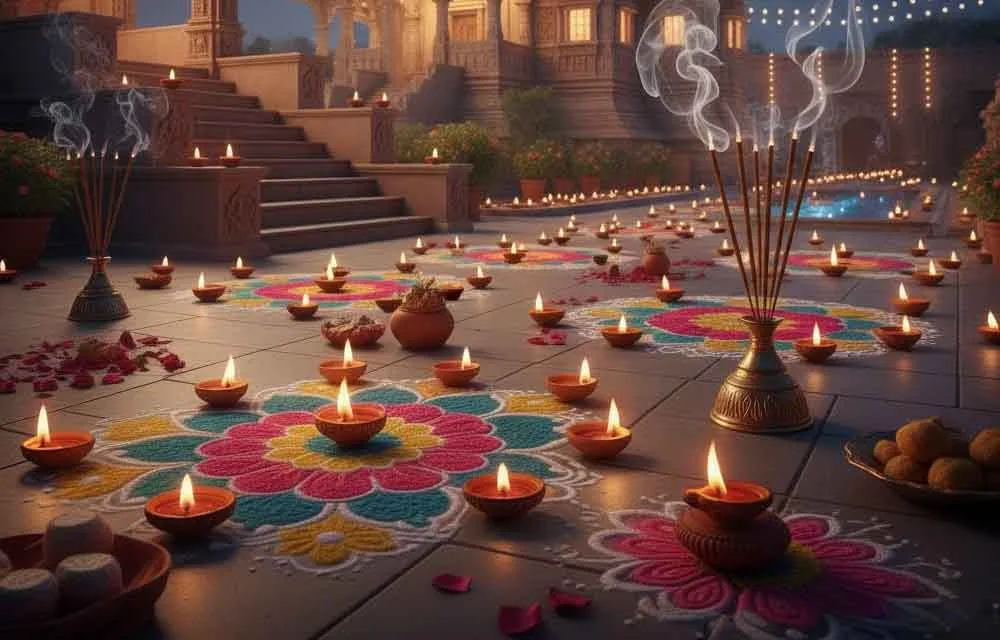
Diwali is a festival of lights, devotion and togetherness. Across India and among Hindu communities worldwide, families decorate their homes with diyas, draw rangoli, worship Goddess Lakshmi and Lord Ganesha, share sweets and spend time with loved ones. For many families, firecrackers are part of the celebration too, but handled carelessly they cause burns, eye injuries, hearing damage, fires and breathing problems. A joyful celebration should never become an emergency.
This guide covers buying and storing crackers, precautions for children, safe lighting, burn and eye first aid, pets, apartments, villages and how to celebrate without crackers at all. Whether you are at home, in an apartment block, in a village or abroad, these precautions protect children, older relatives, neighbours and animals.
Editor's note (8 November 2026): this guide follows the Guidelines for Safe Handling and Use of Firecrackers in India (2026), published by the Trauma and Burn Division of the Directorate General of Health Services (DGHS), Ministry of Health and Family Welfare, and the fireworks do's and don'ts of the Petroleum and Explosives Safety Organisation (PESO). It is general public-awareness information, not a substitute for emergency medical care, fire-service advice or local law. Rules on cracker hours differ by city; see our city guides below.
Why firecracker safety matters
Firecrackers contain combustible and explosive materials, and even sparklers can be dangerous when used carelessly. Common injuries include:
- Burns to the hands, fingers, legs and face.
- Eye injuries from sparks and flying particles.
- Hearing damage from loud explosions.
- Injuries from unexpected or delayed explosions.
- Fires involving clothing, vehicles, homes and dry vegetation.
- Breathing difficulties from smoke and air pollution.
The DGHS guidelines note that these injuries mostly affect young people. The person lighting the cracker is not the only one at risk: bystanders, children, neighbours and animals can also be hurt. The safest choice is often to watch an organised community display instead of handling fireworks yourself.
25 firecracker safety tips every family should know
1. Buy only from licensed sellers
Buy crackers only from authorised, licensed shops and stalls, and check the packaging for the manufacturer's details, instructions and warnings. Avoid unlabelled, old, damp or damaged crackers, suspiciously cheap products and anything from unlicensed sellers.
2. Read the instructions before lighting
Different fireworks have different safety distances and positions. Read the instructions on every item, and never assume that a familiar-looking cracker is safe.
3. Choose an open, uncrowded place
Never light fireworks inside a house, in an apartment corridor, on a balcony, in a parking area or in a narrow lane. Choose an open space away from buildings, vehicles, electric wires, trees and dry leaves, shops, fuel, crowds, animals and anything flammable, and follow local rules on where bursting is allowed.
4. Keep children under adult supervision
Never leave children alone with crackers. An adult should supervise closely and explain the dangers before the celebration starts. Keep matches, lighters and unused crackers out of children's reach, and do not let young children handle explosive crackers.
5. Wear cotton clothes and closed shoes
Wear close-fitting cotton clothes and sturdy footwear. Avoid synthetic fabrics, loose sleeves, flowing dupattas, loose saree ends and long hanging garments, and never burst crackers barefoot.
6. Keep water and sand ready
Before you start, keep a bucket of water, a bucket of sand, a first-aid kit and a charged phone with emergency numbers close by.
7. Light one cracker at a time
Light one item at a time and keep everyone else at a safe distance. Never bundle several crackers together for a bigger bang.
8. Never hold explosive crackers in your hand
Never hold bombs, flowerpots (anar), rockets or ground spinners (chakri) while lighting them. Place each item on the ground as the instructions say. Holding them can cause devastating hand injuries.
9. Never bend over a cracker
Keep your face and body to one side, light the fuse at arm's length with a long agarbatti or lighting stick, and move away at once. Never lean over a fuse to see whether it has caught.
10. Never relight a dud
A cracker that fails to go off is a dud. Do not go near it, pick it up or relight it. The DGHS guidelines say to wait a long time, at least 20 minutes, and then douse it with water before disposal. Keep children away from duds.
11. Never put crackers inside containers
Never put fireworks inside glass bottles, tins, clay pots, pipes or any closed object to make them louder. The container bursts into dangerous flying fragments.
12. Handle sparklers carefully
Sparklers (phuljhadi) burn at extremely high temperatures and are a common cause of burns to the hands.
- Hold them at arm's length and light one at a time.
- Keep them away from clothes, hair and other people's faces.
- Never run with a lit sparkler.
- Do not touch the hot wire after use; drop spent sparklers into a bucket of water.
- Do not give sparklers to children under five, as the DGHS guidelines advise.
13. Take special care with rockets
Never hold a rocket in your hand or point it at people, buildings, trees or wires. Launch it only from a stable base, such as a launch tube or a sturdy bottle half-filled with sand or soil, as the DGHS guidelines suggest, in a wide open space and never in strong wind.
14. Keep crackers away from vehicles and fuel
Keep fireworks away from cars, scooters, petrol pumps, garages and fuel stores, and never burst crackers in a crowded parking area.
15. Keep diyas and crackers apart
Keep lit diyas, candles and agarbattis well away from stored crackers and packaging. Place lamps on stable, non-flammable surfaces, supervise every flame and keep small children away from them.
16. Protect older people and anyone unwell
Loud bangs and smoke can distress or harm older people, infants, pregnant women, people with asthma or heart conditions and people with sensory sensitivities. Give them a comfortable room indoors, with the windows closed, and choose quieter fireworks.
17. Protect your pets
Keep dogs and cats indoors with the doors and windows closed, give them a quiet, familiar space, make sure their identification tags are up to date, and never force them to watch fireworks. Never throw a cracker at any animal. If your pet suffers severe anxiety, talk to your vet before the festival. Street dogs, cows and birds suffer too; see our guide to protecting street dogs and birds on Diwali.
18. No alcohol while handling fireworks
Never handle fireworks after drinking alcohol or taking any intoxicant. Safe handling needs judgement, attention and steady hands.
19. Follow local rules
Rules on permitted crackers, sale sites, bursting hours and noise vary by state, city and district. Check them before you buy, and remember that something allowed in one city may be banned in another. See our Delhi firecracker rules 2026 and Uttar Pradesh firecracker rules 2026.
20. Never make or modify fireworks
Never make, modify or experiment with fireworks, including improvised carbide guns, which the DGHS guidelines specifically warn against. Keep children and teenagers away from social-media videos that show dangerous explosive "experiments".
21. Use green crackers, but stay careful
Where green crackers are required or available, buy genuine ones from licensed sellers and check the CSIR-NEERI green logo and QR code on the box. Green crackers are not pollution-free or risk-free: they still produce smoke, noise and heat and can still injure, so every precaution here still applies.
22. Keep a safe distance
Do not crowd around the person lighting the cracker. Spectators, especially children, should stay back at the distance printed on the product, and nobody should stand directly over or in front of a lit cracker.
23. Dispose of used crackers safely
Spent fireworks can stay hot after the sparks stop. Do not pick them up straight away or throw them into ordinary rubbish; douse used and unexploded crackers with water first, and keep the debris away from children and animals.
24. Wash your hands afterwards
Wash your hands thoroughly after handling fireworks, avoid touching your eyes, sweep up the area once everything has cooled, and do not let children collect unexploded or discarded crackers.
25. Consider a community display
An organised community display, run with the proper permissions, trained people and a controlled viewing area, means fewer households handling fireworks themselves. And a Diwali of diyas, rangoli, puja, music and sweets is just as beautiful without crackers.
Firecracker safety for children: what parents must know
- Explain the dangers before the celebration begins.
- Never let children light explosive crackers on their own.
- Keep matches and lighters out of reach.
- Store unused crackers securely.
- Keep children well back from the lighting area.
- Never let children pick up duds.
- Never let anyone throw crackers at friends or passers-by.
- Avoid loud crackers near babies and toddlers.
- Keep a responsible adult present throughout.
- Offer alternatives: rangoli, diyas, music and family games.
A child's safety matters more than any cracker. For country-specific advice, see our guides to firecracker safety for children in the USA, the UK, Canada and Australia.
What to do if someone is burned
These steps follow the DGHS 2026 first-aid protocol.
Step 1: Move away and stop the burning
Move the injured person away from the fire and any unexploded crackers. If clothing catches fire, stop them running: make them stop, drop and roll, or smother the flames with a blanket or douse them with water.
Step 2: Cool the burn at once
Hold the burned area under clean, cool running water for at least 10–20 minutes, or until the pain eases significantly. If there is no tap, immerse it in a container of cool water. Do not use ice or very cold water.
Step 3: Remove rings and tight items
Gently remove rings, watches, bangles and tight clothing near the burn before it swells. If clothing is stuck to the burn, do not pull it off; leave it in place.
Step 4: Cover the burn
After cooling, cover the burn loosely with a clean, dry, non-stick dressing, clean cling film or a clean lint-free cloth. Do not use cotton wool, and do not break blisters.
Step 5: Get medical help
Call 112 or go to the nearest hospital for:
- Deep or large burns, or burns bigger than the injured person's palm.
- Burns to the face, eyes, hands, feet, groin or joints.
- Chemical or electrical burns, or any blast injury.
- Difficulty breathing, or signs of shock.
- Any burn to a small child or an older person.
Never put these on a burn
Do not apply toothpaste, butter, oil, ghee, turmeric paste, ink, ointments or other home remedies, and never put ice directly on a burn. The DGHS guidelines warn that they trap heat, raise the risk of infection and make it harder for doctors to assess the burn.
What to do if sparks get into an eye
- Do not rub the eye.
- Flush it immediately with clean, cool running water, holding the eyelids open.
- Keep flushing for at least 15–20 minutes.
- Do not try to remove anything stuck in the eye.
- Go to a hospital or eye specialist straight away, even if the pain settles.
Apartments and housing societies
- Follow local rules and your society's arrangements.
- Never burst crackers in corridors, on staircases or on balconies.
- Keep staircases, fire exits and the access road clear for fire engines and ambulances.
- Keep vehicles, lifts, generators, meter rooms and fuel stores away from the bursting area.
- Keep water, sand and fire extinguishers at hand.
- Tell residents where and when bursting is allowed, and make space for older residents, children and pets.
Villages and farms
Never light crackers near haystacks, dry crops, thatched roofs, grain stores, cattle sheds, stored fuel, transformers or irrigation pumps. Keep cattle and other animals away, and let the village committee choose a safe open ground with clear access for emergency vehicles.
How to celebrate Diwali without crackers
Light diyas safely, draw rangoli, perform Lakshmi-Ganesha puja at the right time (see Lakshmi Puja muhurat 2026, city-wise), sing bhajans, share sweets with neighbours, buy from local artisans, visit a temple, help an elderly neighbour or donate food and clothes. A peaceful Diwali is just as joyful and meaningful.
Quick firecracker safety checklist
- Crackers bought from licensed sellers; packaging and instructions checked.
- Local rules and permitted hours checked.
- Crackers stored away from flames and heat.
- Open, safe bursting area chosen.
- Children supervised by a responsible adult.
- Cotton clothes and closed footwear on.
- Water and sand buckets and a first-aid kit ready.
- Pets indoors in a quiet room.
- Older and asthmatic family members indoors.
- No alcohol.
- Duds left alone for at least 20 minutes, then doused with water.
- Used crackers doused before disposal.
- Emergency numbers saved.
Emergency numbers in India
- 112: the national emergency number (police, fire and ambulance).
- 101: fire services in most states.
- 108: ambulance in most states.
Know the way to your nearest hospital emergency department before the celebration starts, and never delay treatment for a serious burn, eye injury, breathing problem or blast injury. Abroad, call 911 in the USA and Canada, 999 in the UK or 000 in Australia.
Official references
- Guidelines for Safe Handling and Use of Firecrackers in India, 2026: Trauma and Burn Division, DGHS, Ministry of Health and Family Welfare.
- Fireworks do's and don'ts: Petroleum and Explosives Safety Organisation (PESO).
More Diwali 2026 guides
Frequently asked questions
What are the most important firecracker safety tips for Diwali?
Buy from licensed sellers, read the instructions, choose an open space, supervise children, wear close-fitting cotton clothes, keep water and sand nearby, light one cracker at a time and never relight a dud.
Are firecrackers safe for children?
Children must never handle explosive crackers without close adult supervision. The DGHS guidelines advise against giving sparklers to children under five.
What should I do if a firecracker does not go off?
Do not go near it or relight it. The DGHS guidelines say to wait at least 20 minutes and then douse it with water before disposal.
What should I do right after a firecracker burn?
Move away from the danger and cool the burn under cool running water for 10–20 minutes. Do not apply ice, toothpaste, oil or butter. Cover it loosely with a clean non-stick dressing and get medical help for anything large, deep or on the face, hands or joints.
Are green crackers pollution-free?
No. Certified green crackers are designed to cut some emissions, but they still produce smoke and noise and can still cause injuries.
How can I protect my dog or cat during Diwali?
Keep pets indoors in a quiet, familiar room with the doors and windows closed, keep their ID tags up to date and never let anyone throw crackers near animals.
Can I burst crackers on my balcony?
No. Balconies are not safe places for crackers: sparks can set fire to your flat or your neighbours'. Use an open ground permitted by your society or local authority.
Which number should I call for a firecracker accident in India?
Dial 112, the national emergency number. Fire services can also be reached on 101 and ambulances on 108 in most states.
Share this with family and friends
Send it on WhatsApp, post it, or copy the link.
More from Festivals
- How the Indian Army Celebrates Diwali: Lights, Duty and Brotherhood on the Borders
- Today in Karthika Masam 2026, Day 17 (26 Nov): Tithi and Deepam Time
- Today in Karthika Masam 2026, Day 16 (25 Nov): Tithi and Deepam Time
- Today in Karthika Masam 2026, Day 15 (24 Nov): Tithi and Deepam Time
- Today in Karthika Masam 2026, Day 14 (23 Nov): Tithi and Deepam Time
You might also like
Firecracker Safety for Children in the UK: A Parent's Guide to a Safe Diwali

Firecracker Safety for Children in Canada: A Parent's Guide to a Safe Diwali

Firecracker Safety for Children in Australia: A Parent's Guide to a Safe Diwali (2026)
