Firecracker Safety for Children in the UK: A Parent's Guide to a Safe Diwali
A UK parent's guide to a safer Diwali: 12 firework and sparkler safety tips, the different rules in England and Wales, Scotland and Northern Ireland, NHS burn first aid and a family checklist.
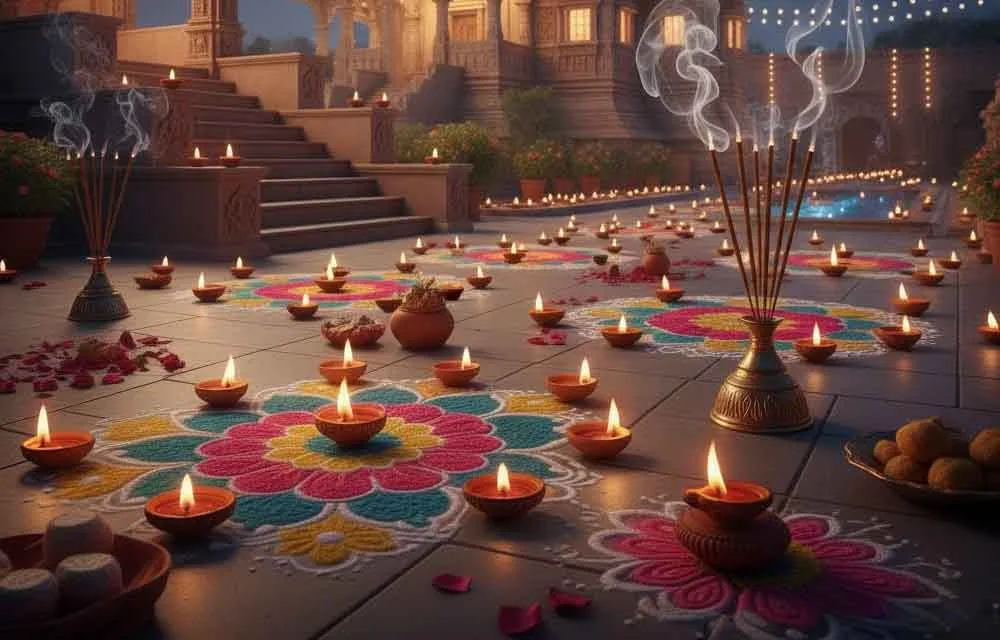
Quick answer: children should watch fireworks, not handle them. In the UK only adults can buy adult fireworks, sparklers are not for children under five, and a bucket of cold water should be ready before anything is lit. The legal hours are different in England and Wales, Scotland and Northern Ireland, so check your nation before Diwali night (Sunday 8 November 2026 on HinduTone's Drik-aligned calendar).
Diwali is the festival of lights, and for many British Indian families the sparkle of a garden display is part of the joy. It is also the night when children are most likely to be near flames, hot sparkler wires and diyas all at once. This guide gives UK parents practical advice from official sources: 12 safety tips, the rules for each nation, burn first aid from the NHS, safer ways to celebrate and a checklist to use on the night.
Last reviewed: 25 October 2026. Sources: London Fire Brigade, the Office for Product Safety and Standards (OPSS) on GOV.UK, NHS, NHS inform, gov.scot, nidirect and legislation.gov.uk.
Why firework safety matters for children
Fireworks are explosives, and even small ones get very hot. London Fire Brigade warns that sparklers, often seen as harmless, burn at temperatures equivalent to a welding torch. Children are curious, move quickly and may not understand that a firework which has stopped fizzing can still go off. Loose festive clothing, dupattas and long sleeves can catch a spark, and lit diyas are often at a child's eye level.
The safest choice is to let adults handle everything while children enjoy the colour from a safe distance. No firework is completely safe for children, so the aim is to reduce the risk as far as you can.
Rules where you live
The UK has three separate sets of fireworks rules. Use this box to find yours, then read the full guide in our Diwali fireworks laws in the UK hub (last checked 25 October 2026).
| Where you live | Normal hours for adult fireworks | Diwali night | Key point for parents |
|---|---|---|---|
| England and Wales | No use between 11 pm and 7 am | Until 1 am after the day of Diwali | Under-18s may not carry adult fireworks in public |
| Scotland | Only 6 pm to 11 pm | 11 pm to 1 am on Diwali | Check for Firework Control Zones; buying fireworks for under-18s is an offence |
| Northern Ireland | No statutory hours; a DoJ licence is needed for most fireworks | No Diwali rule; the DoJ does not normally license 11 pm to 7 am | Only F1 fireworks and sparklers are licence-free |
Nation guides: England, Wales, Scotland and Northern Ireland.
12 firecracker safety tips for UK parents
1. Adults light and handle every firework
Children should never light, hold or carry fireworks. UK law sets 18 as the minimum age to buy adult (F2 and F3) fireworks and 16 for category F1. One responsible, sober adult should be in charge of lighting, with another adult watching the children.
2. Think about a public display first
London Fire Brigade recommends enjoying a public display rather than buying your own fireworks, because public displays are bigger and a lot safer. Many temples and community groups hold Diwali events; check the organiser's own website for dates and tickets.
3. Know the rules for your nation
England and Wales, Scotland and Northern Ireland have different rules on hours, licences and local restrictions. Do not assume the England hours apply in Northern Ireland, where a Department of Justice licence is needed for most fireworks. See the box above and the UK fireworks laws hub.
4. Buy legal fireworks from proper sellers
Buy only from registered or licensed sellers. London Fire Brigade advises looking for a CE or UKCA mark and buying only up to category F3. Category F4 fireworks are for professionals only. Never bring fireworks back from India, and never buy from someone selling out of a car boot or van.
5. Read the instructions and keep the safety distance
Read the instructions on each firework before the evening, and on the night use a torch, never a match or candle. OPSS guidance describes F2 garden fireworks as needing 5 metres and F3 fireworks 25 metres; follow the distance printed on the box and keep children behind it.
6. Treat sparklers as real fireworks
London Fire Brigade's sparkler advice:
- Don't give sparklers to children under 5.
- Make sure everyone handling sparklers wears gloves.
- Hold sparklers at arm's length while they are lit, and light them one at a time.
- Don't wave sparklers close to other people.
- Never hold a baby in your arms while holding a sparkler.
- When a sparkler has finished, put it in a bucket of cold water.
7. Keep water ready before you start
London Fire Brigade advises keeping a bucket of water or a hosepipe nearby in case of emergency. Put a second bucket of cold water aside just for used sparklers.
8. Never go back to a lit firework
Light fireworks at arm's length with a taper and stand well back. Never return to a firework once it has been lit, even if it seems to have failed. Keep children well away from a dud.
9. No pockets, no throwing, no streets
Never put fireworks in pockets and never throw them. It is against the law to set off or throw fireworks, including sparklers, in the street or other public places. Use a garden or private land where you have permission.
10. Make diyas and clothing part of the plan
Place oil diyas and candles where children and pets cannot knock them over, away from curtains, rangoli trays and doorways. Dress children in close-fitting clothes for the display, tie back long hair and keep dupattas and loose sleeves away from flames. LED diyas are a good choice for children's rooms and low windowsills.
11. Think about neighbours, pets and sensitive children
The OPSS 2026 campaign asks people to think beyond their garden. It suggests giving neighbours advance notice, because some people find unexpected fireworks distressing and others want time to prepare themselves, their children or their animals. Keep your own pets indoors, and offer ear defenders and a quiet room to babies, toddlers and children who find loud bangs hard.
12. Clean up safely the next day
OPSS advises waiting until everything is completely cool, then soaking spent fireworks and debris in water overnight before bagging and disposing of them. Do the clean-up yourself and stop children from picking up used fireworks or sparkler wires.
Burn first aid: 5 steps (NHS advice)
This is general first aid from the NHS burns and scalds page and NHS inform, not medical advice for your child. If in doubt, get help.
- Stop the burning and move the child away from the heat. Remove clothing or jewellery near the burn, but do not remove anything stuck to the skin.
- Cool the burn under cool running water for 20 minutes, as soon as possible. If there is no running water, the NHS says you can use cool bottled water or a wet towel. Keep the rest of the child warm.
- Never use ice, iced water, creams, butter or other greasy substances on a burn, and do not burst blisters.
- When the burn has cooled, lay cling film over it if you can. Do not wrap it around the burn or a limb.
- Call 999 or go to A&E if the burn is large or deep, is on the face, genitals or bottom, or was caused by a chemical or electricity. Call NHS 111 if you are not sure what to do; the NHS says to call 111 if you need advice for a child under 5.
Fun and safer ways to celebrate Diwali with children
- Go to an organised community or temple fireworks display and watch from the spectator area.
- Light LED diyas and fairy lights with the children, and let them choose where each one goes.
- Make a rangoli together with coloured rice, flower petals or chalk.
- Paint clay diyas earlier in the week, then let an adult light the oil lamps.
- Tell the story of Rama and Sita returning to Ayodhya, or of Goddess Lakshmi, at bedtime.
- Use glow sticks and glow bracelets instead of sparklers for younger children.
- Make Diwali sweets with the family and share them with neighbours.
- Make paper lanterns or a "light trail" of torches in the garden.
- Join the family Lakshmi puja and let children ring the bell or offer flowers.
- Video-call grandparents in India so the children can share their celebration.
For more ideas, see our guide to an eco-friendly, cracker-free Diwali.
Parents' Diwali night safety checklist
- I have checked the rules for my nation (England and Wales, Scotland or Northern Ireland).
- In Scotland I have checked my council for Firework Control Zones; in Northern Ireland I hold a DoJ licence if I need one.
- Fireworks are from a registered or licensed seller and carry a CE or UKCA mark.
- Fireworks are stored in a closed box, out of children's reach.
- One adult is in charge of lighting and another is watching the children.
- A bucket of water or a hosepipe is ready, plus a bucket of cold water for sparklers.
- Gloves are ready for anyone holding a sparkler, and no child under five will be given one.
- Children are in close-fitting clothes, with long hair tied back.
- Diyas and candles are out of reach and away from curtains and clothing.
- I know the burn first aid steps, and 999 and NHS 111 are saved in my phone.
Frequently asked questions
At what age can a child hold a sparkler in the UK?
London Fire Brigade advises not to give sparklers to children under five. Older children should only hold one with an adult right beside them, wearing gloves, at arm's length and one sparkler at a time, with a bucket of cold water ready for the finished wire. Sparklers burn extremely hot, so no age makes them completely safe.
Can my teenager buy or set off fireworks?
No. In the UK you must be 18 to buy adult (category F2 and F3) fireworks and 16 for category F1. In England, Wales and Scotland under-18s may not carry adult fireworks in a public place. In Scotland it is also an offence to buy fireworks for, or give them to, someone under 18. In Northern Ireland the licence applicant must be 18 or over.
How late can fireworks go on Diwali night?
It depends on where you live. In England and Wales the usual 11 pm cut-off is extended to 1 am after the day of Diwali. In Scotland the normal hours are 6 pm to 11 pm, extended to 1 am on Diwali, but not inside an active Firework Control Zone. Northern Ireland law has no Diwali rule: you need a Department of Justice licence for most fireworks, and the DoJ does not normally license use between 11 pm and 7 am. HinduTone's Drik-aligned calendar lists Diwali 2026 as Sunday 8 November; the law does not define the date.
Do we need a licence for Diwali fireworks in Northern Ireland?
For most fireworks, yes. nidirect says you must not possess, buy or use fireworks, except indoor fireworks and sparklers, unless you hold a fireworks licence from the Department of Justice. Processing can take up to three weeks and licences are not issued more than four weeks before the display, so apply early.
What is a Firework Control Zone?
In Scotland, councils can designate areas where nobody may set off category F2 to F4 fireworks, even in a private garden. Organised public displays can still go ahead. City of Edinburgh Council has 14 zones from 30 October to 8 November 2026, which covers the Diwali weekend. Check your council website before you plan anything at home.
What should I do if my child is burned by a sparkler or firework?
Move them away from the heat, remove clothing or jewellery near the burn unless it is stuck, and hold the burn under cool running water for 20 minutes. Do not use ice, creams or butter. Lay cling film over the burn without wrapping it. Call 999 or go to A&E for a large or deep burn, or a burn on the face, genitals or bottom. Call NHS 111 if you are unsure.
Can we let off fireworks or sparklers in the street or the park?
No. GOV.UK says you must not set off or throw fireworks, including sparklers, in the street or other public places. Use fireworks only on private land with permission, or better still, take the children to an organised public display.
Final thoughts
Diwali is about light, family and the victory of good over evil. With an adult in charge, children at a safe distance, water close by and a plan for the rules where you live, families can enjoy the night with fewer risks. When in doubt, choose a public display and let the children enjoy the diyas at home.
Editor's note (25 October 2026): This guide reuses HinduTone's fireworks law research for England, Wales, Scotland and Northern Ireland (checked 25 October 2026), and its safety advice was checked on the same day against London Fire Brigade, OPSS on GOV.UK, the NHS and NHS inform. Rules and council restrictions can change, so check the official pages below before Diwali night.
Official sources: London Fire Brigade: Fireworks; GOV.UK: My safety: fireworks (OPSS); GOV.UK: Fireworks: the law; gov.scot: Fireworks: the law; nidirect: Fireworks; The Fireworks Regulations 2004; The Fireworks (Scotland) Regulations 2004; City of Edinburgh Council: Firework Control Zones; NHS: Burns and scalds; NHS inform: Burns and scalds.
Disclaimer: This article is general safety information for parents, not legal or medical advice. It does not replace advice from your doctor, NHS 111, the emergency services, your council or the police. In an emergency, call 999.
Related guides
- Also read: Diwali fireworks laws in the UK 2026
- Also read: Diwali cracker safety: precautions to prevent accidents and protect street dogs and birds
- Also read: Firecracker safety for children in the USA: a parent's guide
- Also read: Firecracker safety for children in Canada: a parent's guide
- Also read: Firecracker safety for children in Australia: a parent's guide
- Also read: Firecracker safety for children in Europe: a parent's guide
Share this with family and friends
Send it on WhatsApp, post it, or copy the link.
More from Festivals
- Masik Shivaratri 2027 Dates: Monthly Shivaratri List, Nishita Kaal Times and Dates Abroad
- Sankashti Chaturthi 2027 Dates and Moonrise Times: Full List for India and Abroad
- Pradosh Vrat 2027 Dates: All 25 Pradosham Days, Pradosh Kaal Times and Dates Abroad
- Amavasya 2027 Dates: New Moon Days, Darsha Amavasya, Tithi Times and Dates Abroad
- Purnima 2027 Dates: Full Moon Vrat Days, Snan-Daan Days, Tithi Times and Dates Abroad
You might also like

Firecracker Safety for Children in Australia: A Parent's Guide to a Safe Diwali (2026)

Firecracker Safety for Children in the USA: A Parent's Guide to a Safe Diwali (2026)
Firecracker Safety for Children in South Africa: A Parent's Guide to a Safe Diwali