Firecracker Safety for Children in Australia: A Parent's Guide to a Safe Diwali (2026)
A parent's guide to a safer Diwali in Australia: 12 firecracker safety tips, what each state and territory's fireworks law says, sparkler advice for young children, 5-step burn first aid, safer celebration ideas and a 10-point checklist.

Last reviewed: 25 October 2026. This guide gives general safety and first aid information for families. It is not legal or medical advice.
Quick answer
Fireworks and firecrackers are never safe for children to handle. In Australia, private fireworks use is restricted in most places and the rules differ by state and territory, so many families will celebrate Diwali on Sunday 8 November 2026 with diyas, LED lights and public displays instead. If fireworks are part of your celebration, keep children well back, have an adult in charge at all times, keep water ready, and know the burn first aid steps below. In an emergency call 000. From a mobile phone you can also dial 112.
Why firecracker safety matters for children
Diwali is the festival of lights, and for many Australian Indian families the night means diyas on the doorstep, rangoli, sweets, new clothes and, for some, fireworks. Children are drawn to sparks and loud bangs, but they are also the people least able to judge heat, distance and danger.
A few facts explain why care matters so much:
- Sparklers are often thought of as harmless, but they burn far hotter than a cooking flame and stay hot after the sparks stop.
- Young children have thin skin, react slowly and may run, wave or drop a lit item without warning.
- Loose festive clothing such as dupattas, kurtas, lehengas and silk saris can catch fire quickly.
- Diwali often falls in late spring in Australia, when hot, dry and windy days can bring fire danger ratings and total fire bans.
Planning ahead lets the whole family enjoy the festival without an emergency-department visit.
Sparklers and young children: what a fire service says
Sparklers are fireworks too. The Northern Territory Fire and Rescue Service's fireworks advice, written for Territory Day, says never give fireworks to children under 12 years of age, supervise children at all times, and do not hold more than one lit sparkler at the same time. It also says to keep a hose or bucket of water ready and not to wear synthetic clothes such as nylon, rayon or polyester around fireworks, because stray sparks can set them alight. Source: NT Police, Fire and Emergency Services, Fire safety.
For Diwali, our advice is simple: do not give sparklers to babies, toddlers or young children. Give them glow sticks or LED wands instead, and let them enjoy the light from a safe distance.
12 firecracker safety tips for children in Australia
1. Never let children handle fireworks
Children should not light, hold or throw any firework or firecracker. No firework is safe for a child. The safest role for a child is watching from a safe distance with an adult beside them.
2. Check your state or territory law first
Private fireworks use is restricted in most of Australia and the rules are not the same everywhere. Check the section on Australian fireworks laws below and your state regulator before you buy or use anything. Do not bring fireworks or firecrackers back from India or overseas in your luggage.
3. Choose a professional or community display
Public displays at council events, temples and Diwali festivals are run by licensed operators with safety zones. They are the best way for children to enjoy fireworks.
4. Keep a safe distance
Keep children well back from anyone using fireworks and from the launch area at any display. Follow the barriers and marshals at public events.
5. Have one sober adult in charge
Choose one responsible adult who does nothing else but supervise. Adults who have been drinking alcohol should not handle fireworks.
6. Keep water ready
Keep a bucket of water and a garden hose ready before anything is lit. Put used sparklers and any spent item into the bucket of water.
7. Never relight a dud
If something does not go off, do not go near it, relight it or let a child pick it up. The NT Fire and Rescue Service warns that faulty fireworks can still go off, and advises leaving them for 15 minutes and then dousing them with water.
8. Dress children safely
Choose close-fitting cotton clothes for the evening rather than synthetics such as nylon or polyester. Tie back long hair, tuck in dupattas and avoid trailing sleeves near diyas and candles.
9. Protect eyes and ears
Loud bangs can frighten and hurt young ears. Ear muffs help babies and toddlers at displays, and watching from further back protects eyes from sparks and debris.
10. Think about pets and sensory-sensitive children
Fireworks noise can distress dogs, cats and children who are sensitive to sound or crowds. Plan a quiet room, headphones and an early exit if needed, and keep pets indoors.
11. Be careful with diyas and candles
Diyas are part of the festival, but an open flame at child height is a burn risk. Place diyas out of reach, away from curtains, rangoli powder piles and decorations, and never leave them burning unattended. LED diyas are a good choice in children's rooms.
12. Know the emergency numbers
Teach older children that 000 is the number for police, fire and ambulance in Australia. healthdirect notes that you can also call 112, the international emergency number, from a mobile phone. Keep your address easy to find for anyone who has to call. Source: healthdirect, Calling triple zero (000).
Understand Australian fireworks laws
Australia has no single national fireworks rule for families. Each state and territory sets its own law, and most restrict private use. The lines below come from the official regulator or government pages checked on 25 October 2026. Where a point could not be confirmed, we say so. Even where a product such as a sparkler is legal to buy, that does not make it safe for children.
- New South Wales: Fireworks meant for retail sale to the public are not authorised in NSW. Only licensed pyrotechnicians or holders of a fireworks single use licence may use display fireworks, and only in an authorised display. Source: SafeWork NSW.
- Victoria: Fireworks are classed as explosives and can only be used by licensed pyrotechnicians or people under their direct supervision. Source: WorkSafe Victoria.
- Queensland: Public use of display fireworks has been illegal since 1972. A short list of unrestricted items, including sparklers and party poppers, may be sold in shops. Partly verified; check with Resources Safety and Health Queensland. Source: Business Queensland.
- Western Australia: Buying, possessing, storing or using fireworks is prohibited for the public, except a small group of unrestricted items such as bon-bons, party poppers, Christmas crackers, throwdowns and sparklers. Source: WorkSafe WA.
- South Australia: Not fully verified. We could not confirm from an official page whether the public may use consumer fireworks. Check with SafeWork SA. Source checked: ABLIS, Pyrotechnician's Licence (SA).
- Tasmania: Shop-type fireworks may only be used under a fireworks display permit, and people who are not pyrotechnicians can get one only for Cracker Night in May. The regulations name Diwali as an approved purpose for a permitted display run by a nominated pyrotechnician, not for backyard use. Partly verified (we read the regulations as made); check with WorkSafe Tasmania. Source: Explosives Regulations 2022 (Tas).
- Australian Capital Territory: Fireworks may only be used in a fireworks display run by a person with a fireworks display permit. Partly verified; check with WorkSafe ACT. Source: WorkSafe ACT.
- Northern Territory: Fireworks can only be lit during Territory Day celebrations on 1 July, from 6 pm to 11 pm. There is no Diwali window. Partly verified; check with NT WorkSafe. Source: Territory Day FAQs, NT Government.
Fire bans matter too. In Western Australia, displays are not permitted during a total fire ban unless DFES gives an exemption, and Tasmania's standard permit conditions also stop displays during a total fire ban. Check your state fire service on the day. For the full state-by-state detail, including temple and community display permits, see our Diwali fireworks laws in Australia guide.
Burn first aid: 5 steps
These are general first aid steps based on healthdirect, the Australian Government-funded health information service. They do not replace advice from a doctor, nurse or paramedic.
- Step 1: Stop the burn. Move the child away from the heat source. If clothing is on fire, get them to stop, drop and roll, or smother the flames with a blanket.
- Step 2: Cool with running water. As soon as possible, put the burned area under cool running water for at least 20 minutes.
- Step 3: Do not use ice, lotions or creams. Do not apply ice or any lotion or cream, do not pop blisters, and do not remove anything stuck to the burn.
- Step 4: Cover loosely. Cover the burn with a light, loose, non-stick dressing. Plastic cling film is a good choice, but do not use it on the face.
- Step 5: Get help. Call 000 and ask for an ambulance if the burn is deep (even if it isn't painful), involves the face, hands or genitals, has made the skin brown, black or white, or affects the throat or breathing. See a doctor if the burn is larger than a 20 cent coin, has blistered, or you are worried. You can also call healthdirect on 1800 022 222 for advice.
Source: healthdirect, Burns and scalds.
Safer ways to celebrate Diwali with children
You do not need fireworks to give children a memorable Diwali. Ideas that families across Australia enjoy:
- LED diyas and fairy lights: let children decorate the home and balcony with battery lights.
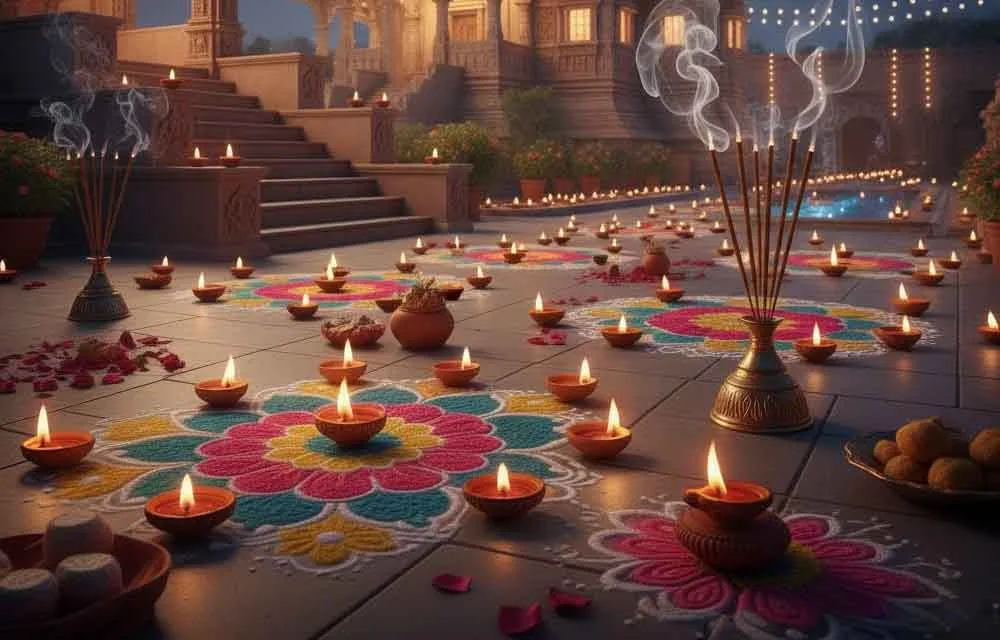
- Rangoli: make rangoli with coloured powder, rice, flowers or chalk on the driveway.
- Diya painting: paint clay diyas with the children and use them with LED tea lights.
- Temple and community events: many Australian temples and community groups hold Diwali melas and cultural programs.
- Public displays: watch a professional display at a council or community Diwali festival.
- Lakshmi Puja together: let children help prepare the puja thali, flowers and prasad, and tell them the story of Rama's return to Ayodhya.
- Sweets and cards: make laddoos or barfi and make Diwali cards for neighbours.
- Glow sticks and battery lanterns: light without a flame for small hands.
Parent's Diwali safety checklist
- I have checked my state or territory fireworks law and any fire ban for the day.
- We are going to a professional display, or an adult is in charge of any legal fireworks.
- Children will not light, hold or throw any firework.
- A bucket of water and a hose are ready.
- Children are wearing close-fitting cotton clothes with hair tied back.
- Diyas and candles are out of children's reach and never left unattended.
- Ear muffs or headphones are packed for young or sensitive children.
- Pets are safely indoors.
- Everyone knows to call 000, or 112 from a mobile, in an emergency.
- I know the burn first aid steps: cool running water for 20 minutes, then cover loosely.
Also read: Firecracker safety for children in South Africa: a parent's guide.
Frequently Asked Questions
Are sparklers safe for children?
No firework is safe for children, and sparklers are fireworks. The Northern Territory Fire and Rescue Service says never give fireworks to children under 12 and supervise children at all times. For young children, use glow sticks or LED wands instead.
Can we use fireworks for Diwali in Australia?
It depends on where you live, and most states and territories restrict private use. NSW does not authorise fireworks for retail sale to the public, Victoria limits use to licensed pyrotechnicians, and the NT allows them only on Territory Day. Check your state regulator before Diwali.
Can I bring firecrackers from India to Australia?
We advise against it. Australian states regulate fireworks as explosives and the rules on buying, possessing and using them are strict. Check with your airline and your state regulator before you travel, and do not try to get around the rules.
What should I do if my child gets a burn from a firework or diya?
Move the child away from the heat, then put the burn under cool running water for at least 20 minutes. Do not use ice, lotions or creams. Cover it loosely with a non-stick dressing or cling film (not on the face) and call 000 for a serious burn.
What is the emergency number in Australia?
Call 000 (triple zero) for police, fire or ambulance. From a mobile phone you can also call 112. For health advice that is not an emergency, call healthdirect on 1800 022 222.
Where can children watch Diwali fireworks safely in Australia?
At a professional display run by licensed operators at a council, temple or community Diwali event. SafeWork NSW publishes notified displays that you can search by postcode, and WorkSafe WA publishes a schedule of approved fireworks events.
How can we celebrate Diwali without fireworks?
Light LED diyas and fairy lights, make rangoli, paint clay diyas, do Lakshmi Puja together, make sweets and cards for neighbours, and visit a temple or community Diwali festival.
Final thoughts
Diwali is about light winning over darkness, and the brightest memories for children usually come from family, food, prayer and lights rather than from noise. Check your local law, keep fireworks in adult hands or leave them to the professionals, and keep water and first aid knowledge ready. A little planning keeps the festival joyful for everyone.
Also read
- Diwali fireworks laws in Australia: state by state
- Firecracker safety for children in the USA: a parent's guide
- Firecracker safety for children in the UK: a parent's guide
- Diwali cracker safety precautions: prevent accidents and protect animals
- Diwali 2026 in Australia: Lakshmi Puja muhurat city by city
- Eco-friendly, cracker-free Diwali 2026: ideas for families
- Diwali 2026 hub: 5-day guide, dates and Lakshmi Puja muhurat
- Firecracker safety for children in Canada: a parent's guide
Editor's note (25 October 2026)
This guide was written for Diwali 2026 and checked against official Australian sources on 25 October 2026: healthdirect for burn first aid and the 000 and 112 numbers, the Northern Territory Fire and Rescue Service for sparkler and fireworks advice, and the state and territory regulators linked above for fireworks law. Fireworks law can change and fire bans are declared day by day, so always check your state or territory regulator and fire service before Diwali.
Disclaimer
This article is general information only. It is not legal advice and it is not medical advice. It does not replace treatment by a doctor, nurse or paramedic. Fireworks laws differ between Australian states and territories and can change; check with the regulator where you live. In an emergency call 000 (or 112 from a mobile).
Share this with family and friends
Send it on WhatsApp, post it, or copy the link.
More from Festivals
- Masik Shivaratri 2027 Dates: Monthly Shivaratri List, Nishita Kaal Times and Dates Abroad
- Sankashti Chaturthi 2027 Dates and Moonrise Times: Full List for India and Abroad
- Pradosh Vrat 2027 Dates: All 25 Pradosham Days, Pradosh Kaal Times and Dates Abroad
- Amavasya 2027 Dates: New Moon Days, Darsha Amavasya, Tithi Times and Dates Abroad
- Purnima 2027 Dates: Full Moon Vrat Days, Snan-Daan Days, Tithi Times and Dates Abroad
You might also like

Firecracker Safety for Children in the USA: A Parent's Guide to a Safe Diwali (2026)
Firecracker Safety for Children in the UK: A Parent's Guide to a Safe Diwali
Firecracker Safety for Children in South Africa: A Parent's Guide to a Safe Diwali