
Firecracker Safety for Children in South Africa: A Parent's Guide to a Safe Diwali
A South African parent's guide to a safer Diwali: 12 safety tips, what SAPS and the Explosives Act say, the checked Diwali by-law rules for Durban, Johannesburg, Cape Town and Tshwane, burn first aid and an 11-point checklist.

Quick answer: children should watch fireworks, not handle them. In South Africa fireworks are controlled under the Explosives Act, may only be sold by licensed dealers, and may not be used in buildings, on public thoroughfares or in other public places without written permission. On top of that, each municipality sets its own rules: Durban and Johannesburg by-laws allow consumer fireworks on Diwali from 19h00 to 22h00, Cape Town has no designated sites, and in Tshwane you should check with the City. Diwali night falls on Sunday 8 November 2026.
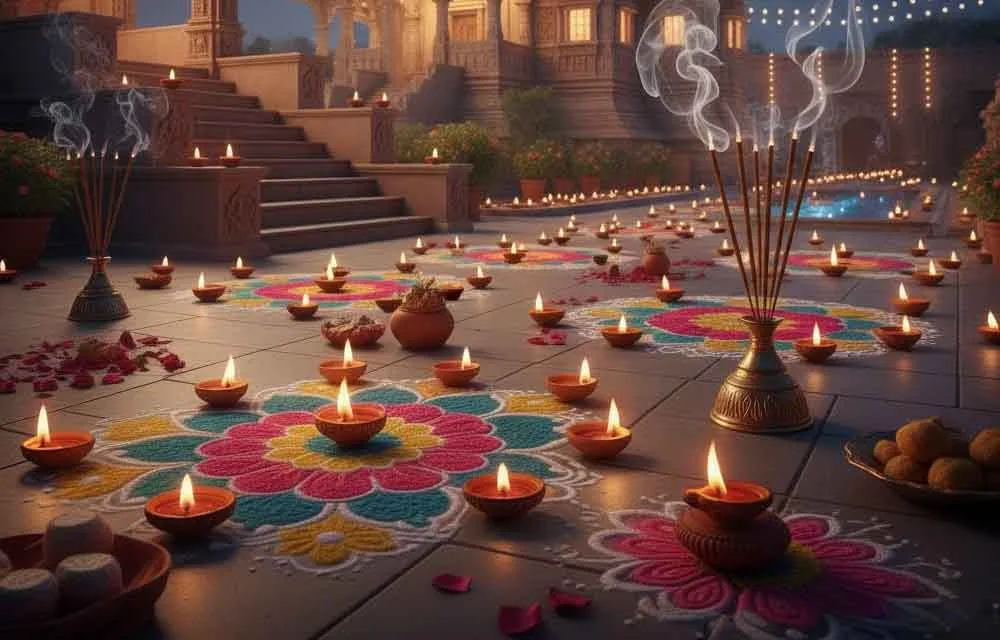
Diwali is the festival of lights, and for many South African Indian families in Durban, Johannesburg, Pretoria and Cape Town, fireworks are part of the evening. It is also the night when children are most likely to be near flames, hot sparkler wires and lit diyas at the same time. This guide gives parents practical advice from official sources: 12 safety tips, what national law and the main municipal by-laws actually say, burn first aid, safer ways to celebrate and a checklist for the night.
Last reviewed: 25 October 2026. Sources: SAPS (via SAnews), gov.za, the eThekwini Fire Safety By-law, the City of Johannesburg Emergency Services By-laws, the City of Cape Town, the City of Tshwane, the Western Cape Government and the NHS. Where we could not find an official text, we say so.
Why firework safety matters for children
Fireworks are explosives. Even small consumer fireworks and sparklers burn extremely hot, and a firework that has stopped fizzing can still go off. Children are curious, move fast and often stand too close. Festive clothes, dupattas and loose sleeves catch sparks easily, and diyas are often at a child's eye level. SAPS reminds parents not to let children pick up pieces of fireworks straight away, because some may still be alight and can explode.
No firework is safe for children, including sparklers. The aim is to keep the risk as low as you can: adults handle everything, children watch from a safe distance, and you know the rules where you live.
What national law says
- The Explosives Act controls fireworks. SAPS says fireworks in South Africa are controlled in terms of the Explosives Act, and that local authorities also have by-laws on their use (SAPS statement via SAnews). The Explosives Act 15 of 2003 was meant to replace the 1956 Act, but gov.za lists its commencement as "to be proclaimed" (gov.za: Explosives Act 15 of 2003), so the Explosives Act 26 of 1956 and its regulations still apply.
- Licensed dealers only. Only dealers licensed under the Explosives Act, with valid licences issued by an inspector, may sell fireworks. SAPS says no fireworks may be sold by street hawkers, at flea markets or from the boot of a car or a trailer.
- Where you may not use fireworks. SAPS lists three places: within 500 metres of any explosives magazine, explosives factory, petroleum depot or gasometer; in any building or on any public thoroughfare; and in any other public place or resort without the prior written permission of the local authority.
- Children under 16. SAPS advises that children under 16 should always use or light fireworks under the supervision of their parents. The City of Cape Town, citing the Act, says selling fireworks to anyone under 16, or letting an under-16 handle fireworks without adult supervision, can each lead to a R300 fine.
- Displays need permission. In the by-laws and City notices we read (Durban, Johannesburg, Cape Town), a public fireworks display needs SAPS explosives approval as well as a municipal fire service permit. A temple or community display should have these in place.
In 2019 SAPS gave the penalty for breaking the regulations as a fine of up to R600, up to 12 months in prison, or both. We could not check this against the current text of the regulations.
Local rules: what the municipal by-laws say
These are local rules, not national law. They apply only inside that municipality, and a municipality can change its days and times. HinduTone read each by-law or City notice on the official site on 25 October 2026. If your municipality is not listed, check with your municipality.
| Municipality (local rule) | Diwali window | Key points for parents | Source |
|---|---|---|---|
| eThekwini (Durban) | 19h00 to 22h00 (Schedule 2) | Consumer fireworks only at home; not on a public road; no sale to under-16s; under-16s only with an adult; not where animals are kept | Fire Safety By-law, 2022 (PDF) |
| City of Johannesburg | 19h00 to 22h00 (s30(3)(i)) | Not at any public place, school, old age home or hospital; not where animals are present; not within 500 m of petrol stations and explosives stores | Emergency Services By-laws (PDF) |
| City of Cape Town | No Diwali window; no designated public sites since 2019 | Displays by permit only (via SAPS); discharge outside a designated area is illegal, says the City | City notice: No permit, no fireworks |
| City of Tshwane (Pretoria) | Not verified: check with the City of Tshwane | Private displays need approval from the City's Emergency Services Department (2024 notice) | City of Tshwane Diwali notice, 2024 |
| Anywhere else | Check with your municipality | National rules below still apply | SAPS |
eThekwini (local rule). Section 12 of the Fire Safety By-law, 2022 says consumer fireworks may only be used on the days and times in Schedule 2, which lists Diwali/Deepavali from 19h00 to 22h00. Section 8 says no one may let a child under 16 handle or use fireworks except under adult supervision, or light fireworks where animals are kept. Retail dealers must show a "Dealer in Fireworks" notice and a sign that they do not sell to children under 16 (eThekwini by-laws page).
Johannesburg (local rule). Section 30 of the City of Johannesburg Emergency Services By-laws lists Divali from 19h00 to 22h00, and section 30(4) says no person may allow a minor in their care to use fireworks against these rules. Note that section 30(2) bans fireworks in any place where animals are present, which matters if you have pets at home.
12 firecracker safety tips for South African parents
1. Adults light and handle every firework
Children should never light, hold or carry fireworks. One responsible, sober adult should do the lighting while another adult watches the children.
2. Choose a permitted community display
A temple or community display with the right permits is usually the safest way for children to enjoy fireworks, especially in Cape Town where there are no designated public sites. Check the organiser's own website for dates.
3. Know your municipality's rules
Durban and Johannesburg allow consumer fireworks on Diwali from 19h00 to 22h00, but other cities differ. Read the local rules table above, and if your municipality is not listed, check with your municipality before Diwali night.
4. Buy only from a licensed dealer
Buy from a shop that shows it is a licensed dealer in fireworks. Do not buy from street hawkers, flea markets or car boots. Keep the fireworks sealed in their packaging and in a closed box, out of children's reach.
5. Never in the street, a building or a public place
National rules ban fireworks in buildings and on public thoroughfares, and other public places need written permission. Use your own yard or property, where your local rules allow it, with the owner's consent.
6. Treat sparklers as real fireworks
Sparklers are fireworks, not toys. Keep them away from young children. If an older child holds one, an adult should stand beside them, the child should hold it at arm's length, and each finished sparkler should go straight into a bucket of water.
7. Keep water ready before you start
SAPS advises having a hose or a bucket of water nearby. Put out a second bucket just for used sparklers and duds.
8. Stand back and never relight a dud
SAPS advises standing back from all fireworks once they are lit and never holding a lit firework in your hand. Never go back to a firework that has failed, and keep children away from it.
9. Point fireworks away from people and homes
Always point fireworks away from people, houses and anything flammable, as SAPS advises. Never throw fireworks, and never put them in pockets.
10. Dress children safely and place diyas carefully
Dress children in close-fitting clothes, tie back long hair and keep dupattas and loose sleeves away from flames. Put oil diyas and candles where children and pets cannot knock them over, away from curtains and doorways. LED diyas are a good choice for low windowsills and children's rooms.
11. Protect pets, babies and sensitive children
Keep pets indoors and under control. Remember that the eThekwini and Johannesburg by-laws ban fireworks where animals are kept or present. Offer ear defenders and a quiet room to babies, toddlers and children who find loud bangs hard.
12. Clean up yourself, and save the emergency numbers
Do not let children pick up used fireworks or sparkler wires. Wait until everything is cool, soak the debris in water and clean up yourself. Save 10177 (ambulance), 10111 (police) and 112 (from a cell phone) in your phone before you start.
Burn first aid: 5 steps
This is general first aid from the NHS burns and scalds page, with South African emergency numbers. It is not medical advice for your child; if in doubt, get help.
- Stop the burning and move the child away from the heat. Remove clothing or jewellery near the burn, but do not remove anything stuck to the skin.
- Cool the burn under cool running water for 20 minutes, as soon as possible. If there is no running water, the NHS says you can use cool bottled water or a wet towel.
- Do not put creams, oils or butter on the burn, and do not burst any blisters.
- When the burn has cooled, lay cling film over it if you can. Do not wrap it around the burn.
- Get emergency help for a large or deep burn, a burn on the face, genitals or bottom, or a burn caused by chemicals or electricity: call 10177 for an ambulance, or 112 from a cell phone, or go to the nearest emergency unit.
Fun and safer ways to celebrate Diwali with children
- Watch a permitted temple or community fireworks display from the spectator area.
- Light LED diyas and fairy lights with the children, and let them choose where each one goes.
- Make a rangoli together with coloured rice, flower petals or chalk.
- Paint clay diyas earlier in the week, then let an adult light the oil lamps.
- Tell the story of Rama and Sita returning to Ayodhya, or of Goddess Lakshmi, at bedtime.
- Use glow sticks and glow bracelets instead of sparklers for younger children.
- Make Diwali sweets together and share them with neighbours.
- Join the family Lakshmi Puja and let the children offer flowers or ring the bell.
- Video-call grandparents and cousins so the children can share their celebration.
For puja times in your city, see Lakshmi Puja muhurat 2026 in South Africa, city by city. For more ideas, see our guide to an eco-friendly, cracker-free Diwali.
Parents' Diwali night safety checklist
- I have checked my municipality's rules (Durban and Johannesburg 19h00 to 22h00; Cape Town and Tshwane: check with the City).
- Fireworks come from a licensed dealer, in sealed packaging.
- Fireworks are stored in a closed box, out of children's reach.
- We will use them only on our own property, not in the street, a building or a public place.
- One adult is in charge of lighting and another adult is watching the children.
- A hose or bucket of water is ready, plus a bucket for used sparklers.
- No young child will be given a sparkler.
- Children are in close-fitting clothes, with long hair tied back.
- Diyas and candles are out of reach and away from curtains and clothing.
- Pets are indoors and babies have a quiet room.
- I know the burn first aid steps, and 10177, 10111 and 112 are saved in my phone.
Frequently asked questions
Can children buy fireworks in South Africa?
No. The City of Cape Town, citing the Explosives Act, says selling fireworks to anyone under 16 is an offence, and eThekwini's Fire Safety By-law tells dealers not to sell any firework to a child under 16 and to display a sign saying so. SAPS advises that children under 16 should only use or light fireworks under the supervision of their parents. HinduTone's advice is stricter: let adults handle every firework.
What time can we light fireworks on Diwali in Durban?
Local rule (eThekwini): Schedule 2 of the eThekwini Fire Safety By-law, 2022 lists Diwali/Deepavali from 19h00 to 22h00 for consumer fireworks. Fireworks may not be lit on a public road, and only consumer fireworks may be used at a home. The by-law lets the Municipality change the days and times, so check for an eThekwini notice before Diwali night.
What time are fireworks allowed on Diwali in Johannesburg?
Local rule (City of Johannesburg): section 30(3) of the Emergency Services By-laws lists Divali from 19h00 to 22h00. The same section bans fireworks at any public place, inside any building, at any school, old age home or hospital, in any place where animals are present, and within 500 metres of an explosives factory, explosives storage place, petrol depot or petrol station, unless the City has authorised it.
Can we light fireworks in Cape Town on Diwali?
Local rule (City of Cape Town): the City says it has not provided designated fireworks sites for Guy Fawkes, Diwali and New Year's Eve since 2019, and that discharging fireworks in an area not specifically designated for it is illegal. Fireworks displays need a permit, applied for through SAPS. Check with the City of Cape Town before planning anything at home; a temple or community display with a permit is the simpler choice.
What are the rules in Pretoria (Tshwane)?
Check with the City of Tshwane. HinduTone could not find the text of a Tshwane fireworks by-law or a Diwali time window on an official site. In a 2024 Diwali notice, the City's Emergency Services Department said private fireworks displays need its approval, and listed site rules such as at least 100 m from buildings, roads and railway lines.
Is it true that fireworks are banned within 500 m of hospitals?
We could not verify that as a national rule. The national 500 m rule that SAPS describes is about explosives magazines, explosives factories, petroleum depots and gasometers. In Johannesburg, the by-law uses 500 m for explosives factories and storage places, petrol depots and petrol stations, and separately bans fireworks at schools, old age homes and hospitals. Other municipalities have their own rules.
Which numbers should I call in an emergency on Diwali night?
Call 10177 for an ambulance or 10111 for the police. From a cell phone you can also call 112 (MTN, Vodacom, Cell C and Telkom), according to the Western Cape Government. Save these numbers, plus your local fire service number, before the evening starts. In Cape Town the fire number is 107 from a landline or 021 480 7700 from a cell phone.
Final thoughts
Diwali is about light, family and the victory of good over evil. With an adult in charge, children at a safe distance, water close by and the rules for your municipality checked in advance, families can enjoy the night with fewer risks. When in doubt, choose a permitted community display and let the children enjoy the diyas at home.
Editor's note (25 October 2026): HinduTone read every rule on this page in the official text: the SAPS statement published by SAnews, gov.za, the eThekwini Fire Safety By-law, 2022, the City of Johannesburg Emergency Services By-laws and notices from the Cities of Cape Town and Tshwane. A claim that fireworks are banned within 500 m of hospitals, clinics and old-age homes everywhere could not be verified as national law, so we left it out. Municipalities can change their days and times, so check for a 2026 notice before Diwali night.
Official sources: SAnews: SAPS urges cautious use of fireworks; gov.za: Explosives Act 15 of 2003; eThekwini Fire Safety By-law, 2022 (PDF); City of Johannesburg Emergency Services By-laws (PDF); City of Cape Town: No permit, no fireworks; City of Tshwane: Fireworks discharge during Diwali celebrations; Western Cape Government: emergency numbers; NHS: Burns and scalds.
Disclaimer: This article is general safety information for parents, not legal or medical advice. It does not replace advice from a doctor, the emergency services, your municipality or SAPS. By-laws and notices can change, so follow the latest official notice for your area. In an emergency, call 10177 or 10111, or 112 from a cell phone.
Related guides
- Also read: Diwali 2026 in South Africa: date, Lakshmi Puja times and temples
- Also read: Diwali cracker safety: precautions to prevent accidents and protect street dogs and birds
- Also read: Firecracker safety for children in the USA: a parent's guide
- Also read: Firecracker safety for children in the UK: a parent's guide
- Also read: Firecracker safety for children in Australia: a parent's guide
Share this with family and friends
Send it on WhatsApp, post it, or copy the link.
More from Festivals
- Diwali Celebrations Around the World 2026: 30 Countries
- Akshaya Tritiya 2027 (Akha Teej): Date, Tritiya Tithi, Puja Muhurat and Gold Buying Time by City, Vidhi and Significance
- Diwali in Bangladesh 2026: Kali Puja Date & Traditions
- Diwali Celebrations in Pakistan 2026: Date & Traditions
- Firecracker Safety for Children in Europe: A Parent's Guide to a Safe Diwali
You might also like
Firecracker Safety for Children in the UK: A Parent's Guide to a Safe Diwali
Firecracker Safety for Children in Australia: A Parent's Guide to a Safe Diwali (2026)

Firecracker Safety for Children in the USA: A Parent's Guide to a Safe Diwali (2026)
