
US Lawmakers Introduce Bill to Make Diwali a Federal Holiday: Diwali Day Act Gains Support from 19 Representatives in 2026
Washington, D.C.: In a significant development for millions of Hindus and the wider South Asian diaspora in the United States, a group of American lawmakers led by Congresswoman Grace Meng has reintroduced legislation seeking to make Diwali, the Festival of Lights, an official federal holiday in the
Breaking News – November 10, 2026
HinduTone Special Coverage
Washington, D.C.: In a significant development for millions of Hindus and the wider South Asian diaspora in the United States, a group of American lawmakers led by Congresswoman Grace Meng has reintroduced legislation seeking to make Diwali, the Festival of Lights, an official federal holiday in the United States.
The proposed legislation, known as the Diwali Day Act, has received the support of 19 lawmakers, including prominent Indian-American representatives Raja Krishnamoorthi, Suhas Subramanyam, Shri Thanedar, Ro Khanna and Ami Bera.
If passed by the US Congress and enacted into law, Diwali would become the 12th federally recognised holiday in the United States, marking a historic milestone for Hindu Americans and other communities that celebrate Deepavali.
The renewed legislative effort is more than a proposal for an additional day off. Supporters say it represents cultural recognition, religious inclusion, diversity and the growing influence of Indian-American and South Asian communities in American society.
For Hindus living in the United States, the proposed bill could eventually mean greater opportunities to celebrate Diwali with families, attend temple ceremonies, participate in community events and preserve religious traditions without workplace and educational scheduling conflicts.
What Is the Latest News About the Diwali Federal Holiday Bill?
On November 9, 2026, Congresswoman Grace Meng and 19 other lawmakers reintroduced the Diwali Day Act in the US House of Representatives.
Grace Meng, who chairs the Congressional Asian Pacific American Caucus (CAPAC), is leading the renewed effort.
The proposed legislation seeks to amend the federal holiday provisions under US law to recognise Diwali, also known as Deepavali, as a federal holiday.
Some of the prominent lawmakers supporting the proposal include:
- Grace Meng – New York
- Raja Krishnamoorthi – Illinois
- Suhas Subramanyam – Virginia
- Shri Thanedar – Michigan
- Ro Khanna – California
- Ami Bera – California
The proposal recognises Diwali's importance to Hindus, Sikhs, Jains and Buddhists, as well as people from South Asian, Southeast Asian and Indo-Caribbean communities.
Congresswoman Meng said the legislation would help educate Americans about the importance of Diwali and create a more inclusive nation that respects the cultural traditions of its people.
According to supporters, recognising Diwali as a federal holiday would send an important message that these communities are valued members of American society.
What Is the Diwali Day Act?
The Diwali Day Act is proposed legislation intended to establish Diwali, or Deepavali, as an official US federal holiday.
Its objective is to give national recognition to one of the world's most widely celebrated festivals.
The legislation is particularly significant because Diwali is not limited to one religious or cultural community.
Different communities celebrate the festival with their own traditions, beliefs and interpretations.
| Detail | Information |
|---|---|
| Bill name | Diwali Day Act |
| Lead lawmaker | Congresswoman Grace Meng |
| Legislative chamber | US House of Representatives |
| Latest development | Reintroduced in November 2026 |
| Supporting lawmakers | 19 representatives |
| Indian-origin supporters | 5 prominent representatives |
| Main objective | Establish Diwali as a federal holiday |
| Potential impact | Diwali becomes the 12th US federal holiday if enacted |
Important: The legislation has been reintroduced; Diwali has not yet become a federal holiday. It must pass the required legislative process before it can become law.
Why Is the United States Considering Diwali as a Federal Holiday?
The renewed proposal reflects several important developments in American society.
1. Growing Indian-American Population
Indian Americans have become an increasingly visible and influential community across the United States.
They contribute to technology, healthcare, education, entrepreneurship, research, finance, public service and numerous other sectors.
Major metropolitan areas such as New York, Chicago, Houston, Dallas, San Francisco, Seattle, Washington, D.C., and New Jersey have vibrant Indian-American populations.
Diwali celebrations have become increasingly visible in American cities, with cultural programmes, temple festivals, public gatherings, business events and community celebrations.
Recognising Diwali nationally would acknowledge the cultural contributions of these communities.
2. Recognition of Hindu Culture and Traditions
Diwali is one of the most important festivals in Hindu traditions.
It symbolises the victory of good over evil, light over darkness and knowledge over ignorance.
For many Hindus, the festival commemorates Lord Rama's return to Ayodhya after defeating Ravana.
Other traditions associate Diwali with Goddess Lakshmi, Lord Ganesha, Lord Krishna and different regional religious histories.
A federal holiday would provide greater recognition of these traditions in America's national calendar.
3. Religious Freedom and Cultural Inclusion
The United States is home to people from different religions, countries and cultural backgrounds.
Recognising Diwali would be an important step towards acknowledging the religious and cultural practices of Hindu, Sikh, Jain and Buddhist communities.
Supporters argue that national recognition can help improve cultural awareness and promote mutual respect.
4. Addressing Anti-Hindu and Anti-South Asian Hate
Another important reason highlighted by Grace Meng and CAPAC is the need to address rising concerns about anti-Hindu and anti-South Asian hate.
The caucus has pointed to incidents involving vandalism at Hindu places of worship, threats against communities and the racist disruption of a Diwali celebration in Washington State.
Supporters believe that recognising Diwali at the federal level would send a strong message that religious discrimination and hatred have no place in American society.
Who Are the 19 US Lawmakers Supporting the Diwali Holiday Proposal?
Congresswoman Grace Meng is leading the renewed legislative effort, with support from representatives across different states.
Five prominent Indian-origin lawmakers are among the supporters.
Important supporters include:
1. Grace Meng
Grace Meng is the principal driving force behind the Diwali Day Act. She has consistently advocated for greater recognition of Asian-American communities and cultural traditions.
2. Raja Krishnamoorthi
The Illinois representative is among the prominent Indian-origin lawmakers supporting the proposal. He has been an influential voice on issues affecting Indian Americans and the wider Asian-American community.
3. Suhas Subramanyam
Representing Virginia, Subramanyam is another Indian-origin lawmaker backing the proposed legislation.
4. Shri Thanedar
The Michigan representative is among the supporters advocating recognition of Diwali at the national level.
5. Ro Khanna
The California representative is another prominent supporter of the Diwali Day Act.
6. Ami Bera
The California congressman is also supporting the renewed legislative initiative.
The proposal has backing from 19 representatives in total. The six names above are among those highlighted in the announcement.
What Happens If Diwali Becomes a US Federal Holiday?
If Congress passes the legislation and it is enacted into law, Diwali would receive a place among the official federal holidays recognised by the United States government.
This could have several important implications.
1. Federal Government Employees Could Receive a Holiday
Federal employees would generally receive the holiday benefits applicable under federal holiday rules.
Government offices would follow the applicable holiday schedule, subject to essential services and operational requirements.
2. Greater Recognition in American Schools and Universities
The legislation could encourage greater awareness of Diwali in educational institutions.
Schools and universities could become more conscious of the importance of the festival when planning academic calendars, examinations and cultural activities.
However, a federal holiday would not automatically require every school or university to close. School calendars are generally determined by state and local authorities or individual institutions.
3. More Opportunities for Family Celebrations
Many Indian-American families face difficulties balancing work schedules with religious celebrations.
A federal holiday could make it easier for government employees to participate in:
- Lakshmi Puja and family prayers.
- Diwali celebrations at Hindu temples.
- Community gatherings and cultural programmes.
- Traditional Indian food celebrations.
- Lighting diyas and decorating homes.
- Family visits and religious ceremonies.
4. Greater Visibility for Hindu Temples
Hindu temples across America organise special Diwali celebrations, including religious ceremonies, cultural performances and community dinners.
A nationally recognised holiday could increase public awareness and participation in these events.
5. Increased Cultural and Economic Activities
Diwali is also an important commercial and cultural occasion.
Businesses, Indian grocery stores, restaurants, jewellery shops, event organisers and cultural organisations could benefit from increased community participation.
A federal holiday could further strengthen Diwali's visibility in America's cultural and commercial landscape.
An important distinction: Federal holiday recognition does not automatically mean every private company, retailer, school, state government or local government must close. Their policies would continue to depend on applicable laws and institutional decisions.
Is Diwali Already Celebrated at the White House?
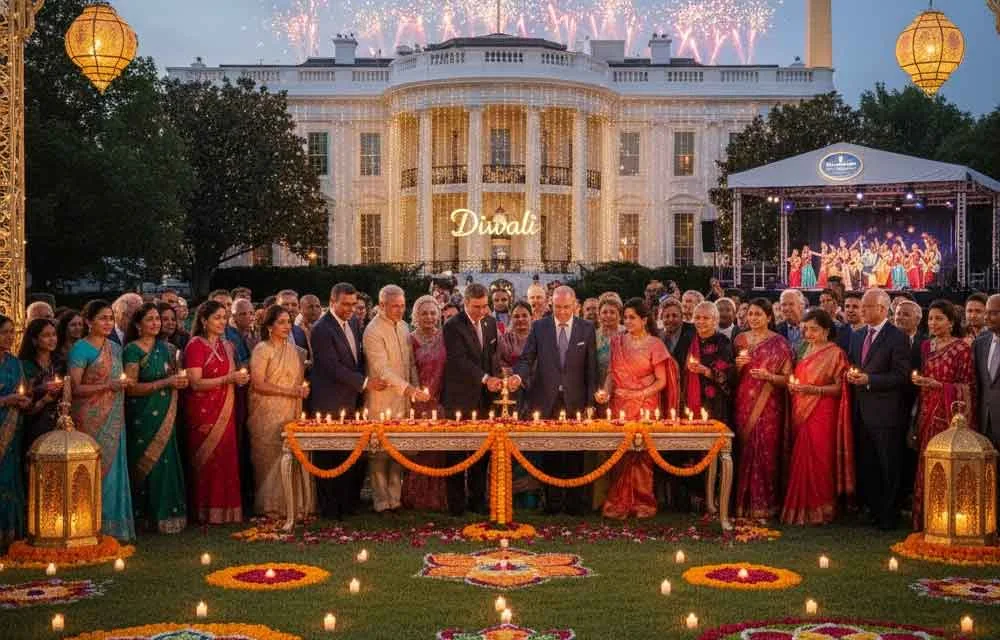
Yes. Diwali has already received recognition through celebrations hosted by American presidents and administrations at the White House.
Over the years, White House Diwali celebrations have become important occasions for recognising the contributions of Hindu Americans and other communities celebrating the Festival of Lights.
These events have featured traditional diya lighting, cultural performances, religious symbolism and participation by Indian-American leaders and community representatives.
However, a White House celebration or presidential greeting is different from a federal holiday.
A presidential Diwali celebration acknowledges the festival, whereas the Diwali Day Act seeks to establish a legally recognised federal holiday.
This distinction makes the 2026 legislative development particularly important. Read how US politicians marked Diwali 2026, including President Trump's Oval Office Diwali, and why US politicians are focusing on Diwali.
Which Religious Communities Would Benefit From Diwali Federal Holiday Recognition?
One of the most significant aspects of the proposed legislation is its recognition of the different religious communities that celebrate Diwali.
Hindu Community
For Hindus, Diwali represents the triumph of righteousness over evil and light over darkness.
Many families celebrate the return of Lord Rama to Ayodhya, worship Goddess Lakshmi and Lord Ganesha, and participate in traditional prayers.
Sikh Community
For Sikhs, Diwali coincides with Bandi Chhor Divas, commemorating the release of Guru Hargobind Sahib Ji from imprisonment.
The Golden Temple in Amritsar becomes especially beautiful during the celebration, with thousands of lights illuminating the sacred complex.
Jain Community
For Jains, Diwali commemorates the nirvana of Lord Mahavira, the 24th Tirthankara.
The festival has deep spiritual significance and is associated with the attainment of liberation.
Buddhist Community
Some Buddhist communities, particularly in South and Southeast Asian traditions, observe Diwali-related celebrations and cultural festivities.
The proposed legislation acknowledges that the Festival of Lights carries different meanings for different communities while bringing people together through shared cultural celebrations.
How Would a US Diwali Federal Holiday Compare With Other American Holidays?
The United States already recognises several federal holidays that reflect its national history, traditions and civic identity.
Examples include:
- New Year's Day
- Martin Luther King Jr. Day
- Washington's Birthday
- Memorial Day
- Juneteenth National Independence Day
- Independence Day
- Labor Day
- Columbus Day
- Veterans Day
- Thanksgiving Day
- Christmas Day
If the Diwali Day Act becomes law, Diwali would become the 12th federal holiday.
This would represent an important expansion of official recognition for the country's diverse cultural and religious communities.
It would also place a major festival celebrated by millions of Americans on the national holiday calendar.
How Many People Celebrate Diwali in the United States?
There is no single authoritative national count of everyone who celebrates Diwali in the United States.
However, the festival has an extensive following among Indian-origin residents and people from Hindu, Sikh, Jain and other communities.
Diwali celebrations are particularly visible in metropolitan areas with established South Asian communities.
Some prominent locations include:
| City or region | Diwali celebrations |
|---|---|
| New York City | Public cultural events and community celebrations |
| New Jersey | Large Indian-American Diwali gatherings |
| Chicago | Temple celebrations and cultural programmes |
| Houston | Major Indian community festivities |
| Dallas–Fort Worth | Diwali festivals and family events |
| San Francisco Bay Area | Community celebrations and cultural events |
| Seattle | Temple and diaspora celebrations |
| Washington, D.C. | Diplomatic and community Diwali events |
| Atlanta | Indian cultural festivals |
| Los Angeles | Public celebrations and temple events |
The proposed federal holiday could provide further visibility to these celebrations and help younger generations maintain connections with their cultural heritage. See our state-by-state guide to Diwali 2026 in the USA and the Diwali 2027 USA guide (Lakshmi Puja on Thursday 28 October 2027).
What Is the Current Status of the Diwali Day Act?
Proposed legislation – Not yet enacted
The Diwali Day Act has been reintroduced in November 2026. It is important to understand that introducing a bill does not immediately make it a law.
The proposed legislation must go through the US legislative process.
The broad process includes:
- Introduction: The bill is introduced in the House of Representatives.
- Committee consideration: The relevant congressional committee examines the proposal.
- House approval: The House of Representatives considers and votes on the bill.
- Senate approval: The Senate must also approve the legislation.
- Presidential action: The legislation is sent to the President for signature or other constitutionally permitted action.
Only after the required process is completed can Diwali officially become a federal holiday.
The previous Diwali Day Act proposal, H.R. 3336, was introduced in May 2023 during the 118th Congress. It was referred to the House Committee on Oversight and Accountability. That earlier bill should not be confused with the newly reintroduced 2026 proposal.
Why Is This Development Important for Indians Living in America?
For millions of Indian-origin Americans, Diwali is much more than a religious festival.
It is a celebration of identity, family, heritage and belonging.
Many Indian-American professionals work in technology companies, hospitals, universities, financial institutions and government organisations.
Although Diwali celebrations are increasingly popular, employees sometimes struggle to obtain leave for religious ceremonies and family gatherings.
Federal recognition could help change that situation for federal employees and increase awareness of the festival throughout American society.
It could also send a positive message to children of Indian-origin families growing up in America: their cultural heritage is an important part of the country's identity.
Could Diwali Become a Federal Holiday in Other Countries Too?
The US proposal could attract international attention because Diwali is celebrated by Indian-origin communities across the world.
Countries such as the United Kingdom, Canada, Australia, Singapore, Malaysia, Nepal, Mauritius, Fiji and South Africa have significant Diwali celebrations, although their public-holiday arrangements differ.
If the United States officially recognises Diwali as a federal holiday, it could strengthen international conversations about recognising the cultural and religious importance of the festival.
For the Indian diaspora, such recognition would be an important symbol of cultural acceptance.
Frequently Asked Questions (FAQs)
1. Are US lawmakers introducing a bill to make Diwali a federal holiday in 2026?
Yes. Congresswoman Grace Meng and 19 other lawmakers have reintroduced the Diwali Day Act in November 2026, seeking to establish Diwali as a US federal holiday.
2. Who introduced the Diwali Day Act?
Congresswoman Grace Meng of New York is leading the legislative effort. She also chairs the Congressional Asian Pacific American Caucus.
3. Which Indian-origin US lawmakers support the Diwali holiday bill?
Prominent supporters include Raja Krishnamoorthi, Suhas Subramanyam, Shri Thanedar, Ro Khanna and Ami Bera.
4. Has Diwali officially become a US federal holiday?
No. The Diwali Day Act is a proposed legislation. It must pass Congress and complete the required legal process before becoming law.
5. How many federal holidays would the United States have if Diwali is recognised?
Diwali would become the 12th federally recognised holiday in the United States.
6. Will Americans get a day off if the Diwali bill passes?
Federal employees would generally receive the applicable federal holiday benefits. However, private companies, schools and state governments would not automatically be required to close.
7. Which religions celebrate Diwali?
Diwali is celebrated by Hindus, Sikhs, Jains and some Buddhist communities, with different religious and cultural meanings.
8. Why does Grace Meng support making Diwali a federal holiday?
She believes federal recognition would educate Americans about Diwali, promote cultural inclusion and demonstrate that Hindu, Sikh, Jain and Buddhist communities are valued members of American society.
9. Is Diwali already celebrated at the White House?
Yes. American presidents and administrations have hosted Diwali celebrations at the White House. However, these celebrations do not establish Diwali as a federal holiday.
10. When will Diwali become an official US holiday?
There is no confirmed implementation date. It depends on whether the legislation successfully completes the congressional process and becomes law.
Conclusion: A Historic Opportunity for Diwali Recognition in America
The renewed Diwali Day Act represents an important moment for Hindu Americans, Indian-origin communities and millions of people who celebrate the Festival of Lights.
The initiative led by Grace Meng, with support from 19 lawmakers including five prominent Indian-origin representatives, highlights the growing recognition of South Asian cultural traditions in American public life.
For generations, Indian families have celebrated Diwali by lighting diyas, offering prayers, sharing sweets and bringing communities together.
Now, supporters hope that the festival will receive an official place on the American federal holiday calendar.
If the legislation becomes law, it will be a landmark moment not only for Indian Americans but also for the wider Hindu, Sikh, Jain and Buddhist communities.
Diwali is a celebration of light, hope, knowledge and the victory of good over evil. Its recognition as a US federal holiday would carry a powerful message of cultural inclusion and religious diversity.
HinduTone.com will continue following the progress of the Diwali Day Act and developments concerning Hindu communities across the world. Explore Diwali celebrations around the world and Hindus in the USA.
Sources
Share this with family and friends
Send it on WhatsApp, post it, or copy the link.
More from News
- Indians Arrested in London for Lighting Sky-Shots on Diwali Night: Police Act Amid Public Safety Concerns
- Kukur Tihar in Kathmandu: Foreign Tourists, Locals & Nepal Police Honour Dogs with Garlands, Tika and VIP Treatment
- Gaay Gohari Festival in Dasai, Dhar: Devotees Lie Under Herds of Decorated Cows on the Day After Diwali
- How International Cricket Teams and IPL Franchises Celebrated Diwali 2026: BCCI, ICC, CSK, MI, SRH and Rajasthan Royals
- Diwali 2026: How Celebrities Around the World Celebrated – Bollywood Stars, Global Icons, Sports Personalities and International Events
You might also like
Indian TV Celebrities Diwali 2026 Celebrations: Hindi TV Actresses, Bigg Boss Contestants, TV Couples and More
Indian Politicians Diwali 2026 Celebrations: PM Narendra Modi, President, Chief Ministers, Political Leaders and More

Why Are US Politicians Focusing More on Diwali? 10 Key Reasons Behind America's Growing Diwali Celebrations