Temple Ritual Coordinator (Niti Karta)
Job Alert: Temple Ritual Coordinator (Niti Karta) Temple: Shree Jagannath Temple, Puri Location: Puri, Odisha Application Email: jagannath.recruit@nic.in…
Job Alert: Temple Ritual Coordinator (Niti Karta)
Temple: Shree Jagannath Temple, Puri
Location: Puri, Odisha
Application Email: jagannath.recruit@nic.in
Deadline: 10 July 2025
Salary: ₹68,000/month + traditional benefits
Role & Sacred Responsibilities
Ritual Orchestration:
Coordinate 56+ daily rituals (Chhappan Bhog) from Mangala Alati to Pahuda
Manage 500+ servitors (Sevayats) during festivals like Rath Yatra
Calendar Management:
Set annual ritual calendar using Tithi and Nakshatra calculations
Adjust schedules per Deity’s symbolic illness (Anasara) periods
Sacred Kitchen Oversight:
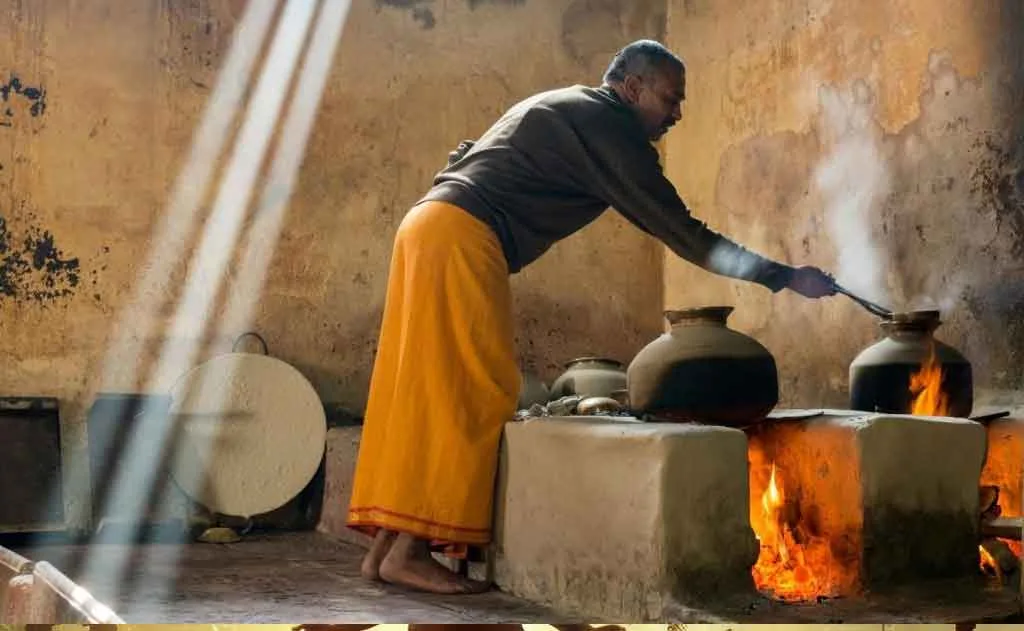
Supervise 700+ cooks for Mahaprasad production (56 varieties daily)
Ensure compliance with 13th-century Niti Shastras
Procession Logistics:
Plan chariot routes for Rath Yatra (3km procession)
Coordinate Daitapati servitors during Nabakalebara (Deity renewal)
Essential Requirements
Education Experience Specialized Skills
MA Sanskrit/Odia Literature 8+ years temple administration Mastery of Jagannath Nitis texts
Certified Temple Ritualist (CTR) Rath Yatra management experience Odia typing (Chandrabindu font)
– Knowledge of Tantric Parichha system Crisis management during Bahuda Yatra
Unique Ritual Knowledge Needed
Decoding Deity’s symbolic gestures (Chaka Apasara)
Managing Chhera Pahanra (royal sweeping ritual)
Understanding Rosa Pitha (Anger Seat) protocols
Salary & Traditional Perks
Base Pay: ₹68,000 (Level 12, OHRC)
Bhog Privilege: Daily Mahaprasad for family
Housing: Free stay in Bada Danda heritage house
Unique Benefits:
Silver chariot ride during Suna Besha
Lifetime hereditary rights for descendants
Annual Daru Brahma pilgrimage allowance
Application Process
Email Submission to jagannath.recruit@nic.in:
Subject Line: “Niti Karta Application – – ”
Attachments:
Scanned handwritten Odia essay (500 words):
Integrating Technology in 13th-Century Rituals
Community certificate (Only Brahmins/Daitapatis eligible)
Rath Yatra participation proofs
Interview:
Stage 1: Oral test on Niladri Mahodaya text
Stage 2: Practical ritual simulation at Ananda Bazar
What are the Chhappan Bhog and why do they define the Niti Karta's day?
The fifty-six food offerings collectively known as Chhappan Bhog form the liturgical spine of every day at Shree Jagannath Temple, Puri. Each offering is timed to a specific Niti — a canonically prescribed ritual act — beginning with Mangala Alati before sunrise and concluding with the Pahuda, the ceremonial 'putting to sleep' of Lord Jagannath late at night. The Niti Karta must ensure that no offering is delayed, mis-sequenced, or prepared in violation of the purity rules codified in the Madala Panji, the temple's own chronicle maintained in Sanskrit and Odia since the medieval period.
The 56-count is traditionally linked to the belief that Lord Jagannath, as the complete manifestation of Vishnu, must be served as a king would be served across every waking hour — six offerings for each of nine segments of the day, plus two additional nighttime services. The Rosa Ghara (sacred kitchen), supervised by the Niti Karta, uses only earthen pots over wood fires, a discipline explicitly retained from the Niti Shastras to prevent ritual contamination. Coordinating delivery of 56 distinct preparations, from Khechudi and Dalma to Khaja and Rasabali, among 700-plus cooks divided into hereditary guilds requires real-time scheduling that is as demanding as any large-scale institutional catering operation.
How does the Sevayat hereditary system shape temple administration?
The approximately 36 categories of Sevayats — totalling over 6,000 hereditary servitors — are the human architecture through which every Niti is actually executed. Each category holds a distinct seva (service right) traced through patrilineal descent, recorded in copper-plate grants (tamra-patra) issued by the Gajapati kings of Odisha. Roles range from Pati Mahapatra, who prepare and serve Mahaprasad, to Khuntia, who carry the palanquin, to Daitapati, the tribal-origin servitors uniquely authorised to touch the wooden form of the Deity during Nabakalebara. The Niti Karta must know these jurisdictions intimately, because assigning a task to the wrong Sevayat category is not merely an administrative error — it is a ritual transgression that can require expiatory rites (prayaschitta).
During Rath Yatra alone, over 500 Sevayats are deployed in a precise hierarchy across the three chariots — Nandighosa for Lord Jagannath, Taladhwaja for Lord Balabhadra, and Darpadalana for Devi Subhadra. The Niti Karta functions here as a living switchboard, receiving updates from Daitapati chiefs on the chariot deck, liaising with Gajapati Maharaja's representatives for the Chhera Pahanra ritual, and coordinating with the Odisha state police for the 3-kilometre route on Bada Danda. This blend of sacred protocol and crowd logistics demands a coordinator who understands both the Agama-derived ritual grammar and ground-level contingency management.
What is the Anasara period and how does it test ritual scheduling expertise?
Anasara is a fifteen-day period following the Snana Purnima (bathing festival of the Deities) during which Lord Jagannath, Balabhadra, and Subhadra are considered to be in ritual convalescence after their ceremonial bath. During this window the Deities are withdrawn from public darshan, and a prescribed regimen of specific herbal preparations (dasamula — a classical Ayurvedic ten-root compound) is offered in place of the standard Chhappan Bhog. The Niti Karta must reconfigure the entire kitchen and offering schedule for this period, communicating changes to every Sevayat guild and ensuring that no standard Niti bleeds into the Anasara substitute protocol.
The theological basis for Anasara is found in Odia Vaishnava theological commentary on the Skanda Purana's Utkal Khanda, which describes the Deities' vulnerability following the Snana ritual and the care required to restore their sacred vigour. Practically, this means the Niti Karta must also manage the 'Madani Pahandi' — the symbolic re-presentation of the Deities on the fifteenth day — coordinating the moment of re-emergence with astronomical tithi calculations so that the first darshan after Anasara falls at an auspicious lagna. Getting this transition wrong has historically prompted formal complaints before the Shree Jagannath Temple Administration (SJTA), underscoring the accountability embedded in the role.
What scriptural and textual knowledge does a Niti Karta draw upon daily?
The primary textual authority for ritual conduct at Puri is the body of texts collectively called the Jagannath Nitis, which synthesise elements from the Pancharatra Agama tradition, the Vaikhanasa Agama, and locally evolved Odia Shaiva-Vaishnava ritual commentaries. These texts prescribe, among other things, the exact hand-posture (mudra) in which each offering is to be presented, the Sanskrit mantras to be recited at each stage of Mangala Alati, and the conditions under which a ritual must be suspended and restarted. The Madala Panji, a temple chronicle sometimes compared in function to a monastic typikon, supplements these Nitis with historical precedents from the 12th century onwards.
Beyond Niti-specific texts, the Niti Karta is expected to be conversant with the relevant sections of the Skanda Purana (Utkal Khanda), which narrates the origin of Jagannath worship and provides mythological grounding for practices like Nabakalebara (the periodic replacement of the wooden Daru Brahma images) and Suna Besha (the golden ornament festival). Familiarity with the Tantric Parichha system — a system of protective ritual enclosure that governs access to the inner sanctum — is listed as a specific requirement because the Niti Karta must adjudicate disputes over access rights that arise during crowded festivals. This textual fluency is not ceremonial; it functions as the rule-book for daily operational decisions.
How does Nabakalebara reveal the deepest responsibilities of the Niti Karta role?
Nabakalebara — literally 'new body' in Sanskrit — is the rarest and most sacred event in Jagannath tradition, occurring when two Ashadha (monsoon) months fall in the same lunar year, a calendar event linked to Adhika Masa. During this ceremony, new wooden images of the four Deities are carved from specially identified Daru Brahma trees (Neem, Azadirachta indica) identified through esoteric forest signs described in the Niti texts, and the life essence (Brahma Padartha) is transferred from old to new forms by the Daitapati servitors in a ritual conducted in total darkness. The Niti Karta's role in Nabakalebara spans months: from coordinating the Daitapati expedition to locate the Daru trees, to managing the 21-day carving process within the temple compound, to scheduling the culminating overnight transfer ritual.
The event draws millions of pilgrims and demands extraordinary logistical and ritual precision simultaneously. The Niti Karta must ensure that every preparatory Niti — including the Brahmanam Bije (invocation ceremonies), the daily offerings to the unfinished wooden forms, and the eventual Pahandi (ceremonial procession) of the new Deities — is executed without break or error, because the theological understanding is that the Deity is in a liminal, maximally present state during this period. The last Nabakalebara took place in 2015, and the documentation and after-action review from that event now serves as part of the institutional knowledge base that future Niti Kartas are expected to study before assuming the post.
What does the Mahaprasad tradition mean for the Niti Karta's oversight of the sacred kitchen?
Mahaprasad at Shree Jagannath Temple, Puri is theologically distinctive in Vaishnavism because it is considered non-hierarchical — once food has been offered to Lord Jagannath and designated Mahaprasad, it transcends caste distinctions and may be shared by all devotees. The Mukti Mandap, a stone platform within the temple complex, is the traditional site where Mahaprasad is distributed and consumed as a community act. The Niti Karta bears administrative responsibility for ensuring that the Rosa Ghara produces sufficient quantity each day — estimates range from food for 10,000 to 100,000 people depending on the festival — while maintaining the ritual purity standards that make the food theologically valid.
The Rosa Ghara uses a unique stacking method for its earthen pots — as many as nine pots stacked vertically over a single fire — a practice described in temple records as ensuring even, unpolluted cooking through natural convection. The Niti Karta must enforce the rule that no tasting occurs during cooking (a Niti prohibition), that only Suara and Mahasuara caste servitors handle certain stages of preparation, and that the kitchen is ritually closed and purified after each cooking cycle. The 13th-century Niti Shastras referenced in the job description codify these kitchen protocols in detail, and the Niti Karta's written examination for the Certified Temple Ritualist credential includes questions drawn directly from these provisions.
Frequently Asked Questions
Where is Temple Ritual Coordinator (Niti Karta) located?
Job Alert: Temple Ritual Coordinator (Niti Karta) Temple: Shree Jagannath Temple, Puri Location: Puri, Odisha Application Email: jagannath.recruit@nic.in Deadline: 10 July 2025 Salary: ₹68,000/month + traditional benefits Role & Sacred Responsibilities Ritual Orchestration: Coordinate 56+ daily rituals (Chhappan Bhog) from Mangala Alati to Pahuda Manage 500+
Who is the presiding deity of Temple Ritual Coordinator (Niti Karta)?
The temple's presiding deity and its significance are described in the guide above.
What are the timings and how do I reach Temple Ritual Coordinator (Niti Karta)?
Temples typically open early morning and evening; confirm current darshan timings before visiting. The nearest airport, railway station and road routes are covered in the guide above.
What is the best time to visit Temple Ritual Coordinator (Niti Karta)?
Major festival days and the cooler months are popular, though weekday mornings offer a calmer darshan. Plan around the temple's key festivals for the most vibrant experience.
Share this with family and friends
Send it on WhatsApp, post it, or copy the link.
More from Temple Jobs
- Minister of Religion – Hindu Priest — Liverpool Ganesh Temple (Liverpool Ganesh Trust), Merseyside 2026
- Assistant Priest (Religious Worker), 2 posts — Liverpool Ganesh Temple (Liverpool Ganesh Trust), Merseyside 2026
- Office Manager — Hindu Temple of The Woodlands, Texas 2026
- Civil Engineer (Facilities and Utilities) — ISKCON Bangalore (Sri Radha Krishna Temple, Hare Krishna Hill, Rajajinagar), Karnataka 2026
- Plumber (Facilities and Utilities) — ISKCON Bangalore (Sri Radha Krishna Temple, Hare Krishna Hill, Rajajinagar), Karnataka 2026
You might also like

Thavil Musician (Religious Worker) — Liverpool Ganesh Temple (Liverpool Ganesh Trust), Merseyside 2026
Sthapathi (temple sculptor, Religious Worker), 2 posts — Liverpool Ganesh Temple (Liverpool Ganesh Trust), Merseyside 2026
Nathaswaram Musician (Religious Worker) — Liverpool Ganesh Temple (Liverpool Ganesh Trust), Merseyside 2026