Vedic Sound Engineer Job Varanasi | Temple Acoustics | ₹52k Salary
Job Alert: Vedic Sound Engineer (Dhvani Shilpi) Temple: Shri Kashi Vishwanath Temple, Varanasi Location: Varanasi, Uttar Pradesh Application Email:…
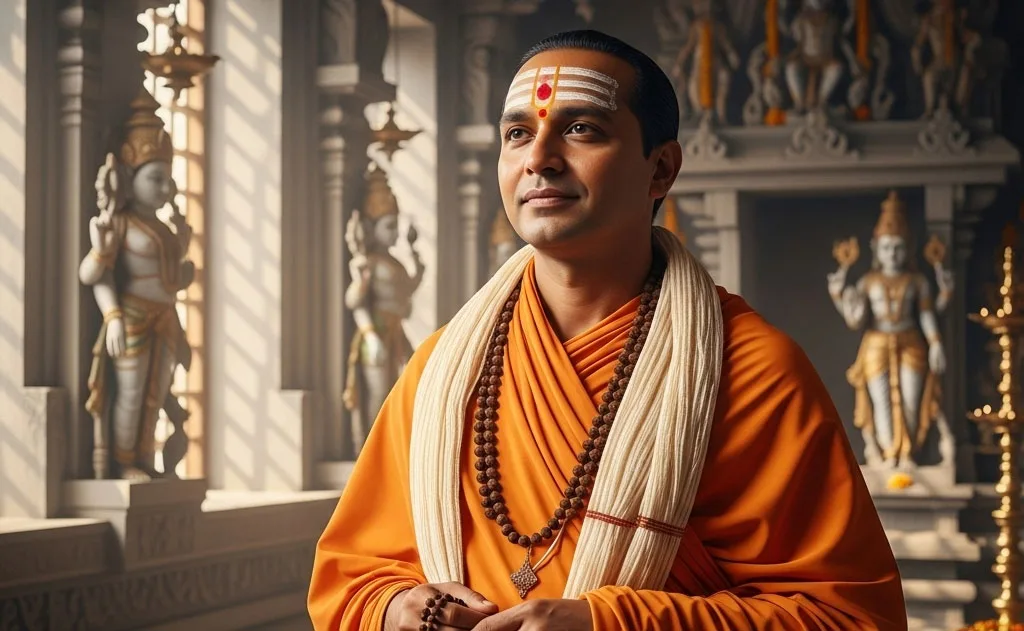
Job Alert: Vedic Sound Engineer (Dhvani Shilpi)
Temple: Shri Kashi Vishwanath Temple, Varanasi
Location: Varanasi, Uttar Pradesh
Application Email: kvt.soundengineer@vvp.org.in
Deadline: 15 July 2025
Salary: ₹52,000/month + acoustic tech allowances
Sacred Sound Responsibilities
Ritual Acoustics Management:
Optimize mic systems for 5 daily aartis (Mangala to Shringar) across 23 shrines
Prevent feedback during Saptrishi chanting in stone-walled sanctums
Vedic Audio Preservation:
Record/archive rare mantras from 300+ elderly priests using Neumann mics
Restore 1947 Ganga Aarti recordings from analog tapes
Devotee Sound Experience:
Design silent zones for meditation near Jnana Vapi
Install directional speakers for blind devotees
Festival Soundscapes:
Create 3D sound design for Dev Deepawali (5 lakh+ attendees)
Live-mix 100+ miked instruments during Shravan processions
Technical & Spiritual Requirements
Education Experience Specialized Skills
B.Tech/B.Sc Sound Engineering 3+ years live venue mixing Pro Tools + Logic Pro mastery
Certificate in Vedic Phonetics Temple/religious space projects Understanding of Nada Yoga principles
– Knowledge of Sanskrit meter (Chandas) AI-based noise filtering
Unique Vedic Knowledge
Recognize 7 microtones (Shrutis) in Vedic chanting
Understand resonance science of Om in temple architecture
Identify 32 Vedic Swaras for perfect mantra reproduction
Salary & Perks
Base Pay: ₹52,000 (Pay Level 10)
Tech Allowance: ₹8,000/month for equipment
Housing: Free riverside accommodation at Assi Ghat
Spiritual Perks:
Lifetime access to Rudrabhishek ceremonies
Training from Dhrupad masters
Annual pilgrimage to Nada Yoga ashrams
Application Process
Email to kvt.soundengineer@vvp.org.in:
Subject: “Vedic Sound Engineer App – ”
Attachments:
3-min demo: Clean noisy recording of Vedic chant (test file available here)
Essay (PDF): “Acoustic Challenges in 12th-Century Stone Temples”
Frequency analysis of Om chanting
Interview:
Round 1: Fix audio glitches in live aarti simulation
Round 2: Design sound plan for 1km procession
Final: Shruti alignment test with head priest
Temple Tech Facts
Current System: 192 Meyer Sound columns + Dante networking
Challenges: Managing river echoes + crowd noise
Heritage Constraints: No drilling in ancient walls
Why Temple Acoustics at Kashi Vishwanath Demand Specialized Knowledge
The Shri Kashi Vishwanath Temple complex, rebuilt in its present form by Ahilyabai Holkar in 1780 CE, features a sanctum sanctorum (garbhagriha) constructed from fine Chunar sandstone — a material that produces distinctive reverb tails of 1.8 to 2.4 seconds at frequencies between 80 and 200 Hz. This natural reverb was intentional in traditional Agama Shastra design: prolonged low-frequency resonance was believed to activate the Muladhara and Anahata chakras in devotees standing within the sacred enclosure. A modern sound engineer must calibrate amplification systems to complement, not fight, this existing acoustic signature.
The 23 subsidiary shrines within the VVP (Vishwanath Temple Trust) campus each have distinct geometries — some are circular (anda-shaped), others rectangular (sala-type) — producing fundamentally different flutter echo patterns. Managing microphone placement for simultaneous aartis across these spaces without cross-bleed is one of the core live challenges this role addresses. Candidates unfamiliar with Agama-based temple spatial planning will find the acoustic variables difficult to anticipate without on-site study.
What Are Shrutis and Why Do They Matter for Vedic Audio Reproduction
Classical Indian musicology, as codified in Bharata Muni's Natyashastra (estimated between 200 BCE and 200 CE), identifies 22 shrutis — microtonal intervals dividing the two-octave saptak — not the 7 the job listing mentions as a minimum threshold. The 7 figure refers specifically to the svaras (Sa, Re, Ga, Ma, Pa, Dha, Ni), while the shrutis are the finer sub-divisions that distinguish, for example, Komal Gandhar from Tivra Gandhar. In Vedic chanting, the Rigveda employs three primary pitch levels — Udatta, Anudatta, and Svarita — which, when sung in traditional Samaveda style, expand into the full microtonal spectrum. A sound engineer must set compressor thresholds and EQ curves narrow enough to preserve these distinctions without flattening them into the equal-temperament assumptions baked into standard DAW tuning references.
The 32 Vedic Swaras referenced in the job description likely refer to the extended tonal framework used in Sama Gana performance, where additional ornamental pitches (alankaras) push the tonal count well beyond the standard 22 shrutis. Neumann KM 184 or KM 84 cardioid condensers — the type referenced in the archiving section — have a flat response up to 20 kHz, which is the minimum specification needed to capture these microtonal subtleties without harmonic smearing at high gain settings.
The Science and Scriptural Basis of Nada Yoga Principles Required for This Role
Nada Yoga is rooted in the Nada Bindu Upanishad, a minor Upanishad attached to the Rigveda tradition, which describes Anahata Nada (unstruck sound) as the primordial vibration underlying manifest creation. The Shiva Purana further establishes Kashi itself as a Kshetra where the sound of Pranava (Om) is said to be continuously resonant at the Jyotirlinga. A sound engineer working at Kashi Vishwanath is therefore expected to understand why certain frequency ranges are treated as sacred boundaries — ambient noise above 65 dB in the Jnana Vapi meditation precinct, for instance, is considered a liturgical disruption, not merely a comfort issue.
Dhrupad, the Hindustani classical form whose masters will provide training per the job's perks, descends directly from Samaveda chanting traditions and preserves the longest meend (sustained glide) techniques in Indian music. Training from Dhrupad masters based at institutions such as Gurukul Sangit Vidyalaya or similar gurukul-format schools teaches the engineer how singers and priests use physical resonance — chest, cranial, and nasal — to project sound through stone without amplification. This embodied understanding is irreplaceable when designing a gain structure that supports rather than supplants the human voice in a live ritual context.
Dev Deepawali Sound Design — Scale, Challenges, and 3D Audio Requirements
Dev Deepawali, observed on Kartik Purnima (the full moon of the Kartik month, typically November), draws over five lakh devotees to the 84 ghats of Varanasi and is one of the largest open-air religious gatherings in northern India. The primary acoustic challenge is the Ganga riverfront itself: water surfaces cause low-frequency reflections that shift predictably with river level, while the ghats' stepped stone geometry creates diffuse scattering at mid-frequencies. A 3D sound design for this event requires spatial audio processing — likely a Dolby Atmos or Wavefield Synthesis approach — deployed across distributed speaker arrays anchored at Dashashwamedh Ghat, Manikarnika Ghat, and Assi Ghat simultaneously.
Wind speed above the Ganga between 8 PM and midnight during November averages 12 to 18 km/h from the northeast, which introduces consistent high-frequency roll-off in uncovered speaker stacks. The engineer is expected to compensate dynamically, using AI-based noise filtering (referenced in the technical requirements) to separate wind noise from sacred audio signals in real time. Prior experience with outdoor festival acoustics — whether from large-scale music events or open-air theatre — is therefore directly transferable to this spiritual context.
Archiving Rare Mantras — Why the 1947 Recordings and Elderly Priests Are Irreplaceable
The 1947 Ganga Aarti recordings referenced in the job description represent one of the earliest documented captures of living Kashi ritual performance. Analog tape from that era typically uses ferric oxide formulation with a frequency response ceiling of 12 to 15 kHz and significant azimuth error after decades of improper storage. Restoration using software such as iZotope RX requires spectral repair, de-click, and de-hiss processes, but the engineer must be careful not to over-process: Vedic chanting contains specific breath patterns (Shwasa-krama) and pitch inflections that can be misidentified as noise artifacts by automated algorithms.
The 300+ elderly priests at Kashi Vishwanath represent living repositories of patha (recitation) traditions — including rare Rigvedic shakhas (recension branches) such as the Shakala and Bashkala — that exist in very few places outside Varanasi and Thanjavur. The Chandas (Sanskrit metrical system) knowledge required in the job specification is directly relevant here: an engineer who can read Anushtubh or Gayatri metre in Devanagari script can place microphones more precisely by anticipating breath breaks and syllable stress points, producing cleaner archival recordings with fewer re-takes from elderly practitioners.
How to Strengthen Your Application — Specific Preparation Tips for Candidates
The 3-minute demo required by the application asks for a cleaned Vedic chant recording, which means candidates should familiarise themselves with the test file format before submission. A strong submission will demonstrate frequency-selective noise reduction that preserves the 200–800 Hz formant region where Vedic vowel tones (particularly the long 'aa' and 'om' vowels) carry their principal energy, while removing HVAC and crowd noise above 4 kHz. Applicants are advised to label their spectral editing decisions in accompanying notes so evaluators can see the reasoning, not just the output.
The essay requirement — 'Acoustic Challenges in 12th-Century Stone Temples' — rewards candidates who demonstrate knowledge of both construction materials and ritual use. Reference to temples such as the Brihadeeswara Temple in Thanjavur (built by Raja Raja Chola I, consecrated 1010 CE), which uses granite with negligible porosity and produces a distinctly drier acoustic than Varanasi sandstone, would illustrate cross-regional comparative understanding. Grounding the essay in the Manasara Shilpa Shastra, the classical Indian architectural treatise that addresses spatial proportions in temple design, signals the kind of integrated technical-scriptural literacy this position genuinely requires.
Frequently Asked Questions
Where is Vedic Sound Engineer Job Varanasi located?
Job Alert: Vedic Sound Engineer (Dhvani Shilpi) Temple: Shri Kashi Vishwanath Temple, Varanasi Location: Varanasi, Uttar Pradesh Application Email: kvt.soundengineer@vvp.org.in Deadline: 15 July 2025 Salary: ₹52,000/month + acoustic tech allowances Sacred Sound Responsibilities Ritual Acoustics Management: Optimize mic systems for 5 daily aartis (Mangala to
Who is the presiding deity of Vedic Sound Engineer Job Varanasi?
The temple's presiding deity and its significance are described in the guide above.
What are the timings and how do I reach Vedic Sound Engineer Job Varanasi?
Temples typically open early morning and evening; confirm current darshan timings before visiting. The nearest airport, railway station and road routes are covered in the guide above.
What is the best time to visit Vedic Sound Engineer Job Varanasi?
Major festival days and the cooler months are popular, though weekday mornings offer a calmer darshan. Plan around the temple's key festivals for the most vibrant experience.
Share this with family and friends
Send it on WhatsApp, post it, or copy the link.
More from Temple Jobs
- Madapalli Priest (temple kitchen, Religious Worker) — Liverpool Ganesh Temple (Liverpool Ganesh Trust), Merseyside 2026
- Minister of Religion – Hindu Priest — Liverpool Ganesh Temple (Liverpool Ganesh Trust), Merseyside 2026
- Assistant Priest (Religious Worker), 2 posts — Liverpool Ganesh Temple (Liverpool Ganesh Trust), Merseyside 2026
- Office Manager — Hindu Temple of The Woodlands, Texas 2026
- Plumber (Facilities and Utilities) — ISKCON Bangalore (Sri Radha Krishna Temple, Hare Krishna Hill, Rajajinagar), Karnataka 2026
You might also like
Civil Engineer (Facilities and Utilities) — ISKCON Bangalore (Sri Radha Krishna Temple, Hare Krishna Hill, Rajajinagar), Karnataka 2026

Thavil Musician (Religious Worker) — Liverpool Ganesh Temple (Liverpool Ganesh Trust), Merseyside 2026

Sthapathi (temple sculptor, Religious Worker), 2 posts — Liverpool Ganesh Temple (Liverpool Ganesh Trust), Merseyside 2026