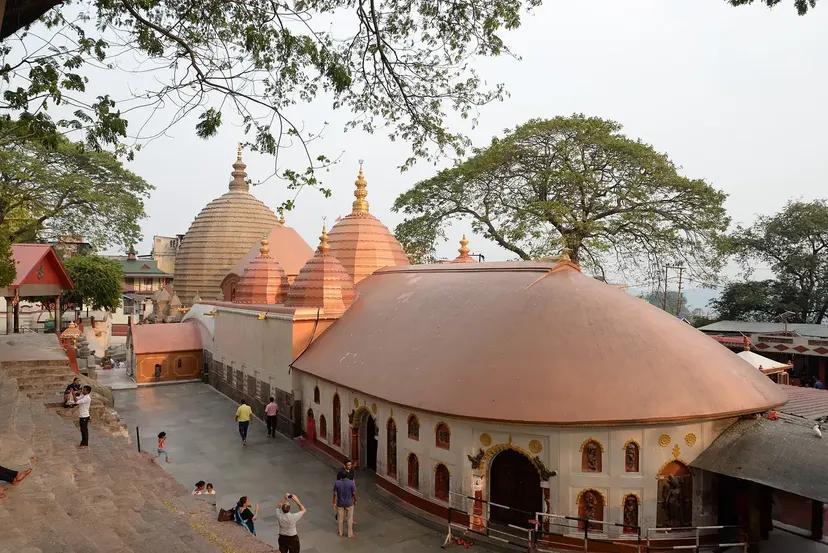
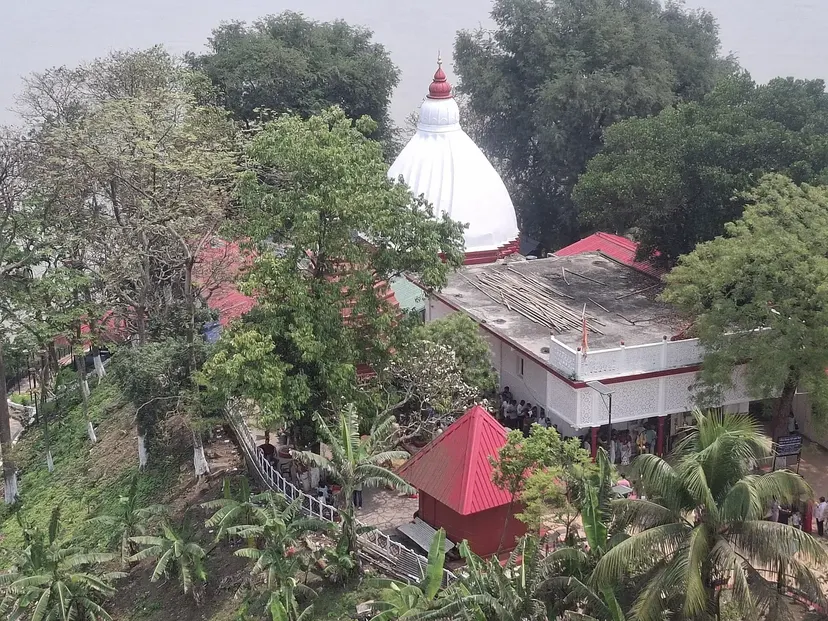
Dirgheswari Temple, North Guwahati
Devi (as Dirgheswari, a form of Durga) temple · North Guwahati (Sitachal hill), Kamrup, Assam, India
The Dirgheswari Temple, also called Dirgheswari Devalaya, is a hilltop shrine of the Goddess in North Guwahati, on the northern bank of the Brahmaputra in Assam. Assam Tourism describes it as one of the most important Devi tirthas of Assam and notes that the hill carries several rock-cut images dating back to the eleventh and twelfth centuries.
The present brick temple was built in the reign of the Ahom king Swargadeo Siva Singha (1714–1744). The shrine is best known today for its annual Durga Puja and for Madan Chaturdashi, when the goddess is carried in procession through North Guwahati for a ritual marriage with Shiva.
Faith & Tradition
Religious Significance of Dirgheswari Temple, North Guwahati
Wikipedia records that local tradition regards Dirgheswari as a Shakti pitha: in the legend of Sati, whose body was dispersed by Vishnu's discus as the grieving Shiva carried it, one part is said to have fallen on Sitachal hill, while Kamakhya on Nilachal hill is associated with another. A second tradition holds that the sage Markandeya performed penance here and was granted a vision of Goddess Durga.
Local devotees, according to Wikipedia, consider the shrine the most sacred place in the area after Kamakhya, and some believe that a pilgrimage to Kamakhya is completed by a visit to Dirgheswari. These are matters of local belief rather than recorded history.
The identity of the goddess is described in slightly different ways. Wikipedia and most accounts speak of Durga; a 2010 report in The Assam Tribune quoted the temple's chief priest describing the shrine as housing Goddess Kali, worshipped as Mangala Kali, and recalling the temple's association with Rishi Markandeya.
Heritage
History of Dirgheswari Temple, North Guwahati
Wikipedia notes that it is not known whether a temple stood at Dirgheswari in ancient or early medieval times, although the rock images on the hill are older than the present shrine. The current brick temple was built on the rocky hilltop under Siva Singha, under the supervision of Tarun Duwarah Barphukan, the Ahom viceroy at Guwahati. A rock inscription at the back entrance names the king and the Barphukan and records the royal order for the temple and the grant of lands to it.
Wikipedia adds that the Ahom king Rajeswar Singha visited the temple during a royal tour in 1756, granted further land and attendants, and presented a silver japi (hat) that is still used to cover the main image. An Assam Tribune report of 2010 attributes the foundation instead to Rudra Singha; the page follows the inscription-based account, which Assam Tourism also gives.
The 'Dirgheswari Ruins' are listed among Assam's state-protected monuments. In 2010 the chief priest complained publicly that the temple, which once received a regular government grant and served daily meals to hundreds of people, was struggling financially. Wikipedia notes that part of the Ahom-era brick wall was later removed when the compound was enlarged to accommodate growing crowds at Durga Puja.
Architecture and sacred features
According to Wikipedia, the inner sanctum (garbhagriha) where the goddess is worshipped lies below ground level in a small cave, beneath the brick temple raised on the hilltop rock. The hill around the shrine is carved with images of deities, including a large Ganesha at the entrance, a pair of footprints believed to be those of the goddess, and a stone that local people call the boat of the apsaras beside a small pond. A small water tank near the temple holds fish and a turtle.
Plan Your Visit
Darshan and Visitor Information
The shrine is an active place of worship as well as a protected heritage site. Dress modestly, remove footwear before entering, and do not touch or climb on the rock carvings. Expect very large crowds during Durga Puja. Confirm current timings and festival arrangements with the temple management or Assam Tourism before visiting.
Timings and arrangements change with seasons and festivals. Confirm current details with the temple administration before travelling. Last reviewed 1 November 2026.
Sacred Calendar
Festivals at Dirgheswari Temple, North Guwahati
Durga Puja
The temple's main annual festival, which draws devotees from far beyond North Guwahati, according to Wikipedia.
Madan Chaturdashi
The goddess is carried in a decorated chariot through North Guwahati, bathed with water from the Bishnupad at the Aswaklanta Devalaya, and ritually married to Shiva at the Manikarneswar Devalaya before returning to Sitachal hill before dawn (The Assam Tribune).
Location
How to Reach Dirgheswari Temple, North Guwahati
The temple stands on a hill in North Guwahati, on the north bank of the Brahmaputra opposite Guwahati city. Assam Tourism says it is easily accessible by road; check the current route locally.
Location: North Guwahati (Sitachal hill), Kamrup, Assam, India
More in Hindu temples in Assam · Devi (as Dirgheswari, a form of Durga) temples · Temples in Kamrup District
Questions
Dirgheswari Temple, North Guwahati: Frequently Asked Questions
Who built the Dirgheswari Temple?
The present brick temple was built in the reign of the Ahom king Siva Singha (1714–1744) under the supervision of Tarun Duwarah Barphukan, according to Wikipedia, which cites a rock inscription at the temple.
Is Dirgheswari a Shakti pitha?
Local tradition regards it as one. Legend holds that a part of Sati's body fell on Sitachal hill, where the temple stands.
How old are the rock carvings at Dirgheswari?
Assam Tourism dates the rock-cut images to the eleventh and twelfth centuries, much earlier than the present temple.
What is Madan Chaturdashi at Dirgheswari?
It is a spring festival in which the image of the goddess is taken in procession to the Aswaklanta and Manikarneswar temples for a ritual marriage with Shiva, and returned to the hill before dawn.
What is the silver japi at the temple?
Wikipedia records that King Rajeswar Singha presented a silver japi (hat) when he visited in 1756, and that it is still used to cover the main image.
When is the busiest time to visit?
Durga Puja draws the largest crowds, according to Wikipedia; Madan Chaturdashi also brings many local devotees.
Sources and attribution
- Assam Tourism Development Corporation — Dirgheswari Temple
- The Assam Tribune — Madan Chaturdashi at Dirgheswari temple
- The Assam Tribune — Modonchaturdashi at Dirgheswari Dewalaya
- The Assam Tribune — Dirgheswari Devalaya craving Govt attention
- Wikipedia — Dirgheshwari temple
- Wikipedia (compiled from the ASI website) — List of State Protected Monuments in Assam
Further reading: Dirgheswari Temple, North Guwahati on Wikipedia (CC BY-SA 4.0).
Spotted an error? Write to info@hindutone.com — see our editorial policy.