Rudreswar Devalaya, North Guwahati
Shiva (as Rudreswar) temple · North Guwahati (Rudreswar village, Silsako), Kamrup, Assam, India
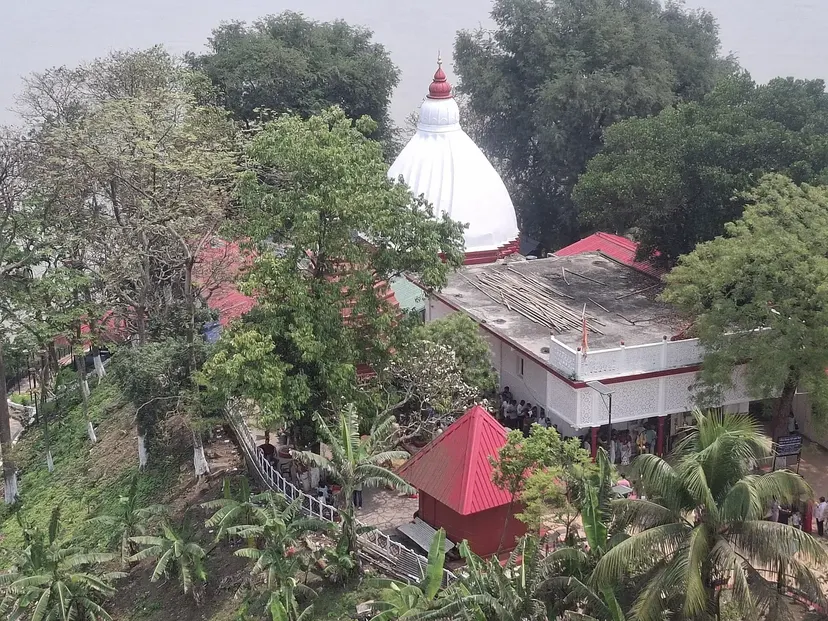
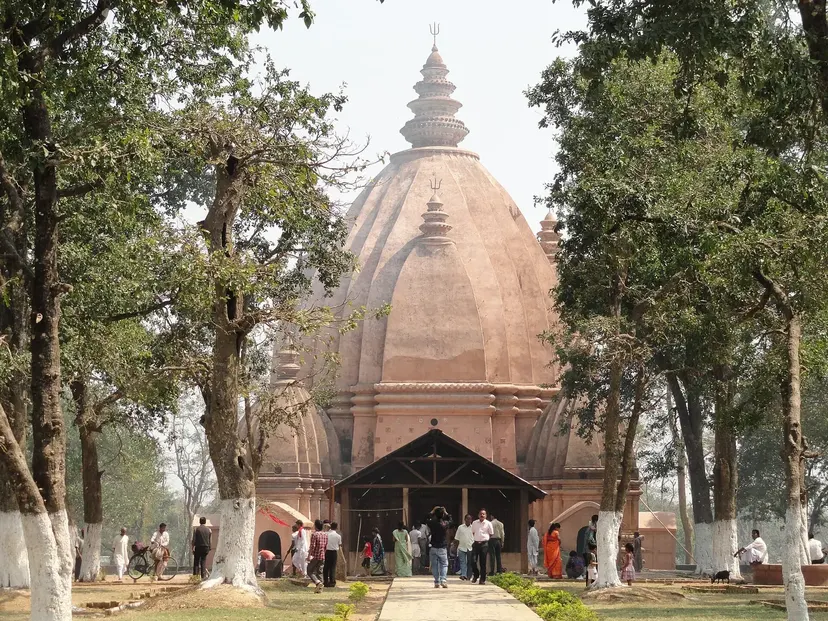
Rudreswar Devalaya is an eighteenth-century Shiva temple in the village of Rudreswar, North Guwahati, on the northern bank of the Brahmaputra opposite the city of Guwahati in Assam. It was built by the Ahom king Pramatta Singha in memory of his father, Swargadeo Rudra Singha, and completed in 1749 CE.
Assam Tourism describes the temple as marking the very spot where Rudra Singha, one of the most ambitious kings of the Ahom dynasty (reigned 1696–1714), died. Its unusual design, which borrows the form of a Mughal mausoleum, has made it a well-known example of the blended Ahom-Mughal style, and the Government of Assam has recently undertaken a restoration of the site for heritage tourism.
Faith & Tradition
Religious Significance of Rudreswar Devalaya, North Guwahati
The temple is both a place of Shiva worship and a royal memorial. Wikipedia records that after the temple was completed, Pramatta Singha installed a Shiva linga and named it the Rudreswar linga after his father; the temple came to be called Rudreswar Devalaya, and the surrounding village took its name from it.
It also illustrates the cultural exchange of the Ahom period. In announcing its restoration in 2024, Assam's Chief Minister described the temple as having a rich architectural heritage, and Assam Tourism calls it a remarkable symbol of Ahom history and architecture.
Wikipedia notes that the king endowed the temple with land and arranged for priests and attendants to maintain its worship, the usual pattern of Ahom royal temple foundations.
Heritage
History of Rudreswar Devalaya, North Guwahati
According to Wikipedia, Pramatta Singha decided soon after his accession to build a Shiva temple in Guwahati in his father's memory, choosing the place where Rudra Singha had died. Wikipedia also preserves local tradition about nearby ponds: the Konwari Pukhuri is said to have been used by the queens and princesses when Rudra Singha camped here during preparations for a campaign towards Bengal, and a pair of ponds to the east is remembered as the Hiloidari Pukhuri, associated with the king's musketeers.
After the end of Ahom rule and the start of British administration, Wikipedia records, the temple lost most of its lands and privileges. It was badly damaged in the great Assam earthquake of 1897 and again in the 1950 Assam–Tibet earthquake, which destroyed much of the upper structure. Local people rebuilt the sanctum roughly in wood and tin so that worship could continue.
The Rudreswar Temple at Silsako, North Guwahati, appears in the Archaeological Survey of India's list of state-protected monuments of Assam (number S-AS-30). In October 2024, the Chief Minister of Assam announced a restoration project led by the state Directorate of Archaeology, with a budget of Rs 2.33 crore, covering boundary walls, gates, signage, visitor amenities, landscaping, 3D laser scanning and documentation, and the repair of the old brick structures using traditional techniques, IANS reported.
Architecture and sacred features
Assam Tourism and Wikipedia both describe the design as an imitation of a Mughal mausoleum built in the Ahom manner. Beneath the temple are underground chambers, entered from the front, whose original purpose is not known; they are thought to have been storerooms for the temple. The Manikut, the sanctum holding the linga, sits directly above these chambers.
Wikipedia notes that the structure includes drainage and ventilation arrangements, and that the compound was enclosed by a brick wall that once carried two Ahom-period stone inscriptions, which are now kept in a museum.
Plan Your Visit
Darshan and Visitor Information
The temple is a protected heritage site that has been under restoration, so parts of the complex may be closed or fenced. Respect any barriers around old brickwork, do not climb on the structure, and follow the instructions of site staff and priests. Dress modestly and remove footwear where worship is conducted. Confirm current opening arrangements with the Directorate of Archaeology, Assam, or Assam Tourism before visiting.
Timings and arrangements change with seasons and festivals. Confirm current details with Directorate of Archaeology, Government of Assam (restoration and protection) before travelling. Last reviewed 1 November 2026.
Location
How to Reach Rudreswar Devalaya, North Guwahati
The temple is in North Guwahati, on the north bank of the Brahmaputra across the river from central Guwahati. It is reached by road from the city; confirm the current route and access to the restored site locally.
Location: North Guwahati (Rudreswar village, Silsako), Kamrup, Assam, India
More in Hindu temples in Assam · Shiva (as Rudreswar) temples · Temples in Kamrup District
Questions
Rudreswar Devalaya, North Guwahati: Frequently Asked Questions
Who built Rudreswar Devalaya?
The Ahom king Pramatta Singha built it in memory of his father, Swargadeo Rudra Singha. It was completed in 1749 CE.
Why was the temple built at this spot?
According to Assam Tourism and Wikipedia, it stands on the site where Rudra Singha died, and the Shiva linga was named Rudreswar after him.
What is special about its architecture?
Its design imitates a Mughal mausoleum while being built in the Ahom tradition. The sanctum, called the Manikut, stands above underground chambers that are thought to have been storerooms.
Was the temple damaged?
Yes. Wikipedia records severe damage in the 1897 Assam earthquake and the 1950 Assam–Tibet earthquake, after which local people rebuilt the sanctum roof in wood and tin so that worship could continue.
Is Rudreswar Devalaya a protected monument?
It is listed among Assam's state-protected monuments (S-AS-30). In 2024 the Assam government announced a Rs 2.33 crore restoration led by the state Directorate of Archaeology.
Where is Rudreswar Devalaya?
It is in Rudreswar village (Silsako) in North Guwahati, on the north bank of the Brahmaputra, in Kamrup district of Assam.
Sources and attribution
- Assam Tourism Development Corporation — Rudreswar Temple
- The Morung Express (IANS) — 18th century Shiva temple will be transformed into heritage centre: Assam CM
- Wikipedia — Rudreswar Temple
- Wikipedia (compiled from the ASI website) — List of State Protected Monuments in Assam
Further reading: Rudreswar Devalaya, North Guwahati on Wikipedia (CC BY-SA 4.0).
Spotted an error? Write to info@hindutone.com — see our editorial policy.