
Kadampuzha Bhagavathy Temple
Parvati as Kirata Parvathy (the huntress), worshipped without an idol temple · Kadampuzha, Malappuram, Kerala, India
The Sree Kadampuzha Bhagavathy Temple, also called the Kadampuzha Devi Temple, is a temple of the Goddess at Kadampuzha in Marakkara panchayat, Malappuram district, Kerala. The deity is Parvati in the form of Kirata Parvathy, a huntress. Kerala Tourism describes it as one of the major pilgrim centres of Malappuram district.
The temple is best known for having no idol. Daily worship is offered into a small hole in the sanctum rather than to an image. Devotees come especially for two offerings, Poomoodal, in which the deity is covered with thechi (ixora) flowers, and Muttarukkal, an offering made by breaking coconuts. The temple is a Special Grade Devaswom under the Malabar Devaswom Board.
Faith & Tradition
Religious Significance of Kadampuzha Bhagavathy Temple
According to Kerala Tourism and the temple, the shrine is linked to the philosopher Adi Shankaracharya. The legend recorded in Kerala Tourism's festival profile says that while passing Kadampuzha he was drawn to a radiance in the undergrowth, which shrank and vanished into a hole in the ground, and he recognised it as the presence of Parvati. Devotees believe that the hole was made by an arrow of Shiva, and that Shankaracharya performed the first worship there.
The hunter form of the Goddess is connected with the Mahabharata episode of Shiva testing Arjuna. According to the legend summarised by Wikipedia, Shiva and Parvati came as hunters to the place where Arjuna was doing penance for the Pashupata weapon, and both Shiva and Arjuna shot the same wild boar, an asura in disguise, leading to a contest between them.
Kerala Tourism's festival profile records that the Goddess is worshipped in three forms through the day: as Vidya Durga (Saraswati) in the morning, as Vanadurga in her quick-to-bless form at noon, and as Adi Durga (Mooladurga Lakshmi) in the evening. Wikipedia notes that Ganesha is also believed to be present with the Goddess, and that because there is no sopanam (raised step) before the sanctum, devotees can watch offerings from close to its door.
Heritage
History of Kadampuzha Bhagavathy Temple
The temple's founding is attributed by tradition to Adi Shankaracharya, and the temple says he consecrated the shrine on the Karthika star in the Malayalam month of Vrischikam; that day is celebrated as the Thrikkarthika festival or Prathishtadinam. No historical date for the temple is given in the sources consulted.
The temple's own account of its administration states that it was declared a public religious institution under the Madras Hindu Religious and Charitable Endowments Act of 1951 and came under the HR and CE department at Kozhikode, with hereditary trusteeship resting with a local family. In 1987 the department framed a scheme of administration and appointed an executive officer. On 2 October 2008 the Malabar Devaswom Board, Kozhikode, took over from the HR and CE department, and the temple is now a Special Grade Devaswom run by an executive officer under the board.
Architecture and sacred features
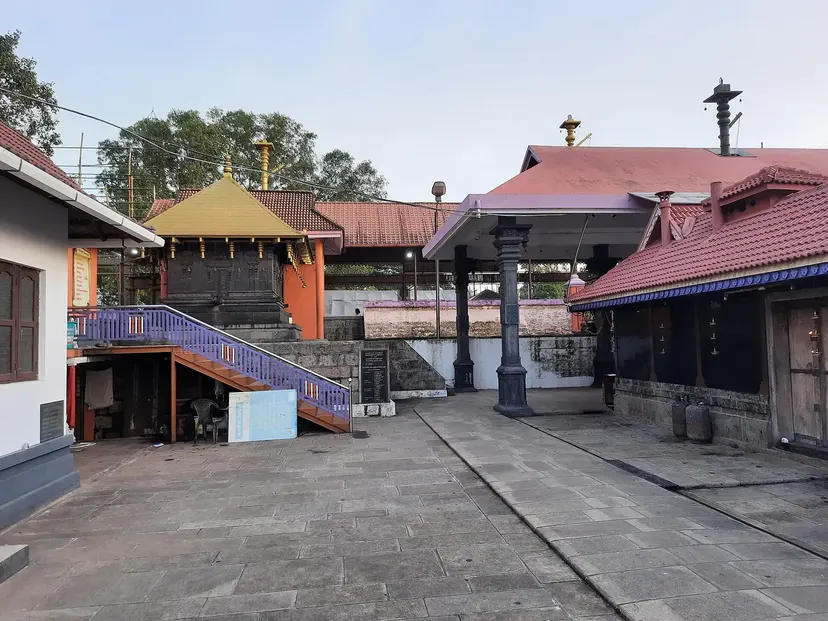
The sanctum (sreekovil) contains no image; worship is directed to a protected spot with a small hole, according to Kerala Tourism. Wikipedia records sub-shrines of Sastha and the serpent deities, and a separate Shiva temple nearby called Madambiyarkavu, also under the Malabar Devaswom Board.
Plan Your Visit
Darshan and Visitor Information
Kadampuzha is an active temple with heavy demand for its offerings, and bookings for Poomoodal and Muttarukkal are handled by the devaswom. Crowds are larger during Thrikkarthika and the Dhanu festival. Confirm current darshan timings, dress rules and offering bookings with the Kadampuzha Devaswom office or its official website before visiting.
Timings and arrangements change with seasons and festivals. Confirm current details with Kadampuzha Devaswom, under the Malabar Devaswom Board (since 2008) (official website) before travelling. Last reviewed 1 November 2026.
Sacred Calendar
Festivals at Kadampuzha Bhagavathy Temple
Thrikkarthika Mahotsavam (Prathishtadinam)
A three-day festival marking the day Shankaracharya is believed to have performed the first worship. Special poojas, Poomoodal, Muttarukkal, annadanam and temple arts are held, and devotees light thousands of lamps in the temple premises.
Rigveda Laksharchana
An eight-day rite led by the temple's tantri, in which Vedic scholars chant the Rigveda each morning, with abhishekam in the evening and cultural programmes including Kathakali, Ottanthullal and Chakyar Koothu during the first seven days.
Dravya Kalasam
An eight-day tantric purification ritual concluding with the Brahmakalasa abhishekam, according to Wikipedia.
Location
How to Reach Kadampuzha Bhagavathy Temple
Kerala Tourism gives the temple as about 12 km from Kuttipuram, and its festival profile lists Kuttipuram railway station (about 13.8 km), Calicut International Airport (about 37 km) and Kadampuzha bus stand (about 100 m) as the nearest transport points. Tirur railway station is about 19 km away, according to Kerala Tourism.
Location: Kadampuzha, Malappuram, Kerala, India
Nearest airport: Calicut International Airport (about 37 km, per Kerala Tourism)
Nearest railway station: Kuttipuram (about 13.8 km, per Kerala Tourism)
More in Hindu temples in Kerala · Parvati as Kirata Parvathy (the huntress), worshipped without an idol temples · Temples in Tirur Taluk · Temples in Malappuram District
Questions
Kadampuzha Bhagavathy Temple: Frequently Asked Questions
Why is there no idol at Kadampuzha temple?
Worship is offered into a small hole in the sanctum. Devotees believe the Goddess vanished into this hole after appearing to Adi Shankaracharya, and that the hole was made by Shiva's arrow.
Which goddess is worshipped at Kadampuzha?
Parvati in the form of Kirata Parvathy, a huntress. Kerala Tourism records that she is worshipped as Vidya Durga in the morning, Vanadurga at noon and Adi Durga in the evening.
What are Poomoodal and Muttarukkal?
Poomoodal is an offering in which the deity is covered with thechi (ixora) flowers. Muttarukkal is an offering made by breaking coconuts. Both are booked through the devaswom.
Who founded Kadampuzha temple?
Tradition holds that Adi Shankaracharya consecrated the shrine on the Karthika star in Vrischikam, which is celebrated as the Thrikkarthika festival.
Who manages Kadampuzha temple?
The Kadampuzha Devaswom, a Special Grade Devaswom under the Malabar Devaswom Board, which took over from the HR and CE department in 2008.
How do I reach Kadampuzha temple?
It is about 12 km from Kuttipuram, whose railway station is the nearest, and about 37 km from Calicut International Airport. Kadampuzha bus stand is about 100 m from the temple.
Sources and attribution
- Kadampuzha Devaswom — Sree Kadampuzha Bhagavathy Temple (home page)
- Kadampuzha Devaswom — Present Administrative Organization
- Department of Tourism, Government of Kerala — Sree Kadampuzha Bhagavathy Temple, Malappuram (Temples of Kerala)
- Department of Tourism, Government of Kerala — Kadampuzha Bhagavathy Temple (destination page)
- Department of Tourism, Government of Kerala (1000 Festivals of Kerala) — Thrikkarthika Mahotsavam, Kadampuzha (PDF)
- Department of Tourism, Government of Kerala (1000 Festivals of Kerala) — Rigveda Laksharchana, Kadampuzha (PDF)
- Wikipedia — Kadampuzha Devi Temple
Further reading: Kadampuzha Bhagavathy Temple on Wikipedia (CC BY-SA 4.0).
Spotted an error? Write to info@hindutone.com — see our editorial policy.
Pilgrim Circuit