Vilwadrinatha Temple, Thiruvilwamala
Rama and Lakshmana (Vilwadrinatha, forms of Vishnu) temple · Thiruvilwamala, Thrissur, Kerala, India
The Vilwadrinatha Temple crowns a hillock in the middle of Thiruvilwamala village in Thrissur district, Kerala, about 100 feet above sea level according to Kerala Tourism. Its presiding deities are Rama and his brother Lakshmana, enshrined in twin sanctums of equal importance, which makes it one of the rare temples in India with a shrine to Lakshmana.
The Bharathappuzha river flows about 3 km north of the temple and can be seen from the hilltop, according to Wikipedia. The temple is administered by the Cochin Devaswom Board, which also organises the annual Punarjani cave ritual nearby, as Onmanorama reported in 2025.
Faith & Tradition
Religious Significance of Vilwadrinatha Temple, Thiruvilwamala
Wikipedia lists Vilwadrinatha among the four major Rama temples of Kerala, with those at Thriprayar, Kadavallur and Thiruvangad, and notes that it is counted among the Abhimana Kshetrams of the Vaishnava tradition. Both sanctums hold standing four-armed images of Vishnu; by popular belief the west-facing image is Rama and the east-facing one is Lakshmana, and pujas are performed identically in both.
Kerala Tourism and the Thrissur DTPC describe the Rama image as about five feet tall and carved from a rare stone called Pathalanjana Sila. According to Wikipedia, devotees believe it is a self-manifested (swayambhu) image, with Sridevi, Bhudevi and the serpent Ananta, and that the smaller Lakshmana image was consecrated by Parashurama.
The temple is closely tied to the Punarjani Guha, a cave on the hill about 2 km from the temple (per Wikipedia). Devotees crawl through the roughly 150-metre passage on Guruvayur Ekadasi, the bright-fortnight Ekadasi of Vrischikam, in a ritual known as Punarjani Noozhal; it is believed to cleanse sins. Entry is permitted only on that one day each year.
Heritage
History of Vilwadrinatha Temple, Thiruvilwamala
Temple legend, summarised by Kerala Tourism and Wikipedia, links the site to Parashurama, who is said to have installed an image of Vishnu here to grant peace to restless souls, and to the sage Amalaka, whose penance is said to have brought Vishnu to appear with his consorts and Ananta. A further legend, recorded by Wikipedia, tells of Vishnu appearing as Narasimha to destroy a demon who attacked the shrine.
Wikipedia records that the temple was once administered by five hereditary families known as the Parasudayavar, and that it later passed under the Zamorins of Kozhikode and then the rulers of Kochi. The temple burned in 1827 and twice in 1861; the present structure was built by the King of Kochi in 1883. It is now under the Cochin Devaswom Board.
Architecture and sacred features
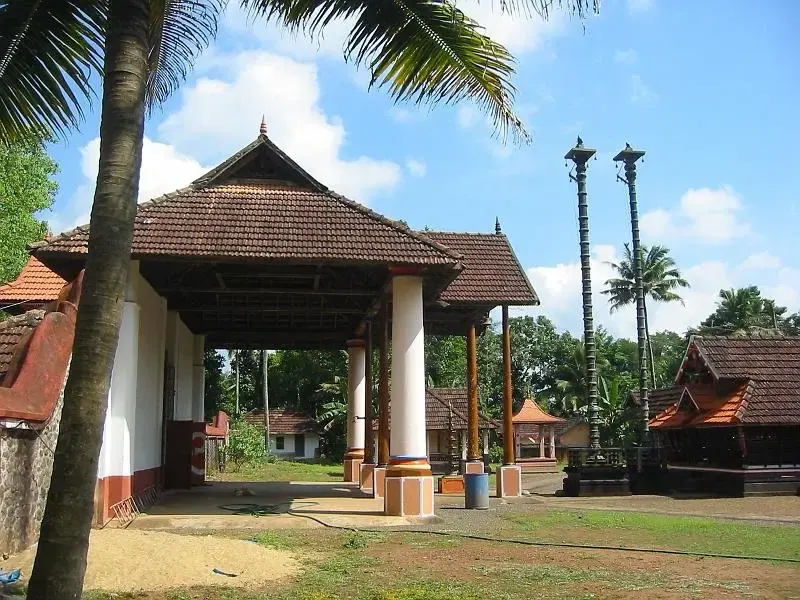
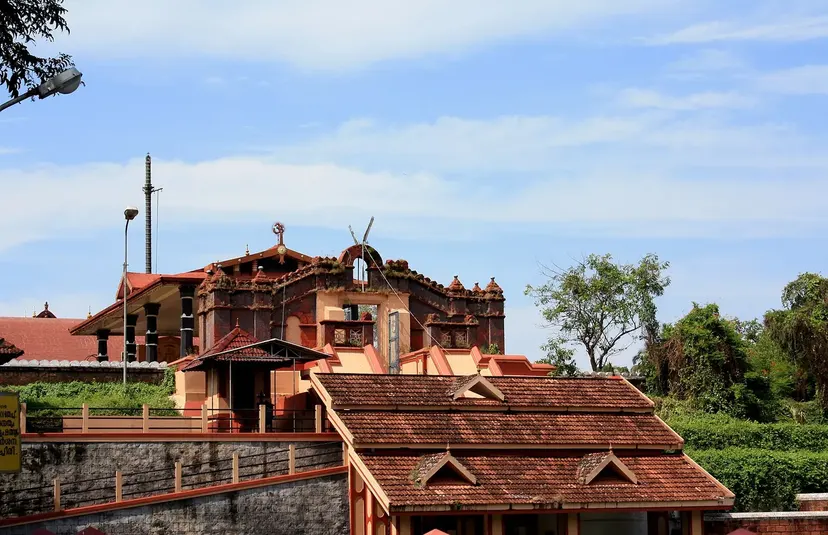
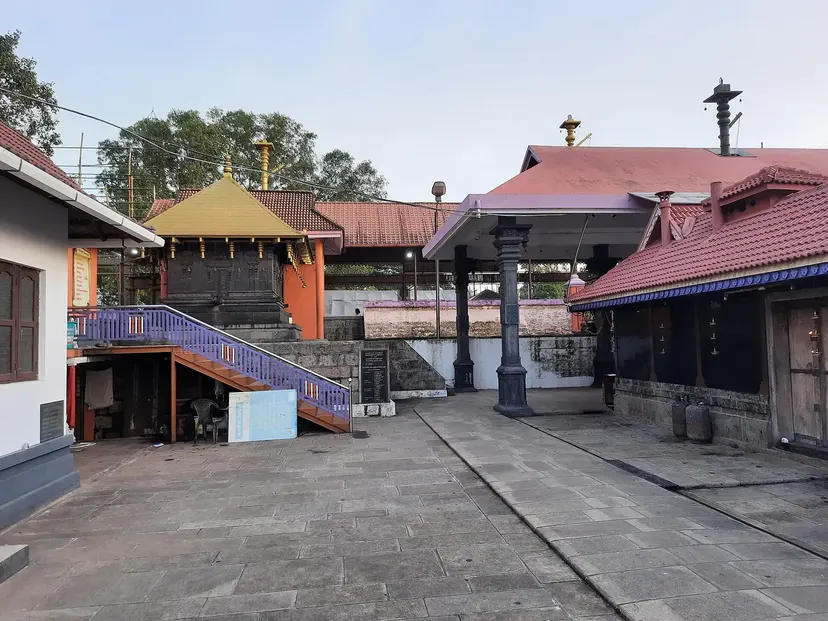
Inside the nalambalam (inner enclosure) are two double-storeyed square sanctums (sreekovils) of equal size, set side by side but facing opposite directions, as described by Kerala Tourism and Wikipedia. Kerala Tourism also notes two anakkottils (elephant pavilions). Wikipedia records the remains of two large gopurams on the east and west, the absence of a flagstaff, a Hanuman shrine just outside the nalambalam, and a shrine to Ayyappa in a hollow on the south side.
The main entrance is from the west, up a long flight of steps. On a rocky rise east of the temple, called Bhoothanmala ('hill of ghosts'), stands a large peepal tree, which Kerala Tourism and the DTPC mention as a landmark.
Plan Your Visit
Darshan and Visitor Information
The temple is reached by a long flight of steps, which visitors with limited mobility should allow for. Wikipedia records a traditional Kerala dress code, with men in mundu and shirts removed inside the inner enclosure. The Punarjani cave ritual on Guruvayur Ekadasi draws very large crowds. Confirm current darshan timings, dress rules and Punarjani arrangements with the Cochin Devaswom Board before travelling.
Timings and arrangements change with seasons and festivals. Confirm current details with Cochin Devaswom Board before travelling. Last reviewed 1 November 2026.
Sacred Calendar
Festivals at Vilwadrinatha Temple, Thiruvilwamala
Punarjani Noozhal (Guruvayur Ekadasi)
On the bright-fortnight Ekadasi of Vrischikam, after a puja by the temple priests at the cave mouth, thousands of devotees crawl through the Punarjani cave, an act believed to cleanse sins; the Cochin Devaswom Board organises the day.
Thripputhari
Wikipedia records that rice for the Thripputhari (new-rice) offering to Vilwadrinatha comes from the Ayyappa shrine within the temple complex.
Location
How to Reach Vilwadrinatha Temple, Thiruvilwamala
The Thrissur DTPC gives Thiruvilwamala bus stand as about 1 km from the temple, Lakkidi railway station as about 4 km, and Cochin International Airport as about 93 km. Wikipedia places the temple about 50 km from Thrissur and 35 km from Palakkad, with Ottappalam (14 km) and Shoranur (20 km) as larger railway stations nearby.
Location: Thiruvilwamala, Thrissur, Kerala, India
Nearest airport: Cochin International Airport (about 93 km, per Thrissur DTPC)
Nearest railway station: Lakkidi (about 4 km, per Thrissur DTPC); Ottappalam and Shoranur are larger stations
More in Hindu temples in Kerala · Rama and Lakshmana (Vilwadrinatha, forms of Vishnu) temples · Temples in Thiruvilwamala · Temples in Thalapilly Taluk · Temples in Thrissur District
Questions
Vilwadrinatha Temple, Thiruvilwamala: Frequently Asked Questions
Which deities are worshipped at Vilwadrinatha Temple?
Rama and Lakshmana, in twin sanctums of equal importance. Both images are standing four-armed forms of Vishnu; by popular belief the west-facing one is Rama and the east-facing one is Lakshmana.
What is Punarjani Guha?
A cave about 2 km from the temple. Devotees crawl through its roughly 150-metre passage on Guruvayur Ekadasi in Vrischikam (November–December), believing it cleanses sins. It is open for the ritual only on that day.
What is special about the Rama idol at Thiruvilwamala?
Kerala Tourism describes it as about five feet tall and carved from a rare stone called Pathalanjana Sila; devotees believe it is self-manifested.
Who manages Vilwadrinatha Temple?
The Cochin Devaswom Board. Historically it was run by hereditary families and later came under the Zamorins and the rulers of Kochi, according to Wikipedia.
When was the present temple built?
Wikipedia records that the temple burned in 1827 and twice in 1861, and that the present structure was built by the King of Kochi in 1883.
How do I reach Thiruvilwamala?
Lakkidi railway station is about 4 km away and Cochin International Airport about 93 km, according to the Thrissur DTPC. Buses run from Thrissur (about 50 km) and Palakkad (about 35 km).
Sources and attribution
- Kerala Tourism (Department of Tourism, Government of Kerala) — Vilwadrinatha Temple, Thiruvilwamala
- Kerala Tourism (Department of Tourism, Government of Kerala) — Thiruvilwamala Vilwadrinatha Temple, Thrissur
- District Tourism Promotion Council, Thrissur — Vilwadrinatha Temple, Thiruvilwamala
- Onmanorama — Devotees crawl through Punarjani Cave at Thiruvilwamala in Thrissur (2 December 2025)
- Wikipedia — Vilwadrinatha Temple
Further reading: Vilwadrinatha Temple, Thiruvilwamala on Wikipedia (CC BY-SA 4.0).
Spotted an error? Write to info@hindutone.com — see our editorial policy.