Adi Kumbeswarar Temple, Kumbakonam
Shiva (as Adi Kumbeswarar), with Goddess Mangalambigai temple · Kumbakonam, Thanjavur, Tamil Nadu, India
Arulmigu Adi Kumbeswarar Temple stands in the centre of Kumbakonam, in Thanjavur district of Tamil Nadu. Shiva is worshipped here as Adi Kumbeswarar in the form of a linga, and his consort is worshipped as Mangalambigai, also called Mangala Nayaki. The temple is administered by the Hindu Religious and Charitable Endowments (HR&CE) Department of the Government of Tamil Nadu.
The temple is closely tied to the identity of Kumbakonam itself. Its legend, of a pot (kumbha) of nectar that came to rest here after the great deluge, is the traditional explanation of the town's name, and the temple is one of the twelve Shiva temples whose deities take part in the Mahamaham festival held once every twelve years.
Faith & Tradition
Religious Significance of Adi Kumbeswarar Temple, Kumbakonam
The temple is a Paadal Petra Sthalam, one of the Shiva shrines praised in the Tevaram hymns. The HR&CE's Mahamaham 2016 website records that it was sung by the Nayanmars Thirugnanasambandar and Appar, and Wikipedia notes that Appar's hymns refer to the town as Kudamukku and to the deity as Kumbesar.
According to the HR&CE account of the sthala purana, Brahma kept the seeds of all life in a pot of nectar at Shiva's direction. When the deluge (pralaya) came at the end of an age, the pot floated until it reached this spot, where Shiva, in the guise of a hunter, broke it with an arrow. The nectar mixed with the sand, and Shiva is believed to have shaped that sand into the linga worshipped as Adi Kumbeswarar. Because the linga is regarded as being made of sand, Dinamalar's temple guide notes that the usual abhishekam (ritual bathing) is not performed on it.
The goddess is also known as Mantra Peeteswari, and the HR&CE describes the temple as one of the Shakti sthalas. Its sthala vriksha (sacred tree) is the vanni tree. Devotees also visit the six-faced, six-armed image of Murugan in the temple, which the HR&CE singles out as a special feature.
Heritage
History of Adi Kumbeswarar Temple, Kumbakonam
Wikipedia dates the origins of the temple to the Chola period in the 9th century. The present complex owes much to the Nayak era: the Kumbakonam municipality's description of the town's temples states that Govinda Dikshitar, chieftain under Achyutappa Nayak of Thanjavur, is believed to have renovated this old temple in the 16th century. Wikipedia also records inscriptions referring to gifts by the Vijayanagara emperor Krishnadeva Raya (1509-1529 CE).
Govinda Dikshitar is remembered within the temple itself: Dinamalar lists a shrine for him and for Nagambal among the shrines devotees pass on their way round the corridors. Today the temple is maintained and administered by the HR&CE Department, which ran the official arrangements for the 2016 Mahamaham.
Architecture and sacred features
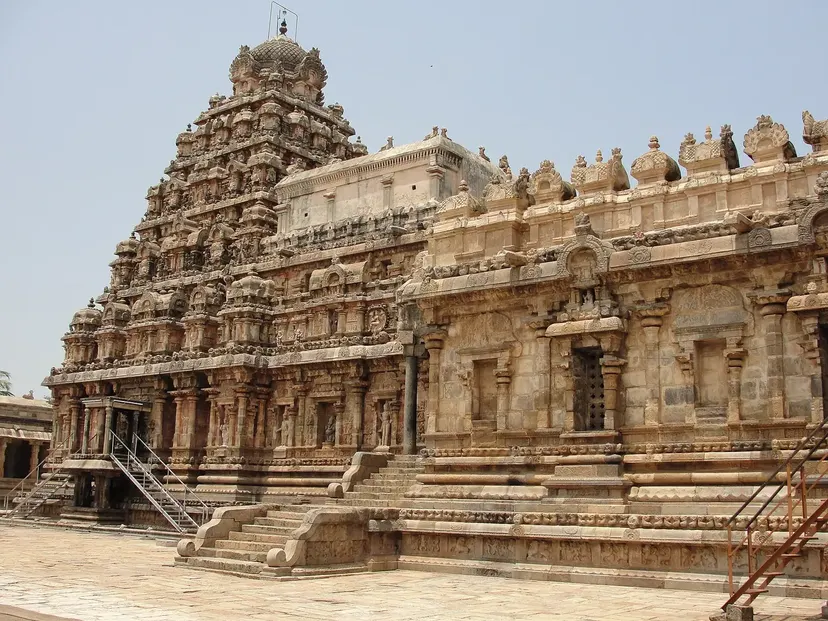
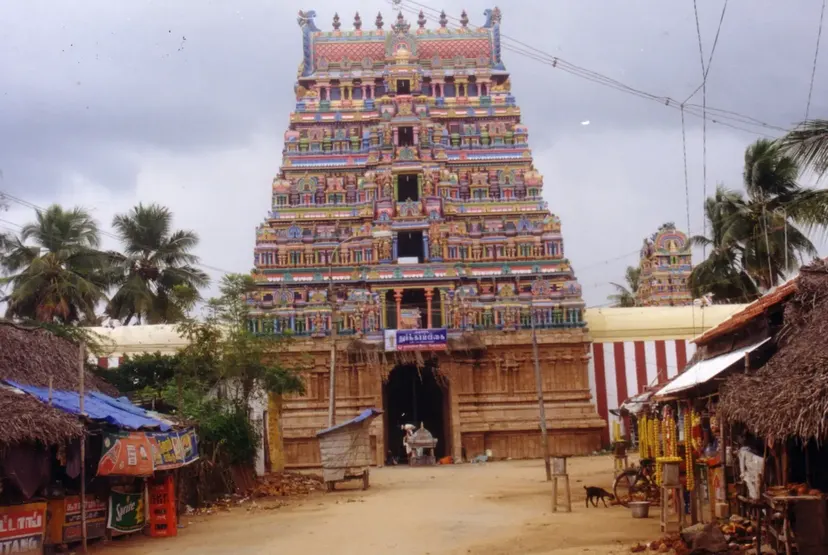
According to the Kumbakonam municipality, the complex measures about 750 by 252 feet and has three prakarams (enclosures) with gopurams on the east, north and west; the eastern gopuram, the tallest, has nine tiers and is about 128 feet high. Wikipedia describes a long covered approach corridor leading from the eastern tower to the inner shrines, with the flagstaff in the second precinct on the axis of the sanctum.
Wikipedia highlights the sixteen-pillared Navaratri Mandapam of the Vijayanagara period, which has the 27 nakshatras (stars) and 12 rasis (zodiac signs) carved on a single stone, and Dinamalar and Wikipedia both mention a nadaswaram (temple wind instrument) carved in stone. The first precinct has shrines for the 63 Nayanmars, the Saptamatrikas, Bhairava, the Navagrahas and others.
Plan Your Visit
Darshan and Visitor Information
The temple is an active place of worship with six daily pujas, and it becomes extremely crowded during Masi Magam and, above all, during the twelve-yearly Mahamaham. Dress modestly, follow the instructions of the temple staff about photography and queues, and confirm current darshan timings and festival dates with the temple office of the HR&CE Department before you travel.
Timings and arrangements change with seasons and festivals. Confirm current details with Hindu Religious and Charitable Endowments Department, Government of Tamil Nadu before travelling. Last reviewed 1 November 2026.
Sacred Calendar
Festivals at Adi Kumbeswarar Temple, Kumbakonam
Mahamaham
The festival deities of the twelve Mahamaham Shiva temples, including Adi Kumbeswarar, are taken in procession to the Mahamaham tank for the theerthavari (holy bath), and lakhs of pilgrims bathe in the tank.
Masi Magam Brahmotsavam
The temple's main annual festival, listed first by the HR&CE, with theerthavari at the Mahamaham tank on Masi Magam day according to Dinamalar.
Saptasthanam
The deities are taken in procession to seven nearby sacred places, a festival listed by both the HR&CE and Dinamalar.
Navaratri, Thirukarthigai and Arudra Darshan
Festivals listed by the HR&CE among the temple's important annual celebrations, along with the float festival (Teppam).
Location
How to Reach Adi Kumbeswarar Temple, Kumbakonam
The temple is in the heart of Kumbakonam town; the municipality places it on Big Bazaar Street in the town centre. The town is served by Kumbakonam railway station.
Dinamalar notes that the Potramarai tank lies in front of the temple and that pilgrims who bathe in the Mahamaham tank traditionally bathe here as well. The Mahamaham tank, also in the town centre, is usually visited together with the temple.
Location: Kumbakonam, Thanjavur, Tamil Nadu, India
Nearest railway station: Kumbakonam
More in Hindu temples in Tamil Nadu · Shiva (as Adi Kumbeswarar), with Goddess Mangalambigai temples · Temples in Darasuram · Temples in Kumbakonam Taluk · Temples in Thanjavur District
Questions
Adi Kumbeswarar Temple, Kumbakonam: Frequently Asked Questions
Which deity is worshipped at Adi Kumbeswarar Temple?
Shiva is worshipped as Adi Kumbeswarar in the form of a linga, with his consort Mangalambigai, also known as Mangala Nayaki and Mantra Peeteswari.
How is the temple linked to the name Kumbakonam?
According to the temple legend, a pot (kumbha) of nectar holding the seeds of life floated here after the deluge and was broken by Shiva's arrow. The linga is believed to have been formed from the nectar-soaked sand, and the town takes its name from the pot.
Is Adi Kumbeswarar a Paadal Petra Sthalam?
Yes. It is praised in the Tevaram hymns of Thirugnanasambandar and Appar, which makes it one of the Paadal Petra Sthalams.
What is the temple's role in the Mahamaham festival?
It is one of the twelve Shiva temples connected with the Mahamaham, held once in twelve years in the month of Masi. Their festival deities are brought to the Mahamaham tank for the holy bath.
How tall is the main gopuram?
The Kumbakonam municipality gives the eastern gopuram as nine tiers and about 128 feet high.
Who manages the temple?
It is maintained and administered by the Hindu Religious and Charitable Endowments Department of the Government of Tamil Nadu.
Sources and attribution
- HR&CE Department, Government of Tamil Nadu (Mahamaham 2016 official website, archived) — Arulmigu Aadhikumbeswarar Temple, Kumbakonam
- HR&CE Department, Government of Tamil Nadu (Mahamaham 2016 official website, archived) — The Big Festival of Mahamaham
- Kumbakonam Municipality (archived) — Temples of Kumbakonam
- Dinamalar — Kumbeswarar Temple, Kumbakonam - Temple details
- Wikipedia — Adi Kumbeswarar Temple, Kumbakonam
Further reading: Adi Kumbeswarar Temple, Kumbakonam on Wikipedia (CC BY-SA 4.0).
Spotted an error? Write to info@hindutone.com — see our editorial policy.