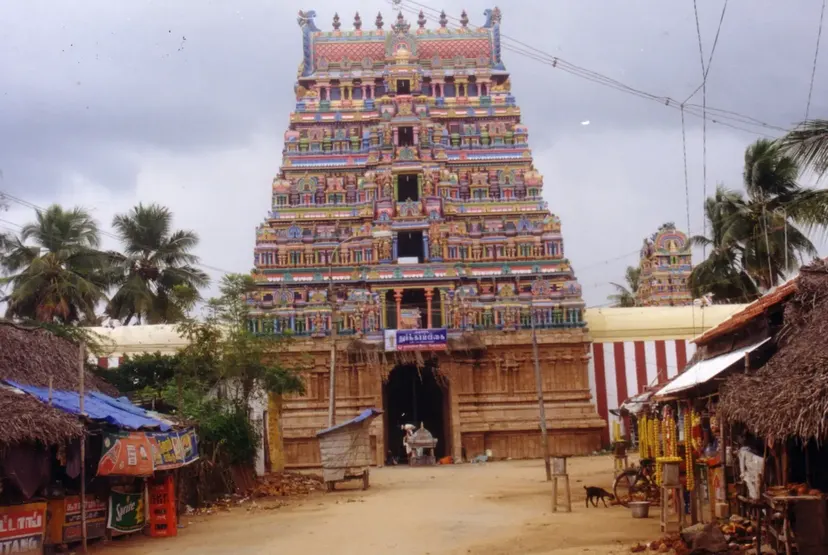
Sarangapani Temple, Kumbakonam
Vishnu as Sarangapani (Aravamudhan), with Komalavalli Thayar temple · Kumbakonam, Thanjavur, Tamil Nadu, India
Sarangapani Temple is a Vishnu temple in the centre of Kumbakonam, in Thanjavur district of Tamil Nadu. Vishnu is worshipped here as Sarangapani, 'he who holds the bow Sharnga', and also by the Tamil name Aravamudhan; his consort Lakshmi is worshipped as Komalavalli Thayar. The temple is one of the 108 Divya Desams, the Vishnu shrines praised by the Alvar saints, and old texts, according to the Tamil Nadu Temples Project, call the place Kudanthai.
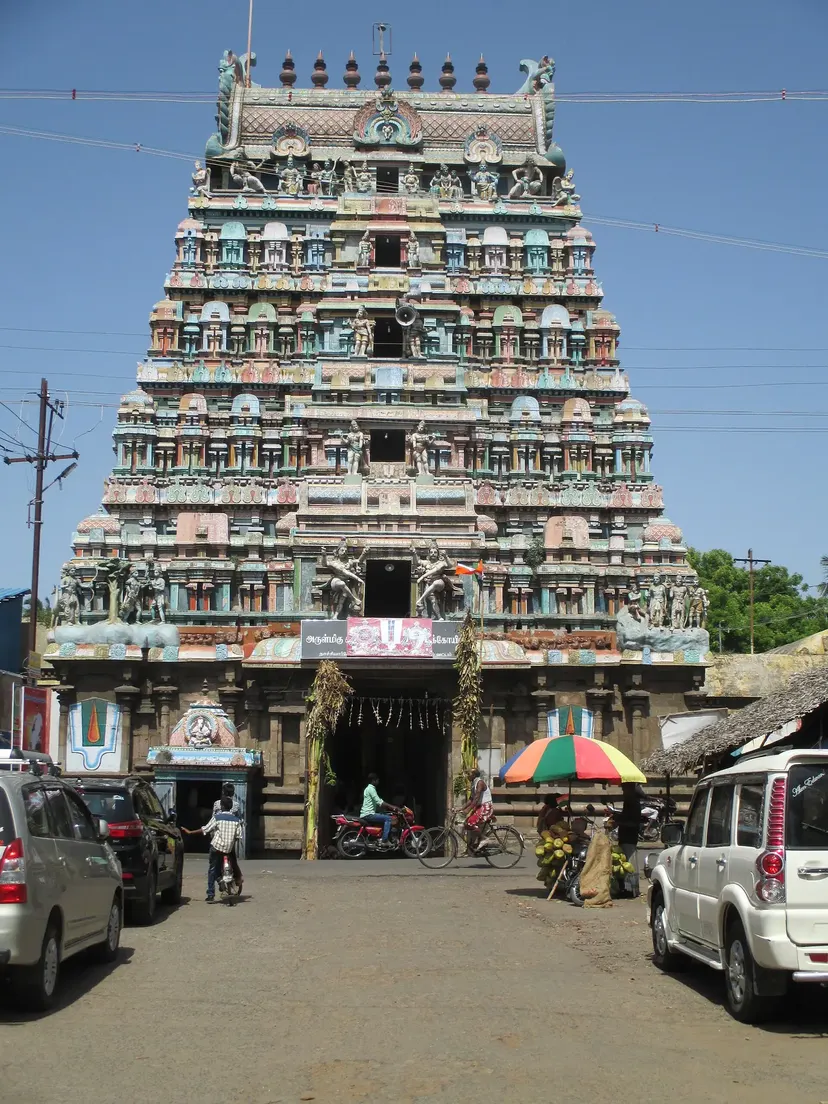
Wikipedia describes it as the largest Vishnu temple in Kumbakonam, with the tallest gopuram in the town. Its central shrine is built in the form of a chariot drawn by horses and elephants, and it is one of five Vishnu temples linked to the Mahamaham festival held once in twelve years at Kumbakonam. The temple is administered by the Tamil Nadu Hindu Religious and Charitable Endowments (HR&CE) Department.
Faith & Tradition
Religious Significance of Sarangapani Temple, Kumbakonam
The temple is praised in the Nalayira Divya Prabandham by seven Alvars, including Andal, Periyalvar, Thirumalisai Alvar, Nammalvar and Thirumangai Alvar, according to Wikipedia and the Tamil Nadu Temples Project. It is closely tied in tradition to the compilation of that canon: according to legend, the Vaishnava teacher Nathamuni heard ten verses sung in praise of Aravamudhan here, learned that they belonged to a larger work, and went on to recover and compile the four thousand hymns of the Alvars. Some lists also count the temple among the Pancharanga Kshetrams, the five shrines of Ranganatha on the Kaveri.
The temple's legend centres on Lakshmi. According to tradition, after the sage Bhrigu struck Vishnu on the chest, Bhrigu sought to atone by having Lakshmi born as his daughter; reborn as the sage Hemarishi, he found her as an infant on a lotus in the Potramarai tank and named her Komalavalli. Vishnu is believed to have come down from Vaikuntha in a chariot, bow in hand, to marry her, which the temple's chariot-shaped sanctum recalls. Because Kumbakonam is regarded as Lakshmi's birthplace, Dinamalar and the Tamil Nadu Temples Project note that worship is offered first at the Thayar shrine, and the cow-worship (go-puja) is performed there.
Another tradition, recorded by Wikipedia, Dinamalar and the Tamil Nadu Temples Project, holds that Thirumalisai Alvar asked the reclining Lord whether he was tired, and that the image began to rise, stopping half-way; the main image is therefore described as Uthana Sayana, a partly risen reclining posture. The temple also preserves a legend that Aravamudhan himself performed the last rites of a childless devotee, and a related rite is observed on Deepavali. Dinamalar notes that the temple has no separate 'gate of heaven' (Sorgavasal), because Vishnu is believed to have come here directly from Vaikuntha.
Heritage
History of Sarangapani Temple, Kumbakonam
According to Wikipedia, the site may have been a Vaishnava settlement as early as the 7th or 8th century, and the earliest inscriptions date from the late Chola period (10th–12th centuries). Rebuilding in the Chola and Vijayanagara eras means the original shrine no longer survives. The temple grew in importance under the Vijayanagara and Nayak rulers (15th–17th centuries), whose patronage of Vaishnava temples in Kumbakonam contrasted with the Cholas' earlier focus on Shaiva shrines; in the 17th century a Vaishnava matha became associated with the temple.
Wikipedia records that the temple's twin wooden chariots were renovated in 2007 after a period in which they had not been drawn, and that the Mahasamprokshanam (consecration) of the temple was held on 13 July 2015. Dinamalar credits the building of the rajagopuram to a devotee named Lakshmi Narayanaswami, the same devotee remembered in the Deepavali legend.
Architecture and sacred features
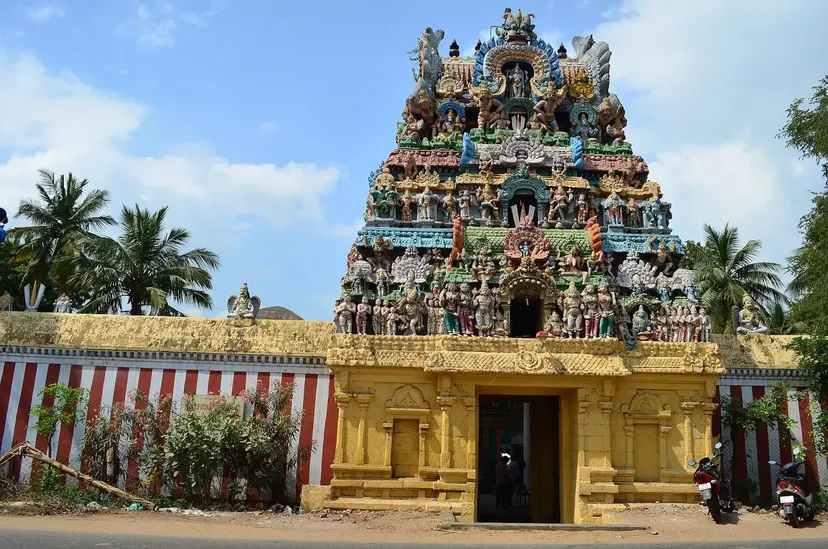
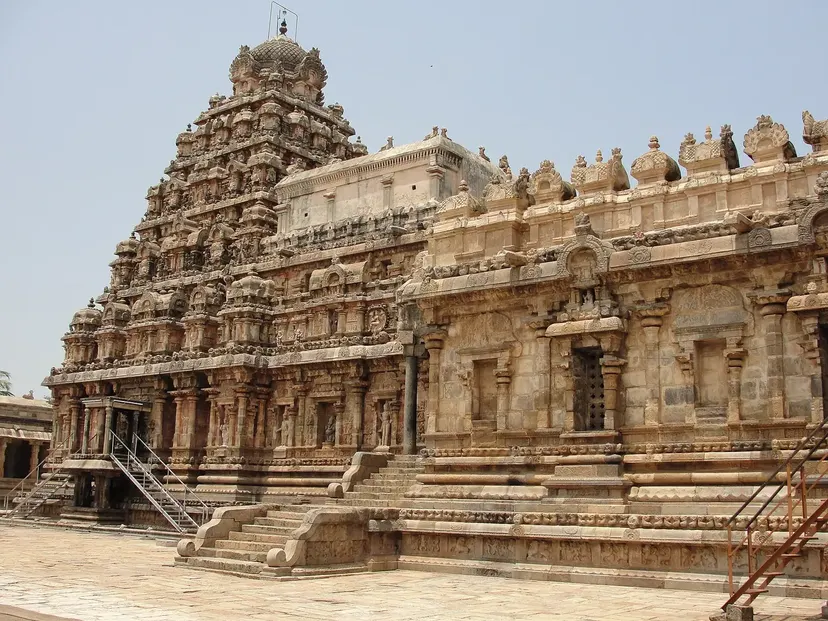
The temple faces east and is enclosed by a high granite wall. Its eleven-tiered rajagopuram is the tallest tower in Kumbakonam; Wikipedia gives its height as 173 feet, while Dinamalar gives about 150 feet. There are five smaller gopurams. The sanctum is reached through a hundred-pillared hall and is built as a chariot with carved wheels, horses and elephants. It has two stepped entrances, the Uttarayana and Dakshinayana gates, each used for half of the year. The main image of Sarangapani reclines with his head resting on his hand, with images of Hemarishi and Lakshmi in the sanctum, and the Komalavalli Thayar shrine stands parallel to it on the north side.
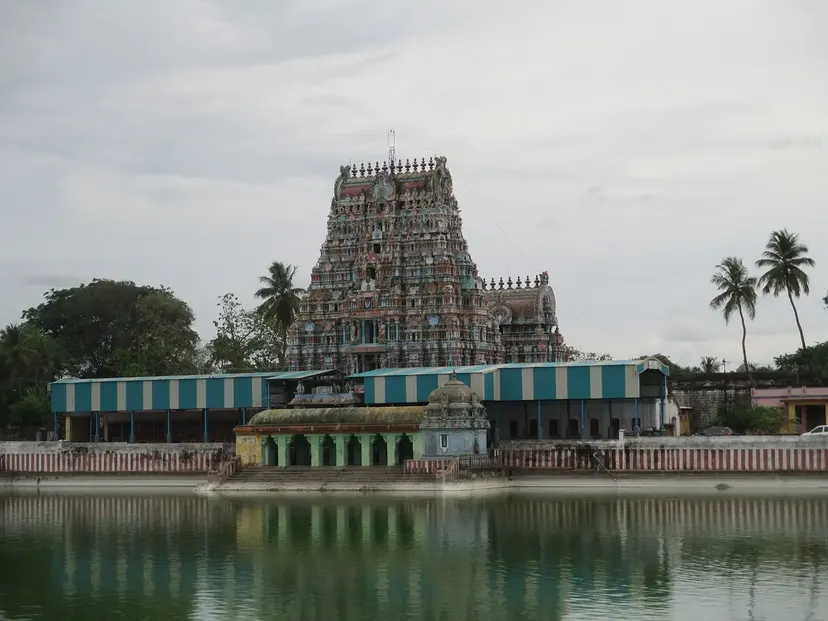
Wikipedia notes that some of the 108 karanas (basic movements) of Bharatanatyam are carved on the temple walls. The Potramarai tank lies outside the western entrance and has a central hall called the Hemarishi Mandapam. A painting in the temple depicts Thirumangai Alvar's Thiruvezhukootrirukkai, a verse whose numbers are arranged in the shape of a chariot.
Plan Your Visit
Darshan and Visitor Information
Only one of the two sanctum entrances is open at a time, depending on the half of the year. The car festival and the Mahamaham year draw very large crowds. Confirm current timings, dress expectations and festival dates with the temple administration (Tamil Nadu HR&CE) before visiting.
Timings and arrangements change with seasons and festivals. Confirm current details with Tamil Nadu Hindu Religious and Charitable Endowments Department before travelling. Last reviewed 1 November 2026.
Sacred Calendar
Festivals at Sarangapani Temple, Kumbakonam
Chithirai festival and car festival
The temple's main festival, when the festival images of Sarangapani and Komalavalli are taken out in the twin temple chariots, drawn by devotees around the temple streets.
Ratha Saptami / Thai festival
Wikipedia records that the chariots are drawn a second time in the year around Ratha Saptami.
Vaikasi Vasantha Utsavam
Listed by Dinamalar among the temple's important festivals.
Float festival
Listed by Dinamalar among the temple's important festivals.
Vaikunta Ekadasi
Observed at the temple, which has no separate Sorgavasal gate.
Location
How to Reach Sarangapani Temple, Kumbakonam
The temple is in the heart of Kumbakonam, which is linked by rail and road to the rest of Tamil Nadu, according to Dinamalar. The Tamil Nadu Temples Project lists Mayiladuthurai about 39 km away.
Location: Kumbakonam, Thanjavur, Tamil Nadu, India
Nearest railway station: Kumbakonam
More in Hindu temples in Tamil Nadu · Vishnu as Sarangapani (Aravamudhan), with Komalavalli Thayar temples · Temples in Kumbakonam Taluk · Temples in Thanjavur District
Questions
Sarangapani Temple, Kumbakonam: Frequently Asked Questions
Why is the Sarangapani Temple built like a chariot?
According to tradition, Vishnu came down from Vaikuntha in a chariot to marry Komalavalli (Lakshmi) at Kumbakonam. The sanctum is built as a chariot with wheels, horses and elephants to recall this.
Is Sarangapani Temple a Divya Desam?
Yes. It is one of the 108 Divya Desams and is praised by seven Alvars in the Nalayira Divya Prabandham.
What is the Nathamuni connection?
Tradition holds that Nathamuni heard ten verses on Aravamudhan sung here, which led him to recover and compile the four thousand hymns of the Alvars.
How tall is the Sarangapani gopuram?
It has eleven tiers and is the tallest gopuram in Kumbakonam. Wikipedia gives 173 feet and Dinamalar about 150 feet.
Why does the temple have no Sorgavasal?
Dinamalar explains that Vishnu is believed to have come here directly from Vaikuntha, so the temple has no separate gate of heaven; it has Uttarayana and Dakshinayana entrances instead.
When is the Sarangapani car festival?
The main car festival is part of the Chithirai festival in April–May; the chariots are also drawn around Ratha Saptami in the Thai month.
Who manages Sarangapani Temple?
The temple is administered by the Tamil Nadu Hindu Religious and Charitable Endowments Department.
Sources and attribution
- Wikipedia — Sarangapani Temple
- Tamil Nadu Temples Project (tntemplesproject.in) — Sarngapani, Kumbakonam, Thanjavur
- Dinamalar (temple directory) — Sarangapani Temple, Kumbakonam
Further reading: Sarangapani Temple, Kumbakonam on Wikipedia (CC BY-SA 4.0).
Spotted an error? Write to info@hindutone.com — see our editorial policy.