
Swetharanyeswarar Temple, Thiruvenkadu (Budha Navagraha Temple)
Shiva (as Swetharanyeswarar), with Aghora Murthy and Nataraja; shrine for Budha (Mercury) temple · Thiruvenkadu, Mayiladuthurai (Sirkazhi taluk), Tamil Nadu, India
The Swetharanyeswarar Temple at Thiruvenkadu, a village between Sirkazhi and Poompuhar in Mayiladuthurai district, Tamil Nadu, is the Budha (Mercury) temple of the Navagraha circuit. The presiding deity is Shiva as Swetharanyeswarar, 'lord of the white forest', worshipped as a lingam, and the goddess is Brahmavidyambigai.
It is a large and old Shaiva temple in its own right. Its hymns are part of the Tevaram, its stone inscriptions span several dynasties, and it is the only temple, according to the Dinamalar temple guide, where Shiva's fierce form Aghora Murthy is enshrined as a principal deity. Budha has his own shrine within the complex.
Faith & Tradition
Religious Significance of Swetharanyeswarar Temple, Thiruvenkadu (Budha Navagraha Temple)
Wikipedia and The Hindu both describe the temple as having three principal forms of Shiva, Swetharanyeswarar, Aghora Murthy and Nataraja, and three sacred tanks named after Surya, Chandra and Agni. Dinamalar extends this pattern of threes to the goddess (Brahmavidyambigai, Durga and Kali) and to the sacred trees (banyan, konrai and vilva). The temple is also called Adi Chidambaram: tradition holds that Shiva danced here before dancing at Chidambaram, and, as at Chidambaram, there is a shrine for Vishnu near the Nataraja shrine.
According to the temple legend recorded by Wikipedia and Dinamalar, the demon Maruthuvasura, empowered by a boon, troubled the devas and sages; Shiva took the form of Aghora Murthy, said in Dinamalar to have emerged from his Ishana face, and subdued him. Special worship of Aghora Murthy is held on Sunday nights. Budha is believed to have worshipped Swetharanyeswarar here to be accepted among the Navagrahas, and devotees pray to him for learning and eloquence. Dinamalar also lists the temple among the Shakti Peethas and among six shrines regarded as equal to Kashi; Wikipedia records the same six-shrine tradition.
The temple has close links with Shaiva saints. Tirugnanasambandar, Appar and Sundarar sang its Tevaram hymns, and Manikkavasagar also praised it; Dinamalar counts it as the 11th Tevaram shrine on the northern bank of the Kaveri. Tradition holds that the saint Pattinathar received initiation here, and that Meykandar, author of the Shaiva Siddhanta text Sivagnana Bodham, was born after his parents prayed at Thiruvenkadu. An image of the goddess carrying the child Sambandar on her hip, called Pillai Idukki Amman, is in the goddess's shrine.
Heritage
History of Swetharanyeswarar Temple, Thiruvenkadu (Budha Navagraha Temple)
Wikipedia states that the original complex is believed to be a Chola foundation, with the present masonry largely from the Vijayanagara period in the 16th century. It records around a hundred stone inscriptions from the Chola, Pandya and Vijayanagara dynasties, including Krishnadevaraya, with endowments attributed to Rajaraja Chola I, Rajendra Chola I, Virarajendra, Kulottunga I and the Pandya kings Kulasekara and Vikrama. Dinamalar notes that the inscriptions call the Nataraja here Adavallan.
Thiruvenkadu is also known for Chola bronzes. Wikipedia describes an 11th-century standing Ardhanarishvara about 102 cm tall, found in the village, together with a Parvati with an attendant and a seated Chandikeswara, now in the bronze gallery of the Government Museum, Chennai. The Thanjavur District Collectorate's tourism page notes the tradition that the temple is referred to in the Valmiki Ramayana. The temple is listed by the Tamil Nadu HR&CE Department under its Joint Commissioner at Mayiladuthurai.
Architecture and sacred features
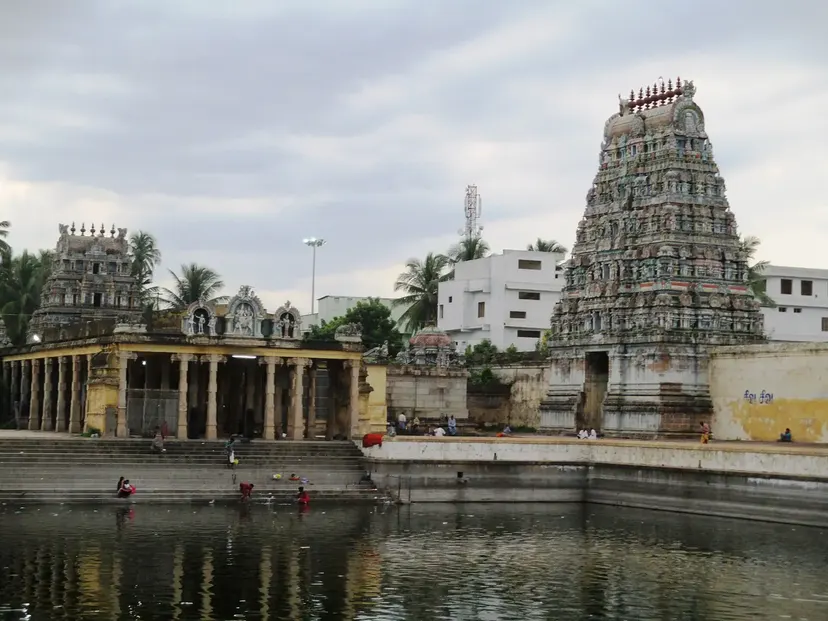
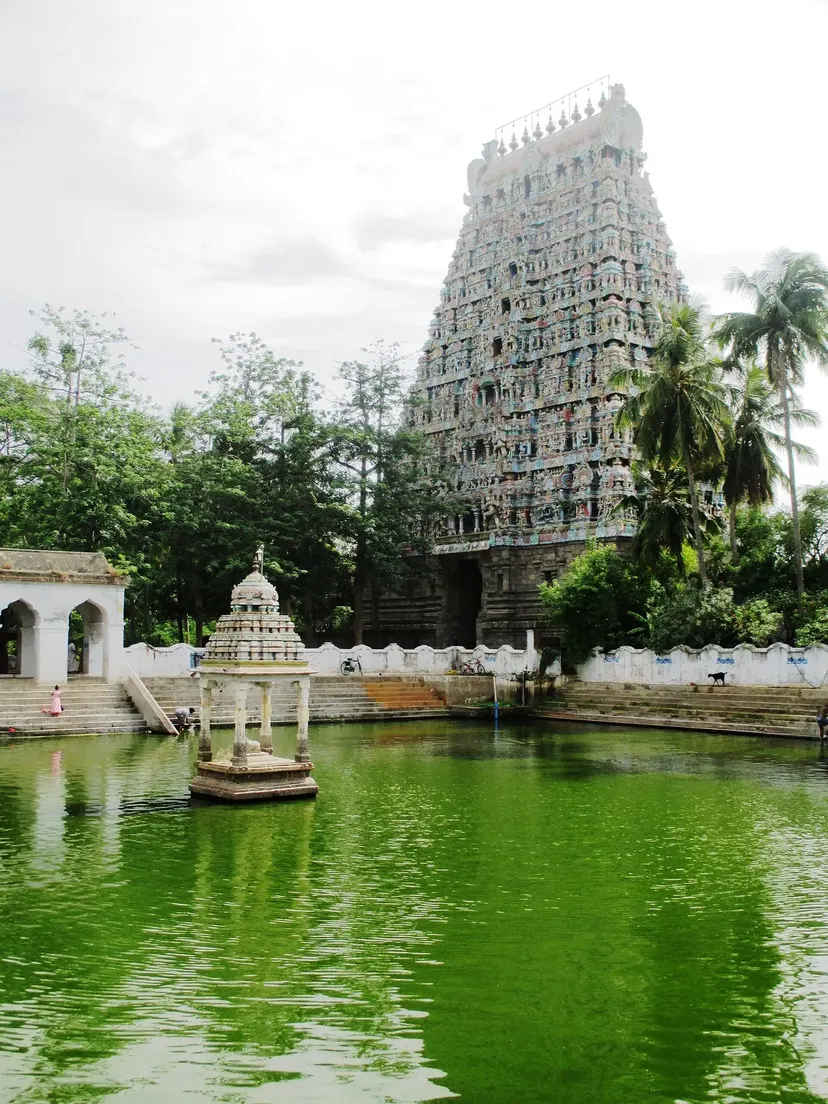
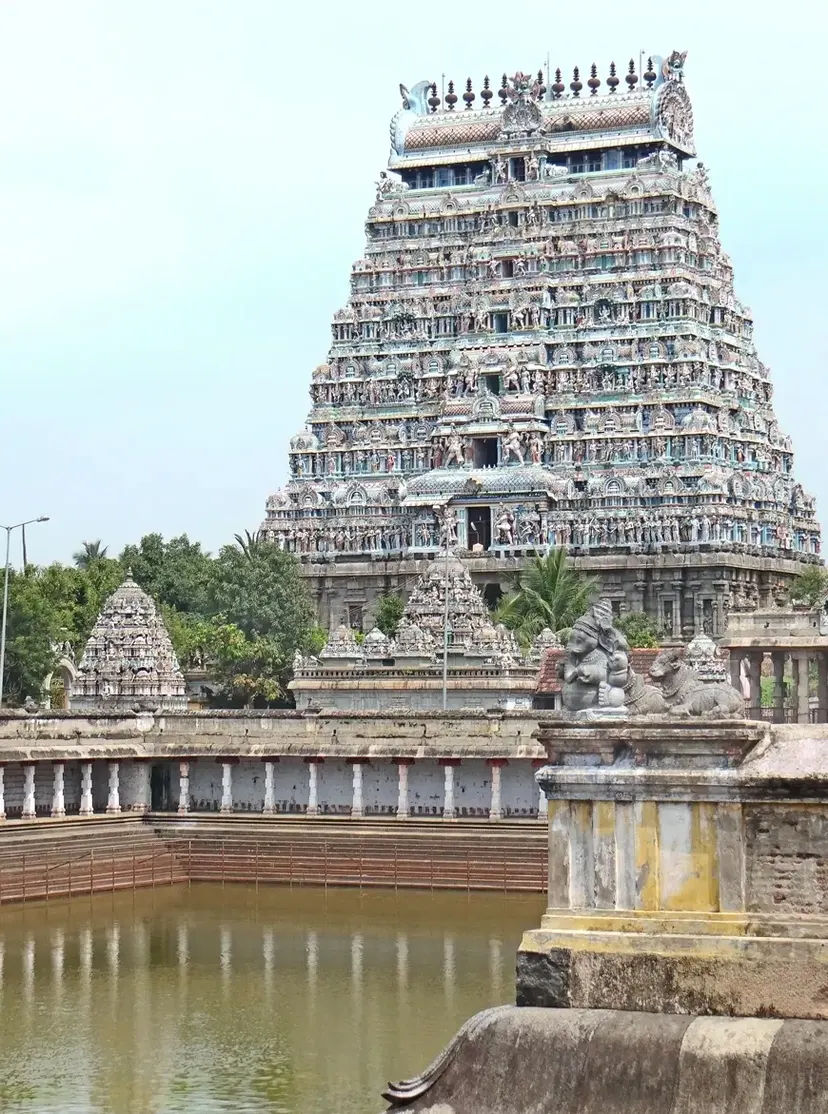
The temple occupies about two acres, with its shrines and the three tanks enclosed within granite walls and gateway towers on the eastern and western sides, according to Wikipedia. Budha's shrine stands in the outer part of the complex, opposite one of the tanks; Dinamalar says the shrine of Chandra, Budha's father in the legend, and the Chandra Pushkarini lie opposite Budha's shrine.
Dinamalar describes the Agni Theertham just inside the eastern entrance, the Surya Theertham with a lingam on its bank further along the prakara, and the goddess's shrine as a separate temple. A Rudra Padam (Shiva's footprint) is worshipped beneath the banyan tree, and there is a sphatika (crystal) lingam in the Nataraja shrine.
Plan Your Visit
Darshan and Visitor Information
The temple is open in the morning and evening with a midday break, and some worship (such as the Aghora puja on Sunday nights) is held outside the usual hours. Dinamalar notes that thousands attend the Masi festival and that monthly pradosham days draw large crowds. Confirm current timings, dress expectations and puja arrangements with the temple office or the HR&CE Department before travelling.
Timings and arrangements change with seasons and festivals. Confirm current details with Listed by the Tamil Nadu HR&CE Department (TM018027, Joint Commissioner, Mayiladuthurai) before travelling. Last reviewed 1 November 2026.
Sacred Calendar
Festivals at Swetharanyeswarar Temple, Thiruvenkadu (Budha Navagraha Temple)
Indra Peruvizha (Brahmotsavam)
A 13-day festival which, by tradition, is conducted by Indra; Dinamalar describes it as the temple's chief festival, attended by thousands.
Nataraja abhishekams
Nataraja receives six abhishekams a year, as at Chidambaram, according to Dinamalar.
Pattinathar initiation festival
Re-enactment of the saint Pattinathar's initiation (Shiva diksha) at the temple.
Aadi Pooram
Ten-day festival for the goddess Brahmavidyambigai.
Maha Rudra abhishekam for Aghora Murthy
Special abhishekam for Aghora Murthy listed by Dinamalar.
Navaratri, Kanda Sashti and Karthigai Deepam
Other annual festivals celebrated at the temple.
Location
How to Reach Swetharanyeswarar Temple, Thiruvenkadu (Budha Navagraha Temple)
Thiruvenkadu is on the Sirkazhi–Poompuhar road, about 15 km from Sirkazhi according to Dinamalar. Wikipedia gives the distance from Thanjavur as about 95 km. The Ketu temple at Keezhaperumpallam is about seven kilometres away, according to The Hindu.
Dinamalar names Mayiladuthurai as the nearest railway station and Tiruchirappalli as the nearest airport.
Location: Thiruvenkadu, Mayiladuthurai (Sirkazhi taluk), Tamil Nadu, India
Nearest airport: Tiruchirappalli
Nearest railway station: Mayiladuthurai
More in Hindu temples in Tamil Nadu · Shiva (as Swetharanyeswarar), with Aghora Murthy and Nataraja; shrine for Budha (Mercury) temples · Temples in Thiruvengadu · Temples in Sirkazhi Taluk · Temples in Nagapattinam District
Questions
Swetharanyeswarar Temple, Thiruvenkadu (Budha Navagraha Temple): Frequently Asked Questions
Which Navagraha is associated with Thiruvenkadu?
Budha (Mercury). The presiding deity is Shiva as Swetharanyeswarar, and Budha has his own shrine in the temple.
Who is Aghora Murthy?
A fierce form of Shiva who, according to the temple legend, subdued the demon Maruthuvasura at Thiruvenkadu. Dinamalar says this is the only temple where he is enshrined as a main deity; special worship is held on Sunday nights.
Why is Thiruvenkadu called Adi Chidambaram?
Tradition holds that Shiva danced here before dancing at Chidambaram. Like Chidambaram, the temple has a Nataraja shrine with a Vishnu shrine beside it.
Is Thiruvenkadu a Paadal Petra Sthalam?
Yes. Sambandar, Appar and Sundarar sang its Tevaram hymns, and Dinamalar counts it as the 11th Tevaram shrine on the northern bank of the Kaveri.
How old is the Thiruvenkadu temple?
It is a Chola foundation. Wikipedia records about a hundred inscriptions, with endowments from Rajaraja Chola I, Rajendra Chola I and later Chola, Pandya and Vijayanagara rulers.
How do I reach Thiruvenkadu?
It is about 15 km from Sirkazhi on the road to Poompuhar. The nearest railway station is Mayiladuthurai and the nearest airport is Tiruchirappalli.
Sources and attribution
- Dinamalar — அருள்மிகு சுவேதாரண்யேஸ்வரர் திருக்கோயில், திருவெண்காடு (Swetharanyeswarar temple – temple details, Tamil)
- Wikipedia — Swetharanyeswarar Temple
- The Hindu — An exploration on foot (5 May 2006)
- District Collectorate, Thanjavur (NIC), archived 2013 — Navagrahas – Tiruvenkadu
- Tamil Nadu HR&CE Department, archived 2020 — Thirukoil – Temple List for Tamil Nadu (TM018027)
- OpenStreetMap — Thiruvengadu temple compound (way 377858347)
Further reading: Swetharanyeswarar Temple, Thiruvenkadu (Budha Navagraha Temple) on Wikipedia (CC BY-SA 4.0).
Spotted an error? Write to info@hindutone.com — see our editorial policy.
Pilgrim Circuit