Rudranath Temple
Shiva (worshipped as Rudranath, in the form of his face – Ekanan) temple · Rudranath, Chamoli, Uttarakhand, India
Rudranath is a temple of Shiva in the high Garhwal Himalayas of Chamoli district, Uttarakhand. It is one of the five Panch Kedar shrines and is often called the fourth Kedar. Here Shiva is worshipped in the form of his face, which the Chamoli district administration and All India Radio describe as the Ekanan form.
The shrine stands in alpine country with no road access: pilgrims reach it on foot, most commonly from Sagar village near Gopeshwar. Because of heavy snow, the temple is open only for part of the year; in winter the deity's symbolic image is carried down to the Gopinath temple in Gopeshwar, where worship continues until the shrine reopens in summer.
Faith & Tradition
Religious Significance of Rudranath Temple
According to the Panch Kedar legend recorded by Wikipedia and retold in news reports of the temple's annual opening, the Pandavas sought Shiva after the Kurukshetra war to atone for killing their kin. Shiva avoided them by taking the form of a bull and sinking into the ground in Garhwal. Devotees believe that parts of the bull reappeared at five places: the hump at Kedarnath, the arms at Tungnath, the face at Rudranath, the navel at Madhyamaheshwar and the hair at Kalpeshwar. Tradition credits the Pandavas with founding a temple at each spot.
The Chamoli district page adds a related belief: while Shiva's face is worshipped at Rudranath, his whole body is worshipped at Pashupatinath in Kathmandu, Nepal. The district administration also notes that the snow peaks of Nanda Devi and Trishul are visible from the front of the temple.
Wikipedia records that the shrine is associated with rites for ancestors. On the trek route, Pitradhar is a place where ancestors are worshipped, and devotees offer pind (rice-ball offerings) for the departed. The Vaitarani stream nearby is regarded by devotees as a river of salvation.
Heritage
History of Rudranath Temple
No dated foundation record for Rudranath is cited by the district administration or Wikipedia; its origin is known only through the Pandava legend, and Wikipedia lists the completion date as unknown. It is described as a natural rock temple, set amid rhododendron and alpine meadows.
The temple's seasonal cycle is a long-standing local tradition. Amar Ujala reported that after the shrine closes for winter, the festival palanquin (doli) of Rudranath is carried down through Mauli Kharak and the Nanda Devi temple at Gangol village to the Gopinath temple in Gopeshwar, where it is installed for about six months and worshipped as both Rudranath and Gopinath. Wikipedia records the priests of the temple as coming from families of Gopeshwar.
The reopening each summer is announced locally and reported by All India Radio and IANS; the district administration and police make arrangements for the pilgrimage. Wikipedia also notes an annual fair at the temple on the full moon of Shravan, attended mostly by local people.
Architecture and sacred features
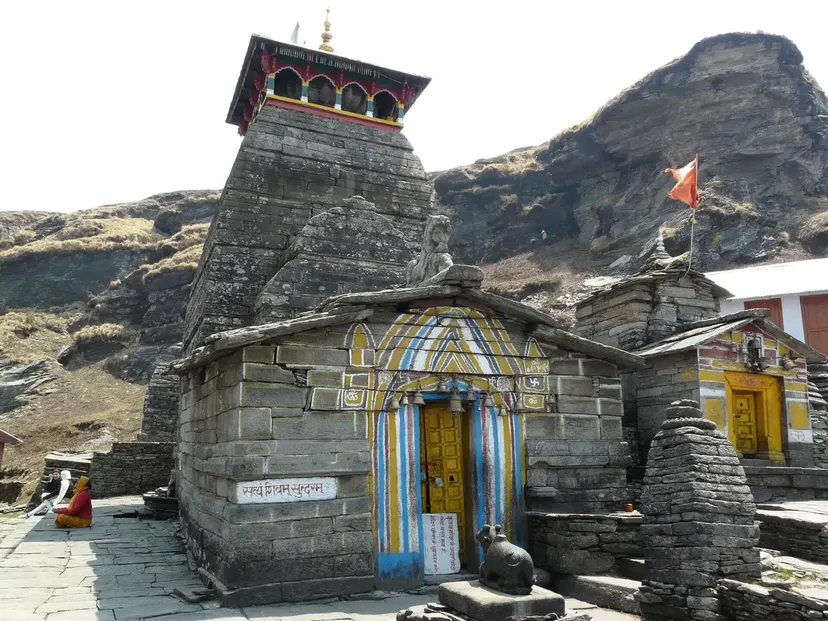
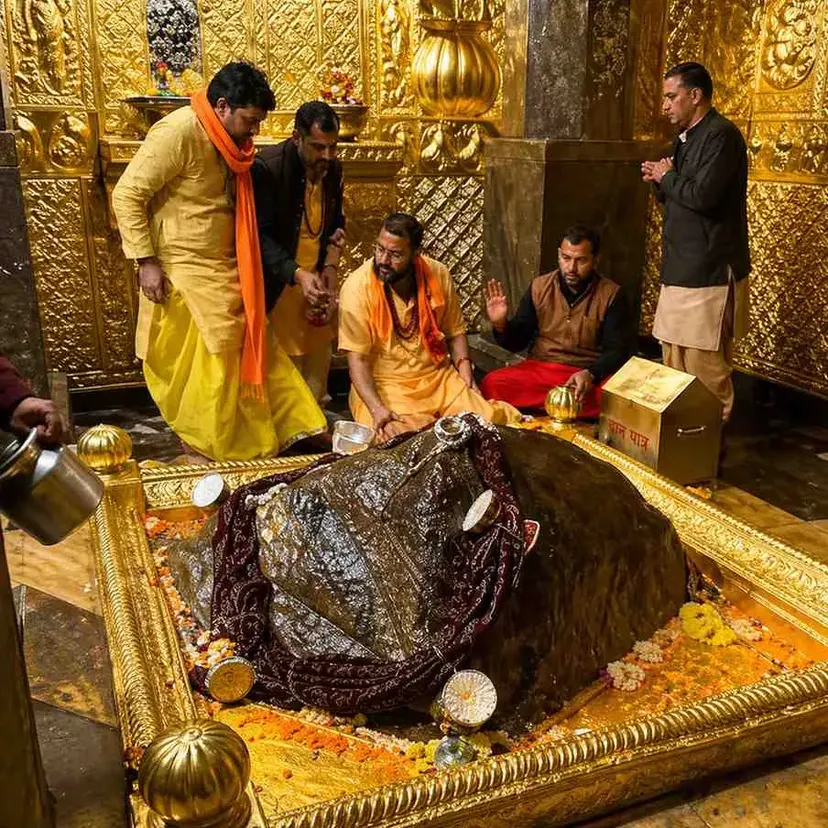
Wikipedia describes Rudranath as a natural rock shrine in the North Indian Himalayan style, housing a grey stone image of Shiva's face. Several sacred tanks lie around it, including Surya Kund, Chandra Kund and Tara Kund, and the peaks of Nanda Devi, Trishul and Nanda Ghunti form the backdrop.
Plan Your Visit
Darshan and Visitor Information
Rudranath is a high-altitude trek, and the shrine is open only in the summer season; in winter worship moves to the Gopinath temple in Gopeshwar. Weather on the route can change quickly. Confirm the current opening period, trek conditions, any permits or registration, and darshan arrangements with the Chamoli district administration and the temple's priests before setting out.
Timings and arrangements change with seasons and festivals. Confirm current details with the temple administration before travelling. Last reviewed 1 November 2026.
Sacred Calendar
Festivals at Rudranath Temple
Summer opening and winter closing of the shrine
The doli of Rudranath travels between the Gopinath temple in Gopeshwar and the high shrine, with worship moving to Gopeshwar for the winter months.
Shravan full-moon fair
Wikipedia records an annual fair at the temple on the Shravan full moon, usually on Raksha Bandhan, attended mainly by local people.
Location
How to Reach Rudranath Temple
According to the Chamoli district administration, the road entry point is Sagar village, 219 km from Rishikesh, and the shrine is reached by a trek of about 20 km from Sagar. The nearest railhead is Rishikesh and the nearest airport is Jolly Grant (Dehradun); from either, buses or taxis run to Gopeshwar, which the district gives as about 241 km from Rishikesh and 258 km from the airport.
Wikipedia notes other trekking routes, including one from Gangolgaon near Gopeshwar and a longer route via Mandal and the Anusuya Devi temple. It describes Rudranath as often considered the hardest of the Panch Kedar temples to reach.
Location: Rudranath, Chamoli, Uttarakhand, India
Nearest airport: Jolly Grant Airport, Dehradun (about 258 km to Gopeshwar, per the district administration)
Nearest railway station: Rishikesh
More in Hindu temples in Uttarakhand · Shiva (worshipped as Rudranath, in the form of his face – Ekanan) temples · Temples in Chamoli Tehsil · Temples in Chamoli District
Questions
Rudranath Temple: Frequently Asked Questions
Which form of Shiva is worshipped at Rudranath?
Shiva is worshipped in the form of his face, called the Ekanan form. According to the Panch Kedar legend, the face of the bull form of Shiva appeared at Rudranath.
Is Rudranath one of the Panch Kedar?
Yes. It is one of the five Panch Kedar shrines and is referred to as the fourth Kedar, after Kedarnath and Tungnath.
Where is Rudranath worshipped in winter?
After the shrine closes for winter, the deity's doli is carried to the Gopinath temple in Gopeshwar, where it is worshipped for about six months until the shrine reopens.
How do I reach Rudranath Temple?
The Chamoli district administration gives Sagar village, 219 km from Rishikesh, as the road entry point, followed by a trek of about 20 km. Other routes start from Gangolgaon and Mandal near Gopeshwar.
Is Rudranath open all year?
No. It closes for winter because of snow and reopens in the summer season. Opening dates are announced each year, so check before planning.
What can be seen from Rudranath?
The district administration notes that the snow peaks of Nanda Devi and Trishul are visible from the front of the temple.
Sources and attribution
- District Chamoli, Government of Uttarakhand — Rudranath Temple
- All India Radio News (newsonair.gov.in) — Portals of Rudranath Temple in Chamoli open for devotees
- Amar Ujala — Doli of fourth Kedar Rudranath installed in Gopinath temple for winters
- IANS — Gates of Rudranath Temple open amid chants of 'Har Har Mahadev'
- Wikipedia — Rudranath
Further reading: Rudranath Temple on Wikipedia (CC BY-SA 4.0).
Spotted an error? Write to info@hindutone.com — see our editorial policy.