Bagnath Temple, Bageshwar
Shiva as Bagnath / Vyaghreshwar (the 'Tiger Lord') temple · Bageshwar, Uttarakhand, India
Bagnath Temple is an ancient Shiva temple at the meeting point of the Saryu and Gomti rivers in Bageshwar, the headquarters town of Bageshwar district in the Kumaon region of Uttarakhand. Shiva is worshipped here as Bagnath or Vyaghreshwar, the 'Tiger Lord', and the town takes its name from the temple.
The present temple, with its tall conical spire, is credited by the district administration to the Chand king Laxmi Chand, but the site is far older. Sculptures from about the 8th to the 10th century are kept in the complex. The temple is the focus of large crowds at Shivaratri and of the Uttarayani fair held at Bageshwar every January.
Faith & Tradition
Religious Significance of Bagnath Temple, Bageshwar
The name comes from Shiva's form as a tiger. According to legend, the sage Markandeya worshipped Shiva here, and Shiva appeared to him in the form of a tiger (bagh or vyaghra). The district administration describes the shrine as that of 'Bageswar or Vyagreswar', the Tiger Lord, an epithet of Shiva. The Tribune notes that both the temple and the town of Bageshwar take their name from this form.
The confluence makes the site especially sacred to pilgrims. On Makar Sankranti in January, the district administration records, crowds take a holy dip in the rivers at Bageshwar. Wikipedia describes the custom of bathing at the confluence before dawn and then offering water to Shiva in the temple; some devotees repeat this for three days, a practice called Trimaghi. Bageshwar has been called the 'Kashi of Uttarakhand', The Tribune reports, for its long standing as a religious centre of Kumaon.
Bagnath is one of a group of ancient Shiva shrines in Kumaon. The Tribune, quoting the regional historian Dr Madan Chandra Bhatt, notes that Bagnath, Baleshwar (Champawat), Jageshwar (Almora) and Rameshwar (Pithoragarh) draw huge crowds at Shivaratri. Bhatt adds that most of the region's Shiva temples are mentioned in the Manaskhand of the Skanda Purana.
Heritage
History of Bagnath Temple, Bageshwar
According to the Bageshwar district administration, the temple was built by the Kumaon king Laxmi Chand around 1450 AD. The district adds that the site has a Sanskrit inscription of a much earlier date. The Tribune describes Bagnath as a 7th-century temple, and Incredible India, the Union tourism ministry's site, likewise traces the site's origins to the 7th century, with sculptures ranging from the 7th to the 16th century. The district's history page records that the area, once known as Danpur, was ruled by the Katyuris from the 7th century and was annexed to the Chand kingdom of Kumaon in 1565.
In 1996 the archaeology department took charge of the temple, Hindustan reported in 2017. Sculptures and inscribed slabs from the 8th to the 10th century were then placed behind an iron grille. They include images of Shiva (including four-faced, three-faced and five-faced forms), Ganesha, Vishnu, Mahishasuramardini, Kartikeya, a sahasra (thousand) Shivalinga, a Panchadeva panel and the Navagraha. The report noted that the priests and visitors wanted the grille opened. The department said a staff member had been posted at the temple and told to open it.
In 2016 The Tribune reported local concern that the temple area had been encroached upon and that plans for beautification and gardening had been pending for decades. The same year a water police post was opened at the temple premises to patrol the rivers, according to Wikipedia, citing The Times of India.
Architecture and sacred features
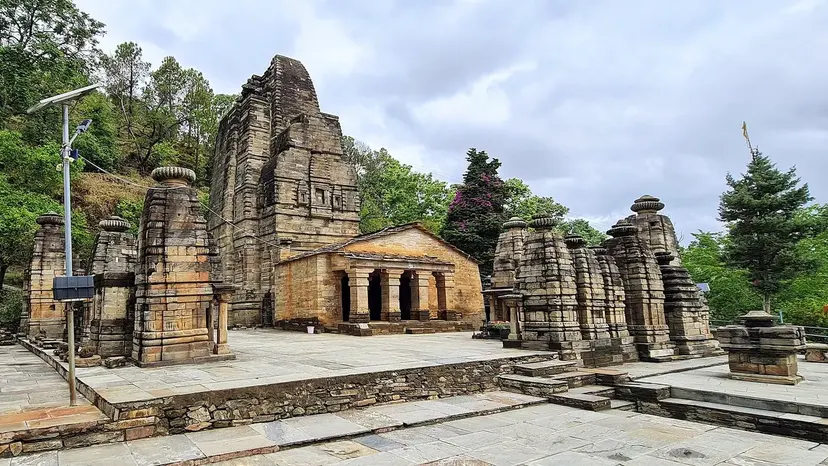
The district administration describes Bagnath as a large temple with a conical tower, built in the Nagara style according to Incredible India and Wikipedia. The complex holds a cluster of smaller shrines. The district lists among them temples of Bhairav, Dattatreya, Ganga Mai, Hanuman, Durga, Kalika and Vaneshwar.
Plan Your Visit
Darshan and Visitor Information
Bagnath is a working temple, and the older sculptures are kept under the care of the archaeology department, so photography and access to those sections may be restricted. Crowds are very large at Shivaratri and during the Uttarayani fair in January. Confirm current timings and arrangements locally or with the Bageshwar district administration before visiting.
Timings and arrangements change with seasons and festivals. Confirm current details with the temple administration before travelling. Last reviewed 1 November 2026.
Sacred Calendar
Festivals at Bagnath Temple, Bageshwar
Uttarayani Mela
One of the largest fairs of Kumaon, held at Bageshwar for about a week in January. Pilgrims bathe at the confluence and offer water to Shiva at Bagnath; the fair has long been a trading occasion for people from the surrounding hills.
Maha Shivaratri
The district administration notes that the temple is flooded with devotees on Shivaratri, and The Tribune has reported huge crowds at Bagnath on the festival.
Location
How to Reach Bagnath Temple, Bageshwar
Bagnath Temple is in Bageshwar town, at the confluence of the Saryu and Gomti. The district administration lists Kathgodam as the nearest railway station (about 180 km by road from Bageshwar) and Pantnagar as the nearest airport (about 210 km). Bageshwar is about 40 km from Kausani and 90 km from Almora by road, with bus and taxi services.
Location: Bageshwar, Uttarakhand, India
Nearest airport: Pantnagar (about 210 km, per the district administration)
Nearest railway station: Kathgodam (about 180 km, per the district administration)
More in Hindu temples in Uttarakhand · Shiva as Bagnath / Vyaghreshwar (the 'Tiger Lord') temples · Temples in Julkiya · Temples in Bageshwar Tehsil · Temples in Bageshwar District
Questions
Bagnath Temple, Bageshwar: Frequently Asked Questions
Why is it called Bagnath Temple?
According to legend, Shiva appeared to the sage Markandeya here in the form of a tiger. Shiva is worshipped as Bagnath or Vyaghreshwar, the 'Tiger Lord', and the town of Bageshwar is named after the temple.
Where exactly is Bagnath Temple?
It stands in Bageshwar town, Uttarakhand, at the confluence of the Saryu and Gomti rivers.
How old is Bagnath Temple?
The district administration says the present temple was built by the Chand king Laxmi Chand about 1450 AD, but the site is older. Sculptures from the 8th–10th centuries survive, and The Tribune and Incredible India trace it to the 7th century.
What is the Uttarayani fair at Bageshwar?
It is a week-long fair held every January around Makar Sankranti, described by the district administration as one of the largest in Kumaon. Pilgrims bathe at the confluence and worship at Bagnath.
What ancient sculptures are at Bagnath?
According to a 2017 Hindustan report, images from the 8th–10th centuries include multi-faced Shiva forms, Ganesha, Vishnu, Mahishasuramardini, Kartikeya, a thousand-linga Shivalinga and the Navagraha, kept behind a grille by the archaeology department since 1996.
How do I reach Bagnath Temple?
Bageshwar is reached by road; the nearest railway station is Kathgodam (about 180 km) and the nearest airport is Pantnagar (about 210 km), per the district administration.
Sources and attribution
- District Administration, Bageshwar (Government of Uttarakhand) — Temples – Bagnath Temple
- District Administration, Bageshwar (Government of Uttarakhand) — Culture & Heritage – Functions & Festivals (Ghughutia, Uttaraini festival)
- District Administration, Bageshwar (Government of Uttarakhand) — History
- District Administration, Bageshwar (Government of Uttarakhand) — How to Reach
- The Tribune — Development gains elude Kumaon's holy place (16 May 2016)
- The Tribune — Terror threat fails to deter devotees (Shivratri report)
- Hindustan (Live Hindustan) — बागेश्वर में पुरातत्व विभाग की कैद में आठवीं सदी के शिलालेख, नहीं हो पा रही पूजा (18 Oct 2017)
- Ministry of Tourism, Government of India — Bagnath Temple
- Wikipedia — Bagnath Temple
Further reading: Bagnath Temple, Bageshwar on Wikipedia (CC BY-SA 4.0).
Spotted an error? Write to info@hindutone.com — see our editorial policy.