Gopinath Mandir, Gopeshwar
Shiva as Gopinath (also called Rudranath), a svayambhu linga temple · Gopeshwar, Chamoli, Uttarakhand, India
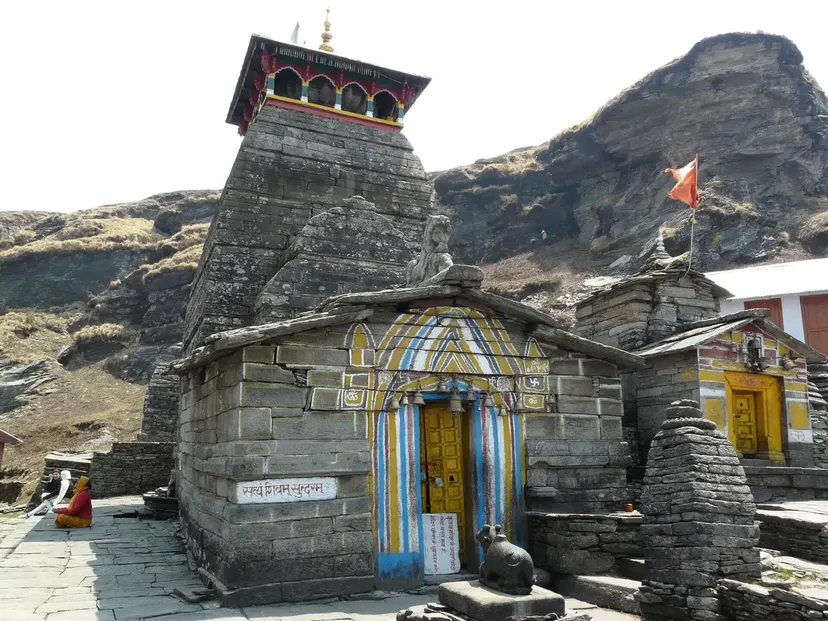
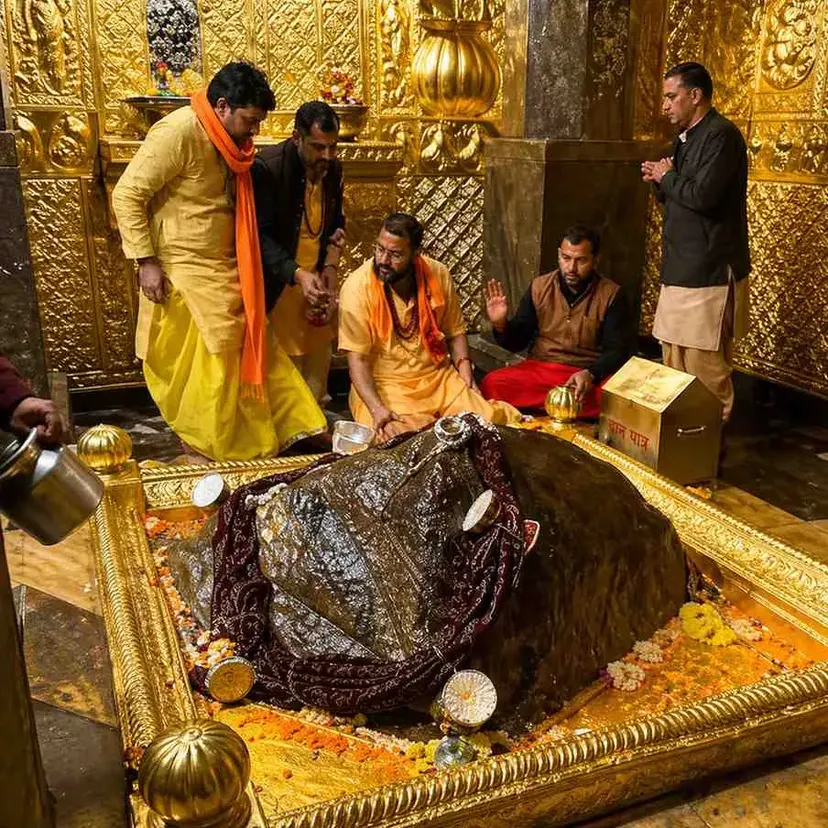
Gopinath Mandir is an ancient Shiva temple in Gopeshwar, the headquarters town of Chamoli district in the Garhwal region of Uttarakhand. The Archaeological Survey of India (ASI), which protects it as a monument of national importance, lists it as the Rudranath (Gopinath) Temple and assigns it to the eighth century AD. The object of worship is a svayambhu (self-manifested) linga.
Two things make the temple widely known. In its courtyard stands a tall metal trident bearing inscriptions more than a thousand years old, which is separately protected by the ASI. And every winter, when snow closes the Rudranath shrine high in the mountains, the festival palanquin (doli) of Rudranath, the fourth of the Panch Kedar temples, is brought down to Gopinath Mandir, where the deity is worshipped for about six months.
Faith & Tradition
Religious Significance of Gopinath Mandir, Gopeshwar
Gopinath Mandir is the winter seat of Rudranath. Wikipedia's article on Rudranath records that in winter a symbolic image of Shiva is carried from Rudranath to the Gopinath Mandir in Gopeshwar for worship, and that the summer doli procession to Rudranath starts from Gopeshwar. In October 2023, Amar Ujala reported, the doli reached Gopinath Mandir two days after the Rudranath temple closed, after overnight halts on the way, and a special puja of Gopinath and Rudranath was performed on its arrival. ETV Bharat described the image being carried in a flower-decorated palanquin in 2020.
The trident in the courtyard is the subject of a popular legend. According to tradition, Shiva hurled his trident at Kamadeva, the god of love, who had disturbed his meditation, and it lodged at this spot. Devotees believe that while force cannot move it, the touch of a true devotee makes it tremble. Wikipedia and Incredible India both record this belief. Incredible India also notes a local tradition crediting a devout king named Gopinath with building the temple after a vision.
Heritage
History of Gopinath Mandir, Gopeshwar
The ASI dates the temple to the eighth century AD, noting that its plan, elevation and ornament closely resemble those of the Mrityunjaya temple at Jageshwar. Incredible India attributes it to the Katyuri dynasty, which built many temples in Kumaon and Garhwal, and places it in the 9th to 11th centuries. The ASI's note that about twenty-one amalakas (the ribbed stones that crown temple spires) of different sizes lie within the compound suggests that the site once held many more shrines than survive today.
The trident carries the temple's oldest written record. According to the ASI, its first inscription, in late Brahmi characters of the sixth to seventh century AD, records that it was set up by Ganapatinaga in front of the temple of Rudra. The trident later fell, and a second inscription in Nagari records that King Asoka Challa of Dulu in western Nepal restored it in 1191 AD. The ASI notes that the nineteenth-century scholar Atkinson read the king's name as Aneka Malla, and that recent studies regard Asoka Challa as the correct reading.
The temple has been protected by the ASI since a notification of 1962; the trident was notified separately in 1920, according to the ASI Dehradun Circle.
Architecture and sacred features
The ASI describes the main shrine as a Nagara temple with a latina (single curved) shikhara, triratha (three projections) in plan and elevation. Its spire is covered with a mesh of chaitya-arch motifs, some carrying auspicious faces, which the texts call a jala shikhara. The chandrashala above the tall sukanasa (the projecting front of the spire) shows Shiva dancing as Nataraja. The mandapa in front of the sanctum is a later addition.
The compound also holds three miniature shrines, one of them in the valabhi (barrel-roofed) style of about the tenth century, and two double-storeyed buildings known as the Baradari and the Rawal Niwas, according to the ASI. The metal trident, over five feet high and about 20 cm in diameter per the ASI, stands within the complex.
Plan Your Visit
Darshan and Visitor Information
Gopinath Mandir is a working temple as well as an ASI-protected monument, so respect any rules on photography and on touching the trident and old sculptures. The temple is busiest in Shravan, on Maha Shivaratri and when the Rudranath doli arrives or departs. Confirm current timings and arrangements locally before visiting.
Timings and arrangements change with seasons and festivals. Confirm current details with Monument protected by the Archaeological Survey of India (Dehradun Circle) before travelling. Last reviewed 1 November 2026.
Sacred Calendar
Festivals at Gopinath Mandir, Gopeshwar
Arrival of the Rudranath doli
After the Rudranath shrine closes for winter, its festival palanquin is brought to Gopinath Mandir and installed for about six months, with a special puja on arrival.
Maha Shivaratri
Incredible India notes large celebrations at the temple on Maha Shivaratri.
Shravan month
Incredible India records thousands of devotees visiting for rituals during Sawan.
Location
How to Reach Gopinath Mandir, Gopeshwar
Gopinath Mandir is in Gopeshwar town, Chamoli. Incredible India lists Jolly Grant Airport at Dehradun as the nearest airport. Gopeshwar is also the starting point for most routes to Rudranath; Wikipedia notes that most trekking routes to Rudranath begin from Gopeshwar or nearby villages, including Gangolgaon about 3 km away.
Location: Gopeshwar, Chamoli, Uttarakhand, India
Nearest airport: Jolly Grant Airport, Dehradun (per Incredible India)
More in Hindu temples in Uttarakhand · Shiva as Gopinath (also called Rudranath), a svayambhu linga temples · Temples in Gopeshwar · Temples in Chamoli Tehsil · Temples in Chamoli District
Questions
Gopinath Mandir, Gopeshwar: Frequently Asked Questions
How old is Gopinath Mandir in Gopeshwar?
The ASI assigns the temple to the eighth century AD. Incredible India places it in the 9th–11th centuries under the Katyuri dynasty. The trident in its courtyard has an inscription of the sixth–seventh century AD.
What is written on the Gopeshwar trident?
According to the ASI, a late Brahmi inscription records that Ganapatinaga set it up before the temple of Rudra, and a later Nagari inscription records its restoration in 1191 AD by King Asoka Challa of Dulu in western Nepal.
What is the legend of the trident?
Tradition holds that Shiva threw his trident at Kamadeva and it lodged here. Devotees believe force cannot move it but a true devotee's touch makes it tremble.
Why is Gopinath Mandir linked with Rudranath?
It is the winter seat of Rudranath, one of the Panch Kedar shrines. When Rudranath closes in winter, its doli is brought to Gopinath Mandir and worshipped there for about six months.
Is Gopinath Mandir an ASI-protected monument?
Yes. The ASI Dehradun Circle lists the Rudranath (Gopinath) Temple, Gopeshwar, and separately the trident, as protected monuments.
What is the temple's architectural style?
The ASI describes a Nagara temple with a latina jala shikhara covered in chaitya motifs and a Nataraja image on the chandrashala, closely resembling the Mrityunjaya temple at Jageshwar.
Sources and attribution
- Archaeological Survey of India, Dehradun Circle — Monuments of Chamoli district: Rudranath (Gopinath) Temple and Trident, Gopeshwar
- Ministry of Tourism, Government of India (Incredible India) — Gopinath Temple
- Wikipedia — Gopinath Temple, Gopeshwar
- Wikipedia — Rudranath
- Amar Ujala — Doli of fourth Kedar Rudranath installed in Gopinath temple for winter (20 Oct 2023)
- ETV Bharat — Uttarakhand's Rudranath temple shuts before snowfall (17 Oct 2020)
Further reading: Gopinath Mandir, Gopeshwar on Wikipedia (CC BY-SA 4.0).
Spotted an error? Write to info@hindutone.com — see our editorial policy.