Tirupati Temple AI Partnership with Google 2025 | Smart Darshan Experience for Devotees
In a historic first for Hindu temples, the Tirumala Tirupati Devasthanams (TTD) has partnered with tech giant Google to launch AI-integrated pilgrim services…
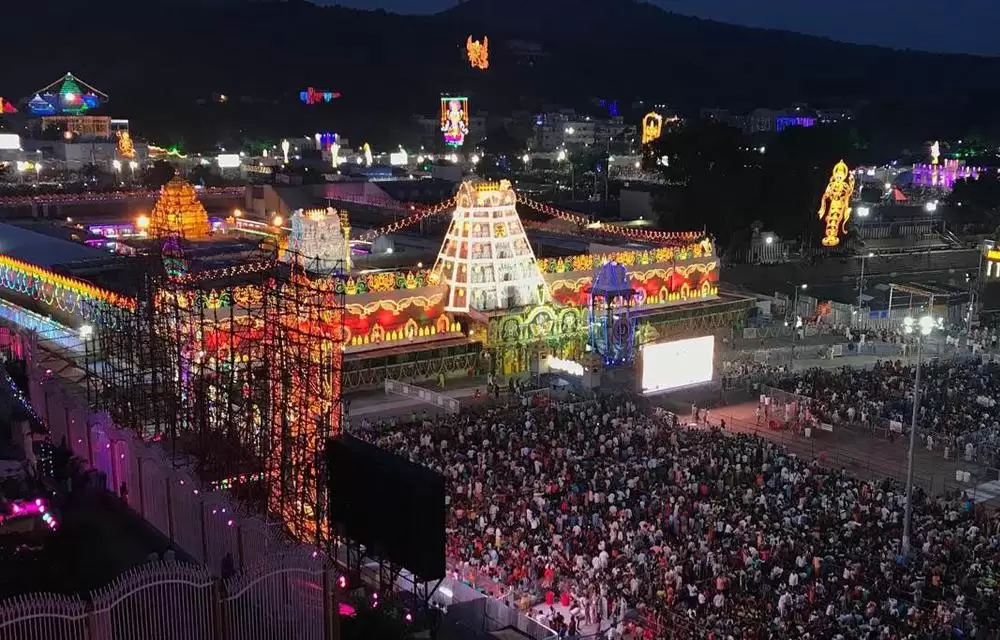
In a historic first for Hindu temples, the Tirumala Tirupati Devasthanams (TTD) has partnered with tech giant Google to launch AI-integrated pilgrim services…
In a historic first for Hindu temples, the Tirumala Tirupati Devasthanams (TTD) has partnered with tech giant Google to launch AI-integrated pilgrim services at the sacred Tirupati Temple. Announced on April 3, 2025, this groundbreaking collaboration is set to transform the darshan experience for millions, significantly reducing waiting times and enhancing crowd management.
For detailed guides and insights on this innovative fusion of tradition and technology, visit www.hindutone.com.
A New Era for Tirupati Pilgrims
The Tirupati Temple, among the world’s busiest pilgrimage sites, welcomes over 70,000 devotees daily. Until now, long queues and crowding were a common struggle. But with Google’s AI technology, the TTD will offer:
- Crowd Prediction: AI forecasts peak times using historical and live data.
- Queue Optimization: Smart algorithms streamline darshan access.
- Real-Time Alerts: Through a new TTD app, devotees receive live updates on queue status and temple activities.
This initiative is a landmark moment in Hindu technology, combining ancient devotion with smart digital tools. Andhra Pradesh CM Chandrababu Naidu called it a “fusion of tradition and technology” during the official launch.
How the AI System Works
Google’s AI uses data from temple gates, local weather, and visitor flow trends to:
- Analyze and predict crowd patterns.
- Allocate time slots for darshan.
- Notify users via the official TTD mobile app.
Devotees can now:
- Check live queue times
- Book personalized darshan slots
- Access travel and temple guides
“This is a game-changer for pilgrims,” a TTD spokesperson said. “Technology is now a bridge to divinity.”
Want a step-by-step walkthrough of the app? Visit www.hindutone.com for detailed tutorials and pilgrim insights.
Global Praise for a Local Milestone
The announcement has sparked excitement across the Hindu diaspora. Devotees from the US, UK, and Australia shared their support online using hashtags like #TirupatiAI and #HinduInnovation.
“It’s inspiring to see our temples embrace the future.” – Tweet from a California-based devotee
Hindutone is covering every development of this story—bringing interviews, tech breakdowns, and reactions straight to the global Hindu community.
Why This Matters for Hindu Devotees
Beyond convenience, this AI rollout enriches the spiritual journey. Key advantages include:
- Shorter Wait Times: Spend more time in worship, less time in line.
- Better Planning: Avoid peak rushes during festivals like Brahmotsavam.
- Global Connectivity: Stay connected to Tirupati from anywhere in the world.
Temples such as Vaishno Devi and Sabarimala may soon adopt similar models—trends that www.hindutone.com continues to monitor.
Hindutone: Your Gateway to Hindu Innovation
At Hindutone, this initiative is celebrated as a milestone in cultural evolution. The platform offers:
- Detailed feature explainers on the Tirupati-Google AI system
- Video walkthroughs of the new TTD app
- Insights into how tech is helping preserve and enhance Hindu traditions
Whether you're a spiritual seeker or a tech lover, www.hindutone.com has everything you need to stay informed.
What’s Next for Tirupati?
Following the successful launch, TTD plans to expand AI-driven services to:
- Prasadam distribution
- Accommodation booking
- Transportation logistics
Hindutone will be your source for all updates as this digital transformation continues to unfold.
Join the Journey
The Tirupati-Google partnership is a powerful example of how technology can elevate faith. Stay connected to this revolution with www.hindutone.com—your trusted platform for Hindu news, spirituality, and innovation.
Explore. Learn. Be inspired.
Why Tirumala Tirupati Devasthanams Is the Right Place for This Innovation
The Tirumala Venkateswara Temple, situated on the Seshachalam Hills in Andhra Pradesh, is dedicated to Lord Venkateswara — a form of Vishnu venerated across the Vaishnava tradition. The Brahmotsavam festival alone draws over a million pilgrims across nine days each year, making logistical excellence not merely a convenience but a spiritual necessity. The Skanda Purana's Venkatesha Mahatmya extols the merit of darshan at Tirumala, underscoring why every devotee regards their wait — however long — as an act of devotion in itself.
The TTD manages not just the main shrine but a sprawling complex of subsidiary temples, choultries (pilgrims' rest houses), and prasadam counters that together serve tens of thousands of people simultaneously. With an annual footfall consistently exceeding 25 million, the scale rivals that of major international airports, making AI-assisted crowd management a logical and long-overdue step rather than a departure from tradition.
What Does the Vedic Tradition Say About Welcoming All Devotees Efficiently
The Agama Shastras — the ancient liturgical manuals governing temple construction and ritual — place the concept of darshan at the centre of temple worship. Darshan, from the Sanskrit root 'drsh' meaning 'to see,' is understood as a sacred exchange: the devotee beholds the deity and the deity's grace flows back. Any system that allows more devotees to achieve a calm, undistracted darshan is therefore aligned with the spirit of the Agama texts rather than opposed to it.
The Vishnu Purana describes the ideal of tirtha-kshetra seva — service to pilgrims at a holy site — as an act of merit equal to personal worship. Temple authorities and rulers throughout history, from the Pallava kings who first patronised Tirumala to the later Vijayanagara emperors who expanded its gopurams, invested heavily in infrastructure to ease the pilgrim's journey. The current AI initiative can thus be seen as a continuation of this centuries-old tradition of royal and institutional seva.
Classical Sanskrit texts such as the Manasara and Mayamata, which codify temple architecture, also address the design of yatra-mandapams — waiting halls — demonstrating that managing the flow of worshippers was always a considered part of sacred architecture. The integration of digital queue management is, in that sense, a 21st-century yatra-mandapam.
How the New TTD App Changes the Pilgrim Journey from Home to the Sanctum
The reimagined TTD mobile application functions as a single digital companion throughout the pilgrimage. Before departure, devotees can use the AI-powered crowd-prediction dashboard to identify low-footfall windows — typically early weekday mornings outside major festival calendars — and pre-book a Sudarshana token, the digitised equivalent of the traditional token system that has governed darshan queues for decades.
On arrival at Tirupati town, real-time alerts notify pilgrims about the current wait at each of the queue complexes — Vaikuntam Queue Complex I and II — along with live updates on prasadam availability and the schedule for special sevas such as Suprabhatam, Thomala Seva, and Archana. This granular information allows families, elderly pilgrims, and those with young children to plan rest breaks and meals without losing their place in the digital queue.
The app also integrates with the TTD's existing e-seva portal for booking accommodation in TTD-run cottages and guest houses across the hill, as well as the Annadanam (free meal) schedule at Tirumala. The result is an end-to-end digital pilgrimage planner that reduces the anxiety of the unknown — which has historically been one of the greatest stressors for first-time visitors making the arduous climb to the 853-metre summit.
Privacy, Data Ethics, and the Responsibility of a Sacred Institution
Any partnership involving mass biometric and movement data naturally raises questions about privacy. The TTD has publicly stated that the AI system relies on anonymised aggregate data from gate sensors and the app's opt-in location services, rather than facial recognition or individual tracking. Devotees who prefer not to use the app retain access to the traditional physical token and queue system, ensuring that digital adoption remains voluntary.
India's Digital Personal Data Protection Act of 2023 places obligations on large data processors, and as a state-government-administered trust, the TTD operates under additional public-accountability norms. Pilgrims are encouraged to review the app's privacy policy and use the dedicated TTD helpline — 1800-425-4141 — to raise any data-related concerns. Transparency in this area will be essential if the partnership is to maintain the deep institutional trust that devotees have placed in Tirumala for centuries.
Hindu philosophers have long distinguished between yantra (tool) and mantra (sacred intent): a tool is only as sacred or as harmful as the intent with which it is wielded. The TTD's stated intent — reducing devotee hardship and expanding access to darshan — places this technology squarely in the service of dharmic values, provided the ethical safeguards around data are rigorously maintained.
Other Major Hindu Temples Watching the Tirupati Model Closely
Tirumala is not the only temple wrestling with enormous pilgrim volumes. The Kashi Vishwanath Temple Corridor in Varanasi, redesigned and reopened in 2021, already uses digital booking for certain sevas, but has not yet adopted AI-driven crowd prediction at the scale now being piloted at Tirumala. The Shree Somnath Trust in Gujarat and the Shri Jagannath Temple Administration in Puri have both expressed interest in modernising their darshan systems, and the Tirupati model is being watched as a replicable blueprint.
The Char Dham pilgrimage circuit — comprising Badrinath, Kedarnath, Gangotri, and Yamunotri — poses an especially acute management challenge, given that the high-altitude shrines are accessible for only a few months each year, compressing enormous devotee numbers into a narrow seasonal window. An AI-assisted slot system similar to the one being deployed at Tirumala could, in principle, help the respective Devasthanam Boards distribute that seasonal load more evenly.
Beyond India, temples in Singapore, the United Kingdom, and the United States that regularly host large events — such as the Neasden BAPS Swaminarayan Mandir in London or the Sri Venkateswara Temple in Bridgewater, New Jersey — are also observing how the world's most visited Hindu temple navigates the intersection of ancient devotion and modern technology. Success at Tirumala would likely accelerate adoption across the global Hindu temple network.
What Devotees Can Practically Do to Make the Most of the New System
Pilgrims planning a visit to Tirumala in 2025 should download the official TTD app from the Google Play Store or Apple App Store and create an account using their Aadhaar-linked mobile number, which is already required for the existing e-seva booking system. Once registered, the crowd-prediction feature can be accessed from the home screen under 'Plan My Visit,' where the AI model displays a colour-coded forecast — green for low crowds, amber for moderate, and red for peak — for each day of the coming fortnight.
It is advisable to book the Sudarshana token at least three to five days in advance for weekend visits and during major Vaishnava observances such as Vaikuntha Ekadasi, Brahmotsavam, and the monthly Saturdays in Karthika Masam, which consistently draw the highest footfall. For first-time pilgrims, the app's 'Visitor Guide' section offers a step-by-step walkthrough of the climb via the Alipiri foot-trail as well as the ghat road route, complete with estimated travel times from Tirupati railway station.
Devotees who are elderly, differently abled, or travelling with infants should note that the TTD's existing Divyangula Seva (special assistance programme) is now integrated into the app, allowing pre-registration for wheelchair services and priority darshan lanes. For detailed tutorials and regularly updated guides on using every feature of the new system, HinduTone provides comprehensive walkthroughs at www.hindutone.com.
Frequently Asked Questions
Where is Tirupati Temple AI Partnership with Google located?
In a historic first for Hindu temples, the Tirumala Tirupati Devasthanams (TTD) has partnered with tech giant Google to launch AI-integrated pilgrim services at the sacred Tirupati Temple . Announced on April 3, 2025, this groundbreaking collaboration is set to transform the darshan experience for millions, significantly reducing waiting times and enhancing
Who is the presiding deity of Tirupati Temple AI Partnership with Google?
The temple's presiding deity and its significance are described in the guide above.
What are the timings and how do I reach Tirupati Temple AI Partnership with Google?
Temples typically open early morning and evening; confirm current darshan timings before visiting. The nearest airport, railway station and road routes are covered in the guide above.
What is the best time to visit Tirupati Temple AI Partnership with Google?
Major festival days and the cooler months are popular, though weekday mornings offer a calmer darshan. Plan around the temple's key festivals for the most vibrant experience.
You might also like
Tirumala Tirupati TTD — Complete Guide for NRIs (Darshan, Seva, Accommodation)

Nirjala Ekadashi June 25 2026 – The King of Ekadashis: Complete Guide with Bhima’s Story, Rituals, Mantras & Benefits

Parama Ekadashi June 11 2026 – Complete Devotional Guide: Date, Story, Rituals, Mantras & Benefits