
Navratri 2026 for Working Women: A Realistic Office-Day Routine for 11 to 19 October
Navratri 2026 runs from Sunday 11 to Monday 19 October in India, and seven of those days are working days. Here is a realistic plan for working women: a 15-minute morning puja, a quiet office-friendly devotion, vrat-friendly lunchboxes, a calm evening routine, how to handle Ashtami and Navami on a Monday, asking for Dussehra leave and tips for women abroad.
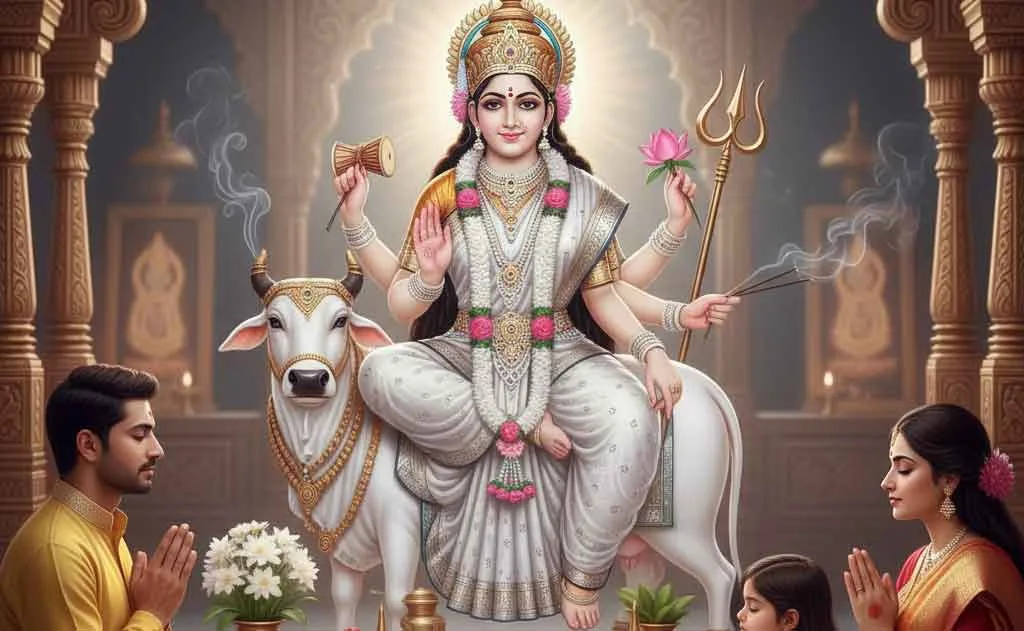
Navratri 2026 runs from Sunday 11 to Monday 19 October in India, and seven of those days are working days. Here is a realistic plan for working women: a 15-minute morning puja, a quiet office-friendly devotion, vrat-friendly lunchboxes, a calm evening routine, how to handle Ashtami and Navami on a Monday, asking for Dussehra leave and tips for women abroad.
Quick answer: Navratri 2026 runs from Sunday 11 October to Monday 19 October in India (Drik Panchang), with Durga Ashtami and Maha Navami both on Monday 19 October and Dussehra on Tuesday 20 October. For a working woman, a realistic routine is: a 15-minute morning puja (lamp, the day's naam mantra, a short prayer), a quiet devotional moment at your desk without flames or incense, a vrat-friendly or sattvic lunchbox, and a calm evening lamp and aarti after work. Plan Monday 19 October and Tuesday 20 October early with your manager.
This is a practical plan, not a rulebook. Many women observe Navratri very differently, traditions vary by region and family, and there is no single correct way. Take what fits your week.
Your working week at a glance
Of the nine days, Day 1 (Sunday 11 October) and Days 7 and 8 (Saturday 17 and Sunday 18 October) fall on a weekend for most people with a Monday to Friday week. Use the weekends for the longer rituals: Ghatasthapana, a longer reading, a temple visit or Garba night. Keep weekdays short and steady.
For the full festival overview, see the Navratri 2026 complete guide for NRIs and the diaspora, and for the general women's guide see Navratri 2026 for women: Devi worship, daily rituals, colours and fasting.
A realistic 15-minute morning puja before work
Set your alarm 15 to 20 minutes earlier than usual. Prepare the night before: wash the lamp, keep flowers or a few tulsi or other leaves ready, and lay out your clothes (in the day's colour if you follow that custom).
- Minutes 1 to 3: Freshen up and light the lamp. Sit facing the Devi's picture or the kalash if you have set one up.
- Minutes 3 to 6: Offer what you have. A flower, a pinch of kumkum, a little fruit, sugar or a spoon of the day's bhog. Simplicity is fine.
- Minutes 6 to 11: Chant the day's naam mantra 11, 27 or 108 times, whatever fits. A mala helps you keep count without watching the clock.
- Minutes 11 to 14: One short prayer. Many women recite the Sarva-mangala-mangalye verse, given below.
- Minute 15: Set an intention for the day, such as patience in a difficult meeting, then leave the lamp in a safe place or put it out before you go.
Never leave a lit lamp unattended when you leave home. If you want a lamp that stays on, many families use a battery diya during the day.
Here is the Day 1 naam mantra for Shailaputri. The mantra changes each day: only the Devi's name changes, and each day page lists it.
ॐ देवी शैलपुत्र्यै नमः॥
Om Devi Shailaputryai Namah
A widely recited prayer from the Devi Mahatmya, suitable for any day:
सर्वमङ्गलमाङ्गल्ये शिवे सर्वार्थसाधिके। शरण्ये त्र्यम्बके गौरि नारायणि नमोऽस्तु ते॥
Sarva-mangala-mangalye shive sarvartha-sadhike, sharanye tryambake gauri narayani namostu te.
It means, in short: "O auspicious one, the giver of all good, who fulfils every aim, the refuge, the three-eyed Gauri, Narayani, salutations to you."
For a longer version, see the Navratri daily routine for women: morning puja and evening prayer.
Devotion at your desk (office-friendly, no lamps)
- A small photo or card of the Devi on your desk or as your phone wallpaper, if your workplace is comfortable with personal items.
- Silent japa on a small mala or a finger counter during a coffee break or the commute. Nobody needs to hear it.
- A two-minute pause before a big meeting: close your eyes, breathe, and repeat the day's Devi name in your mind.
- No flames, no incense, no camphor at work. Offices have fire-safety rules, and colleagues may have allergies.
- Wear the day's colour as a scarf, dupatta, bangle or bindi if a full outfit does not suit your office dress code. See the Navratri 2026 colours list.
- Be relaxed about questions. If a colleague asks, a one-line answer works: "It is Navratri, nine nights honouring the Goddess."
Vrat-friendly and sattvic office lunches
Fasting rules differ widely: some women eat one meal, some eat fruit and milk, some avoid grains but eat vrat flours, and many simply avoid onion, garlic and meat for nine days. Follow your family's custom. Easy lunchbox ideas that travel well:
- Sabudana khichdi: packs well, reheat gently.
- Samak rice (barnyard millet) khichdi with curd.
- Rajgira paratha or kuttu puri with a dry potato sabzi.
- Sabudana vada as a snack box, made the night before.
- Makhana kheer in a small insulated jar, or plain roasted makhana for the afternoon.
- Fruit, roasted peanuts, a bottle of water and buttermilk or coconut water.
For a full day-by-day plan, see Sharad Navratri 2026 day-wise vrat recipes, and for what is usually allowed, see Navratri fasting rules 2026.
Health first: if you have diabetes, low blood pressure, a long commute, a physically demanding job, are pregnant or breastfeeding, or take regular medication, consult your doctor before fasting. Many women choose a light sattvic diet instead, which is a fully valid way to observe Navratri.
An evening routine after work
- Freshen up and light the lamp as soon as you are home. Many working women make the evening their main puja.
- Offer the day's bhog (fruit is always fine), chant the naam mantra and do a short aarti.
- Read for ten minutes: a few verses of the Devi Mahatmya, a stotra, or a Navadurga story with your children.
- Garba or Dandiya on weekends: midweek, many women attend only one or two evenings so they are not exhausted at work.
- Sleep on time. Rest is part of observing a nine-day vrat with care.
Ashtami and Navami on a weekday (Monday 19 October)
In India, Drik Panchang lists both Durga Ashtami and Maha Navami on Monday 19 October 2026 (Saptami still prevails at sunrise on Sunday 18 October). For working women this means the biggest puja day falls on a Monday.
- Do the Ashtami or Navami puja early that morning, before work.
- If your family does Kanya Pujan, invite the girls for a morning meal, or plan it for the evening if your family's custom allows. Prepare halwa, puri and chana the night before.
- If you would like more time, a half-day or a day of leave on Monday may be worth requesting early.
- If your family breaks the fast on Navami, plan a simple dinner rather than a late, heavy meal.
Asking for leave for Dussehra (Tuesday 20 October)
Dussehra is widely observed as a holiday across India, but holiday lists differ between states and employers, so check your company's calendar. If you need leave:
- Ask a week or two ahead, and offer to finish urgent work before the day.
- Keep it short and matter-of-fact: "Dussehra is a major festival for my family on Tuesday 20 October; I would like to take the day off."
- If a full day is not possible, ask for flexible hours so you can do the morning Vijayadashami puja.
- Abroad, many people use a floating holiday or a personal day. See Dussehra 2026 in the USA for local timings, and the Dussehra / Vijayadashami 2026 guide.
Telangana families will also want to plan around Saddula Bathukamma on Sunday 18 October 2026. Diwali follows on Sunday 8 November 2026.
Time-zone tips for working women abroad
- Follow your local calendar and your local temple. Navratri begins on Sunday 11 October abroad too, but Drik Panchang lists Durga Ashtami on Sunday 18 October in the USA, Canada and the UK.
- Never convert India's puja times into your time zone. Look up muhurats for your own city.
- Video calls with family in India are easiest on weekends; agree a time in advance.
- For more, see Navratri 2026 for Indian women abroad.
Printable 9-day plan for working women
Dates are for India (Drik Panchang). Colours follow the popular weekday custom; for Days 8 and 9, lists differ. "Office tip" is just a suggestion.
| Day and date | Devi | Colour (custom) | Morning (15 min) | Office tip |
|---|---|---|---|---|
| 1: Sun 11 Oct | Shailaputri | Orange | Ghatasthapana as per your family | Weekend: prepare lunches for the week |
| 2: Mon 12 Oct | Brahmacharini | White | Lamp, naam mantra, prayer | Silent japa on the commute |
| 3: Tue 13 Oct | Chandraghanta | Red | Lamp, naam mantra, prayer | Red dupatta or bindi |
| 4: Wed 14 Oct | Kushmanda | Royal blue | Lamp, naam mantra, prayer | Two-minute pause before meetings |
| 5: Thu 15 Oct | Skandamata | Yellow | Lamp, naam mantra, prayer | Fruit and makhana snack box |
| 6: Fri 16 Oct | Katyayani | Green | Lamp, naam mantra, prayer | Plan weekend Garba or temple visit |
| 7: Sat 17 Oct | Kalaratri | Grey | Longer puja and reading | Weekend: shop for Ashtami |
| 8: Sun 18 Oct | Mahagauri | Lists differ | Longer puja; Saddula Bathukamma for Telangana families | Prepare Kanya Pujan prasad |
| 9: Mon 19 Oct | Siddhidatri | Lists differ | Ashtami and Navami puja, Kanya Pujan | Half-day or early start if possible |
| Tue 20 Oct | Vijayadashami | - | Vijayadashami puja | Leave or flexible hours |
Each day page has that Devi's naam mantra, dhyana shloka and bhog. For mantras on one page, see Navratri day-wise mantras and their significance.
Frequently asked questions
Can I observe Navratri properly if I work full-time?
Yes. Many working women keep Navratri with a short morning puja, the day's naam mantra and an evening lamp and aarti. Devotion is measured by sincerity, not by the number of hours. Traditions vary by family, so keep any ritual your family treats as essential and simplify the rest.
Can I light a diya or incense at my office desk?
Generally no. Most offices do not allow open flames or incense for fire-safety reasons and out of consideration for colleagues. A small photo or card of the Devi, silent japa on a mala or a counter, or simply saying the name mantra in your mind works well at work. Keep the lamp for home.
When are Ashtami and Navami in 2026 if I work on Monday?
In India, Drik Panchang lists both Durga Ashtami and Maha Navami on Monday 19 October 2026, with Dussehra on Tuesday 20 October. Many working women do the Ashtami or Navami puja and Kanya Pujan early that morning, or take a half-day. Abroad, Drik lists Durga Ashtami on Sunday 18 October in the USA, Canada and the UK, which makes it easier for many families.
What should I pack for lunch if I am fasting at work?
Many women carry sabudana khichdi, samak rice khichdi, rajgira paratha, makhana, fruit, roasted peanuts and buttermilk or curd, depending on their family's vrat rules. Pack enough water. If you have a health condition, are pregnant or take regular medication, consult your doctor before fasting.
Do I have to fast to observe Navratri?
No. Fasting is one of many ways to observe Navratri. Many women keep the puja, the mantra and sattvic meals without a full fast, or fast only on chosen days such as Ashtami. See our guide to Navratri without fasting.
I live abroad. Should I follow India's puja times?
No. Use your local calendar and your local temple's schedule. Look up muhurats for your own city; never convert India's clock times to your time zone.
Editor's note (8 October 2026)
This page has been restored at its original address and rewritten for 2026. India dates are from Drik Panchang. The 15-minute timings above are only a suggested way to fit puja into a working morning; they are not muhurats. Colours, bhog and fasting describe popular practice that varies by family and region. Nothing here is medical advice: if you have a health condition, are pregnant or take medication, consult your doctor before fasting.
Related guides
You might also like
Navratri Daily Routine for Women 2026: Morning Puja, Evening Prayer and a 9-Day Plan
Navratri Without Fasting: A 9-Day Devotional Routine for Beginners (2026)
Navratri 2026 for Indian Women Abroad: A Practical Guide for the USA, Canada, UK and Australia