The Role of Nava Grahas in Hindu Cosmology: Understanding Their Influence on Our Lives
Introduction In Hindu cosmology, the Nava Grahas, or the nine planets, play a significant role in shaping human destiny and influencing various aspects of…
Introduction
In Hindu cosmology, the Nava Grahas, or the nine planets, play a significant role in shaping human destiny and influencing various aspects of life. Rooted in Vedic astrology (Jyotisha), these celestial bodies govern not only the material world but also an individual’s health, wealth, relationships, and spiritual journey. Vedic astrology teaches that the positioning and movements of these planets at the time of birth affect one’s personality, behavior, and life events.
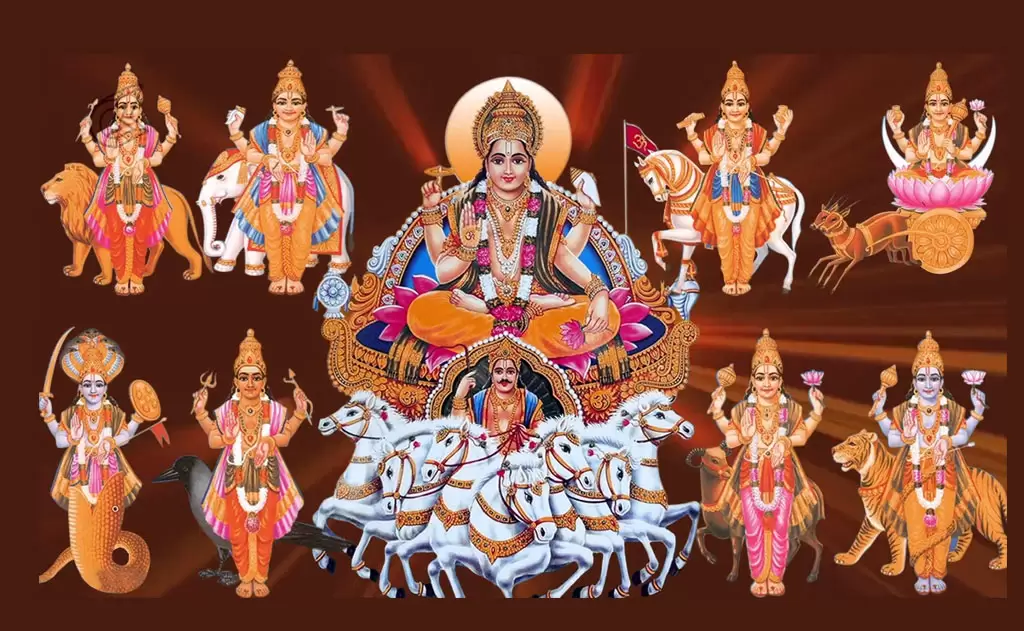
The nine planets, known as Nava Grahas, are:
- Surya (Sun)
- Chandra (Moon)
- Mangal (Mars)
- Budha (Mercury)
- Guru (Jupiter)
- Shukra (Venus)
- Shani (Saturn)
- Rahu (North Node of the Moon)
- Ketu (South Node of the Moon)
This article explores the significance of each of these planets in Vedic astrology, their impact on health, wealth, relationships, and spirituality, and how they shape our lives.
1. Surya (Sun)
Significance in Vedic Astrology
Surya, or the Sun, is considered the king of the Nava Grahas and represents the soul (Atman) and vitality. It governs one’s self-esteem, authority, leadership, and physical health. The Sun is the planet of power, ego, and individuality.
Impact on Life
- Health: Surya is associated with vitality and health. A well-placed Sun ensures high energy levels, while a weak Sun may cause heart problems, fevers, or bone issues.
- Wealth: The Sun signifies authority and career success. A strong Sun leads to leadership roles and material success.
- Relationships: The Sun represents the father figure in a birth chart. A harmonious Sun indicates a good relationship with one’s father.
- Spirituality: As the symbol of the soul, Surya influences one’s spiritual journey and higher purpose.
2. Chandra (Moon)
Significance in Vedic Astrology
Chandra, or the Moon, symbolizes the mind, emotions, and maternal instincts. It governs mental peace, intuition, and emotional well-being.
Impact on Life
- Health: A strong Moon ensures emotional stability and mental clarity, while an afflicted Moon leads to stress and anxiety.
- Wealth: The Moon is linked to fluid wealth, influencing business success in travel, hospitality, and food-related industries.
- Relationships: Chandra symbolizes motherly relationships and harmony with women.
- Spirituality: The Moon enhances intuition and meditation, fostering emotional healing.
3. Mangal (Mars)
Significance in Vedic Astrology
Mangal, or Mars, represents energy, courage, passion, and action. It governs physical strength and ambition.
Impact on Life
- Health: Mars rules blood, muscles, and stamina. A weak Mars may lead to injuries or blood-related ailments.
- Wealth: Mars influences real estate and construction businesses.
- Relationships: Mars governs male energy and marital harmony. A balanced Mars brings passion and protection.
- Spirituality: Mars supports willpower and overcoming obstacles.
4. Budha (Mercury)
Significance in Vedic Astrology
Budha, or Mercury, governs communication, intellect, and logic.
Impact on Life
- Health: Mercury rules over the nervous system and speech. An afflicted Mercury causes speech disorders or skin diseases.
- Wealth: Budha favors business, trade, and intellectual pursuits.
- Relationships: Mercury ensures effective communication in relationships.
- Spirituality: It promotes intellectual and scriptural studies.
5. Guru (Jupiter)
Significance in Vedic Astrology
Guru, or Jupiter, is the planet of wisdom, spirituality, and expansion.
Impact on Life
- Health: Jupiter governs liver and digestion. A weak Jupiter leads to digestive and obesity-related issues.
- Wealth: A favorable Jupiter brings wealth through knowledge and education.
- Relationships: Jupiter governs mentors and elders, ensuring harmony.
- Spirituality: Guru influences spiritual wisdom and ethical living.
6. Shukra (Venus)
Significance in Vedic Astrology
Shukra, or Venus, symbolizes love, beauty, luxury, and creativity.
Impact on Life
- Health: Venus governs reproductive health and physical beauty.
- Wealth: Shukra influences wealth through art, entertainment, and luxuries.
- Relationships: Venus governs romance and harmony in relationships.
- Spirituality: Venus balances material pleasures with spiritual joy.
7. Shani (Saturn)
Significance in Vedic Astrology
Shani, or Saturn, represents discipline, responsibility, and karma.
Impact on Life
- Health: Saturn rules bones, joints, and longevity.
- Wealth: Shani brings slow but steady financial growth.
- Relationships: Saturn teaches patience and loyalty.
- Spirituality: It represents detachment and perseverance.
8. Rahu (North Node of the Moon)
Significance in Vedic Astrology
Rahu governs illusion, obsession, and unconventional paths.
Impact on Life
- Health: Rahu causes mental turmoil and stress-related ailments.
- Wealth: It can bring sudden gains or losses.
- Relationships: Rahu can cause instability and unconventional relationships.
- Spirituality: It teaches detachment from material illusions.
9. Ketu (South Node of the Moon)
Significance in Vedic Astrology
Ketu represents detachment, enlightenment, and spirituality.
Impact on Life
- Health: Ketu influences spiritual healing and chronic illnesses.
- Wealth: It promotes renunciation of material possessions.
- Relationships: Ketu fosters spiritual solitude.
- Spirituality: It leads to moksha (liberation) and spiritual insight.
Conclusion
The Nava Grahas profoundly impact health, wealth, relationships, and spirituality. Understanding their influence allows individuals to align their actions with cosmic forces. Through prayers, rituals, and remedies, one can mitigate negative effects and enhance positive energies, leading to a harmonious and fulfilling life.
Frequently Asked Questions
What are the Nava Grahas in Hindu cosmology?
Nava Grahas are the nine planets of Vedic astrology (Jyotisha): Surya (Sun), Chandra (Moon), Mangal (Mars), Budha (Mercury), Guru (Jupiter), Shukra (Venus), Shani (Saturn), Rahu and Ketu.
Which planets are Rahu and Ketu?
Rahu is the North Node of the Moon and Ketu is the South Node of the Moon. Rahu governs illusion, obsession and unconventional paths, while Ketu represents detachment, enlightenment and spirituality.
Why is Surya called the king of the Nava Grahas?
Surya, the Sun, is considered the king of the Nava Grahas and represents the soul (Atman) and vitality. It is associated with self-esteem, authority, leadership and physical health.
What does Shani represent in Vedic astrology?
Shani, or Saturn, represents discipline, responsibility and karma. It is linked to bones, joints and longevity, slow but steady financial growth, and teaches patience, loyalty, detachment and perseverance.
How do the Nava Grahas affect a person in Vedic astrology?
Vedic astrology teaches that the position and movement of the planets at the time of birth affect personality, behavior and life events. Each planet is linked to health, wealth, relationships and spirituality.
How can the negative effects of the planets be reduced?
Through prayers, rituals and remedies, one is said to mitigate negative effects and enhance positive energies. This is traditional belief, with no guaranteed outcome.
Share this with family and friends
Send it on WhatsApp, post it, or copy the link.
More from Hinduism
- AI and the Sanskrit Revival in 2026: Language Models, Manuscript OCR, Translation Tools and What AI Still Gets Wrong
- Can a Robot Perform Puja? Robot Aarti, AI in Rituals and What Hindu Tradition Says
- GitaGPT and AI Bhagavad Gita Chatbots: How Accurate Are They, and What Does Hindu Tradition Say?
- Robotic Elephants and AI in Hindu Temples: Kerala's Mechanical Tuskers, Tirumala's AI Command Centre and the Debate
- Quantum Computing Explained for Hindus: Qubits, Superposition and Entanglement, with Vedanta Analogies (Not Equivalences)