Kadri Manjunatha Temple, Mangaluru
Shiva (as Manjunatha) temple · Mangaluru, Dakshina Kannada, Karnataka, India
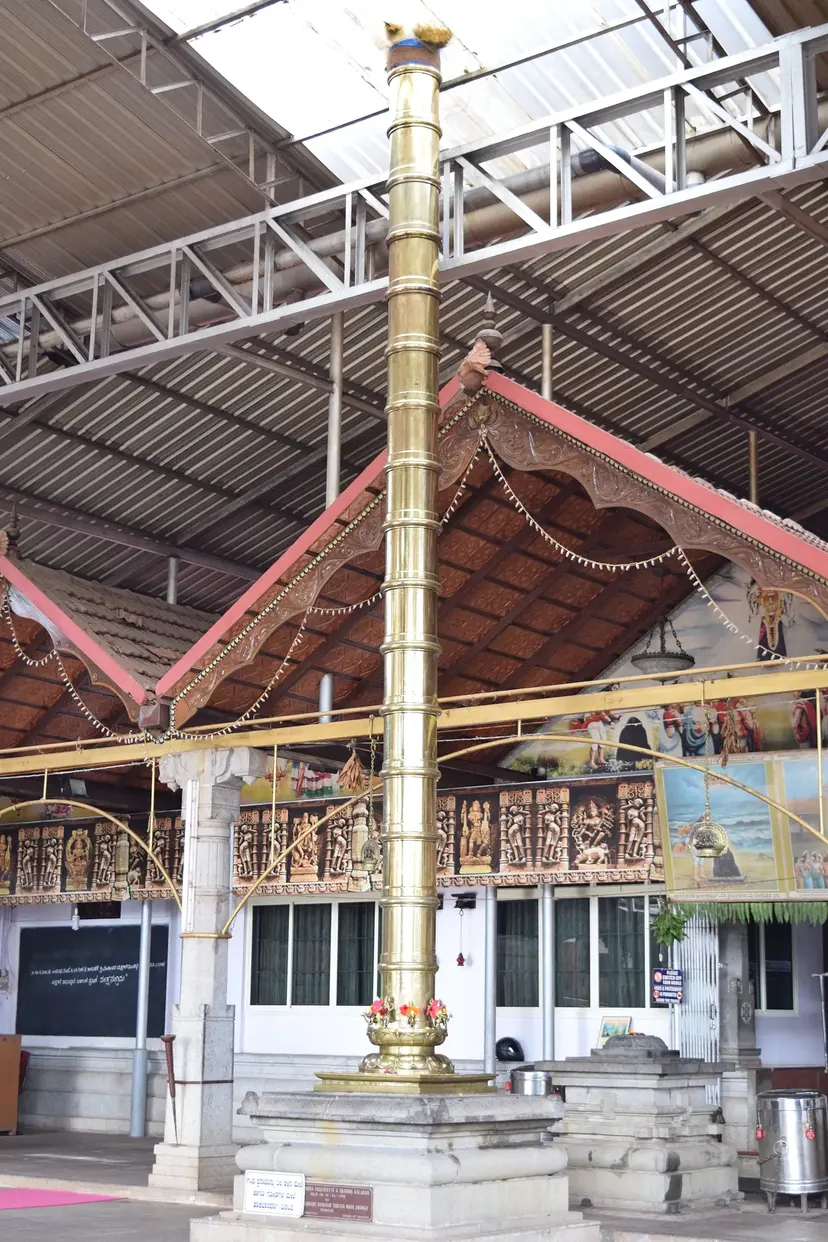
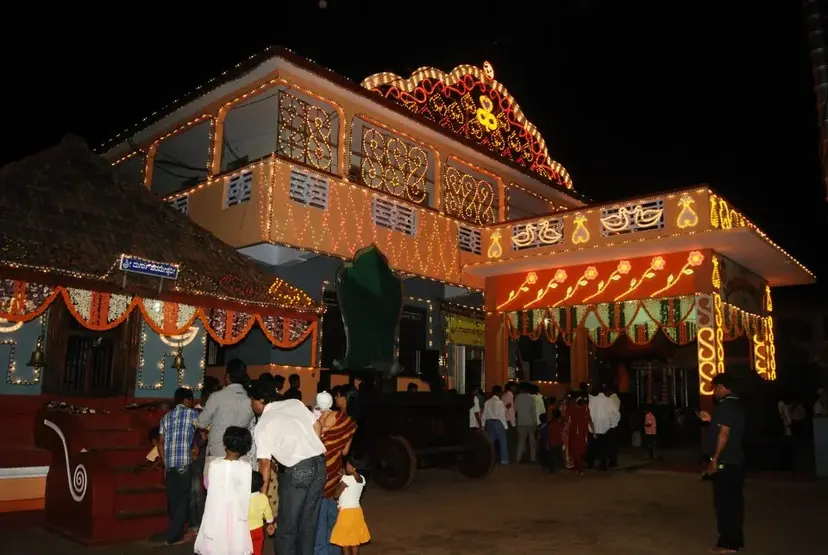
The Kadri Manjunatha Temple stands on Kadri Hill in Mangaluru, Dakshina Kannada district, Karnataka. It is dedicated to Shiva, worshipped here as Manjunatha, and Karnataka Tourism describes it as the oldest Shiva temple in the city.
The temple is unusual for the traces it preserves of earlier Buddhist and Nath traditions. Its bronze image of Lokeshwara (Avalokiteshvara), with an inscription naming a king of the Alupa dynasty, is often cited as one of the finest early bronzes of South India. Behind the temple, a spring known as Gomukha feeds a series of tanks, and laterite caves called the Pandava Caves lie nearby.
Faith & Tradition
Religious Significance of Kadri Manjunatha Temple, Mangaluru
According to Karnataka Tourism and the Dakshina Kannada district administration, a bronze image of Lokeshwara and an image of Gautama Buddha in the meditative (dhyana) posture point to the site's Buddhist origins. Historic records refer to the place as Kadarika Vihara, and Wikipedia records the scholar M. Govinda Pai's view that the name Kadri derives from a Vajrayana Buddhist monastery of that name. Mangaluru Smart City offers another explanation, linking the name to kadali, the plantain, which grows abundantly in the area.
Mangaluru Smart City also describes Kadri Hill as an important centre of the Natha Pantha in South India. Wikipedia notes that images of the Nath teachers Matsyendranath and Gorakhnath, along with Lokeshwara, Manjushri and the Buddha, are reported in the temple, reflecting how Buddhist, Nath and Shaiva traditions came together here over time.
The spring at the back of the temple, the Gomukha, is believed by devotees to be linked to the Ganga at Kashi. Its water flows into nine ponds of different sizes, in which pilgrims wash before entering the temple, according to Mangaluru Smart City and Wikipedia.
Heritage
History of Kadri Manjunatha Temple, Mangaluru
Mangaluru Smart City dates the temple to the 10th or 11th century and says Buddhism was practised at Kadri until about the 10th century CE. Karnataka Tourism dates the temple to the 11th century, when it says Buddhist monks had made Kadri their base, and adds that local rulers and landlords helped enhance the complex in the 14th century; Wikipedia says the shrine became a fully stone structure in that century.
The most important dated record is the inscription on the pedestal of the Lokeshwara bronze. Mangaluru Smart City dates it to 968 CE and attributes it to King Kundavarma of the Alupa dynasty; it refers to the hill by its old name, Kadarika. Wikipedia notes that some scholars read the date as 1068 CE and that the inscription also mentions Mangaluru as Mangalapura. Wikipedia further records a later stone inscription granting land to the temple and an 18th-century text, the Kadri Manjunatha Mahatmya, describing the temple's Nath connection.
Architecture and sacred features
Mangaluru Smart City describes the temple as an example of early Vijayanagara-period architecture. The bronze Lokeshwara is seated, with three faces and six arms, and Wikipedia gives its height as about 1.5 metres; two other early bronzes of similar workmanship are identified as Avalokiteshvara and the Buddha.
The temple complex includes the Gomukha spring and the nine ponds it feeds, and a pond at the front of the temple where, Incredible India notes, tortoises live. The laterite Pandava Caves cut into the hill beside the temple are mentioned by both Karnataka Tourism and the district administration.
Plan Your Visit
Darshan and Visitor Information
Karnataka Tourism advises modest dress and quiet behaviour in the main shrine. The temple is crowded during the January festival and the Karthika Deepotsava. Confirm current timings and any seva arrangements with the temple office before visiting.
Timings and arrangements change with seasons and festivals. Confirm current details with the temple administration before travelling. Last reviewed 1 November 2026.
Sacred Calendar
Festivals at Kadri Manjunatha Temple, Mangaluru
Annual jatra and car festival
Karnataka Tourism notes a car festival at Makar Sankranti; Wikipedia describes a nine-day festival beginning that day with flag hoisting, processions and the chariot festival.
Deepotsava
A festival of lamps held in the month of Karthika, according to Karnataka Tourism.
Kadri Kambala
The traditional buffalo race held at Kadri, mentioned by the district administration alongside the temple.
Location
How to Reach Kadri Manjunatha Temple, Mangaluru
The district administration places the temple about 2 km from Mangaluru city centre, and Karnataka Tourism notes that it can be reached by auto-rickshaw or taxi. Mangaluru is connected by air, rail and road; Incredible India names Mangaluru International Airport and Mangalore Central railway station as the nearest airport and station.
Location: Mangaluru, Dakshina Kannada, Karnataka, India
Nearest airport: Mangaluru International Airport
Nearest railway station: Mangalore Central
More in Hindu temples in Karnataka · Shiva (as Manjunatha) temples · Temples in Mangaluru Taluk · Temples in Dakshina Kannada District
Questions
Kadri Manjunatha Temple, Mangaluru: Frequently Asked Questions
Which deity is worshipped at Kadri Manjunatha Temple?
Shiva, worshipped as Manjunatha. The temple also houses a celebrated bronze image of Lokeshwara (Avalokiteshvara).
How old is the Kadri Manjunatha Temple?
Karnataka Tourism and Mangaluru Smart City date it to the 10th or 11th century. The inscription on the Lokeshwara bronze is dated to 968 CE, though some scholars read 1068 CE.
Why does a Shiva temple have a Buddhist image?
Kadri was a Buddhist centre known as Kadarika Vihara before it became a Shiva temple, according to Karnataka Tourism and the district administration. The Lokeshwara and Buddha images are survivals of that period.
What is the Gomukha at Kadri?
It is a natural spring behind the temple, believed by devotees to be linked to the Ganga at Kashi. Its water flows into nine ponds where pilgrims wash before entering.
What are the Pandava Caves at Kadri?
They are laterite caves cut into Kadri Hill beside the temple, mentioned by Karnataka Tourism and the Dakshina Kannada district administration.
When is the Kadri temple festival?
The main festival and car festival begin at Makara Sankranti in January, and a Deepotsava is held in Karthika.
Sources and attribution
- Karnataka Tourism, Government of Karnataka — Kadri Manjunatha Temple
- District Dakshina Kannada, Government of Karnataka — Places of Interest
- Mangaluru Smart City Limited — Kadri Manjunatha temple
- Incredible India, Ministry of Tourism, Government of India — Kadri Manjunatha Temple
- Wikipedia — Kadri Manjunath Temple
Further reading: Kadri Manjunatha Temple, Mangaluru on Wikipedia (CC BY-SA 4.0).
Spotted an error? Write to info@hindutone.com — see our editorial policy.