
Kichakeshwari Temple, Khiching
Devi as Kichakeshwari (a ten-armed form of Chamunda) temple · Khiching, Mayurbhanj, Odisha, India
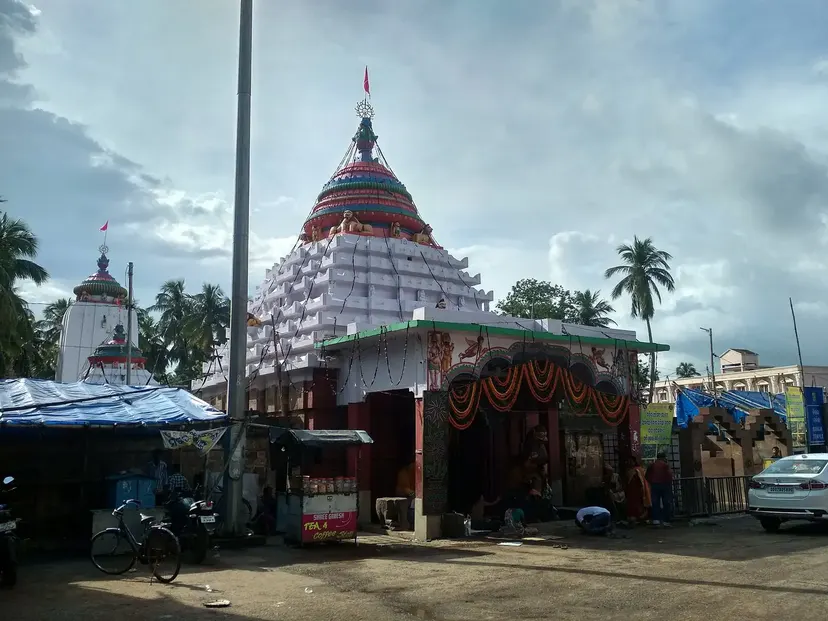
The Kichakeshwari (Kichakesvari) Temple stands at Khiching in Mayurbhanj district of northern Odisha, the old capital of the Bhanja rulers. The Mayurbhanj district administration describes Kichakeswari as the most sacred goddess of the Mayurbhanj chiefs, and her temple, built entirely of chlorite slabs, is the largest in the village. Locally it is also called the Bada Deula, or Great Temple.
The present temple is a 20th-century reconstruction of a 10th-century original that had fallen into ruin, put back together largely from the original carved stones. It is a living temple and a protected monument of the Odisha State Archaeology department, according to heritage documentation compiled for the Indira Gandhi National Centre for the Arts (IGNCA).
Faith & Tradition
Religious Significance of Kichakeshwari Temple, Khiching
According to the IGNCA record, the presiding deity is a ten-armed image of Chamunda, a fierce form of the goddess. Incredible India, the Government of India's tourism site, likewise describes Kichakeshwari as a form of Chamunda Devi. Live History India notes that she was the family deity of the Bhanja rulers.
Khiching was the capital of the Bhanja kingdom, then known as Khijjinga Mandala, from about the 9th to the 12th century CE, according to Live History India, and the many temples and ruins around the village reflect that period. The district administration notes that several of these temples are still in worship, and that a small museum at Khiching holds important sculptures and other finds.
Heritage
History of Kichakeshwari Temple, Khiching
The IGNCA record dates the original temple to the 10th century CE, in the period of Bhanja rule, on the basis of its architecture and sculpture; other sources give dates ranging from the 7th–8th century (Live History India) to the 8th–10th century (Incredible India). By the 19th century the temple was in ruins.
According to Live History India, Rai Bahadur Rama Prasad Chanda, sent by the Archaeological Survey of India's Director-General John Marshall, found the temple in 1922 buried under a mound, with a small brick shrine to Kichakeswari on top. Maharaja Pratap Chandra Bhanja Deo, ruler of the princely state of Mayurbhanj, commissioned its restoration in 1928. The IGNCA record gives 1942 as the year of the reconstruction; Wikipedia gives 1934. The Khiching Museum was set up to display finds from the excavations.
Today the monument is protected by Odisha State Archaeology and is under the Endowment Department of the Government of Odisha, with a Kichakesvari Temple Trust Board involved in its care, according to the IGNCA record. In September 2026 OdishaBytes reported that the Union Ministry of Tourism had sanctioned Rs 44.91 crore under its PRASAD scheme to improve facilities at the temple complex.
Architecture and sacred features
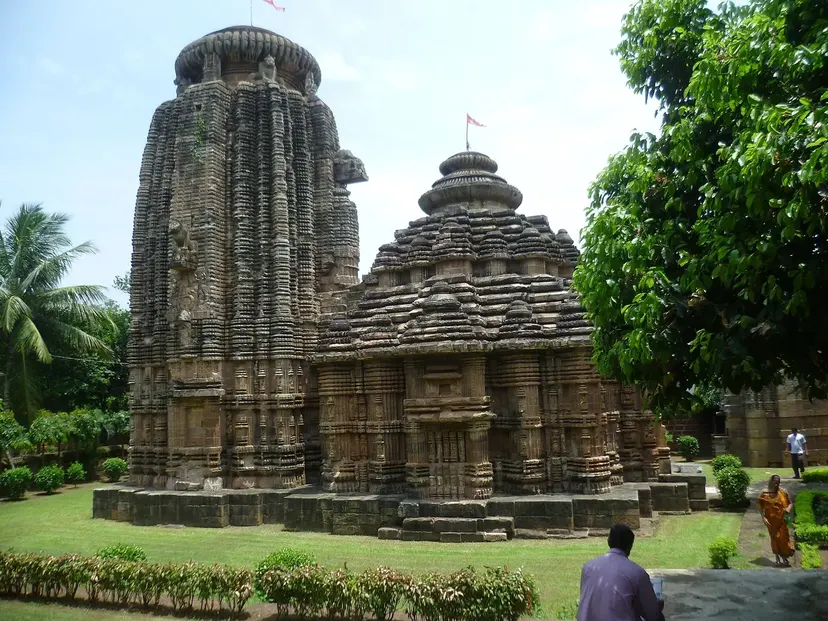
The IGNCA record describes the temple as a single rekha (curvilinear-towered) vimana of the Kalinga order with only a shallow porch in front, standing on a platform about 1.2 metres high and facing east. It is pancharatha on plan (five projections on each face) and built of black chlorite in dry ashlar masonry. Live History India and an Odisha Tourism blog note that, unlike most Kalinga temples, the Khiching temples have no separate jagamohana (front hall), a feature sometimes called the Khiching style. The IGNCA record gives a height of about 22 metres; other sources give about 100 feet.
The outer walls are carved with female figures, loving couples, deities, royal figures and holy men, together with naga-nagi pilasters, kirtimukha faces and scrollwork. About 20 metres to the south-west stands a smaller temple of Chandrasekhar Mahadev, which the IGNCA dates to the 9th–10th century.
Plan Your Visit
Darshan and Visitor Information
The temple is both a place of worship and a protected monument: dress modestly, follow the instructions of the priests, and do not touch or climb on the carved stonework. The Khiching Museum is near the temple and is worth combining with a visit. Confirm current timings and any restrictions with the temple trust or the Mayurbhanj district administration before travelling.
Timings and arrangements change with seasons and festivals. Confirm current details with Odisha State Archaeology and Endowment Department; Kichakesvari Temple Trust Board before travelling. Last reviewed 1 November 2026.
Sacred Calendar
Festivals at Kichakeshwari Temple, Khiching
Durga Puja
Listed by the IGNCA record among the main observances at the temple; Incredible India also notes large gatherings during Navaratri.
Ashokashtami
Also listed by the IGNCA record among the temple's festivals.
Location
How to Reach Kichakeshwari Temple, Khiching
The Mayurbhanj district administration gives Khiching as about 150 km from Baripada and 205 km from Balasore, with regular bus services from Baripada and Keonjhar. It names Bhubaneswar (about 270 km) and Kolkata (about 240 km) as the nearest airports, and Balasore as the nearest major railhead.
The IGNCA record places the temple about 13 km north of the national highway at Singda Chowk.
Location: Khiching, Mayurbhanj, Odisha, India
Nearest airport: Bhubaneswar (about 270 km) or Kolkata (about 240 km), per the district administration
Nearest railway station: Balasore, per the district administration
More in Hindu temples in Odisha · Devi as Kichakeshwari (a ten-armed form of Chamunda) temples
Questions
Kichakeshwari Temple, Khiching: Frequently Asked Questions
Which goddess is worshipped at the Kichakeshwari Temple?
Goddess Kichakeshwari, whose image, according to the IGNCA record, is a ten-armed form of Chamunda. She was the family deity of the Bhanja rulers of Mayurbhanj.
How old is the Kichakeshwari Temple?
The IGNCA record dates the original temple to the 10th century CE; other sources suggest the 7th to 10th century. The present building is a 20th-century reconstruction using the original stones.
Who rebuilt the Kichakeshwari Temple?
Maharaja Pratap Chandra Bhanja Deo of Mayurbhanj commissioned the restoration in 1928, according to Live History India. The IGNCA record dates the reconstruction to 1942.
What is special about the temple's architecture?
It is built of black chlorite and, unlike most Kalinga temples, has no separate front hall (jagamohana), only a shallow porch. Its walls are richly carved.
Why is Khiching historically important?
Khiching was the capital of the Bhanja rulers, then called Khijjinga Mandala, from about the 9th to the 12th century CE, and has many temples and ruins of that period.
How do I reach Khiching?
The district administration gives Khiching as about 150 km from Baripada and 205 km from Balasore, with buses from Baripada and Keonjhar.
Sources and attribution
- Indira Gandhi National Centre for the Arts (heritage documentation) — Kichakesvari Temple, Khiching, Dist. Mayurbhanj
- Indira Gandhi National Centre for the Arts (heritage documentation) — Chandrasekhar Mahadev Temple, Khiching, Dist. Mayurbhanj
- Mayurbhanj District Administration (Wayback Machine copy, October 2023) — Khiching | Mayurbhanj District
- Incredible India, Ministry of Tourism — Kichakeshwari Temple
- Odisha Tourism (visitor blog on the official site) — Maa Kichakeswari Temple, Khiching, Mayurbhanj
- Live History India (Nehal Rajvanshi, 2020) — Khiching and its 'Artistic' Royals
- OdishaBytes (September 2026) — Centre Sanctions Rs 44.91 Cr For Development Of Kichakeswari Temple In Odisha's Mayurbhanj
- Wikipedia — Kichakeshwari Temple
Further reading: Kichakeshwari Temple, Khiching on Wikipedia (CC BY-SA 4.0).
Spotted an error? Write to info@hindutone.com — see our editorial policy.
Pilgrim Circuit