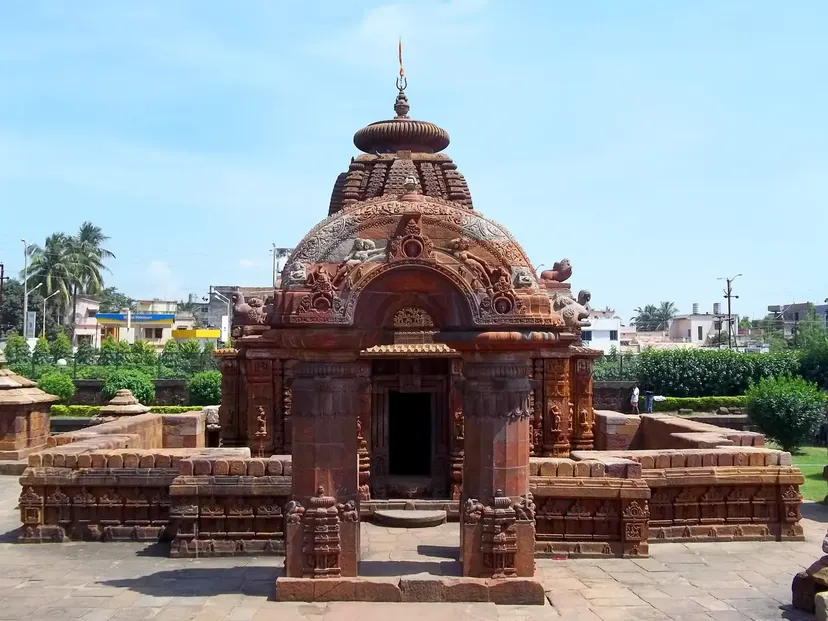
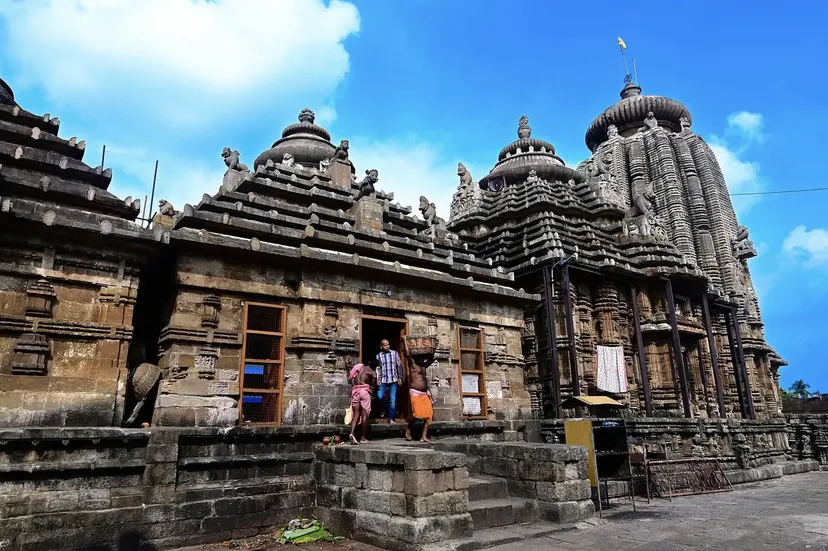
Chausath Yogini Temple, Hirapur
The sixty-four Yoginis, with Mahamaya as presiding goddess temple · Hirapur, Khordha, Odisha, India
The Chausath Yogini (Chausathi Yogini, 'Sixty-Four Yoginis') Temple at Hirapur village, on the outskirts of Bhubaneswar in Odisha's Khordha district, is a small circular shrine open to the sky, dedicated to sixty-four female deities of the Tantric tradition. It is also known as the Mahamaya temple, after its presiding goddess.
Temples to the sixty-four Yoginis are rare in India. Hirapur's is one of two in Odisha, the other being at Ranipur-Jharial in Balangir district, and it is valued both as a living place of worship and for its finely carved images in dark chlorite stone. The temple is protected by the Archaeological Survey of India (ASI).
Faith & Tradition
Religious Significance of Chausath Yogini Temple, Hirapur
Yoginis are goddess figures worshipped in Tantric traditions, often in groups of sixty-four. According to Wikipedia, the temple is roofless because Tantric worship here honours the open sky and the elements, and because the Yoginis were believed to be able to fly; Odisha Tourism adds the belief that each Yogini embodies a centre of energy that flows freely in a circle.
A legend recounted by local priests, according to Wikipedia, tells that the goddess Durga took sixty-four forms to defeat a demon, and that these goddesses later asked to be remembered in a temple. The IGNCA heritage record describes Hirapur as a living temple, where Mahamaya is worshipped together with the other Yoginis and Bhairavas, and lists Basanti Durga Puja, Dussehra and fire rituals (yajna) among its observances. Family ceremonies such as engagements, weddings and thread ceremonies are also held there.
Heritage
History of Chausath Yogini Temple, Hirapur
The date of the temple is uncertain. Odisha Tourism describes it as a 9th-century shrine built by Queen Hiradevi, and Wikipedia records the belief that Hiradevi, a queen of the Bhauma-Kara dynasty, built it around 864 CE. The IGNCA record, based on architecture and sculpture, assigns it to the early 10th century, during Bhauma-Kara rule, and notes that the structure has been renovated.
The temple came to wider scholarly attention in the 1950s; the IGNCA record cites a 1953 note on the 'hypaethral temple of sixty-four yoginis at Hirapur' in the Orissa Historical Research Journal, and Odisha Tourism also dates its rediscovery to 1953. It has since been renovated and conserved by the ASI. According to the IGNCA record, the Odisha Endowments Department and the Odisha Tourism Development Corporation are also involved in its care, and a local trust manages the worship.
Architecture and sacred features
The temple is a low circular enclosure built of sandstone blocks without mortar on a laterite foundation, facing east. A short rectangular entrance passage projects from the circle, so that, as Wikipedia notes, the plan resembles the base of a Shiva linga. The IGNCA record gives the circle as about 10.5 m across and about 2.1 m high, with a small rectangular pavilion (mandapa) at its centre.
Inside, sixty niches in the circular wall each hold a Yogini, and the central pavilion holds four Bhairavas and four more Yoginis, one of which is missing; two Bhairava images stand at the entrance. The Yoginis, carved in black chlorite and each about 40 cm tall according to Wikipedia, stand on animals, demons or human heads, each with her own pose, ornaments and hairstyle. The outer wall carries nine images of Katyayani and two door guardians in yellowish sandstone, which the IGNCA record notes are badly worn by the weather.
Plan Your Visit
Darshan and Visitor Information
Hirapur is an active shrine in a village setting, so dress modestly, remove footwear where asked and follow the instructions of the priests. Do not touch the images, and ask before photographing inside the shrine. Confirm current visiting arrangements with the temple trust, the ASI Bhubaneswar Circle or Odisha Tourism before travelling.
Timings and arrangements change with seasons and festivals. Confirm current details with Archaeological Survey of India, with the Odisha Endowments Department, OTDC and a local temple trust before travelling. Last reviewed 1 November 2026.
Sacred Calendar
Festivals at Chausath Yogini Temple, Hirapur
Basanti Durga Puja
Listed in the IGNCA record among the temple's main observances.
Dussehra
Celebrated at the temple, according to the IGNCA record.
Location
How to Reach Chausath Yogini Temple, Hirapur
Hirapur is about 20 km from central Bhubaneswar, according to Wikipedia. The IGNCA record places the temple on the left bank of the Bhargavi river, beside the road from Balakati to Hanspal, about 4 km from Balakati. Odisha Tourism gives the Dhauli Peace Pagoda as about 6.5 km away and the Lingaraja Temple about 13 km away; the nearest airport and railway station are in Bhubaneswar.
Location: Hirapur, Khordha, Odisha, India
Nearest airport: Biju Patnaik International Airport, Bhubaneswar
Nearest railway station: Bhubaneswar
More in Hindu temples in Odisha · The sixty-four Yoginis, with Mahamaya as presiding goddess temples · Temples in Khordha District
Questions
Chausath Yogini Temple, Hirapur: Frequently Asked Questions
Why does the Hirapur Yogini temple have no roof?
It was built open to the sky. Wikipedia explains this by Tantric worship of the elements and the belief that the Yoginis could fly; Odisha Tourism adds the belief that each Yogini's energy flows freely in the circle.
Who built the Chausath Yogini Temple at Hirapur?
Tradition credits Queen Hiradevi of the Bhauma-Kara dynasty. Odisha Tourism dates it to the 9th century; the IGNCA record assigns it to the early 10th century.
Who is the main deity at Hirapur?
The presiding goddess is Mahamaya, worshipped with the other Yoginis and with Bhairava images in the centre of the shrine.
How many Yogini images are there?
The temple was built for sixty-four Yoginis. The IGNCA record describes sixty in the wall niches and four in the central pavilion, one of which is missing.
Is the Hirapur temple still in worship?
Yes. The IGNCA record describes it as a living temple, with festivals such as Basanti Durga Puja and Dussehra.
How far is Hirapur from Bhubaneswar?
Hirapur is about 20 km from Bhubaneswar, according to Wikipedia; Odisha Tourism gives the Lingaraja Temple as about 13 km away.
Sources and attribution
- Indira Gandhi National Centre for the Arts (heritage documentation, ASI-protected monuments of Khordha) — Chausathi Yogini Temple, Hirapura (OR/KDA/13)
- Odisha Tourism, Government of Odisha — Chausathi Yogini Temple, Hirapur
- Wikipedia — Chausath Yogini Temple, Hirapur
Further reading: Chausath Yogini Temple, Hirapur on Wikipedia (CC BY-SA 4.0).
Spotted an error? Write to info@hindutone.com — see our editorial policy.