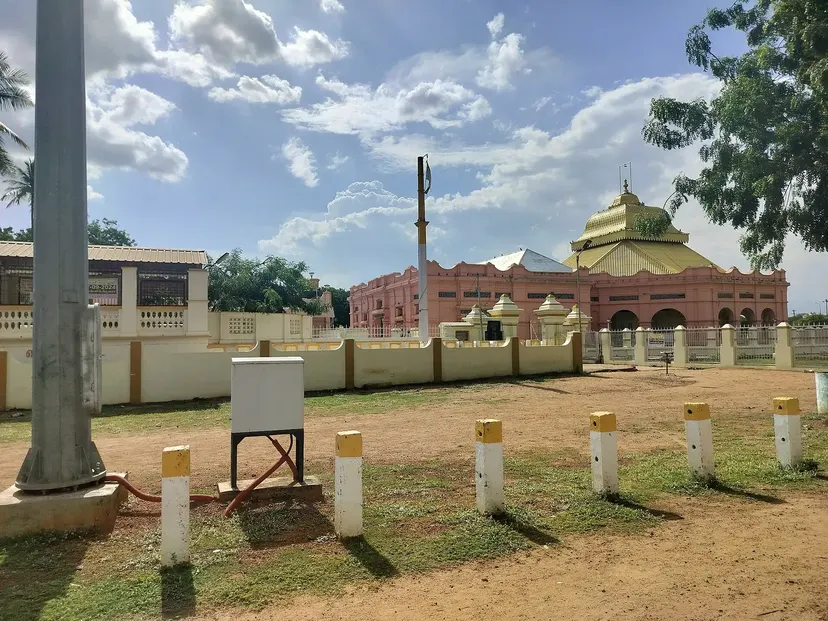
Manakula Vinayagar Temple
Ganesha (as Manakula Vinayagar, earlier Bhuvaneshar Ganapathy) temple · Puducherry, India
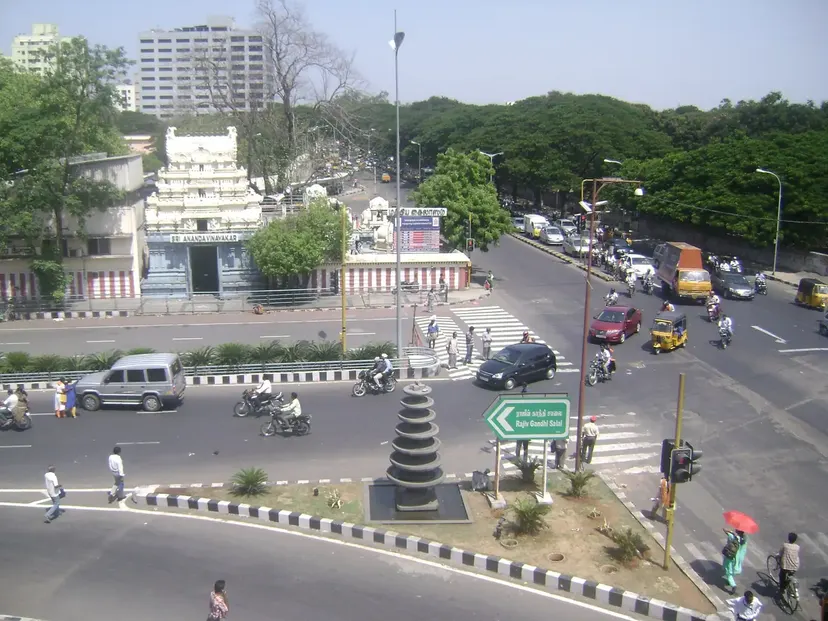
Arulmigu Manakula Vinayagar Temple is a Ganesha temple in the old French quarter of Puducherry, close to the sea. The temple's own website places it about 400 metres west of the Bay of Bengal, on the street now named Manakula Vinayagar Koil Street, with the presiding deity facing east.
The temple states that it already existed before the French settled in Puducherry, which it dates to before 1666, and both Wikipedia and Incredible India, the Union tourism portal, describe it as predating French rule. It is managed by the Arulmigu Manakula Vinayagar Devasthanam and is known for its gold-covered vimanam, its golden chariot and a 24-day annual Brahmotsavam.
Faith & Tradition
Religious Significance of Manakula Vinayagar Temple
The temple website explains the name. Ganesha here was originally known as Bhuvaneshar (Bhuvanesa) Ganapathy, one of the sixteen traditional forms of Ganesha. In Tamil, manal means sand and kulam means pond; there was once a sand-filled pond on the western side of the temple, near the sea, so people called the deity 'Manal Kulathu Vinayagar', Ganesha by the sandy pond. Over time this became Manakula Vinayagar.
The temple also preserves the memory of a saint known as Thollaikkathu Siddhar. According to the temple website, he attained enlightenment through this deity and entered samadhi in the temple about 300 years ago, and since then families have brought their newborn children here for worship before visiting any other temple.
The temple has links with the Sri Aurobindo Ashram. The website reproduces a message from the Mother of the Ashram about Ganesha and records that she donated land on the southern side, about 106 sq m, for the temple's extension on 25 December 1968.
Heritage
History of Manakula Vinayagar Temple
The temple website states that the shrine stood before the French settled in Puducherry and that Jesuits and missionaries tried, without success, to demolish it. It adds that around 1700 the French authorities prohibited pujas and festivals at the temple, especially on Fridays, and that the Hindus who worshipped here objected and moved to Moratandi in English territory. Wikipedia similarly records attempts to destroy the temple during the tenure of Governor Dupleix, which were abandoned after strong protest.
According to the temple's sthalapuranam (local legend), the French, who lived in this part of the town, tried to remove the deity and even threw the image into the sea, but each time it returned to the same spot; devotees believe this is why the temple stands where it does. Historian T. Ganesan, writing for Sahapedia, notes that the temple is said to have formed part of the fort the French built in the late 17th century, and describes it as the only temple in the French quarter of Puducherry.
In more recent times the temple has been renovated with devotees' donations. The website records that the vimanam was covered with gold plate and a maha kumbabishekam held on 24 January 1999, and that the golden chariot first ran on 5 October 2003. Wikipedia, citing The Hindu, notes a further renovation and consecration in 2015.
Architecture and sacred features
The temple website describes a compact complex of about 7,913 sq ft with an outer mandapam, a raja gopuram, a gold-plated flagstaff about 18 feet tall, a front mandapam, a maha mandapam and the sanctum, whose vimanam is fully covered in gold plate, using about 10 kg of gold according to the temple. The four-armed presiding deity holds the goad and noose in the upper hands. Around the sanctum are shrines to Bala Vinayagar and Balasubramaniar (Murugan) under silver vimanams and a small shrine to Chandikeswarar. Sahapedia describes the main tower as a two-tier brick and cement structure about 24 feet high, and records a small crystal linga, said to have been found in farmland near Senji.
The temple is noted for its art. On the southern prakaram wall, the website lists rows of sculpted forms of Ganesha (33 in one row and 25 in another) and stone inscriptions of hymns, including Subramania Bharati's Vinayagar Nanmanimalai. The ceilings and front mandapam carry paintings of Ganesha's life, such as his birth, the slaying of the demon Gajamukhasura and his marriage to Siddhi and Buddhi; Sahapedia also notes ceiling paintings of Purana stories. The golden chariot, described by the temple and Wikipedia, is 10 feet high and 6 feet wide, made of teak covered with engraved copper plates and about 7.5 kg of gold.
Plan Your Visit
Darshan and Visitor Information
Manakula Vinayagar is a busy working temple, and Incredible India suggests visiting outside peak hours to avoid long waits; crowds are heaviest during the Brahmotsavam and Vinayaka Chaturthi. The temple website notes that timings change on festival days and holidays. Confirm current darshan timings, puja and chariot arrangements with the Arulmigu Manakula Vinayagar Devasthanam before visiting.
Timings and arrangements change with seasons and festivals. Confirm current details with Arulmigu Manakula Vinayagar Devasthanam (official website) before travelling. Last reviewed 1 November 2026.
Sacred Calendar
Festivals at Manakula Vinayagar Temple
Brahmotsavam
The temple's main festival, celebrated every year for 24 days, according to the temple website.
Vinayaka Chaturthi
Ganesha's festival day; All India Radio reported special abhishekam from early morning and the deity adorned in golden armour.
Pavithra Utsavam
A seven-day festival listed on the temple's festival calendar.
Vijayadasami golden chariot procession
Once a year, on Vijayadasami, the golden chariot is taken out of the temple through the surrounding streets.
Location
How to Reach Manakula Vinayagar Temple
The temple website gives the temple as about 165 km south of Chennai, 23 km north of Cuddalore and 35 km east of Villupuram. Incredible India lists Puducherry railway station as the nearest station, and Puducherry and Chennai airports as the nearest airports.
The temple stands in the old town near the seafront; Wikipedia describes it as about a ten-minute walk from the beach road along Promenade Beach.
Location: Puducherry, India
Nearest airport: Puducherry Airport; Chennai International Airport (per Incredible India)
Nearest railway station: Puducherry (per Incredible India)
More in Hindu temples in Puducherry · Ganesha (as Manakula Vinayagar, earlier Bhuvaneshar Ganapathy) temples · Temples in Puducherry Tehsil · Temples in Puducherry District
Questions
Manakula Vinayagar Temple: Frequently Asked Questions
Why is it called Manakula Vinayagar?
According to the temple, a sand-filled pond (manal = sand, kulam = pond) once lay on the temple's western side near the sea, so the deity was called Manal Kulathu Vinayagar, later shortened to Manakula Vinayagar.
How old is Manakula Vinayagar Temple?
The temple states that it existed before the French settled in Puducherry, before 1666. Incredible India describes it as more than 500 years old.
What happened to the temple during French rule?
The temple says Jesuits and missionaries tried to demolish it and that around 1700 the French banned pujas and festivals there, particularly on Fridays. Legend says the image was thrown into the sea but kept returning.
What is special about the golden chariot?
Built with devotees' donations, it is 10 ft high, made of teak with engraved copper plates and about 7.5 kg of gold. It first ran in 2003 and goes out into the streets once a year on Vijayadasami.
When is the Manakula Vinayagar Brahmotsavam?
The Brahmotsavam is celebrated every year for 24 days in August–September.
Does the temple still have an elephant?
The temple elephant Lakshmi, donated in 1995, died in November 2022, as reported by The Tribune.
Who manages Manakula Vinayagar Temple?
The temple is run by the Arulmigu Manakula Vinayagar Devasthanam.
Sources and attribution
- Arulmigu Manakula Vinayagar Devasthanam — Arulmigu Manakula Vinayagar Temple – Home
- Arulmigu Manakula Vinayagar Devasthanam — About Temple (Location, Nomenclature, Sthalapuranam, Sculpture, Paintings, Thollaikkathu Siddhar)
- Arulmigu Manakula Vinayagar Devasthanam — List of Important Festivals
- Sahapedia (T. Ganesan) — Temples of Puducherry
- Incredible India (Ministry of Tourism, Govt. of India) — Manakula Vinayagar Temple
- The Tribune — Lakshmi, elephant of Manakula Vinayakar shrine in Puducherry, collapses on road, dies
- All India Radio News (newsonair.gov.in) — Puducherry celebrates Vinayaka Chaturthi with grandeur
- Wikipedia — Manakula Vinayagar Temple
Further reading: Manakula Vinayagar Temple on Wikipedia (CC BY-SA 4.0).
Spotted an error? Write to info@hindutone.com — see our editorial policy.