Veerattaneswarar Temple, Thiruvathigai
Shiva (as Veerattaneswarar, the destroyer of the three cities) temple · Thiruvathigai, near Panruti, Cuddalore, Tamil Nadu, India
The Veerattaneswarar Temple stands in Thiruvathigai village, which Wikipedia and the Panruti municipality both place about 2 km east of the town of Panruti in Cuddalore district, Tamil Nadu. Shiva is worshipped here as Veerattaneswarar in the form of a lingam, and his consort Parvati as Thiripurasundari; the Dinamalar temple guide also names the goddess Periyanayaki.
The temple is a Paadal Petra Sthalam, one of the shrines praised in the 7th-century Tamil Saiva hymns known as the Tevaram, and one of the Ashta Veerattanam temples linked to eight heroic acts of Shiva. It is best known as the place where, according to tradition, the saint-poet Appar (Thirunavukkarasar) returned to Saivism. The temple is maintained by the Thiruvaduthurai Adheenam, a Saiva monastic institution, according to Wikipedia and the Panruti municipality.
Faith & Tradition
Religious Significance of Veerattaneswarar Temple, Thiruvathigai
According to legend, Thiruvathigai is where Shiva destroyed the three flying cities (Tripura) of the demons, sons of Taraka, who had won boons from Brahma. Wikipedia records that the place was earlier called Tripura Dahanam ('burning of Tripura') and that the name later became Thiruvathigai. In the version given by the Dinamalar guide, Shiva needed no weapon: the demons' cities were burnt by the fire of his laughter, and he spared two of them, who became his doorkeepers. A local tradition also holds that Shiva forgot to worship Ganesha before setting out and turned back to do so, a story shared with the Atcheeswarar temple at Acharapakkam.
The temple's best-known story concerns Appar. According to Saiva tradition, as summarised by Wikipedia and Dinamalar, Appar had become a Jain monk under the name Dharmasenar, while his elder sister Thilagavathiyar stayed in Thiruvathigai and served this temple. Suffering from a severe stomach ailment, he came to her; devotees believe he was cured after receiving sacred ash at the shrine. He then returned to Saivism, and the temple tradition holds that his first hymn was sung here. Wikipedia notes that the Pallava king Mahendravarman I is believed to have followed Appar from Jainism to Saivism.
All three principal Tevaram poets are linked to the temple. Wikipedia records that Appar praised Veerattaneswarar in verses compiled in the Fourth, Fifth and Sixth Tirumurai, Tirugnana Sambandar in the First Tirumurai and Sundarar in the Seventh. The Dinamalar guide counts it as the seventh of the Tevaram shrines of the Nadu Nadu region.
Heritage
History of Veerattaneswarar Temple, Thiruvathigai
Wikipedia gives the temple as established before the 7th century CE, based on its mention in the Tevaram. It records the tradition that Mahendravarman I built a temple called Gunavareswaram nearby after his conversion, and notes that temple inscriptions mention gifts and structures from a king called Kalinkaraya. The temple is believed to have been expanded by later Pandya rulers.
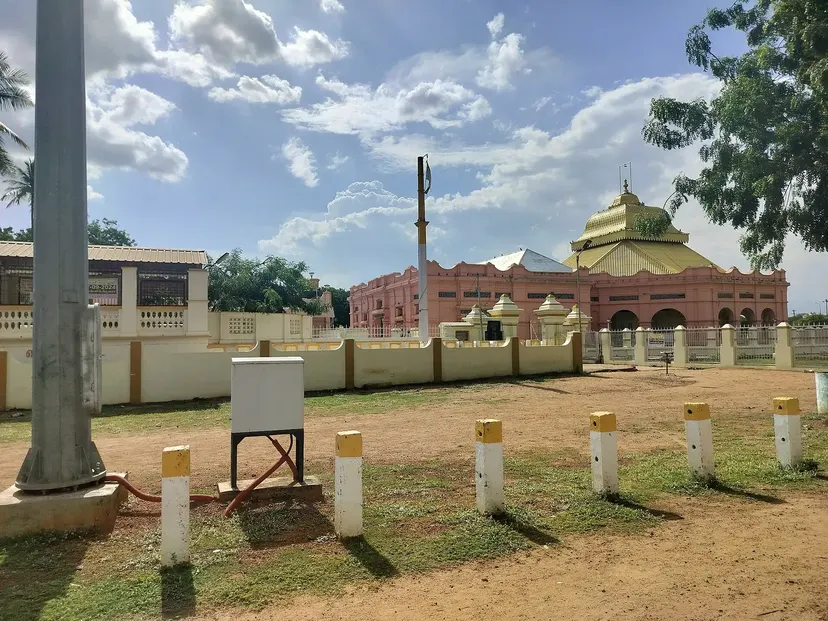
A widely repeated belief, cited by Wikipedia from a newspaper report and also found in the Dinamalar guide, is that the Chola king Raja Raja I studied this temple before building the Brihadeeswarar temple at Thanjavur; this is a tradition rather than a documented fact. According to Wikipedia, the temple served as a fort for armies during the Thanjavur Maratha and British colonial periods. The Panruti municipality notes that the second precinct dates from the Vijayanagara period and contains many sculptures.
Architecture and sacred features
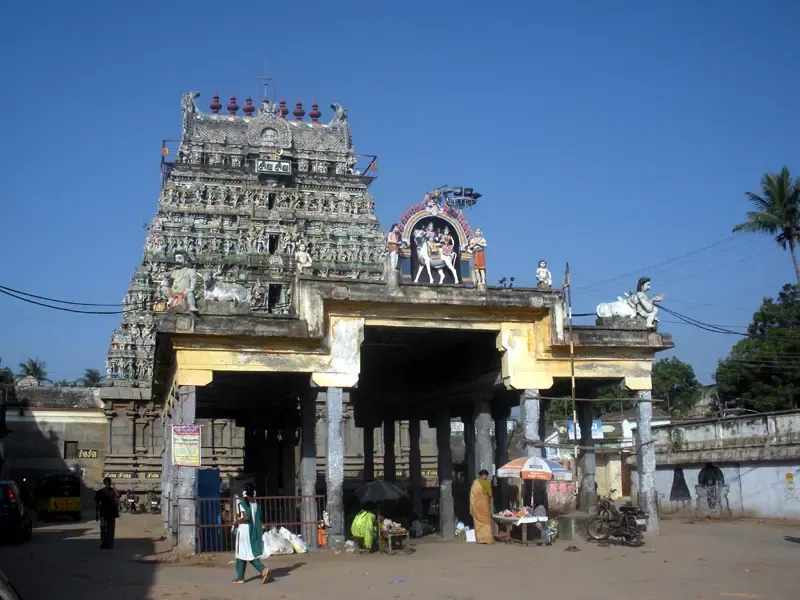
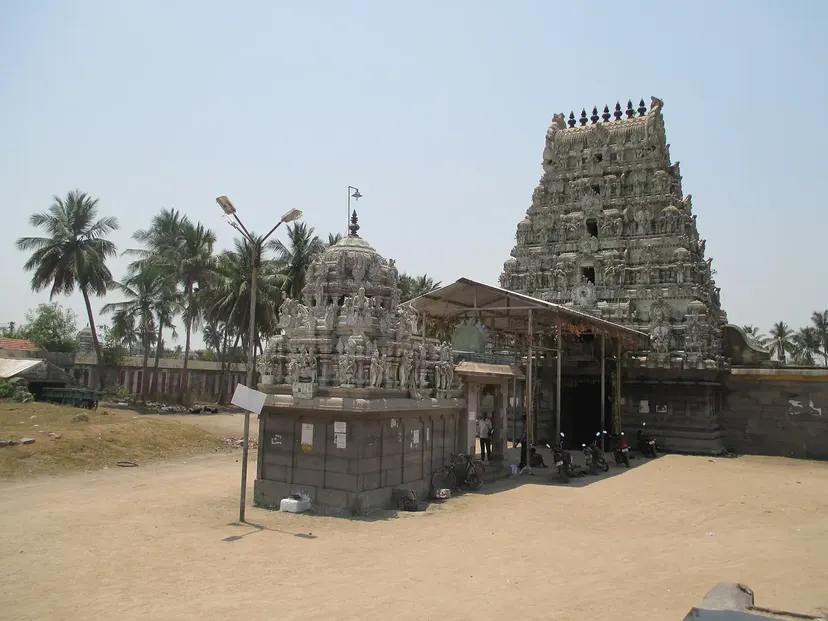
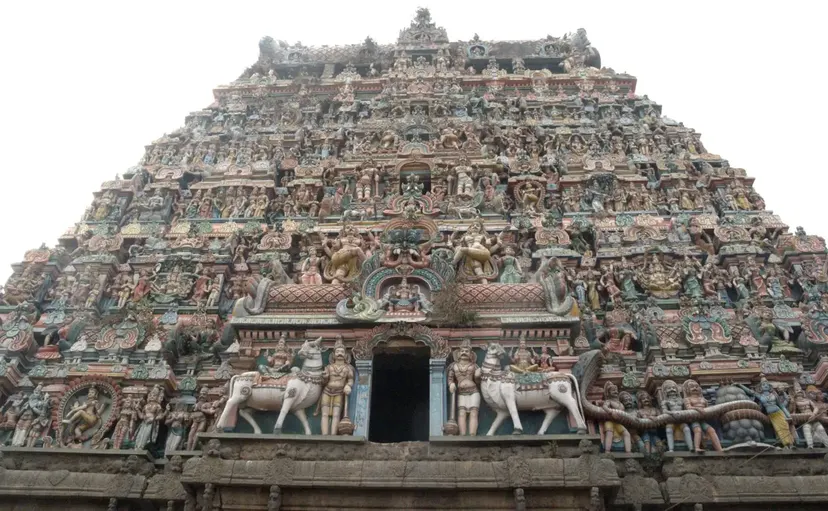
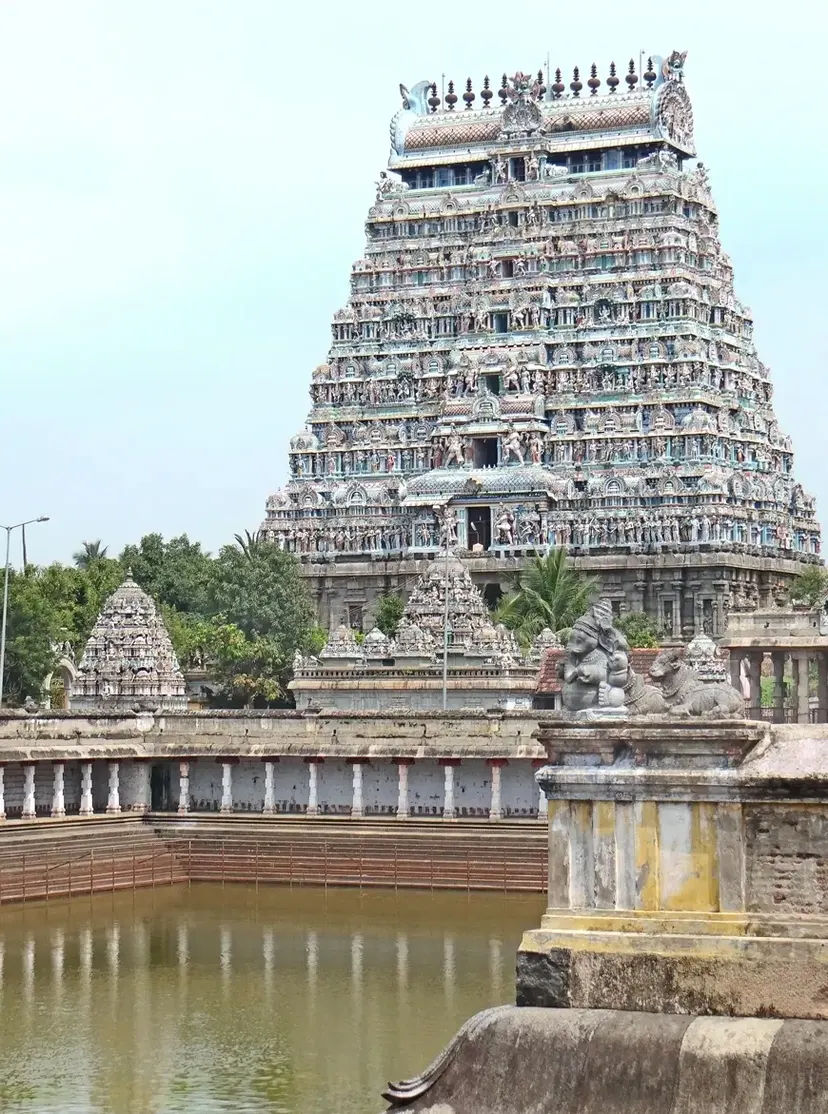
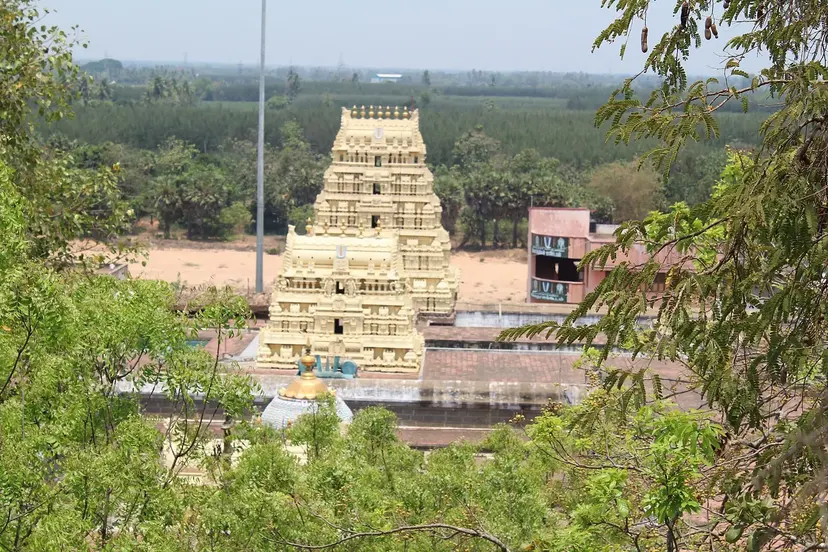
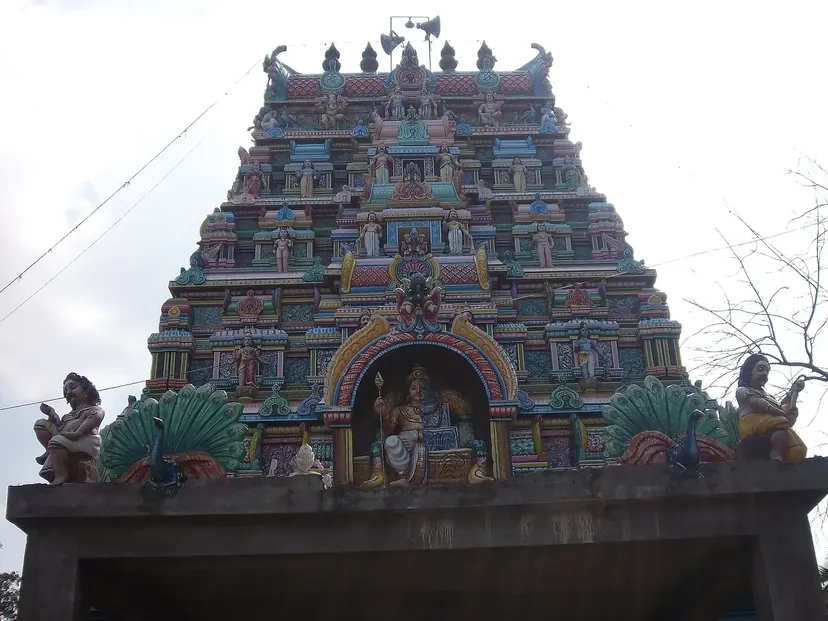
Wikipedia describes the complex as covering about 7 acres with three precincts and two gateway towers. The main seven-tiered tower carries sculptures of the 108 dance poses of Bharatanatyam. Inside are a sixteen-pillared hall, the Thiruneetru Mandapam, which tradition links to Thilagavathiyar, a temple tank called Chakra Theertham with a Vasantha Mandapam, and a five-tiered inner tower. Ceiling paintings survive in the halls.
The sanctum stands on a raised base and houses Veerattaneswarar as a lingam. Around it are shrines of Thilagavathiyar, the 63 Nayanmars, Durga, Ganesha, Murugan, Nataraja and Surya, and a south-facing shrine of Tripurasamharamurthy (Shiva as destroyer of Tripura) with sixteen arms. The Dinamalar guide notes that the sanctum and its hall are built in the form of a chariot. A well known as the Soolai Kinaru is linked by tradition to the story of Appar.
Plan Your Visit
Darshan and Visitor Information
This is a working temple with daily worship, so dress modestly and follow the instructions of temple staff, especially inside the sanctum. Festival days, especially in Chithirai and Vaikasi, draw large crowds. Confirm current darshan timings and arrangements with the temple office or the Thiruvaduthurai Adheenam before you travel.
Timings and arrangements change with seasons and festivals. Confirm current details with Thiruvaduthurai Adheenam before travelling. Last reviewed 1 November 2026.
Sacred Calendar
Festivals at Veerattaneswarar Temple, Thiruvathigai
Vasantha Utsavam
Described by Wikipedia as the temple's most prominent festival, lasting ten days, with the festival images of Veerattaneswarar and Thiripurasundari taken around the temple and village streets.
Chithirai Sadayam
Honours Appar on the star day linked with his attainment of salvation.
Vaikasi Brahmotsavam
A ten-day festival; the Dinamalar guide mentions a car festival and a re-enactment of Tripura Samharam.
Margazhi Thiruvathirai
Listed by the Dinamalar guide along with a ten-day Manickavasagar festival in the same month.
Location
How to Reach Veerattaneswarar Temple, Thiruvathigai
Thiruvathigai is about 2 km east of Panruti. The Dinamalar guide says the temple lies near Panruti on the Chennai–Neyveli route, with buses from Panruti and Cuddalore town. It gives Panruti as the nearest railway station and Chennai as the nearest airport.
Location: Thiruvathigai, near Panruti, Cuddalore, Tamil Nadu, India
Nearest airport: Chennai (per Dinamalar)
Nearest railway station: Panruti (per Dinamalar)
More in Hindu temples in Tamil Nadu · Shiva (as Veerattaneswarar, the destroyer of the three cities) temples · Temples in Panruti · Temples in Panruti Taluk · Temples in Cuddalore District
Questions
Veerattaneswarar Temple, Thiruvathigai: Frequently Asked Questions
Where is the Veerattaneswarar Temple of Thiruvathigai?
It is in Thiruvathigai village, about 2 km east of Panruti in Cuddalore district, Tamil Nadu.
Why is Thiruvathigai important to Appar?
According to Saiva tradition, Appar, then a Jain monk, was cured of a severe stomach ailment at this temple, where his sister Thilagavathiyar served, and returned to Saivism here.
What does Veerattaneswarar mean?
It refers to Shiva as the hero of one of his eight heroic deeds. At Thiruvathigai the deed is the destruction of the three demon cities, Tripura.
Is Thiruvathigai a Paadal Petra Sthalam?
Yes. Appar, Sambandar and Sundarar all praised Veerattaneswarar in the Tevaram, so it is one of the Paadal Petra Sthalams.
Who manages the temple?
Wikipedia and the Panruti municipality say it is maintained by the Thiruvaduthurai Adheenam, a Saiva monastic institution.
When is the main festival?
Wikipedia names the ten-day Vasantha Utsavam in Chithirai (April–May) as the most prominent festival. Vaikasi Brahmotsavam and Chithirai Sadayam for Appar are also important.
Sources and attribution
- Panruti Municipality, Government of Tamil Nadu (TN Urban Tree) — Places of Interest – Thiruvathigai Veerateeswarar Temple
- Dinamalar — Sri Veerattaneswarar Temple, Tiruvadhigai
- Wikipedia — Veerateeswarar Temple, Thiruvathigai
- OpenStreetMap — Sri Veerattaneswarar Temple, Thiruvathigai (way 206113696)
Further reading: Veerattaneswarar Temple, Thiruvathigai on Wikipedia (CC BY-SA 4.0).
Spotted an error? Write to info@hindutone.com — see our editorial policy.