Azhagiya Singar Temple, Tiruvelukkai (Kanchipuram)
Vishnu as Narasimha (Azhagiya Singar, also Mukunda Nayakan) temple · Kanchipuram, Tamil Nadu, India
Tiruvelukkai is a Vishnu temple in Kanchipuram where the presiding deity is Narasimha, worshipped under the Tamil name Azhagiya Singar, 'the beautiful lion'. Dinamalar's temple guide also names him Mukunda Nayakan, and the consort is worshipped as Velukkai Valli, also called Amruthavalli.
The temple is one of the 108 Divya Desams of the Sri Vaishnava tradition. Wikipedia describes it as the smallest of the Divya Desams in Kanchipuram. It is believed to date from the Pallava period, with later additions under the Cholas and the Vijayanagara kings.
Faith & Tradition
Religious Significance of Azhagiya Singar Temple, Tiruvelukkai (Kanchipuram)
The name of the place is traditionally explained as a compound of 'vel' (desire) and 'irukkai' (dwelling): according to both Dinamalar and Wikipedia, it means the place where the Lord chose, of his own wish, to stay. Dinamalar's account says that after slaying Hiranya, Narasimha desired peace and chose to remain here; the name Velirukkai is said to have become Velukkai over time.
The temple's legend links it to Brahma's sacrifice in Kanchipuram. In the version given by Wikipedia and Dinamalar, demons sent to disrupt Brahma's yajna were driven away by Vishnu in his Narasimha form, who emerged, according to Dinamalar, from the Hasthisailam cave and then remained here as Yoga Narasimha. The sage Bhrigu is believed to have worshipped the Lord at this shrine. These are traditional accounts.
According to Dinamalar, the Alvars Peyalvar and Thirumangai Alvar sang the temple's praise, and Peyalvar's verse compares it to the great shrines of Kumbakonam and Tirupati. The Sri Vaishnava teacher Vedanta Desika (1268-1369 CE) composed the Kamasikashtakam on this Narasimha, and the shrine is also known as the Kamasika Narasimha sannidhi.
Heritage
History of Azhagiya Singar Temple, Tiruvelukkai (Kanchipuram)
Wikipedia records that the temple is believed to have been built by the Pallavas in the late 8th century, with later contributions from the Medieval Cholas and the Vijayanagara kings. Three inscriptions survive on its walls, two from the reign of Kulothunga Chola I (1070-1120 CE) and one from the reign of Rajadhiraja Chola (1018-1054 CE).
Architecture and sacred features
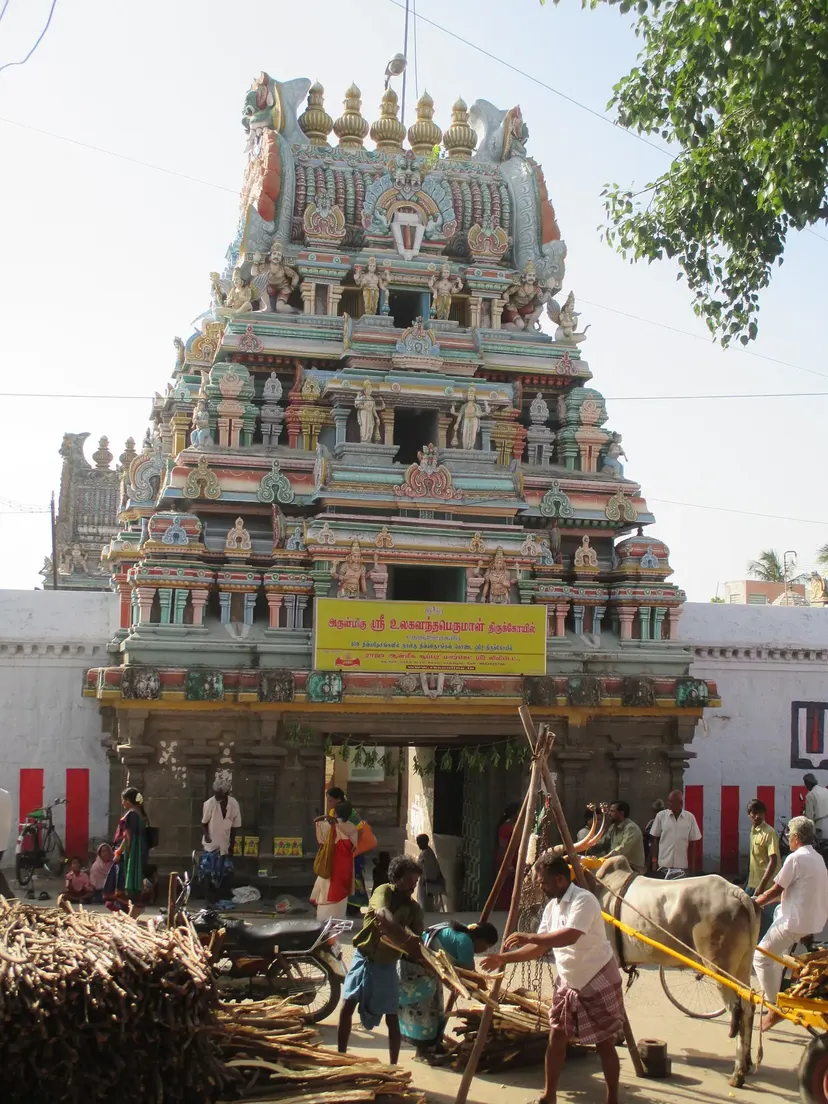
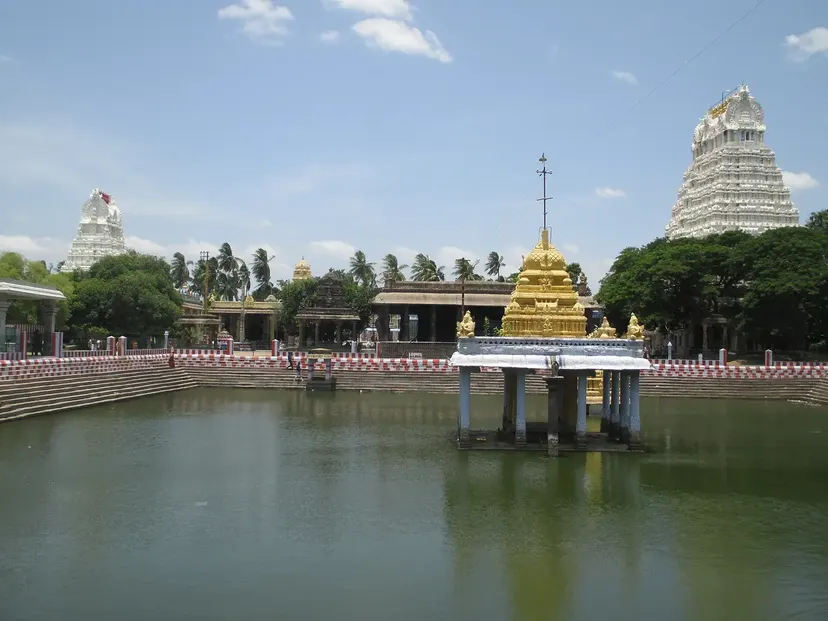
Wikipedia describes a compact temple: a granite wall encloses all the shrines and two bodies of water, and the entrance has a three-tiered rajagopuram. The presiding deity is seated, and there are separate shrines for Azhagiya Singar, for the consort and for Garuda. Dinamalar names the sanctum tower the Kanaka Vimana and the temple tanks Kanaka Saras and Hema Saras.
Dinamalar notes two details of interest to visitors: a shrine to Sudarshana (Chakrathazhwar) in the outer corridor, and an image of Garuda in the Narasimha shrine whose head is slightly tilted, which tradition explains as Garuda being unable to bear the Lord's fierce glory.
Plan Your Visit
Darshan and Visitor Information
This is a small, active Divya Desam with fixed morning and evening darshan periods. Dress modestly, remove footwear before entering, and follow the instructions of the temple staff regarding photography in the shrines. Confirm current timings and festival dates locally with the temple administration before visiting.
Timings and arrangements change with seasons and festivals. Confirm current details with the temple administration before travelling. Last reviewed 1 November 2026.
Sacred Calendar
Festivals at Azhagiya Singar Temple, Tiruvelukkai (Kanchipuram)
Vaikunta Ekadasi
Dinamalar's temple guide names Vaikunta Ekadasi as the festival celebrated with devotion at this temple.
Location
How to Reach Azhagiya Singar Temple, Tiruvelukkai (Kanchipuram)
The temple is in Kanchipuram town. Dinamalar gives it as about a kilometre from the Kancheepuram bus stand, with Kancheepuram the nearest railway station and Chennai the nearest airport.
Location: Kanchipuram, Tamil Nadu, India
Nearest airport: Chennai (per Dinamalar)
Nearest railway station: Kancheepuram (per Dinamalar)
More in Hindu temples in Tamil Nadu · Vishnu as Narasimha (Azhagiya Singar, also Mukunda Nayakan) temples · Temples in Kanchipuram Taluk · Temples in Kanchipuram District
Questions
Azhagiya Singar Temple, Tiruvelukkai (Kanchipuram): Frequently Asked Questions
Which deity is worshipped at Tiruvelukkai?
Vishnu in his Narasimha form, called Azhagiya Singar ('the beautiful lion') and Mukunda Nayakan. His consort is Velukkai Valli, also called Amruthavalli.
What does the name Velukkai mean?
It is traditionally explained as 'vel' (desire) plus 'irukkai' (dwelling): the place where the Lord chose of his own wish to stay.
Which Alvars sang about Tiruvelukkai?
According to Dinamalar, Peyalvar and Thirumangai Alvar sang its praise in the Nalayira Divya Prabandham.
What is the connection with Vedanta Desika?
Vedanta Desika composed the Kamasikashtakam on the Narasimha of this temple, which is why the shrine is also called the Kamasika Narasimha sannidhi.
How old is Tiruvelukkai?
It is believed to date from the Pallava period of the late 8th century, and it has inscriptions of the Chola kings Rajadhiraja and Kulothunga I.
Where is Tiruvelukkai temple located?
In Kanchipuram town, about a kilometre from the bus stand according to Dinamalar.
Sources and attribution
Further reading: Azhagiya Singar Temple, Tiruvelukkai (Kanchipuram) on Wikipedia (CC BY-SA 4.0).
Spotted an error? Write to info@hindutone.com — see our editorial policy.