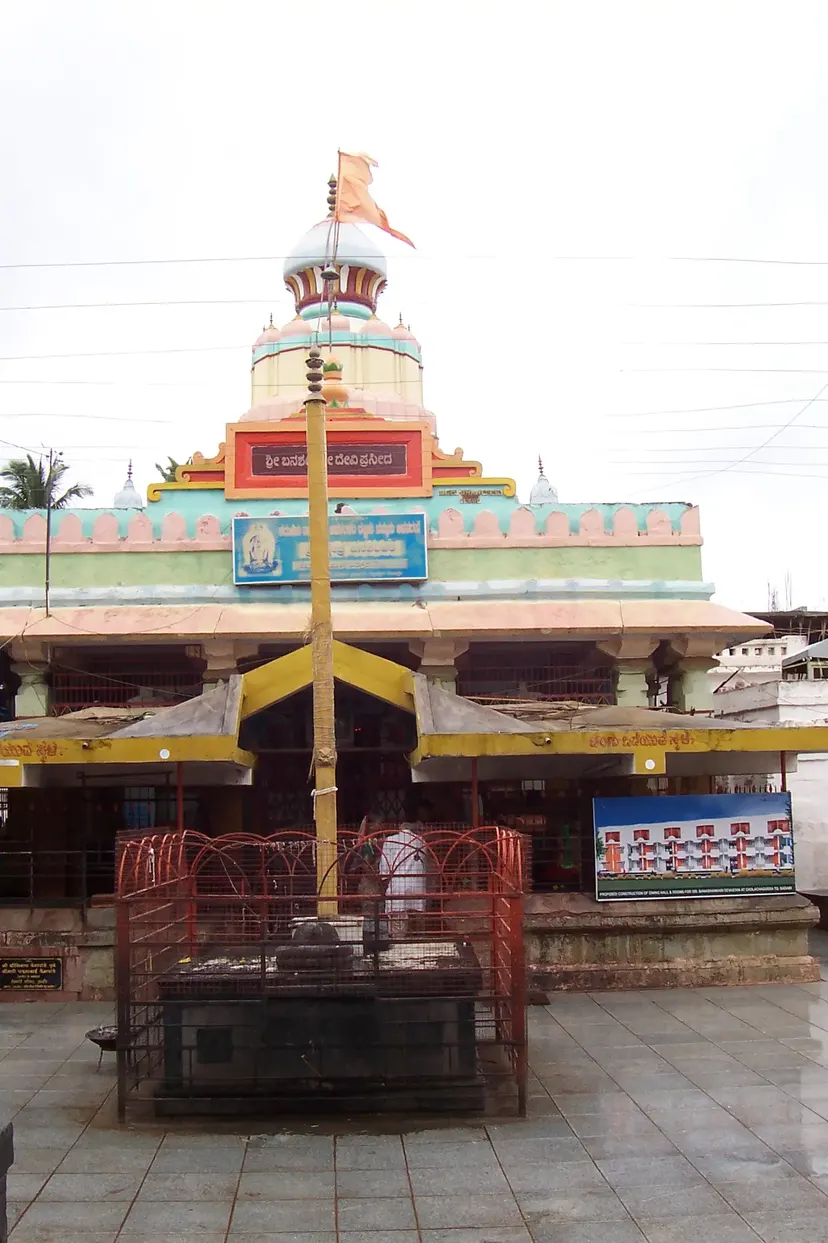
Lad Khan Temple, Aihole
Shiva (linga with Nandi) temple · Aihole, Bagalkot, Karnataka, India
The Lad Khan Temple is one of the best known of the many early stone temples at Aihole, in Bagalkot district of Karnataka. It is a Shiva temple, also referred to as the Chalukya Shiva Temple, and stands just south of the Durga temple in the main monument enclosure.
The Bagalkot district administration describes Aihole as a former capital of the early Chalukyas and a cradle of temple architecture, with about 125 temples in 22 groups. Karnataka Tourism calls the Lad Khan Temple one of the earliest stone Hindu temples in India and believes it to be the oldest structure in Aihole, though historians disagree on its exact date.
Faith & Tradition
Religious Significance of Lad Khan Temple, Aihole
The temple is important less as a pilgrimage centre than as a document of how Indian temple architecture began. Its low, hall-like form, flat roof and heavy pillars show builders working out how to translate earlier timber construction into stone, before the tall towered sanctum became standard. Wikipedia describes the roof stones as shaped like logs, an imitation of older wooden buildings.
Inside, according to Wikipedia, the hall is arranged in concentric squares of pillars, with a seated Nandi in the centre facing the Shiva linga at the rear. The Bagalkot district site and Wikipedia both note that the sanctum appears to have been added later to what began as a hall.
Heritage
History of Lad Khan Temple, Aihole
The name has nothing to do with the temple's builders. According to the Bagalkot district site, it comes from a Muslim prince who turned the building into his residence; Wikipedia describes him as a commander under the Adil Shahi sultans who stayed here briefly. The original name of the shrine is not recorded in these sources.
Dating has changed over time. The Bagalkot district site gives a date of about 450 CE, and the Wikipedia article on the temple says it was formerly placed in the 7th or 8th century but is now dated to around the 5th century. The Wikipedia article on Aihole, however, records a range from about 450 CE to the 6th-8th centuries, and cites George Michell's view that the nearby Gaudargudi is older than the Lad Khan Temple. This page therefore treats the date as uncertain and within the early Chalukya period.
Wikipedia notes a tradition that the temple was originally dedicated to Vishnu before housing the present Shiva linga; this is not confirmed by the other sources consulted.
Architecture and sacred features
The temple consists of an open pillared porch (mukha-mandapa) with twelve carved pillars, leading into a larger square hall. The hall's walls are filled with stone lattice windows in a northern style, and its flat roof is crowned by a small square structure. Wikipedia describes this upper shrine as carrying images of Vishnu, Surya and Ardhanarishvara on its outer walls, and sees it as an early forerunner of the towers that later developed into the northern shikhara and southern vimana.
Wikipedia also records reliefs of the river goddesses Ganga and Yamuna. The heavy square pillars, bracket capitals and absence of a tall tower give the building its distinctive, almost secular appearance among Aihole's temples.
Plan Your Visit
Darshan and Visitor Information
The temple stands in a ticketed monument enclosure maintained by the Archaeological Survey of India. Visitors should treat the carvings with care and follow site rules on photography and footwear. Confirm current timings and entry charges with the ASI before visiting.
Timings and arrangements change with seasons and festivals. Confirm current details with Archaeological Survey of India before travelling. Last reviewed 1 November 2026.
Location
How to Reach Lad Khan Temple, Aihole
Karnataka Tourism gives Aihole as about 34 km from Bagalkot railway station and about 140 km from Hubballi airport, with road access via Bagalkot. Wikipedia places Aihole about 9.7 km from Pattadakal, making it easy to combine with Pattadakal and Badami.
The Lad Khan Temple lies inside the main enclosure at Aihole, south of the Durga temple and near the ASI museum.
Location: Aihole, Bagalkot, Karnataka, India
Nearest airport: Hubballi (about 140 km, per Karnataka Tourism)
Nearest railway station: Bagalkot (about 34 km, per Karnataka Tourism)
More in Hindu temples in Karnataka · Shiva (linga with Nandi) temples · Temples in Kalligudda · Temples in Hungund Taluk · Temples in Bagalkot District
Questions
Lad Khan Temple, Aihole: Frequently Asked Questions
Why is it called the Lad Khan Temple?
The name comes from a later occupant, not the builder. The Bagalkot district site says a Muslim prince turned it into his residence; Wikipedia describes him as an Adil Shahi commander who stayed there briefly.
Which deity is in the Lad Khan Temple?
The sanctum holds a Shiva linga, with a seated Nandi in the centre of the hall facing it.
How old is the Lad Khan Temple?
Its date is debated. The Bagalkot district site gives about 450 CE, while other estimates cited by Wikipedia range into the 7th or 8th century.
What makes the Lad Khan Temple architecturally important?
It shows early builders adapting timber construction to stone: a flat roof with log-shaped stones, a pillared hall with lattice windows, and a small shrine on the roof seen as a forerunner of later temple towers.
Where is the Lad Khan Temple in Aihole?
It stands inside the main monument enclosure, just south of the Durga temple.
How do I reach Aihole?
Karnataka Tourism gives Bagalkot railway station as about 34 km away and Hubballi airport as about 140 km away. Aihole is about 9.7 km from Pattadakal.
Sources and attribution
- Wikipedia — Chalukya Shiva Temple (Lad Khan Temple)
- Wikipedia — Aihole
- District Administration, Bagalkot (bagalkot.nic.in) — Aihole
- Karnataka Tourism, Government of Karnataka — Aihole
Further reading: Lad Khan Temple, Aihole on Wikipedia (CC BY-SA 4.0).
Spotted an error? Write to info@hindutone.com — see our editorial policy.