Mahakuta Group of Temples (Mahakuteshwara Temple)
Shiva (as Mahakuteshwara) temple · Mahakuta, Bagalkot, Karnataka, India
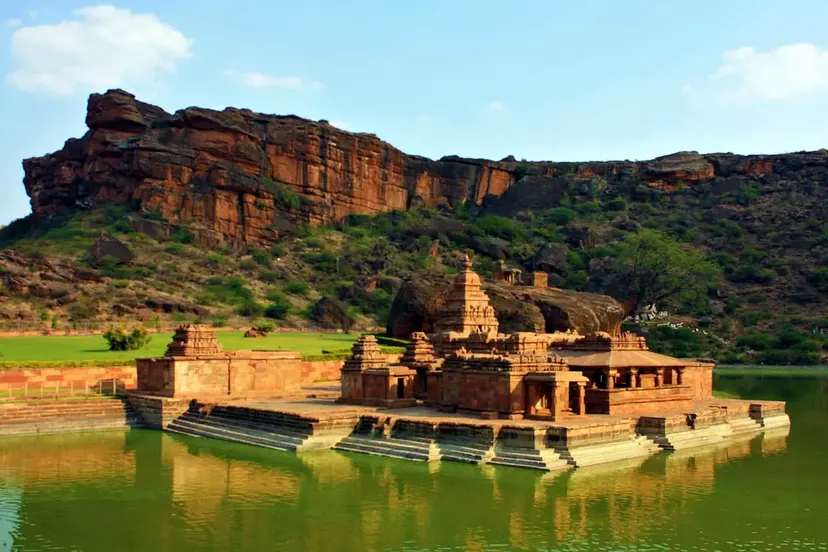
Mahakuta is a village in Bagalkot district, Karnataka, a short distance east of Badami, where a cluster of early Chalukya temples surrounds a spring-fed tank. The main shrine is the Mahakuteshwara temple, dedicated to Shiva, and the site remains an active Shaiva place of pilgrimage. Incredible India notes that Mahakuta is known as 'Dakshin Kashi', the Kashi of the south.
Wikipedia dates the temples to the 6th and 7th centuries CE and attributes them to the early kings of the Chalukya dynasty of Badami. The complex is important to historians because of two inscriptions connected with it, including the Mahakuta pillar of about 602 CE, which records gifts to the Shiva temple here.
Faith & Tradition
Religious Significance of Mahakuta Group of Temples (Mahakuteshwara Temple)
At the centre of the complex is a large tank, the Vishnu Pushkarini, fed by a natural spring, with a smaller ablution tank called Papavinasha Tirtha. Incredible India and Outlook Traveller both record the devotional belief that bathing in the spring-fed tank washes away sins. According to Wikipedia, a small shrine in the middle of the tank holds a five-faced (panchamukha) linga.
Incredible India relates a tradition that Shiva performed penance at Mahakuta after slaying the demon Andhakasura, and Outlook Traveller notes the local association of the site with the sage Agastya. Wikipedia also describes Mahakuta as the seat of a well-known Shaiva monastery. Outlook Traveller counts about ten Shiva temples and a Saraswati shrine within the complex.
Heritage
History of Mahakuta Group of Temples (Mahakuteshwara Temple)
The Mahakuta pillar, also called the Dharma-jayastambha, is a sixteen-sided red sandstone column about 4.4 m tall with a Sanskrit inscription in old Kannada script. Wikipedia, following the epigraphist John Fleet, explains that it was set up in the reign of the Chalukya king Mangalesha to announce the gift of ten more villages to the Shiva temple of Makuteshvaranatha, which already existed. The date is read variously between 595 and 602 CE. The pillar was found near the temples in the 19th century and moved to Bijapur around 1920; it is now in the Archaeological Museum at Vijayapura.
A second, Kannada inscription is carved in the porch of the Mahakuteshwara temple. Wikipedia attributes it to Vinapoti, a companion of King Vijayaditya (late 7th to early 8th century), and records that it describes gifts of rubies, a silver umbrella and land to the deity. Together with the style of the buildings, which resembles the temples of nearby Aihole, these records are the basis for dating the complex.
Architecture and sacred features
Mahakuta is notable for building temples in two styles side by side. Wikipedia explains that the Mahakuteshwara and Mallikarjuna temples, the largest in the complex, are in the southern dravida style, with a tiered tower capped by a dome-like top, while several smaller shrines, such as the Sangameshvara temple, have the curvilinear nagara tower of the north. The mixing of the two traditions in this region is seen as an early stage of what later became the Vesara style.
Incredible India describes the Mahakuteshwara temple as built of red sandstone with finely carved pillars and towers. Wikipedia's illustrations also show a sculpture of Ardhanarishvara, the half-Shiva, half-Parvati form, among the carvings at the site.
Plan Your Visit
Darshan and Visitor Information
Mahakuta is a living Shaiva pilgrimage site as well as an early Chalukya monument, so dress modestly, remove footwear where required, and respect bathers at the tank. Carvings and inscriptions are fragile and should not be touched. Confirm current darshan timings and any rules for bathing in the Vishnu Pushkarini with the temple authorities at Mahakuta before visiting.
Timings and arrangements change with seasons and festivals. Confirm current details with the temple administration before travelling. Last reviewed 1 November 2026.
Location
How to Reach Mahakuta Group of Temples (Mahakuteshwara Temple)
Mahakuta lies a few kilometres east of Badami; Wikipedia's article on the Mahakuta pillar places the temple site about 5 km east of the Badami cave temples, and Outlook Traveller notes that it lies on the way to Aihole. Outlook Traveller recommends staying in Badami, as there is no accommodation or food at Mahakuta itself.
Badami has the nearest railway station according to Outlook Traveller; Incredible India also lists Bagalkot station. Incredible India lists Hubballi, Kalaburagi and Bengaluru as the nearest airports.
Location: Mahakuta, Bagalkot, Karnataka, India
Nearest airport: Hubballi (per Incredible India)
Nearest railway station: Badami
More in Hindu temples in Karnataka · Shiva (as Mahakuteshwara) temples · Temples in Badami Taluk · Temples in Bagalkot District
Questions
Mahakuta Group of Temples (Mahakuteshwara Temple): Frequently Asked Questions
Who built the Mahakuta temples?
They were built by the early Chalukya kings of Badami in the 6th and 7th centuries CE, according to Wikipedia and Incredible India.
Which deity is worshipped at Mahakuta?
Shiva, as Mahakuteshwara, in the main temple. The complex has several other Shiva shrines and a five-faced linga in a shrine in the middle of the tank.
What is the Vishnu Pushkarini at Mahakuta?
It is the large tank at the centre of the complex, fed by a natural spring. Devotees believe that bathing in it washes away sins.
What is the Mahakuta pillar?
A 16-sided red sandstone pillar with a Sanskrit inscription of King Mangalesha's reign, dated between 595 and 602 CE, recording a gift of ten villages to the Shiva temple. It is now in the Archaeological Museum at Vijayapura.
Why is Mahakuta called Dakshin Kashi?
Incredible India notes that Mahakuta is known as Dakshin Kashi, the southern counterpart of Kashi (Varanasi), reflecting its importance as a Shaiva pilgrimage place.
How far is Mahakuta from Badami?
About 5 km east of the Badami cave temples, on the way towards Aihole. Badami is the usual base for visitors.
Sources and attribution
- Wikipedia — Mahakuta group of temples
- Wikipedia — Mahakuta Pillar
- Incredible India (Ministry of Tourism, Government of India) — Mahakuta Group of Temples, Bagalkote
- Outlook Traveller — Banashankari and Mahakuta: Temple Villages
Further reading: Mahakuta Group of Temples (Mahakuteshwara Temple) on Wikipedia (CC BY-SA 4.0).
Spotted an error? Write to info@hindutone.com — see our editorial policy.