The Four Mahavakyas: The Great Sayings of the Upanishads Explained
Quick answer: The four Mahavakyas ("great sayings") are short statements from the Upanishads about the relation between the Self and Brahman, one from each Veda: Prajnanam Brahma ("Consciousness is Brahman", Rigveda), Aham Brahmasmi ("I am Brahman", Yajurveda), Tat Tvam Asi ("You are That", Samaveda
Quick answer: The four Mahavakyas ("great sayings") are short statements from the Upanishads about the relation between the Self and Brahman, one from each Veda: Prajnanam Brahma ("Consciousness is Brahman", Rigveda), Aham Brahmasmi ("I am Brahman", Yajurveda), Tat Tvam Asi ("You are That", Samaveda) and Ayam Atma Brahma ("This Self is Brahman", Atharvaveda).
The Upanishads contain many profound sentences, but these four became special, above all in the Advaita Vedanta tradition of Adi Shankaracharya. They are short enough to memorise and deep enough to occupy a lifetime of reflection. This guide explains where each one appears, what it means word by word, and how the different schools of Vedanta understand them.
The Four Mahavakyas at a Glance
| Mahavakya | Meaning | Upanishad and reference | Veda | Matha linked in the Advaita tradition |
|---|---|---|---|---|
| Prajnanam Brahma | Consciousness is Brahman | Aitareya Upanishad 3.3 (3.1.3 in some editions) | Rigveda | Govardhana Matha, Puri |
| Aham Brahmasmi | I am Brahman | Brihadaranyaka Upanishad 1.4.10 | Shukla Yajurveda | Sringeri Sharada Peetham |
| Tat Tvam Asi | You are That | Chandogya Upanishad 6.8.7 (repeated to 6.16) | Samaveda | Dwaraka Sharada Peetham |
| Ayam Atma Brahma | This Self is Brahman | Mandukya Upanishad 2 | Atharvaveda | Jyotirmath, Badrinath |
Why Are They Called "Great Sayings"?
Maha means great and vakya means sentence. Each Mahavakya brings together two things the Upanishads discuss everywhere: Brahman, the infinite reality behind the universe, and Atman, the Self within each being. Each sentence puts them side by side in a single line.
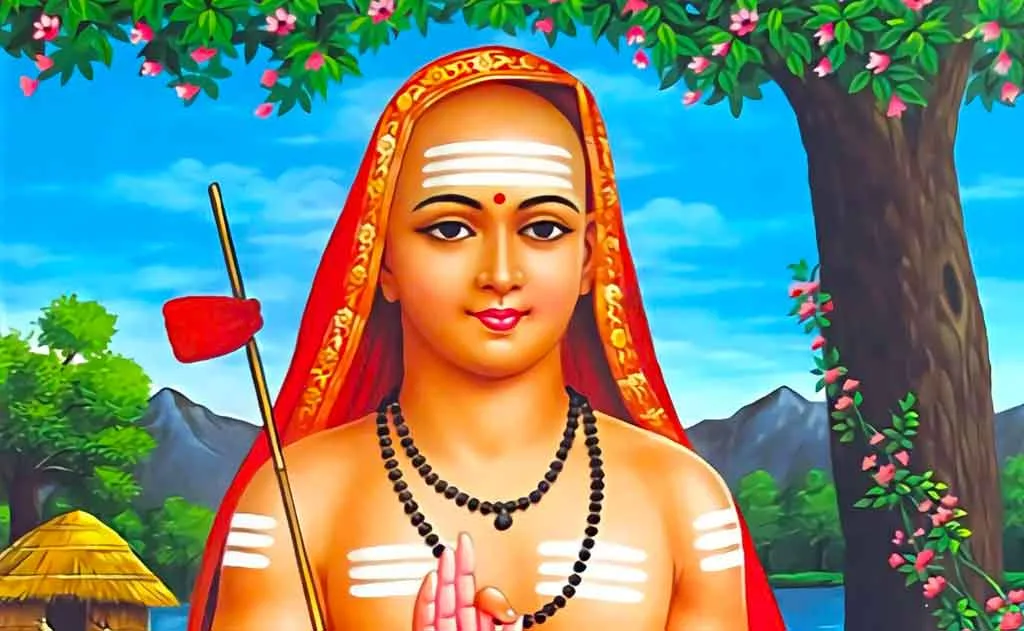
Grouping exactly four, one from each Veda, is a convention of the later Advaita tradition. In that tradition each of the four mathas (monasteries) that Adi Shankaracharya is said to have founded is linked with one Veda and its Mahavakya, and a Mahavakya is traditionally imparted to a disciple at sannyasa initiation.
1. Prajnanam Brahma: "Consciousness Is Brahman"
- Source: Aitareya Upanishad of the Rigveda.
- Words: prajnanam = consciousness, awareness; Brahma = Brahman.
- Context: The Upanishad asks, "Who is this Self that we worship?" It answers that the awareness by which we see, hear, smell, speak and know is the Self, and that all beings and all worlds are guided by and rest in this consciousness. Consciousness is Brahman.
- Called: the lakshana vakya, a "defining sentence", because it describes what Brahman is.
2. Aham Brahmasmi: "I Am Brahman"
- Source: Brihadaranyaka Upanishad of the Shukla Yajurveda, 1.4.10.
- Words: aham = I; Brahma = Brahman; asmi = am.
- Context: The passage says that in the beginning this was Brahman, and it knew itself as "I am Brahman", and so became all. Whoever among gods, sages or humans knows it in the same way becomes the All.
- Called: the anubhava vakya, the sentence of direct experience.
- A common misreading: it is not a claim of personal greatness. See Aham Brahmasmi Meaning: Why It Is Not Ego.
3. Tat Tvam Asi: "You Are That"
- Source: Chandogya Upanishad of the Samaveda, chapter 6.
- Words: tat = that; tvam = you; asi = are.
- Context: The sage Uddalaka Aruni teaches his son Shvetaketu through a series of examples: the honey gathered from many flowers, rivers merging into the sea, salt dissolved in water, the seed of the banyan tree. Each time he ends with the same refrain: that subtle essence is the Self of all this, that is the truth, that is the Self, and "you are That, Shvetaketu".
- Called: the upadesha vakya, the sentence of instruction, because a teacher says it to a student.
- See Tat Tvam Asi Meaning: Chandogya Upanishad 6.8.7 Explained.
4. Ayam Atma Brahma: "This Self Is Brahman"
- Source: Mandukya Upanishad of the Atharvaveda, verse 2.
- Words: ayam = this; atma = Self; Brahma = Brahman.
- Context: The Mandukya says that all this is Brahman, that this Self is Brahman, and that this Self has four quarters: waking, dreaming, deep sleep and the fourth, turiya, pure consciousness. The Upanishad links these states with the syllable Om.
- Called: the anusandhana vakya, the sentence for contemplation.
- See Om: Meaning, Symbol and the Mandukya Upanishad.
How the Schools of Vedanta Read the Mahavakyas
All schools of Vedanta accept these sentences as Shruti. They differ on what kind of "is" they express.
| School | Main teacher | How it reads "You are That" |
|---|---|---|
| Advaita (non-dualism) | Adi Shankaracharya | Identity. The pure consciousness in you and Brahman are one and the same, once the limiting ideas of body and mind are set aside. |
| Vishishtadvaita (qualified non-dualism) | Ramanujacharya | Brahman is the inner Self of the soul. "You" refers to Brahman, who has the soul as His body; the soul is real and distinct, yet inseparable from Brahman. |
| Dvaita (dualism) | Madhvacharya | Not identity. Madhva reads the line either as "you are not That" (dividing the words as atat tvam asi) or as expressing likeness and dependence, never sameness. |
For the wider comparison, see Advaita, Vishishtadvaita and Dvaita Explained.
How Advaita Explains "You Are That"
Advaita teachers use a method called bhaga-tyaga lakshana, "dropping part of the meaning". In the sentence "This is that Devadatta", said of a man you met years ago in another town, you drop the differences of time and place and recognise the same person. In the same way, in "You are That", you set aside what belongs only to the individual (a limited body and mind) and only to the cosmic (omnipotence, rulership), and what remains on both sides, pure consciousness, is recognised as one.
The Advaita tradition describes three steps for this: hearing the teaching (shravana), reflecting on it (manana) and deep contemplation (nididhyasana).
Common Misreadings
- "I am God, so I can do as I please." No school of Vedanta teaches this. In Advaita the "I" that is Brahman is pure awareness, not the ego. In the other schools the soul depends wholly on God.
- "It is just a slogan." In the tradition, a Mahavakya is meant to be studied with a teacher, in context, with discipline and devotion.
- "Only Advaita uses them." Every Vedanta school comments on these passages; they simply read them differently.
Frequently Asked Questions
What are the four Mahavakyas?
Prajnanam Brahma (Aitareya Upanishad), Aham Brahmasmi (Brihadaranyaka Upanishad), Tat Tvam Asi (Chandogya Upanishad) and Ayam Atma Brahma (Mandukya Upanishad), one from each of the four Vedas.
What does Tat Tvam Asi mean?
"You are That." The sage Uddalaka repeats it to his son Shvetaketu in the Chandogya Upanishad, teaching that the subtle essence of all things is also his own Self.
Does Aham Brahmasmi mean "I am God"?
Not in the ego sense. In Advaita it points to pure consciousness, not the personality. Other schools read it as the soul's dependence on, and closeness to, Brahman.
Who grouped the four Mahavakyas together?
The grouping of four, one from each Veda, is a convention of the later Advaita tradition, which links each one with one of the four mathas associated with Adi Shankaracharya.
Are there other Mahavakyas?
The Upanishads contain other great sentences, such as "All this is indeed Brahman" (Chandogya 3.14.1). The term "four Mahavakyas" refers to the four listed here.
How should I study the Mahavakyas?
Read them in their full context in a principal Upanishad, ideally with a teacher or a traditional commentary, and reflect on them over time.
Related Reading on HinduTone
- What Are the 108 Upanishads?
- What Is Atma? The Self in the Upanishads
- Atma and Paramatma: Are They One?
- Advaita Vedanta and Adi Shankaracharya
- Bhagavad Gita Complete Guide
Sources
- Patrick Olivelle, The Early Upanishads: Annotated Text and Translation, Oxford University Press, 1998 (Aitareya, Brihadaranyaka 1.4.10, Chandogya 6.8–16, Mandukya 2).
- Swami Gambhirananda (tr.), Eight Upanishads, with the Commentary of Sankaracarya, Advaita Ashrama, Kolkata (Aitareya and Mandukya).
- Swami Gambhirananda (tr.), Chandogya Upanishad, with the Commentary of Sri Sankaracarya, Advaita Ashrama, Kolkata.
Last reviewed: 12 November 2026.
Share this with family and friends
Send it on WhatsApp, post it, or copy the link.
More from Hinduism
- The Swastika in Hinduism: Meaning and History
- Hindu Symbols and Their Meanings
- Shiva Purana: Structure and Main Stories
- Atharvaveda: What It Contains and Why It Matters
- Samaveda: The Veda of Song