Rigveda: Structure, Well-Known Hymns and What It Teaches
Quick answer: The Rigveda is the oldest of the four Vedas and the oldest Hindu scripture. It is a collection of 1,028 hymns (suktas) in 10 books (mandalas), addressed mainly to Agni, Indra and Soma. It contains the Gayatri Mantra, the Purusha Sukta and the Nasadiya Sukta, and has been passed down or
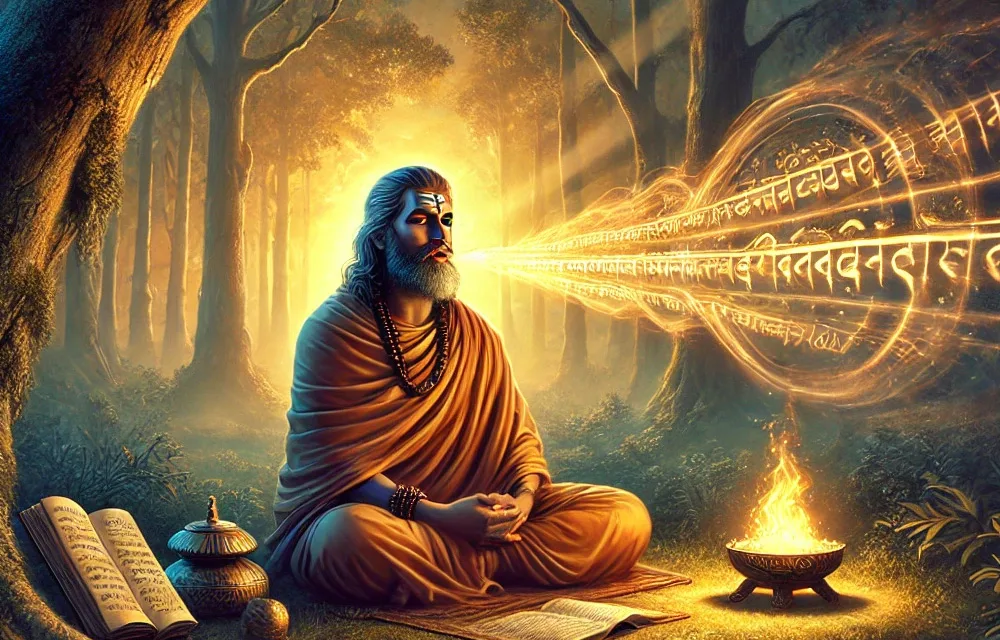
Quick answer: The Rigveda is the oldest of the four Vedas and the oldest Hindu scripture. It is a collection of 1,028 hymns (suktas) in 10 books (mandalas), addressed mainly to Agni, Indra and Soma. It contains the Gayatri Mantra, the Purusha Sukta and the Nasadiya Sukta, and has been passed down orally, syllable by syllable, for over three thousand years.
Rig comes from rich, a verse of praise, so Rigveda means "the Veda of praise". Its hymns were chanted at the fire ritual, and they remain the source of many mantras recited in Hindu homes and temples today. This page explains how the Rigveda is organised, what it contains and where to begin.
The Rigveda at a Glance
| Feature | Details |
|---|---|
| Language | Vedic Sanskrit, the oldest form of Sanskrit |
| Structure | 10 mandalas; 1,028 hymns, including 11 supplementary (Valakhilya) hymns in Mandala 8 |
| Verses | Roughly 10,500 to 10,600, depending on how they are counted |
| Surviving recension | Shakala (complete); the Bashkala is known only in part |
| Brahmanas | Aitareya and Kaushitaki (Shankhayana) |
| Upanishads | Aitareya and Kaushitaki |
| Main deities | Indra, Agni and Soma, then Varuna, Mitra, the Ashvins, Ushas, Surya, Vayu, the Maruts and others |
| Dating | Tradition: eternal and revealed (apaurusheya), arranged by Veda Vyasa. Historians: most hymns composed roughly 1500–1200 BCE |
| Heritage | Rigveda manuscripts at the Bhandarkar Oriental Research Institute, Pune, are on UNESCO's Memory of the World Register (2007); Vedic chanting is on UNESCO's intangible heritage list |
How the Rigveda Is Organised
The ten mandalas are not all alike:
- Mandalas 2–7, the "family books". Each is linked with one family of rishis: Gritsamada (2), Vishvamitra (3), Vamadeva (4), Atri (5), Bharadvaja (6) and Vasishtha (7). Scholars generally regard these as the oldest core.
- Mandala 8 is linked mainly with the Kanva and Angirasa families.
- Mandala 9 is devoted entirely to Soma: 114 hymns sung as the sacred Soma juice is purified.
- Mandalas 1 and 10 collect hymns from many families and are generally seen as the latest layer. Mandala 10 contains many of the famous philosophical hymns.
Each hymn has a traditional rishi (seer), devata (deity addressed) and chhandas (metre), which are recited before it in traditional chanting.
The Deities of the Rigveda
- Agni, the sacred fire, is the messenger between humans and gods. The very first hymn (1.1) praises him.
- Indra, king of the gods, wields the thunderbolt and releases the waters by slaying Vritra. About a quarter of the hymns are his.
- Soma, the sacred plant and drink, has the whole ninth book.
- Varuna guards rita, the cosmic order that later thought calls dharma.
- Ushas (Dawn), Surya and Savitr (the Sun), the Ashvins (healers), Vayu (wind) and the Maruts (storm gods) are also praised.
The Rigveda already points beyond the many gods to one reality: "Truth is one; the wise call it by many names" (ekam sad vipra bahudha vadanti, 1.164.46). See 33 Crore Gods Meaning.
Famous Hymns From the Rigveda
| Hymn | Reference | What it is |
|---|---|---|
| Agni Sukta | 1.1 | The opening hymn, to Agni |
| Gayatri Mantra | 3.62.10 | Prayer to Savitr for an illumined mind; see the Gayatri Mantra guide |
| Mahamrityunjaya Mantra | 7.59.12 | Prayer to Tryambaka (Shiva) for freedom from death; see the Maha Mrityunjaya Mantra |
| Purusha Sukta | 10.90 | The cosmic Person from whom the universe arises; see Purusha Suktam |
| Hiranyagarbha Sukta | 10.121 | The "golden womb" from which creation came |
| Devi (Vak) Sukta | 10.125 | The goddess of speech declares her universal power; see Devi Suktam |
| Ratri Sukta | 10.127 | Hymn to the goddess Night; see Ratri Suktam |
| Nasadiya Sukta | 10.129 | The hymn of creation, which ends in a famous question about who truly knows how creation began |
| Samjnana Sukta | 10.191 | The last hymn: a prayer for unity, "move together, speak together" |
The well-known Sri Suktam is not in the main ten books but in the khila, the supplementary hymns attached to the Rigveda. See Sri Suktam.
What the Rigveda Teaches
- Rita, the order of the cosmos. The universe has a moral and natural order, which the gods uphold and humans should follow.
- Worship through offering. The fire ritual (yajna) joins humans and gods in a cycle of giving.
- One truth, many names. Behind the many deities lies one reality, an idea the Upanishads develop.
- Wonder at creation. The Nasadiya and Hiranyagarbha hymns ask the deepest questions about how existence began.
- Unity and goodwill. The closing hymn asks people to meet, think and act together.
How the Rigveda Has Been Preserved
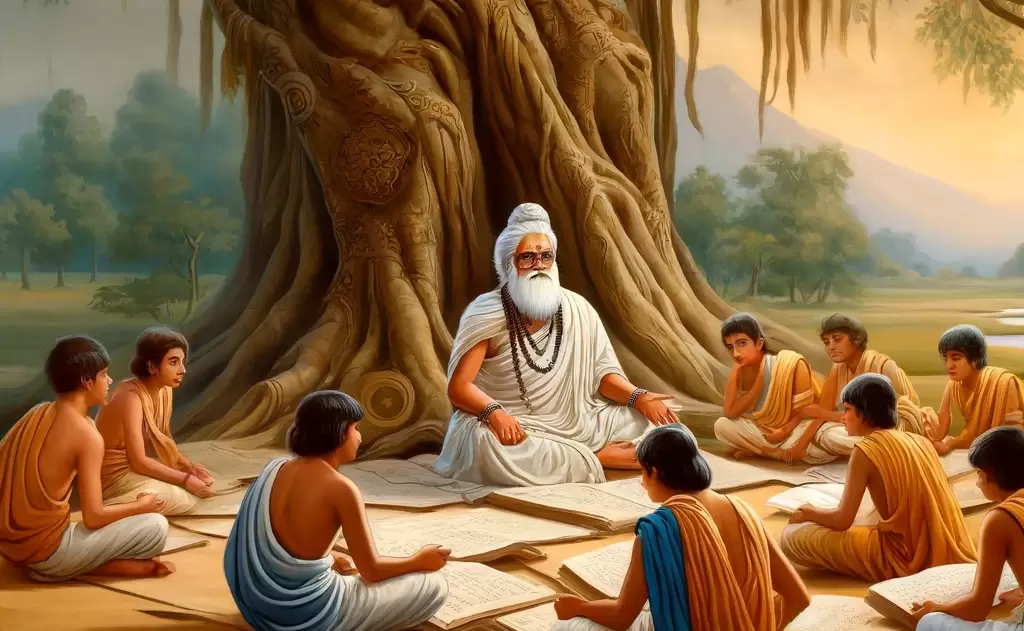
The Rigveda was passed down by memory long before it was written. To keep every syllable and accent exact, teachers developed several ways of reciting the same text: the continuous text (samhita patha), word by word (pada patha) and complex woven patterns such as krama, jata and ghana. A mistake in one pattern shows up in another. This oral tradition still continues in Vedic schools (pathashalas) across India.
How to Begin
- Learn a few mantras you already hear: the Gayatri, the Mahamrityunjaya, the Purusha Sukta.
- Read a translation of selected hymns with notes, rather than the whole text at once.
- Hear it chanted. The Rigveda is meant to be heard; recordings by traditional pathashalas show its living form.
- Learn chanting from a teacher, as the tradition requires for correct accents.
Frequently Asked Questions
How many hymns are in the Rigveda?
1,028, in ten mandalas, counting the 11 Valakhilya hymns in Mandala 8. Without them the count is 1,017.
How old is the Rigveda?
Tradition regards it as eternal and revealed. Most historians date the bulk of its hymns to about 1500–1200 BCE, with the oldest books (2–7) earlier than books 1 and 10.
Is the Gayatri Mantra from the Rigveda?
Yes. It is Rigveda 3.62.10, in the book linked with the sage Vishvamitra. It also appears in the other Vedas.
Which gods are worshipped in the Rigveda?
Mainly Agni, Indra and Soma, along with Varuna, Mitra, Surya, Ushas, the Ashvins, Vayu, the Maruts and others.
Which Upanishads belong to the Rigveda?
The Aitareya Upanishad (source of the Mahavakya "Prajnanam Brahma") and the Kaushitaki Upanishad. See The Four Mahavakyas.
Related Reading on HinduTone
- The Four Vedas Explained
- Hindu Scriptures Explained: Shruti and Smriti
- What Are the 108 Upanishads?
- Yajurveda: Shukla and Krishna Recensions
Sources
- Stephanie W. Jamison and Joel P. Brereton (tr.), The Rigveda: The Earliest Religious Poetry of India, 3 vols, Oxford University Press, 2014 (structure, families of the mandalas, hymn references).
- Vedic Heritage Portal (Government of India), Introduction: vedicheritage.gov.in/introduction/
- UNESCO Memory of the World Register, Rigveda (manuscripts at BORI, Pune), inscribed 2007.
Last reviewed: 12 November 2026.
Share this with family and friends
Send it on WhatsApp, post it, or copy the link.
More from Hinduism
- Samkhya Philosophy Explained: Purusha, Prakriti and the 25 Tattvas
- Hinduism for Kids: A Simple Guide to What Hindus Believe
- A Hindu Day: Daily Practices from Waking to Sleep
- Dvaita Philosophy Explained: Madhvacharya's Vedanta of Difference
- Vishishtadvaita Explained: Ramanuja's Philosophy of Qualified Non-Dualism