12 Jyotirlinga Yatra from Hyderabad: Route, Travel Plan, Budget and Karthika Masam Guide
Plan the 12 Jyotirlinga yatra from Hyderabad: Srisailam by road, the Maharashtra and Madhya Pradesh circuits, Gujarat, Kashi, Deoghar and Rameswaram, 3 to 7 day itineraries, budget styles, official booking sites and Karthika Masam 2026 dates.
Quick answer: From Hyderabad, the 12 Jyotirlingas are best covered as regional circuits, not one trip. Srisailam (Mallikarjuna) is the nearest and is reached by road. Grishneshwar, Trimbakeshwar and Bhimashankar in Maharashtra are reached via Chhatrapati Sambhajinagar, Nashik and Pune; Mahakaleshwar and Omkareshwar via Indore; Somnath and Nageshwar via Gujarat; Kashi Vishwanath and Baidyanath (Deoghar) in the north and east; and Ramanathaswamy via Madurai. Kedarnath closes for winter on 11 November 2026. Karthika Masam 2026 runs 10 November to 8 December, with Somavarams on 16, 23 and 30 November and 7 December and Karthika Pournami on 24 November.
Hyderabad sits in the middle of the Deccan, which makes it one of the better starting points in India for the Dwadasha Jyotirlinga Yatra: one shrine is a road trip away, three or five more are in neighbouring Maharashtra, and the rest are a flight or an overnight train or two away. This guide is written for Hyderabad and Telangana families planning the yatra, especially in Karthika Masam. For the history and significance of each shrine, read our complete pilgrim's guide to the twelve Jyotirlingas; for what is special at each temple this month, see 12 Jyotirlingas in Karthika Masam 2026; and for an all-India itinerary, see the 12 Jyotirlinga Yatra 2026 guide.
Editor's note on sources: Karthika dates are from our Karthika Masam 2026 hub (Telugu amanta calendar). The Kedarnath closing time and the Ukhimath winter seat are from the Badrinath-Kedarnath Temple Committee schedule as reported by PTI (ThePrint, 27 October 2026). The note on the Srisailam forest road is from a Deccan Chronicle report (5 February 2025). Booking information is from the official temple websites, read on 9 November 2026. We have deliberately not given fares, train numbers, flight routes, distances or driving times: they change often, and you should check them on IRCTC, Indian Railways, airline and state transport websites before you travel. Last reviewed: 9 November 2026.
The 12 Jyotirlingas and their states
- Somnath - Prabhas Patan, near Veraval, Gujarat
- Mallikarjuna - Srisailam, Nandyal district, Andhra Pradesh
- Mahakaleshwar - Ujjain, Madhya Pradesh
- Omkareshwar - Mandhata island on the Narmada, Khandwa district, Madhya Pradesh
- Vaidyanath (Baidyanath) - Deoghar, Jharkhand; in another tradition, Parli Vaijnath, Beed district, Maharashtra
- Bhimashankar - Sahyadri hills, Pune district, Maharashtra
- Ramanathaswamy - Rameswaram, Tamil Nadu
- Nageshwar - near Dwarka, Gujarat; in another tradition, Aundha Nagnath, Hingoli district, Maharashtra
- Kashi Vishwanath - Varanasi, Uttar Pradesh
- Trimbakeshwar - Trimbak, Nashik district, Maharashtra
- Kedarnath - Rudraprayag district, Uttarakhand (seasonal)
- Grishneshwar - Verul, near Ellora, Chhatrapati Sambhajinagar district, Maharashtra
The order follows the Dwadasha Jyotirlinga Stotram. Seen from Hyderabad, they fall into six practical groups: Andhra Pradesh (1), Maharashtra (3, or 5 with the Maharashtra tradition), Madhya Pradesh (2), Gujarat (2), the north and east (Kashi, Deoghar and Kedarnath) and Tamil Nadu (1).
Getting around from Hyderabad: air, rail and road
Hyderabad's Rajiv Gandhi International Airport at Shamshabad and the city's main railway stations (Secunderabad, Hyderabad Deccan/Nampally and Kacheguda among them) connect to most of the gateway cities below, some directly and some with a change. Schedules change by season, so check current trains on IRCTC or Indian Railways and flights on the airlines' own websites before you fix dates. For Srisailam, state buses run by TGSRTC and APSRTC are an alternative to driving.
1. Srisailam (Mallikarjuna) by road
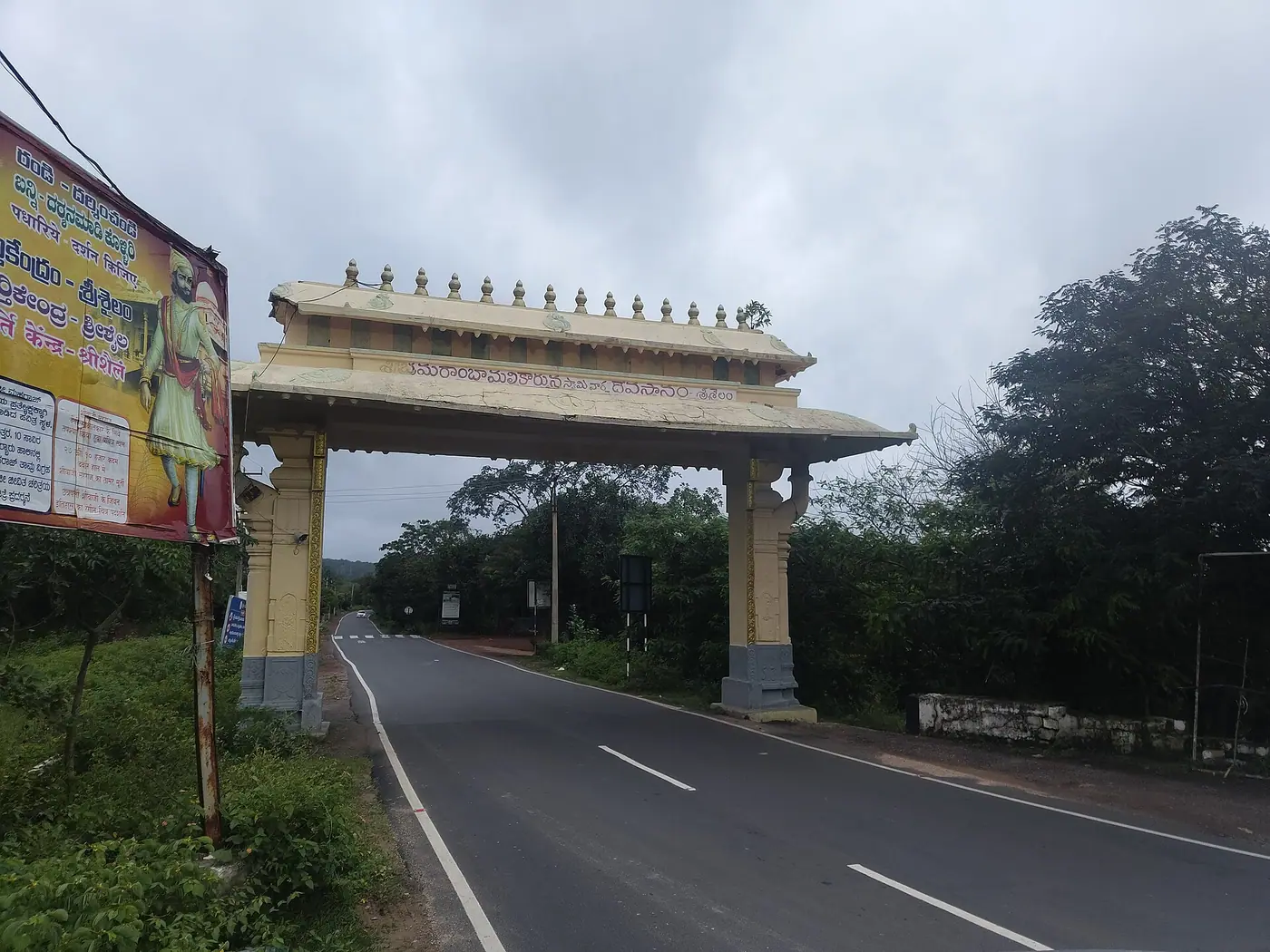
Srisailam, high in the Nallamala hills above the Krishna, is the Jyotirlinga most Hyderabad families visit first, and many go every Karthika Masam. Lord Mallikarjuna is worshipped with Goddess Bhramaramba, and the shrine is revered as both a Jyotirlinga and a Shakti Peetha. The usual route is by road south from Hyderabad through Mannanur and Domalapenta, crossing the Amrabad Tiger Reserve. That forest stretch is normally closed to traffic at night (it has been opened at night only for special occasions such as Maha Shivaratri), so plan to cross it in daylight and confirm current timings before leaving. There is no railway to Srisailam. Details: Srisailam Mallikarjuna Jyotirlinga temple guide. Darshan, seva and accommodation: Srisailam Devasthanam official site.
2. The Maharashtra trio: Grishneshwar, Trimbakeshwar, Bhimashankar
- Grishneshwar: go to Chhatrapati Sambhajinagar (formerly Aurangabad), which has an airport and a railway station, then by road to Verul, beside the Ellora caves. It pairs naturally with Ellora and Daulatabad. See the Grishneshwar Jyotirlinga guide.
- Trimbakeshwar: go to Nashik (Nashik Road railway station; Nashik's airport is at Ozar), then by road to Trimbak, at the source of the Godavari. Darshan pass, puja and Bhaktniwas booking: Shri Trimbakeshwar Devsthan Trust. See the Trimbakeshwar Jyotirlinga guide.
- Bhimashankar: go to Pune (airport and railway station), then by road into the Sahyadri hills. The last stretch is a hill road, so start early and avoid driving it after dark. See the Bhimashankar Jyotirlinga guide.
Many pilgrims fly or take the train to one city and return from another (for example, in through Chhatrapati Sambhajinagar and out through Pune), using a hired car between the three shrines.
3. The Maharashtra tradition: Parli Vaijnath and Aundha Nagnath
In Maharashtra and much of the Deccan, many devotees identify the Vaidyanath Jyotirlinga with Parli Vaijnath in Beed district and the Nageshwar Jyotirlinga with Aundha Nagnath in Hingoli district. Others follow the identifications at Deoghar (Jharkhand) and near Dwarka (Gujarat). The question is not settled, and both sets of shrines are revered by large numbers of pilgrims. For Hyderabad families the Marathwada temples are relatively close, and they combine well with Grishneshwar. Parli Vaijnath has its own railway station; Aundha Nagnath is reached by road from the nearby towns of Hingoli or Parbhani. We could not find an official booking website for either temple, so ask locally or at the temple office.
4. Madhya Pradesh: Mahakaleshwar and Omkareshwar via Indore
Indore, which has an airport and a major railway station, is the usual gateway for both shrines. Ujjain (Mahakaleshwar) also has its own railway junction, and Omkareshwar is reached by road. Mahakaleshwar's early-morning Bhasma Aarti needs advance registration and ID; use only the official Shri Mahakaleshwar site. Omkareshwar's official site lists Shighra Darshan and puja bookings. Guides: Mahakaleshwar and Omkareshwar.
5. Gujarat: Somnath and Nageshwar
Somnath stands by the sea at Prabhas Patan near Veraval, which has the nearest railway station. Nageshwar is near Dwarka, which has its own station, and is usually combined with the Dwarkadhish temple and Bet Dwarka. The two are at opposite ends of the Saurashtra coast, so allow a full day of road travel between them. Airports in the region include Rajkot, Jamnagar, Porbandar and Diu; check which ones have convenient connections from Hyderabad on your dates. Rooms, special puja and donations at Somnath: only through somnath.org or the Trust's offices; the Trust warns against bookings through WhatsApp, chat, personal phone numbers or UPI. Guide: Somnath temple.
6. North and east: Kashi Vishwanath and Baidyanath (Deoghar)
Varanasi has an airport and several railway stations, and the Shri Kashi Vishwanath official web portal is the place for darshan and aarti information. Deoghar has an airport, and Jasidih Junction is the main railhead for Baba Baidyanath Dham; the Baba Baidyanath Dham Temple Trust site offers live darshan and donations but, as of our check, no online darshan booking. Kashi and Deoghar are in neighbouring states and are often combined in one trip. In Karthika 2026, Kashi's great event is Dev Deepawali on 24 November, when hotels in Varanasi fill up early. Guide: Kashi Vishwanath temple.
7. Tamil Nadu: Ramanathaswamy via Madurai
Madurai is the usual air gateway, followed by road or rail to Rameswaram island, which has its own railway station. Many Telugu pilgrims combine Rameswaram with the Meenakshi temple in Madurai. The temple is administered by Tamil Nadu's Hindu Religious and Charitable Endowments (HR&CE) department; we could not reach its official portal when we checked, so confirm darshan and theertham arrangements at the temple itself. Guide: Ramanathaswamy temple.
8. Kedarnath: seasonal, closes 11 November 2026
Kedarnath in the Garhwal Himalayas is open only from late spring to autumn. For 2026 the Badrinath-Kedarnath Temple Committee scheduled the closing for Wednesday 11 November at about 8:30 AM, on Bhai Dooj. The utsava murti then travels by palanquin to the Omkareshwar Temple in Ukhimath, where Lord Kedarnath is worshipped through the winter; it is scheduled to arrive there on 13 November. If you are in Hyderabad today you cannot realistically reach Kedarnath before it closes. Plan it for the next season: the reopening date is traditionally announced on Maha Shivaratri, registration on the Uttarakhand registration portal is required, and the BKTC website handles puja bookings. The trek is long and at high altitude, so a medical check is wise.
Suggested itineraries from Hyderabad
These outlines assume you start and end in Hyderabad and want unhurried darshan. Travel times depend on the train or flight you get, so treat the day plans as a shape, not a timetable. Add a buffer day on Somavarams, Karthika Pournami and weekends.
3 days: Srisailam
- Day 1: Leave Hyderabad early by car or state bus so that you cross the forest stretch in daylight. Check in, rest, attend the evening darshan or aarti.
- Day 2: Early-morning darshan of Mallikarjuna and Bhramaramba; Sakshi Ganapati, the Srisailam dam viewpoint and Pathala Ganga as time and energy allow.
- Day 3: A second darshan if you wish, then return to Hyderabad in daylight.
Alternative 3-day trip: Grishneshwar and Ellora via Chhatrapati Sambhajinagar (one day each way, one day for darshan and the caves; note that the Ellora caves have a weekly closing day, so check before you go).
5 days: the Maharashtra trio
- Day 1: Hyderabad to Chhatrapati Sambhajinagar by air or train; evening at leisure.
- Day 2: Grishneshwar darshan in the morning, Ellora caves; drive towards Nashik.
- Day 3: Trimbakeshwar darshan (book the darshan pass on the Trust site for busy days), Kushavarta tank; Panchavati in Nashik if time permits.
- Day 4: Road journey towards Pune and the Sahyadris; stay near Bhimashankar or in Pune.
- Day 5: Bhimashankar early-morning darshan, return to Pune and back to Hyderabad by air or train.
Alternative 5-day trip: Indore - Omkareshwar - Ujjain - Indore (one travel day each way, a day at Omkareshwar, a day and a morning in Ujjain for Mahakaleshwar and the Bhasma Aarti if you have registered).
7 days: the five Maharashtra Jyotirlingas
For devotees who follow the Maharashtra tradition, a week covers five shrines in one state: Aundha Nagnath and Parli Vaijnath in Marathwada, then Grishneshwar, Trimbakeshwar and Bhimashankar, returning from Pune. Allow roughly one shrine a day with a rest day in the middle. Families who follow the Deoghar and Dwarka identifications can instead combine the Maharashtra trio (5 days) with a separate Srisailam weekend.
Extended: completing all twelve over several trips
- Trip 1 (south, 3 to 6 days): Srisailam by road; Rameswaram via Madurai as a separate short trip.
- Trip 2 (west, 5 to 7 days): the Maharashtra trio, with Parli and Aundha if you wish.
- Trip 3 (central, 4 to 5 days): Mahakaleshwar and Omkareshwar via Indore.
- Trip 4 (Gujarat, 4 to 6 days): Somnath and Nageshwar, with Dwarka.
- Trip 5 (north and east, 5 to 7 days): Kashi Vishwanath and Baidyanath; Kedarnath separately in its open season (allow about a week from Hyderabad including the trek and weather margin).
Don't try to cover all twelve within Karthika Masam 2026: the distances are large, crowds peak on Somavarams and Pournami, and Kedarnath is closed for almost the whole month.
Budget: three broad styles
Costs vary widely with season, group size and how far ahead you book, so we give styles, not prices. Check current fares on IRCTC and airline websites, and room rates on the temple websites.
- Budget: sleeper or 3-tier AC trains and state RTC buses; temple-run guest houses and choultries where available; free (sarva) darshan; shared jeeps or autos locally.
- Mid-range: AC trains for long legs, perhaps one flight; temple guest houses or mid-range hotels; a hired car between shrines within a circuit; paid darshan or puja only where the temple offers it officially.
- Comfort: flights to each gateway city; a private car with driver for the whole circuit; hotels close to the temples; booking darshan slots and pujas in advance on the official sites.
Whatever the style, keep a margin for peak-day crowds, changes of plan and offerings at the temple. Pay only on official websites or at temple counters.
Darshan and accommodation: official sites only
Fake temple websites and agents promising VIP darshan are a real problem. Use these official sites, which we checked on 9 November 2026:
- Srisailam (Mallikarjuna): srisailadevasthanam.org
- Somnath: somnath.org
- Mahakaleshwar, Ujjain: shrimahakaleshwar.mp.gov.in
- Omkareshwar: shriomkareshwar.org
- Trimbakeshwar: trimbakeshwartrust.com
- Kashi Vishwanath: shrikashivishwanath.org
- Baba Baidyanath Dham, Deoghar: babadham.org
- Kedarnath (Badrinath-Kedarnath Temple Committee): badrinath-kedarnath.gov.in
For Grishneshwar, Bhimashankar, Nageshwar, Ramanathaswamy, Parli Vaijnath and Aundha Nagnath we could not confirm an official booking website, so arrange darshan at the temple's own counters or office, and be wary of any site or agent asking for advance payment.
Karthika Masam 2026: when to go
In the Telugu amanta calendar, Karthika Masam 2026 runs from Tuesday 10 November to Tuesday 8 December. The key days for a Jyotirlinga visit:
- Wednesday 11 November: Kedarnath closes for winter (about 8:30 AM).
- Monday 16 November: first Karthika Somavaram.
- Monday 23 November: second Karthika Somavaram.
- Tuesday 24 November: Karthika Pournami; Dev Deepawali in Varanasi.
- Monday 30 November: third Karthika Somavaram.
- Monday 7 December: fourth Karthika Somavaram.
These are the most auspicious days and, at Srisailam especially, the most crowded. If darshan on the day itself matters to you, book early and expect long queues; if a calm darshan matters more, go mid-week and keep the Somavaram vratam at home or at a temple near you. See Karthika Somavaram 2026 dates, Karthika Pournami 2026, Karthika Masam rules and food, and for temples closer home, Karthika Masam 2026 in Hyderabad and Shiva temples in Telangana for Karthika.
Weather and road notes for November and December
- Deccan (Srisailam, Marathwada, Maharashtra trio): generally dry and pleasant after the monsoon, with cool early mornings in the hills. Hill roads to Srisailam and Bhimashankar are best driven in daylight.
- Madhya Pradesh and Gujarat: comfortable days, cold nights and early mornings; carry a light woollen layer for early darshan.
- Varanasi and Deoghar: cold mornings, and fog in December can delay trains and flights; build in a spare day.
- Rameswaram: coastal Tamil Nadu gets its north-east monsoon rains in this season, so check weather warnings before travel.
- Kedarnath: closed for winter from 11 November.
For forecasts and warnings, use the India Meteorological Department.
Dress code and temple etiquette
Wear modest traditional clothing: dhoti or kurta-pyjama for men and saree, half-saree or salwar kameez for women are accepted everywhere. Some temples have stricter rules for the sanctum or for particular sevas, for example asking men to remove shirts or requiring traditional dress for abhishekam, so read the notice at each temple or on its website. Leave footwear at the counters provided, follow the rules on phones and photography, and carry a government photo ID, which many temples ask for at booking and at the gate.
Tips for senior citizens and families
- Travel in short legs and add a rest day after every two shrines.
- Ask at each temple about queues or facilities for the elderly and the differently abled; arrangements vary and change.
- Avoid Somavarams, Karthika Pournami and long weekends if anyone in the group cannot stand in long queues.
- Choose rooms close to the temple, even if they cost more, to reduce walking before early-morning darshan.
- Carry regular medicines, a copy of prescriptions, a small first-aid kit and drinking water.
- Keep children's and elders' ID cards with them, and agree on a meeting point inside large temple complexes.
- For Kedarnath (in season), take medical advice first; the high-altitude trek is not suitable for everyone.
Packing and planning checklist
- Government photo ID for every traveller (originals and copies).
- Printouts or screenshots of train, flight, room and darshan bookings.
- Traditional clothes for darshan and a light woollen layer for cold mornings.
- Medicines, prescriptions, first-aid kit, water bottle and dry snacks.
- Small cash for offerings and footwear counters, plus a working UPI app for official counters.
- Phone power bank and the official temple helpline numbers from each website.
- A small bag for prasadam, and a cloth bag for footwear where counters are crowded.
- Puja items only if the temple allows outside items; many sell them at official counters.
Frequently Asked Questions
Which Jyotirlinga is nearest to Hyderabad?
Mallikarjuna at Srisailam, in Nandyal district of Andhra Pradesh, is the nearest and the only one most Hyderabad families reach by road. The Maharashtra Jyotirlingas, especially Grishneshwar near Chhatrapati Sambhajinagar, come next. If you follow the Maharashtra tradition, Parli Vaijnath and Aundha Nagnath in Marathwada are also within reach.
Can I cover all 12 Jyotirlingas from Hyderabad in one trip?
It is possible but not practical for most families. The shrines are spread from Gujarat to Jharkhand and from Uttarakhand to Tamil Nadu, and Kedarnath is open only in its summer-to-autumn season. Most pilgrims from Hyderabad complete the twelve over several trips, one regional circuit at a time.
Is Kedarnath open during Karthika Masam 2026?
Only for the first two days. The Badrinath-Kedarnath Temple Committee scheduled the closing for Wednesday 11 November 2026 at about 8:30 AM. After that, Lord Kedarnath's utsava murti is worshipped through the winter at the Omkareshwar Temple in Ukhimath, which the palanquin is scheduled to reach on 13 November.
What is the best Jyotirlinga circuit from Hyderabad for a long weekend?
Srisailam by road is the easiest 2 to 3 day trip. For a slightly longer break, Grishneshwar with the Ellora caves via Chhatrapati Sambhajinagar works well. The Madhya Pradesh pair, Mahakaleshwar and Omkareshwar via Indore, needs about 4 to 5 days from Hyderabad.
Which is the real Vaidyanath and Nageshwar Jyotirlinga?
Traditions differ. Baba Baidyanath Dham at Deoghar (Jharkhand) and Nageshwar near Dwarka (Gujarat) are the most widely followed identifications. Many devotees in Maharashtra and the Deccan revere Parli Vaijnath (Beed district) as Vaidyanath and Aundha Nagnath (Hingoli district) as Nageshwar. This guide treats both as living traditions; many pilgrims visit both.
When should I visit Srisailam in Karthika Masam 2026?
Karthika Masam runs from 10 November to 8 December 2026. The Somavarams (16, 23 and 30 November and 7 December) and Karthika Pournami (24 November) are the most auspicious and the most crowded days. If you want a calmer darshan, go on a weekday that is not a Monday or Pournami, and check the Devasthanam site for special arrangements.
Where should I book darshan and rooms?
Only on each temple's official website or at the temple's own counters. The Somnath Trust, for example, warns that it does not take bookings over WhatsApp, chat, personal phone numbers or UPI. Avoid agents who promise VIP darshan.
Is the Srisailam road open at night?
The forest stretch between Mannanur and Domalapenta, inside the Amrabad Tiger Reserve, is normally closed to traffic at night; it has been opened at night only for special occasions such as Maha Shivaratri. Plan to cross it in daylight and check the current timings locally before you leave Hyderabad.
Is this yatra suitable for senior citizens?
Most Jyotirlingas can be visited by elderly devotees with planning: travel in short legs, avoid Somavaram and Pournami crowds, and ask at the temple about facilities for the elderly and differently abled. Kedarnath involves a long high-altitude trek and medical checks, so seniors should consult a doctor first. Bhimashankar and Srisailam involve hill roads.
Om Namah Shivaya. For the stories and significance of each shrine, continue with our complete guide to the twelve Jyotirlingas.
Share this with family and friends
Send it on WhatsApp, post it, or copy the link.
More from Spiritual Yatra
- Pashupatinath: Divine Mysteries & Soul-Stirring Miracles of Lord Shiva in Nepal
- Dwarkadhish: Divine Mysteries & Soul-Stirring Miracles of Lord Krishna's Eternal Kingdom
- Badrinath: Divine Mysteries & Soul-Stirring Miracles of Lord Vishnu's Himalayan Abode
- Ayodhya Ram Mandir: Divine Mysteries & Soul-Stirring Miracles of Lord Rama's Birthplace
- Vaishno Devi: Divine Mysteries & Soul-Stirring Miracles of Maa's Holy Cave
You might also like

12 Jyotirlinga Yatra 2026: Pilgrimage Guide, Itinerary & Costs | HinduTone
Ashtavinayak Yatra: Complete Guide to the Eight Ganesha Temples of Maharashtra
Amarnath Yatra 2026 — Registration Open, Dates, Route, Safety & Complete NRI Pilgrimage Guide