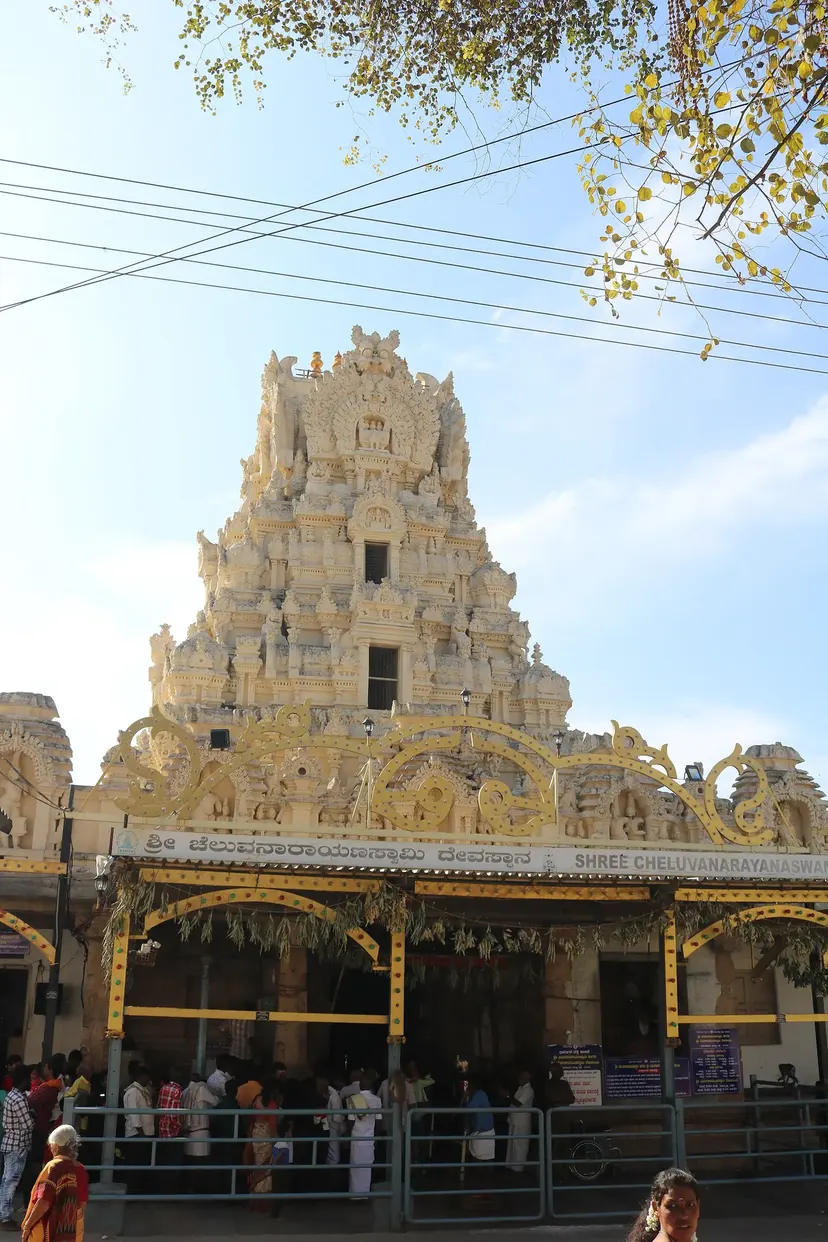
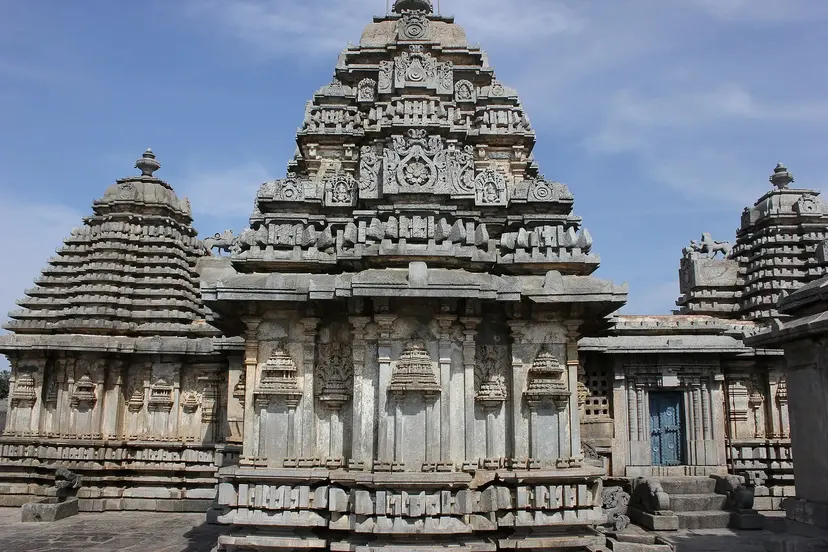
Chennakeshava Temple, Belur
Vishnu (as Chennakeshava / Vijayanarayana) temple · Belur, Hassan, Karnataka, India
The Chennakeshava Temple at Belur, in Hassan district of Karnataka, is a living Vishnu temple built by the Hoysala dynasty on the banks of the Yagachi river. Belur was one of the early Hoysala capitals, and Karnataka Tourism notes that the town was known in older times as Velapuri, Velur and Belapur. The temple is also called the Vijayanarayana Temple, the name its founding inscription gives the deity.
In September 2023 the temple became one of the three components of the UNESCO World Heritage Site 'Sacred Ensembles of the Hoysalas', alongside the Hoysalesvara Temple at Halebidu and the Keshava Temple at Somanathapura. UNESCO notes that, unlike the other two, Belur has remained in continuous worship since it was founded in 1117 CE.
Faith & Tradition
Religious Significance of Chennakeshava Temple, Belur
The presiding deity is Vishnu as Keshava. Wikipedia, drawing on the temple's inscriptions, records that the main shrine was dedicated to Vijayanarayana, while a smaller temple beside it, built by Queen Santala Devi, was the one originally called Chennakesava; today the two are known as the Chennakeshava and Kappe Chennigaraya temples. Chennakeshava means 'handsome Keshava'. The temple is an important centre of Vaishnava pilgrimage, and its sculptures also honour Shiva, Shakti and other deities.
UNESCO describes the Hoysala temples as a deliberate new style created to give the kingdom its own identity. Its features include a star-shaped (stellate) sanctum, a raised platform for circumambulation that follows the sanctum's outline, multi-tiered friezes, a gallery of sculptures arranged by theme, and carving over the entire outer surface. Many Hoysala sculptors signed their work, which UNESCO calls unusual in the Indian subcontinent; Wikipedia names Dasoja and his son Chavana among the artists at Belur.
Sculptures of the legend of Sala killing a tiger appear at the temple; UNESCO treats this scene as a defining motif of all three Hoysala temple complexes.
Heritage
History of Chennakeshava Temple, Belur
Karnataka Tourism says King Vishnuvardhana built the temple to commemorate a victory over the Cholas. According to Wikipedia, an inscription on the east wall of the main hall records that he commissioned it for the god Vijayanarayana in 1117 CE, the same date UNESCO gives for the start of worship. Karnataka Tourism and Wikipedia both say the complex took about 103 years to complete over three generations of rulers. Historians have recorded 118 inscriptions in the complex, dating from 1117 CE to the 18th century.
Wikipedia records that later Hoysala kings added to the temple; a high enclosure wall and perforated stone screens for the open hall were added around the reign of Veera Ballala III. The temple was damaged in 14th-century raids, and under the Vijayanagara rulers it was repaired, a new gateway tower (gopuram) was built and further shrines were added. Further repairs followed in the 18th century. The tower over the sanctum was removed in the late 19th century because it was collapsing, and UNESCO lists this lost superstructure among the past alterations to the site.
UNESCO inscribed the Sacred Ensembles of the Hoysalas on the World Heritage List in 2023 under criteria (i), (ii) and (iv). The Deccan Herald reported that the decision was made on 18 September 2023 at the 45th session of the World Heritage Committee in Riyadh, and that the Hoysala temples had been on India's Tentative List since April 2014.
Architecture and sacred features
UNESCO states that all three Hoysala temples are built of chloritic schist, often called soapstone. Wikipedia explains that the stone is soft when quarried, which allows very fine carving, and hardens over time. The main temple stands in the middle of a walled courtyard, faces east and rises from a raised platform (jagati). Karnataka Tourism describes friezes of elephants and horses along the base, bracket figures of celestial dancers (madanikas) under the eaves, and a figure of Garuda facing the shrine. According to Wikipedia, the outer walls carry about 80 large reliefs, most of them of Vishnu and his avatars.
Inside, Wikipedia records that the pillared hall (navaranga) has 48 pillars, most of them lathe-turned, including the elaborately carved Narasimha and Mohini pillars. The four central pillars are later supports added in the Vijayanagara period. The image of Keshava in the sanctum has four arms, and Karnataka Tourism notes that the ten avatars of Vishnu are carved on its halo. Other shrines in the complex include the Kappe Chennigaraya, Viranarayana, Soumyanayaki and Andal shrines.
Plan Your Visit
Darshan and Visitor Information
The temple is an active place of worship as well as a protected monument. UNESCO records that the monument is owned and conserved by the Archaeological Survey of India, while the religious activities are managed by the Karnataka Hindu Religious Institutions and Charitable Endowments Department. Follow the rules on footwear, photography and dress posted at the site, and confirm current timings and access arrangements locally or with Karnataka Tourism before travelling.
Timings and arrangements change with seasons and festivals. Confirm current details with Monument: Archaeological Survey of India; worship: Karnataka Hindu Religious Institutions and Charitable Endowments Department (per UNESCO) before travelling. Last reviewed 1 November 2026.
Location
How to Reach Chennakeshava Temple, Belur
Karnataka Tourism gives Belur as about 220 km from Bengaluru and 155 km from Mangaluru. Mangaluru is the nearest airport, and Hassan junction, about 40 km away, is the nearest railway station. Buses run to Belur from Hassan city.
Halebidu, the second Hoysala World Heritage component, is about 20 km from Belur according to Karnataka Tourism, so many visitors see both temples on the same day.
Location: Belur, Hassan, Karnataka, India
Nearest airport: Mangaluru (per Karnataka Tourism)
Nearest railway station: Hassan junction, about 40 km (per Karnataka Tourism)
More in Hindu temples in Karnataka · Vishnu (as Chennakeshava / Vijayanarayana) temples · Temples in Belur · Temples in Belur Taluk · Temples in Hassan District
Questions
Chennakeshava Temple, Belur: Frequently Asked Questions
Who built the Chennakeshava Temple at Belur?
The Hoysala king Vishnuvardhana. An inscription in the temple records that he commissioned it for the god Vijayanarayana in 1117 CE, and Karnataka Tourism links it to his victory over the Cholas.
Is Belur a UNESCO World Heritage Site?
Yes. In 2023 the Chennakeshava Temple was inscribed as part of the 'Sacred Ensembles of the Hoysalas', together with the temples at Halebidu and Somanathapura.
Is the Belur temple still used for worship?
Yes. UNESCO notes continuous worship, rituals and festivals at Belur since 1117 CE. Worship is managed by the Karnataka Endowments Department, while the ASI looks after the monument.
What stone is the Belur temple made of?
Chloritic schist, commonly called soapstone. It is soft when quarried, which allowed the very fine Hoysala carving, and hardens over time.
Why does the Belur temple have no tower?
The tower over the sanctum was rebuilt several times and was removed in the late 19th century because it was collapsing. UNESCO lists the loss of the superstructure among past alterations.
How far is Belur from Halebidu and Bengaluru?
Karnataka Tourism gives Halebidu as about 20 km away and Bengaluru as about 220 km. The nearest railway station is Hassan junction, about 40 km away.
Sources and attribution
- UNESCO World Heritage Centre — Sacred Ensembles of the Hoysalas (Wayback Machine copy, 20 Oct 2026; direct fetch refused)
- Department of Tourism, Government of Karnataka — Chennakeshava Temple
- Deccan Herald (PTI) — Sacred Ensembles of the Hoysalas in Karnataka designated UNESCO World Heritage site (Wayback Machine copy)
- Wikipedia — Chennakeshava Temple, Belur
- Wikidata — Chennakesava Temple (Q3536222)
Further reading: Chennakeshava Temple, Belur on Wikipedia (CC BY-SA 4.0).
Spotted an error? Write to info@hindutone.com — see our editorial policy.