
Lakshminarasimha Temple, Javagal
Vishnu as Lakshmi Narasimha (with shrines of Sridhara and Venugopala) temple · Javagal, Hassan, Karnataka, India
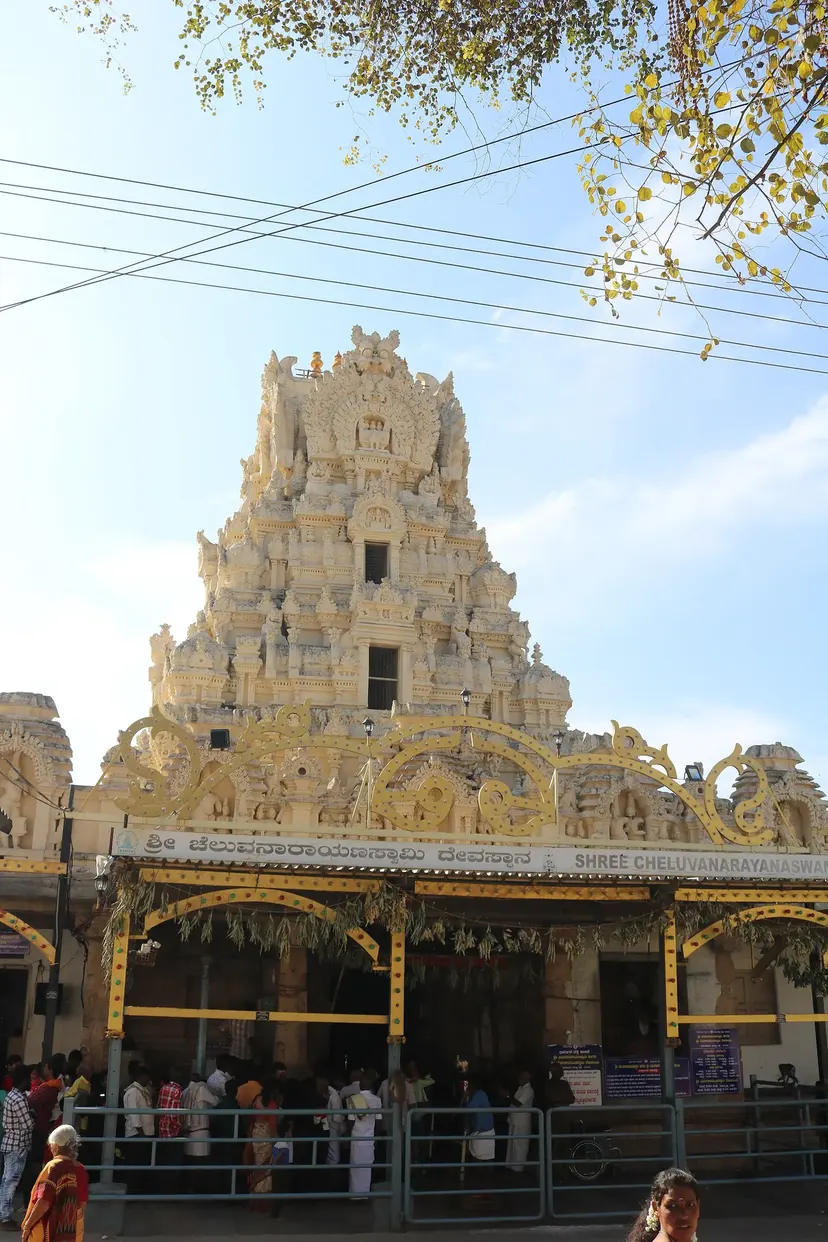
The Lakshminarasimha Temple at Javagal, a village in Arsikere taluk of Hassan district, Karnataka, is a three-shrine (trikuta) Vaishnava temple built in the Hoysala style in the 13th century. Wikipedia places it about 20 km north-east of Halebidu, the old Hoysala capital, and about 50 km from Hassan city.
The temple is best known among historians for its sculpture. Many of the carved deities on its outer walls carry the names of the sculptors who made them, including Mallitamma, one of the most prolific artists of the Hoysala period, and his son Cikka-Mallitamma, according to the art historian Kelleson Collyer.
Faith & Tradition
Religious Significance of Lakshminarasimha Temple, Javagal
The temple has three sanctums opening off a shared hall. Wikipedia records them as dedicated to Lakshmi Narasimha, the man-lion form of Vishnu, and to Sridhara and Venugopala, two other forms of Vishnu. The complex as a whole is known by the name of the Narasimha shrine.
For art historians, Javagal is a key site for understanding Mallitamma's career. Collyer, writing for the Karnataka Directorate of Archaeology and Museums, counts ten images on the temple that bear Mallitamma's name, all on the southern and south-western walls, where he worked alongside other master sculptors. Three further images on the west and north sides carry the name of his son, Cikka-Mallitamma, and another sculptor, named Makasa or Makosa, also worked here.
Collyer notes that the images of the gods Sridhara and Damodara at Javagal are carved to a proportion of eight and a half talas (a traditional unit of measurement), the same scale used by Makasa, which gives the sculpture on these walls a uniform appearance. He treats Javagal as the place where Mallitamma's workshop style first took shape, before the more formal work seen at Harnahalli and Nuggehalli.
Heritage
History of Lakshminarasimha Temple, Javagal
No foundation inscription survives for the temple, so it cannot be dated directly. Wikipedia, drawing on the architectural historian Gerard Foekema, dates its completion to between about 1250 and 1260 CE, during the reign of the Hoysala king Vira Someshwara, and bases this on the sculptors' signatures on the wall panels.
Collyer reports that R. Narasimhachar of the Mysore Archaeological Department tentatively dated the temple to about 1250 CE. Collyer himself argues, from the style of Mallitamma's carvings, that the temple may be earlier, possibly from the first two decades of the 13th century, and lists it as an early work in Mallitamma's career. The exact date therefore remains open.
Javagal itself appears in older records. Collyer cites a grant of 1133 CE in which the Hoysala king Vishnuvardhana gave Javagal, in the Asandi-nad division, along with other grants, for the worship of the Jain Tirthankaras and the repair of their basadi. Wikipedia describes the Lakshminarasimha Temple as a protected monument.
Architecture and sacred features
According to Wikipedia, the temple stands on a raised platform (jagati) that provides a path for circumambulation, and its plan is square. Only the central shrine has a tower (shikhara) and a projecting vestibule roof (sukhanasi); the two side shrines have no towers. The central sanctum connects to the shared hall (mantapa) through a vestibule, and the hall is entered through an open porch. The Hoysala emblem usually seen over the sukhanasi is missing here, and the original stone finial (kalasa) has been replaced by a metal one.
The outer walls carry two eaves, with miniature decorative towers on pilasters between them. Below the second eave runs a band of more than a hundred wall panels of deities and attendants. The base has six friezes which, from top to bottom, show swans (hamsa), aquatic monsters (makara), scenes from the Ramayana, the Mahabharata and the stories of Krishna, leafy scrolls, horses and elephants. Foekema describes the workmanship as relaxed and folk-like in character. Door guardians (dvarapalas) stand at the entrance to the hall and at the main entrance.
Plan Your Visit
Darshan and Visitor Information
This is a historic temple with fragile carved surfaces; do not touch, climb on or lean against the sculpture, and follow any instructions from the custodians on site. No reliable source opened gives current opening hours or worship arrangements, so confirm timings and access locally, or with the Hassan district authorities, before visiting.
Timings and arrangements change with seasons and festivals. Confirm current details with the temple administration before travelling. Last reviewed 1 November 2026.
Location
How to Reach Lakshminarasimha Temple, Javagal
Javagal is in Arsikere taluk of Hassan district. Wikipedia gives the temple's distance as about 20 km north-east of Halebidu and about 50 km from Hassan city, so it can be combined with a visit to the Hoysala temples of Halebidu. Check local road and bus connections before travelling, as the village is off the main tourist circuit.
Location: Javagal, Hassan, Karnataka, India
More in Hindu temples in Karnataka · Vishnu as Lakshmi Narasimha (with shrines of Sridhara and Venugopala) temples · Temples in Javagal · Temples in Arsikere Taluk · Temples in Hassan District
Questions
Lakshminarasimha Temple, Javagal: Frequently Asked Questions
Which deity is worshipped at the Javagal Lakshminarasimha Temple?
The temple is named after Lakshmi Narasimha, the man-lion form of Vishnu. It is a three-shrine temple, and Wikipedia records the other two sanctums as dedicated to Sridhara and Venugopala, also forms of Vishnu.
Who built the Lakshminarasimha Temple at Javagal?
No foundation inscription survives. Wikipedia attributes its completion to the reign of the Hoysala king Vira Someshwara, around 1250–1260 CE, based on the sculptors' signatures on the panels.
Which sculptors worked on the Javagal temple?
According to Kelleson Collyer, ten images carry the name of the Hoysala sculptor Mallitamma, three carry the name of his son Cikka-Mallitamma, and a sculptor named Makasa or Makosa also worked here.
How old is the Javagal temple?
It is a 13th-century temple. R. Narasimhachar tentatively dated it to about 1250 CE, while Collyer argues from the style of the sculpture that it may date from the early decades of the 13th century.
What is a trikuta temple?
A trikuta temple has three sanctums sharing a common hall. At Javagal only the central shrine has a tower; the two side shrines do not.
Where is Javagal and how far is it from Halebidu?
Javagal is in Arsikere taluk of Hassan district, Karnataka. Wikipedia places the temple about 20 km north-east of Halebidu and about 50 km from Hassan city.
Sources and attribution
- Wikipedia — Lakshminarasimha Temple, Javagal
- Directorate of Archaeology and Museums, Mysore (Internet Archive copy) — Kelleson Collyer, The Hoysala Artists: Their Identity and Styles (1990), pp. 73, 91–92, 127, 149–151, 163
- Wikidata — Lakshminarasimha Temple, Javagal (Q6479945)
Further reading: Lakshminarasimha Temple, Javagal on Wikipedia (CC BY-SA 4.0).
Spotted an error? Write to info@hindutone.com — see our editorial policy.
Pilgrim Circuit