Bhadrapada Home Decor: Peacock Themes and Eco-Friendly Altars
The month of Bhadrapada (August–September) is a time of vibrant Hindu festivals like Janmashtami and Ganesh Chaturthi, celebrating Lord Krishna and Lord…
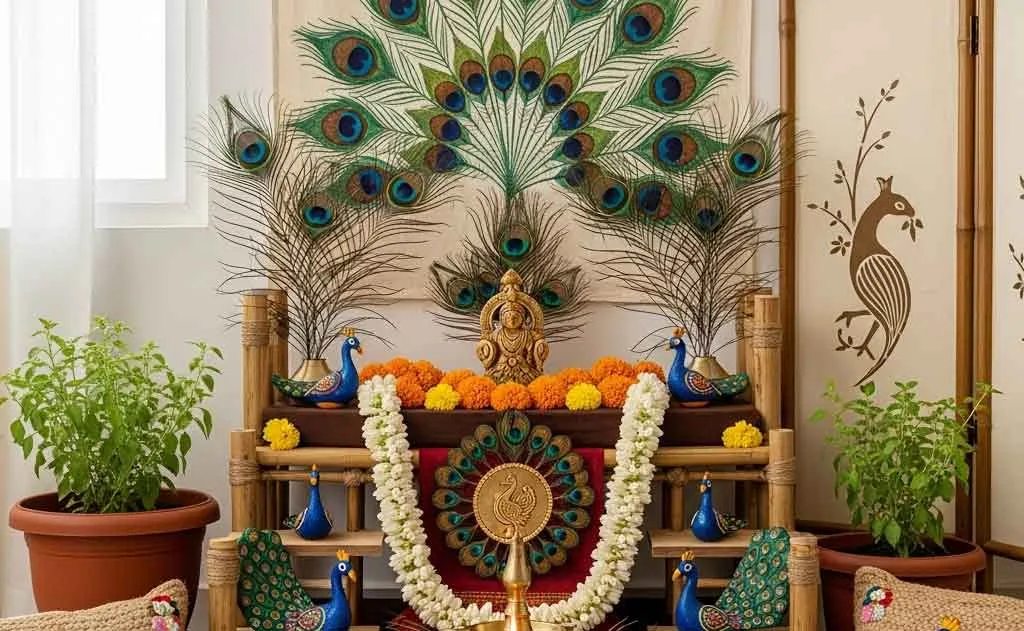
The month of Bhadrapada (August–September) is a time of vibrant Hindu festivals like Janmashtami and Ganesh Chaturthi, celebrating Lord Krishna and Lord Ganesha, respectively. These occasions offer a perfect opportunity to transform your home with festive decor inspired by divine motifs, particularly the peacock, a symbol associated with Krishna, and eco-friendly altars for sustainable worship. This guide provides DIY ideas for creating stunning, environmentally conscious decorations for 2025, blending tradition with sustainability.
Peacock-Themed Decor: Inspired by Lord Krishna
Lord Krishna, celebrated during Janmashtami, is often depicted adorned with peacock feathers, symbolizing beauty, grace, and divinity. Incorporating peacock themes into your home decor adds a vibrant and spiritual touch to the festivities.
Peacock Feather Rangoli
A rangoli at the entrance or puja area is a traditional way to welcome divine energies. Here’s how to create a peacock feather-inspired rangoli:
- Materials: Colored rice flour, turmeric, vermillion, flower petals, and stencils (optional).
- Steps:
- Clean and sweep the floor to create a smooth canvas.
- Use white rice flour to draw a large peacock feather outline, with a curved tip and an eye-like center.
- Fill the feather with vibrant colors like turquoise, green, and gold using natural dyes or colored powders.
- Add flower petals (marigold or rose) around the edges for a 3D effect.
- Place small diyas (oil lamps) at key points to enhance the glow.
- Tip: Use reusable stencils or draw freehand for a personalized touch. Opt for eco-friendly powders made from rice, turmeric, or natural pigments.
This rangoli not only beautifies your home but also reflects Krishna’s divine charm, making it a perfect centerpiece for Janmashtami 2025 celebrations.
Peacock-Inspired Wall Hangings
Create wall decor to complement the festive vibe:
- Materials: Cardboard, colored paper, eco-friendly glitter, and faux peacock feathers.
- Steps:
- Cut cardboard into circular or feather shapes.
- Cover with colored paper in shades of blue, green, and purple.
- Glue faux peacock feathers or paint feather patterns with natural dyes.
- Add Krishna motifs like flutes or small bells for a divine touch.
- Hang near the puja area or entrance using jute strings.
- Tip: Avoid real peacock feathers to protect wildlife; opt for handmade or fabric alternatives.
Eco-Friendly Altars: Honoring Lord Ganesha
Ganesh Chaturthi in Bhadrapada is a time to worship Lord Ganesha, the remover of obstacles. Creating an eco-friendly altar ensures your devotion aligns with environmental consciousness, reducing the ecological impact of festive celebrations.
Clay Ganesha Idols
Instead of plaster-of-Paris idols, which harm water bodies when immersed, craft or purchase eco-friendly clay idols:
- DIY Clay Idol:
- Materials: Natural clay, water, and biodegradable paints.
- Steps:
- Knead natural clay (available at craft stores) into a soft dough.
- Shape into Ganesha’s form, focusing on his iconic trunk, ears, and modak (sweet) in hand.
- Let it air-dry or bake as per clay instructions.
- Paint with natural dyes (turmeric for yellow, beetroot for red) or leave unpainted for a rustic look.
- Tip: Source clay idols from local artisans to support sustainable craftsmanship.
- Immersion: Dissolve the idol in a bucket of water at home and use the clay for plants, avoiding river pollution.
Sustainable Worship Materials
Elevate your puja setup with eco-friendly materials:
- Leaf Plates and Bowls: Use plates made from banana leaves or areca nut for offering prasad. These are biodegradable and add a traditional aesthetic.
- Natural Dyes for Decor: Replace synthetic colors with natural alternatives:
- Turmeric for yellow.
- Beetroot juice for red.
- Spinach or henna for green.
- Apply these to rangoli, idol painting, or fabric decor.
- Eco-Friendly Diyas: Craft diyas from wheat flour dough or clay, and use sesame or mustard oil with cotton wicks.
- Floral Offerings: Use locally sourced flowers like marigolds or jasmine, and compost them after use.
- Jute and Cotton Accents: Decorate the altar with jute mats or cotton cloth instead of plastic or synthetic fabrics.
Setting Up the Altar
- Steps:
- Place a wooden or bamboo platform as the base.
- Cover with a cotton cloth in vibrant colors like red or yellow, symbolizing auspiciousness.
- Position the clay Ganesha idol at the center, adorned with flowers and natural tilak (vermillion or sandalwood paste).
- Arrange leaf plates with modaks, fruits, and other offerings.
- Add small diyas and incense sticks made from natural herbs.
- Surround with peacock-themed rangoli or small clay pots filled with plants for a green touch.
- Tip: Keep the altar minimal to focus on devotion and sustainability.
Spiritual and Cultural Significance
Peacock-themed decor reflects Krishna’s divine association with beauty and joy, enhancing the spiritual ambiance of Janmashtami. Eco-friendly altars for Ganesha honor his role as the deity of beginnings while promoting environmental stewardship. These DIY ideas blend tradition with modern consciousness, ensuring your Bhadrapada celebrations in 2025 are both vibrant and sustainable.
For more inspiration on Hindu festival decor and eco-friendly practices, visit www.hindutone.com.
Frequently Asked Questions
Which festivals fall in Bhadrapada?
Bhadrapada (August–September) brings Janmashtami, celebrating Lord Krishna, and Ganesh Chaturthi, celebrating Lord Ganesha. Both are good occasions to decorate the home.
How do you make a peacock feather rangoli?
Clean the floor, draw a large feather outline with white rice flour, and fill it with turquoise, green and gold using natural dyes or colored powders. Add marigold or rose petals around the edges and small diyas at key points.
Why use peacock themes for Janmashtami?
Lord Krishna is often depicted adorned with peacock feathers, symbolizing beauty, grace and divinity. Peacock decor adds a vibrant, spiritual touch to the festivities.
Should you use real peacock feathers for decoration?
No. Real feathers should be avoided to protect wildlife, so use faux peacock feathers, fabric alternatives or handmade feather patterns painted with natural dyes.
Why choose clay Ganesha idols over plaster-of-Paris?
Plaster-of-Paris idols harm water bodies when immersed. Clay idols can be dissolved in a bucket of water at home, and the clay reused for plants, avoiding river pollution.
What natural dyes and materials suit an eco-friendly altar?
Use turmeric for yellow, beetroot juice for red, and spinach or henna for green. Banana-leaf or areca plates, flour or clay diyas, jute mats and compostable marigold or jasmine flowers complete the setup.
Share this with family and friends
Send it on WhatsApp, post it, or copy the link.
More from Traditions
- Must-Performed Rituals Every NRI Woman Should Do for Her Family's Wellbeing
- Friday Rituals in Hinduism — Shukravar Lakshmi Puja, Devi Worship & Complete NRI Guide for 2026
- Thursday Rituals in Hinduism — Guruvara Vishnu Puja, Guru Worship & Complete NRI Guide for 2026
- Monday Rituals in Hinduism — Somavar Shiva Puja, Vrat & Complete NRI Guide for 2026
- Thursday Rituals in Hinduism: Complete Guide to Guruvar Pooja, Temples & Sacred Foods
You might also like
Vidyarambha Muhurat 2026 — Best Day to Begin Education
Hindu Dietary Restrictions: A Complete Guide to Food Rules, Practices & TraditionsDietaryHindu Dietary Restrictions: A Complete Guide to Food Rules, Practices & Traditions
Garuda Purana on Ekoddishta Shraddha: Special Rites for Recent Departed