
Hindu Rituals to Perform After Diwali 2026: Complete Guide to Govardhan Puja, Annakut, Bali Pratipada, Bhai Dooj and Karthika Masam for Hindus in USA, UK & Canada
Diwali, the beautiful festival of lights, is one of the most important celebrations in Hinduism. Families celebrate the victory of light over darkness, good over evil and knowledge over ignorance by lighting diyas, worshipping Goddess Lakshmi and Lord Ganesha, exchanging gifts, preparing festive foo
Introduction: What Should Hindus Do After Diwali?
Diwali, the beautiful festival of lights, is one of the most important celebrations in Hinduism. Families celebrate the victory of light over darkness, good over evil and knowledge over ignorance by lighting diyas, worshipping Goddess Lakshmi and Lord Ganesha, exchanging gifts, preparing festive food and spending time with loved ones.
However, Diwali celebrations do not end with Lakshmi Puja.
The days following Diwali are equally meaningful in Hindu tradition. Several important festivals and religious observances take place during the Kartika Shukla Paksha, including Govardhan Puja, Annakut, Bali Pratipada, Gujarati New Year and Bhai Dooj.
For Hindu families living in the United States, United Kingdom, Canada, Australia, UAE and other countries, these days offer an opportunity to preserve Sanatana Dharma, introduce Hindu traditions to children and strengthen family and community connections.
Whether you are living in New York, New Jersey, Texas, California, London, Leicester, Toronto, Brampton, Mississauga or Vancouver, you can observe these traditions at home or visit a nearby Hindu temple.
Important: There is no single mandatory post-Diwali ritual that every Hindu must perform. Customs differ according to regional traditions, family practices, sampradaya and the local Hindu Panchang. The following are important and widely observed traditions rather than compulsory requirements for every household.
1. Govardhan Puja – Worshipping Lord Krishna and Govardhan Hill
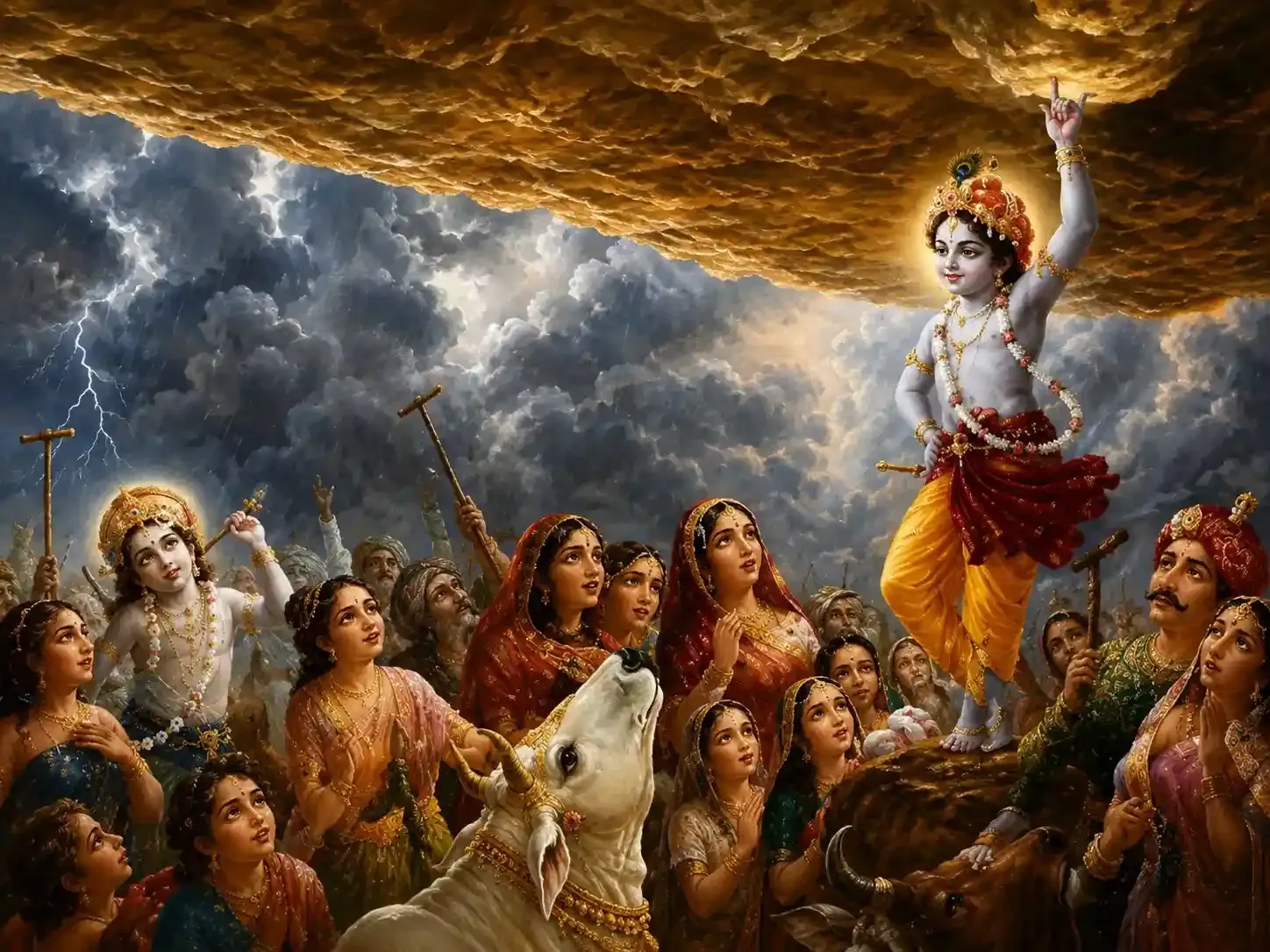
Govardhan Puja is one of the most important observances following Diwali. It commemorates Lord Krishna lifting Govardhan Hill to protect the people of Vrindavan from heavy rainfall sent by Lord Indra.
The festival teaches an important lesson: human beings must respect nature, protect animals, appreciate agriculture and remain grateful for the resources that sustain life.
Govardhan Puja 2026 date: Tuesday, 10 November 2026 in India and Monday, 9 November 2026 in the USA and Canada, because Pratipada tithi prevails at local sunrise on those days. See Govardhan Puja and Annakut 2026 and the US date guide; local sunrise and tithi decide the day, so check today's Panchang.
Why is Govardhan Puja celebrated?
According to the Bhagavata Purana, the people of Vrindavan traditionally performed a sacrifice to please Indra, the god of rain.
Lord Krishna encouraged them to worship Govardhan Hill, the land, cattle and nature that directly supported their lives.
Indra became angry and sent heavy rainfall. Krishna lifted Govardhan Hill on his little finger and protected the villagers and their cattle beneath it.
Eventually, Indra understood Krishna's divine greatness and stopped the storm.
The celebration reminds devotees of:
- Respect for nature and the environment.
- Gratitude for food, water and agricultural resources.
- Protection of cows and other animals.
- Faith in Lord Krishna.
- Humility and devotion.
Govardhan Puja Vidhi at Home
Hindu families can follow a simple traditional procedure:
- Wake up early and take a bath.
- Clean the puja room and decorate it with flowers and rangoli.
- Place an image or idol of Lord Krishna.
- Prepare a small symbolic Govardhan Hill using clean clay or cow dung, where customary.
- Decorate it with flowers and leaves.
- Offer fruits, sweets, rice, milk and other vegetarian preparations.
- Recite Krishna prayers or chant the Hare Krishna Maha Mantra.
- Perform aarti.
- Distribute the offerings as prasadam.
Families who cannot prepare a physical Govardhan Hill can simply worship Lord Krishna with devotion.
Govardhan Puja Mantra
Om Namo Bhagavate Vasudevaya.
How Hindu Families in the USA, UK and Canada Can Celebrate
Indian-origin families can visit Krishna temples and participate in Annakut celebrations.
- USA: Krishna temples and ISKCON centres in New York, New Jersey, Houston, Dallas, Chicago, Atlanta and California.
- UK: Hindu and Krishna temples in London, Leicester, Birmingham and Manchester.
- Canada: Hindu temples and Krishna communities in Toronto, Brampton, Mississauga, Calgary and Vancouver.
Check the local temple calendar for Annakut offerings, darshan and community celebrations.
2. Annakut Puja – Offering a Mountain of Food to Lord Krishna
Annakut means a mountain of food. It is an important tradition associated with Govardhan Puja.
Devotees prepare a variety of vegetarian dishes and offer them to Lord Krishna as an expression of gratitude for food and abundance.
Some temples prepare dozens or even hundreds of dishes.
What Foods Are Offered During Annakut?
Common offerings include:
- Rice and pulao.
- Dal and sambar.
- Chapati and puri.
- Vegetable curries.
- Khichdi.
- Sweets and laddus.
- Halwa.
- Fruits.
- Milk-based preparations.
- Traditional regional vegetarian dishes.
The number of preparations differs between temples and households. Preparing 56 dishes, commonly called Chappan Bhog, is a popular tradition in many Krishna communities, but it is not compulsory.
How to Perform Annakut Puja
- Prepare fresh vegetarian food.
- Arrange the dishes before Lord Krishna.
- Decorate the puja space with flowers and lamps.
- Offer the food with prayers.
- Perform Krishna aarti.
- Distribute prasadam among family members and devotees.
- Share food with people in need.
The central message is gratitude, generosity and sharing.
Annakut Celebrations Abroad
For Hindu families living abroad, Annakut is a wonderful community experience.
Many temples organise special darshan, vegetarian food offerings, bhajans and devotional programmes.
Parents can involve children in preparing a small Annakut offering at home. This is also an excellent opportunity to teach children about Krishna's Govardhan Leela.
3. Bali Pratipada – Remembering King Mahabali
Bali Pratipada is another significant observance associated with the post-Diwali period.
It honours King Mahabali, a generous and righteous ruler remembered in Hindu traditions. Read the full story and vidhi in Govardhan Puja and Bali Padyami 2026.
The festival is especially important in Maharashtra, Karnataka, Andhra Pradesh, Telangana and other parts of India, although its customs and emphasis vary by region.
The Story of King Bali and Lord Vamana
King Mahabali was known for generosity, charity and devotion.
According to Hindu Puranic tradition, Lord Vishnu appeared as Vamana, a dwarf Brahmin, and requested three steps of land.
Mahabali agreed.
Vamana then assumed a gigantic cosmic form. With the first step, he covered the earth; with the second, he covered the heavens. With nowhere left for the third step, Mahabali offered his own head.
Lord Vishnu blessed Mahabali for his devotion and granted him an honoured place in the divine order.
The story represents humility, devotion, generosity and the importance of keeping one's promises.
Bali Pratipada Rituals
Depending on regional customs, families may:
- Clean and decorate their homes.
- Draw traditional rangoli designs.
- Light oil lamps.
- Offer prayers remembering King Mahabali.
- Worship Lord Vishnu.
- Prepare traditional festive meals.
- Visit relatives and exchange greetings.
- Donate food, clothing or other useful items.
Bali Padyami in South India
In Karnataka, Andhra Pradesh and Telangana, Bali Padyami is an important traditional observance.
For Telugu and Kannada Hindu families living in the USA, UK and Canada, this festival provides an opportunity to preserve regional customs and teach children about King Mahabali.
4. Gujarati New Year – Bestu Varas
For Gujarati Hindu families, the day following Diwali is traditionally associated with the Gujarati New Year, known as Bestu Varas or Nutan Varsh.
It is an important day for new beginnings, family relationships, business prosperity and religious devotion.
Gujarati New Year Traditions
Gujarati families commonly observe the following:
- Visit temples and seek blessings.
- Perform prayers at home.
- Wear new traditional clothes.
- Exchange New Year greetings.
- Visit relatives and friends.
- Prepare festive sweets and snacks.
- Begin new business account books according to family tradition.
- Seek blessings from elders.
A popular greeting is:
Saal Mubarak!
Gujarati families living in New Jersey, New York, Chicago, London, Leicester, Toronto and Vancouver can celebrate by organising family gatherings and attending local Gujarati community events.
5. Diwali Padwa – Celebrating Marriage and Family Relationships
Diwali Padwa, also called Bali Pratipada in several regional traditions, is especially important in Maharashtra.
It is traditionally associated with married life, prosperity and the relationship between husband and wife.
Diwali Padwa Traditions
Some families follow these customs:
- Husbands and wives exchange gifts.
- Families perform special prayers.
- Married women apply tilak to their husbands.
- Families prepare festive meals.
- Couples seek blessings from elders.
- Relatives visit one another.
The observance is a reminder to appreciate family relationships, mutual respect and togetherness.
6. Bhai Dooj – Celebrating the Bond Between Brothers and Sisters
Bhai Dooj, also known as Bhai Tika, Bhai Phonta and Yama Dwitiya in different regions, is one of the most beautiful festivals following Diwali.
It celebrates the loving relationship between brothers and sisters.
The festival is traditionally observed on Kartika Shukla Dwitiya, subject to the local Panchang. In 2026 that is Wednesday, 11 November in India and Tuesday, 10 November in the USA and Canada; see Bhai Dooj 2026: date, story and tika vidhi and the US guide.
Why Is Bhai Dooj Celebrated?
According to Hindu tradition, Bhai Dooj is associated with the story of Yama, the god of death, and his sister Yamuna.
Yamuna welcomed her brother with affection and performed a traditional welcome ceremony.
Yama blessed her and declared that brothers who visit their sisters and receive their blessings on this occasion would be fortunate.
The festival therefore symbolises sibling affection, blessings, protection and family unity.
Bhai Dooj Puja Vidhi
- The sister prepares a clean place for the ceremony.
- She welcomes her brother.
- A traditional tilak is applied to the brother's forehead.
- Aarti is performed according to family custom.
- Sweets and festive food are offered.
- The sister prays for her brother's well-being.
- The brother gives gifts and expresses his affection.
- Both exchange blessings and spend time together.
Bhai Dooj for NRI Families
For families living in different countries, celebrating Bhai Dooj may require additional planning.
For example:
- A sister living in New York can perform the tilak ceremony when her brother visits.
- A brother in London can send gifts and join the family ceremony through a video call.
- Families in Toronto and Vancouver can organise a joint gathering.
- Siblings living in different time zones can arrange a suitable local-time celebration.
The most important part is preserving love, respect and family connections.
7. Begin Karthika Masam with Devotion
Karthika Masam is considered a highly sacred month in several Hindu traditions, particularly among Telugu, Kannada and other regional communities.
It is associated with worship of Lord Shiva, Lord Vishnu and the lighting of sacred lamps.
For the full month calendar, see Karthika Masam 2026 and the Karthika Masam rules, food and dos and don'ts. For many Hindu families, the beginning of Karthika Masam after Deepavali marks a transition from festive celebrations to a month of spiritual discipline and devotion.
Important Karthika Masam Practices
1. Lighting Deepams
Lighting lamps in the morning and evening is an important practice in many households.
Families may light lamps near their puja rooms, Tulsi plants and other traditional sacred spaces.
2. Lord Shiva Worship
Devotees worship Lord Shiva by offering water, flowers, bilva leaves where available and chanting Shiva mantras.
3. Lord Vishnu Worship
Devotees offer prayers to Lord Vishnu and worship his different forms according to their family traditions.
4. Tulsi Puja
Tulsi is considered sacred in Hindu tradition and is associated with Lord Vishnu.
Families may light a lamp near the Tulsi plant and offer prayers.
5. Karthika Somavara Vratham
Many devotees observe Monday fasting and special Shiva puja during Karthika Masam.
6. Temple Visits
Visiting Shiva and Vishnu temples during this month is an important devotional practice.
7. Charity and Annadanam
Donating food, helping the needy and participating in Annadanam are meaningful ways to observe the spiritual values of the month.
Karthika Masam for Hindus Living Abroad
Hindu families in the USA, UK and Canada can continue these practices even during winter.
Simple activities include:
- Lighting a safe oil lamp in a suitable place.
- Performing a short Shiva or Vishnu puja.
- Reading devotional stories with children.
- Visiting a nearby Hindu temple.
- Observing suitable fasting practices according to health and family customs.
- Participating in temple charity programmes.
Those who cannot visit temples regularly can maintain a simple daily prayer routine at home.
8. Perform Lakshmi-Narayana Puja and Express Gratitude
After the main Diwali Lakshmi Puja, some Hindu households continue their daily worship of Goddess Lakshmi and Lord Vishnu.
This is not a compulsory additional ritual for every Hindu, but it is a meaningful way to continue the spirit of gratitude and prosperity.
Families can:
- Clean the puja area.
- Light a diya.
- Offer flowers and fruits.
- Recite Lakshmi or Vishnu prayers.
- Express gratitude for family, food, health and opportunities.
- Pray for peace and prosperity.
Prosperity in Hindu philosophy should also be understood in terms of dharma, compassion, wisdom and responsible living.
9. Clean the Home and Organise the Puja Area
After several days of Diwali celebrations, families can clean and organise their homes.
This is a practical household activity rather than a mandatory religious ceremony.
Useful activities include:
- Safely removing used decorations.
- Cleaning the puja room.
- Storing reusable diyas and decorations.
- Disposing of firework waste responsibly.
- Cleaning the kitchen after festive cooking.
- Keeping religious books and puja materials organised.
Families should also follow local firework disposal and environmental rules.
10. Donate Food, Clothing and Essential Items
Charity, compassion and helping others are important values across Hindu traditions.
After Diwali, families can extend the joy of the festival by supporting people who need assistance.
Possible activities include:
- Donating groceries to food banks.
- Supporting homeless shelters.
- Providing winter clothing.
- Helping elderly people.
- Supporting children's education.
- Participating in temple Annadanam.
- Donating to verified community charities.
For Hindu families living in colder regions of the USA, UK and Canada, donating warm clothes and essential supplies can be particularly helpful during the winter season.
11. Visit Hindu Temples After Diwali
Temple visits are an important part of post-Diwali celebrations.
Many temples organise special pujas, Annakut darshan, bhajans, cultural programmes and community meals.
Families should check temple websites and official announcements for exact timings and registration requirements.
Hindu Temple Celebrations in the USA
Hindu communities in the United States can look for post-Diwali programmes in:
- New York and New Jersey.
- Houston and Dallas.
- Chicago.
- Atlanta.
- Los Angeles and San Francisco Bay Area.
- Seattle.
- Washington, DC.
Hindu Temple Celebrations in the UK
Hindu families can look for programmes in:
- London and Wembley.
- Neasden.
- Leicester.
- Birmingham.
- Manchester.
- Coventry.
Hindu Temple Celebrations in Canada
Major Hindu community areas include:
- Toronto.
- Brampton.
- Mississauga.
- Vancouver.
- Surrey.
- Calgary.
- Edmonton.
- Montreal.
ISKCON centres, BAPS mandirs, regional Hindu temples and local community organisations may organise different post-Diwali programmes. Explore Hindu communities in the USA and Diwali celebrations around the world.
12. Teach Children About Hindu Traditions After Diwali
For Hindu parents living outside India, the days after Diwali provide a valuable opportunity to teach children about Sanatana Dharma.
Children may enjoy learning about:
- Lord Krishna and Govardhan Hill.
- The story of King Mahabali.
- The significance of Annakut.
- The relationship between brothers and sisters during Bhai Dooj.
- The importance of Tulsi worship.
- The meaning of lighting a diya.
- The values of charity, gratitude and environmental protection.
Parents can organise a simple family activity:
Day 1: Explain the story of Govardhan Krishna and prepare a small Annakut.
Day 2: Tell children the story of King Mahabali and Lord Vamana.
Day 3: Celebrate Bhai Dooj with siblings and relatives.
During Karthika Masam: Encourage children to light a lamp safely with adult supervision and learn one devotional prayer.
These activities help children understand their cultural heritage while developing respect for other communities.
13. Post-Diwali Traditions for Hindu Families in USA, UK and Canada
Hindu families living abroad may have different schedules, work commitments and time-zone challenges.
Nevertheless, they can continue important traditions without needing elaborate arrangements.
United States
Indian-origin Hindu communities across the USA organise temple visits, Annakut offerings, family gatherings and Bhai Dooj celebrations.
Families in New Jersey, New York, Texas, California, Illinois and Georgia can check local mandir calendars.
United Kingdom
The UK has a large Hindu community, particularly in London, Leicester, Birmingham and surrounding areas.
Families can visit temples, participate in community Annakut events and celebrate Bhai Dooj with relatives.
Canada
Toronto, Brampton and Mississauga have significant Hindu communities, with additional communities in Vancouver, Surrey and Calgary.
Indoor temple events and family gatherings are practical options during colder weather.
Australia
Hindu communities in Sydney, Melbourne, Brisbane and Perth can participate in local temple celebrations, Krishna pujas and Karthika Masam observances.
UAE
Hindu families in Dubai, Abu Dhabi and Sharjah can check local temple schedules and observe home puja traditions.
Singapore
Hindu families can visit local temples, participate in devotional programmes and continue Karthika Masam practices.
14. What Should Hindus Avoid After Diwali?
There is no universal list of prohibited activities after Diwali. However, the following are sensible ways to maintain the spiritual spirit of the festival:
- Avoid unnecessary food wastage.
- Do not throw religious offerings into public spaces or water bodies.
- Dispose of firework waste safely.
- Avoid harming animals.
- Respect temple rules and local religious customs.
- Do not pressure family members to observe fasts or rituals.
- Avoid treating regional traditions as compulsory for all Hindus.
- Practise kindness, charity and responsible behaviour.
Fasting, dietary restrictions and other religious observances should follow individual family traditions and personal circumstances.
15. Simple Post-Diwali Daily Puja Routine for Busy Families
Not every family can perform elaborate ceremonies. A short daily routine can help maintain devotion.
| Time | Suggested Practice |
|---|---|
| Morning | Take a bath and offer prayers |
| Morning | Light a diya safely |
| Morning | Chant a preferred mantra |
| Evening | Offer prayers to family deities |
| Evening | Read a devotional story |
| Weekly | Visit a temple when possible |
| During Karthika Masam | Observe suitable Shiva or Vishnu worship |
A simple prayer performed with sincerity is meaningful. Families should follow their own traditions and the guidance of their temple or spiritual teacher.
Frequently Asked Questions: Hindu Rituals After Diwali
1. What should Hindus do immediately after Diwali?
Hindus can observe Govardhan Puja, Annakut, Bali Pratipada and other regional traditions according to their local Hindu calendar. Families may also visit temples, offer prayers, distribute food and spend time with relatives.
2. Is Govardhan Puja performed the day after Diwali?
Govardhan Puja is traditionally associated with Kartika Shukla Pratipada. Depending on the Amavasya and Pratipada timings, it may fall on the following calendar day or occasionally later. Always check the local Panchang.
3. What is Annakut and why is it celebrated?
Annakut means a mountain of food. Devotees prepare different vegetarian dishes and offer them to Lord Krishna to express gratitude for food, nature and prosperity.
4. What is Bali Padyami?
Bali Padyami commemorates King Mahabali and his encounter with Lord Vishnu's Vamana avatar. It is observed in several South Indian and Western Indian traditions.
5. What is Bhai Dooj and what should sisters do?
Bhai Dooj celebrates the relationship between brothers and sisters. Sisters traditionally apply tilak, perform aarti and pray for their brothers' well-being. Brothers offer gifts and blessings.
6. Can Hindus celebrate Govardhan Puja at home in the USA, UK and Canada?
Yes. Families can worship Lord Krishna, prepare a small vegetarian Annakut offering, light a diya safely and perform a simple aarti at home.
7. What should Hindus do during Karthika Masam after Diwali?
Many devotees light lamps, worship Lord Shiva and Lord Vishnu, perform Tulsi Puja, observe Karthika Somavara Vratham according to their tradition, visit temples and participate in charity.
8. Is fasting compulsory after Diwali?
No. Fasting is not compulsory for every Hindu. It depends on individual beliefs, family customs, sampradaya and personal health.
9. Can Hindu families living abroad perform rituals without a priest?
Yes. Many simple household prayers can be performed by family members using their customary procedures. Families can also consult their temple priest for rituals requiring specific guidance.
10. How can children living abroad learn post-Diwali Hindu traditions?
Parents can teach children through devotional stories, family pujas, temple visits, Annakut preparation, Bhai Dooj celebrations and Karthika Masam activities.
11. Which Hindu festivals follow Diwali?
Important observances include Govardhan Puja, Annakut, Bali Pratipada, Gujarati New Year, Bhai Dooj and subsequent Karthika Masam festivals. Their dates and regional importance vary.
12. What is the significance of lighting diyas after Diwali?
Lighting diyas symbolises knowledge, hope, devotion and the removal of darkness. Many families continue lighting lamps during Karthika Masam.
Conclusion: Continue the Light of Diwali Throughout the Year
Diwali is not simply a five-day festival of lights. Its deeper message is about gratitude, devotion, family relationships, charity and living according to dharma.
Govardhan Puja teaches respect for nature. Annakut reminds us to be grateful for food. Bali Pratipada celebrates generosity and humility. Bhai Dooj strengthens the bond between siblings. Karthika Masam encourages spiritual discipline and devotion.
For Hindu families in the USA, UK, Canada, Australia, UAE and other countries, these traditions offer a beautiful way to keep Sanatana Dharma alive across generations.
You do not need elaborate arrangements to preserve Hindu traditions. A small diya, a sincere prayer, a family meal, a temple visit or an act of charity can carry the true spirit of Diwali forward.
May Lord Krishna, Lord Shiva, Lord Vishnu, Goddess Lakshmi and all divine blessings bring happiness, peace, prosperity and good health to Hindu families worldwide.
Shubham Bhavatu! Jai Shri Krishna! Har Har Mahadev!
About HinduTone: HinduTone.com brings Hindu festivals, temple traditions, Panchang information, spiritual practices, devotional stories and cultural knowledge to Hindus across the world.
Share this with family and friends
Send it on WhatsApp, post it, or copy the link.
More from Diwali 2026
- Diwali 2026 in Ghaziabad: Lakshmi Puja Muhurat, NCR Green Cracker Rules, Sale Sites, Traffic and Parking
- Diwali 2026 in Meerut: Lakshmi Puja Muhurat, NCR Green Cracker Rules, Market Traffic Diversions and Temples
- Diwali 2026 in Prayagraj: Lakshmi Puja Muhurat, Kartik Amavasya Snan and Deepdaan at the Sangam, 79 Cracker Markets and Temples
- Diwali 2026 in Mathura and Vrindavan: Lakshmi Puja Muhurat, Govardhan Puja Parikrama, Yam Dwitiya at Vishram Ghat and Traffic Rules
- Diwali 2026 in Agra: Lakshmi Puja Muhurat, Old-City Market Restrictions, the Six Cracker Sale Sites, Temples and Govardhan Puja
You might also like
Diwali in Kashmir 2026: Famous Hindu Temples, Srinagar Celebrations, Tourist Attractions and Cultural Heritage
Diwali 2026 in Tirupati and Tirumala: Deepavali Asthanam, Arjitha Sevas Cancelled, Lakshmi Puja Muhurat and Karthika Masam
Diwali 2026 in Noida and Greater Noida: Lakshmi Puja Muhurat, NCR Green Cracker Rules, Sale Sites, Govardhan Puja and Bhai Dooj
