Errol Musk on Shiva and Hinduism: Embracing the Ancient Wisdom of Sanatan Dharma
Errol Musk, father of Tesla and SpaceX CEO Elon Musk, recently expressed his profound admiration for Hinduism and Lord Shiva during a visit to India.
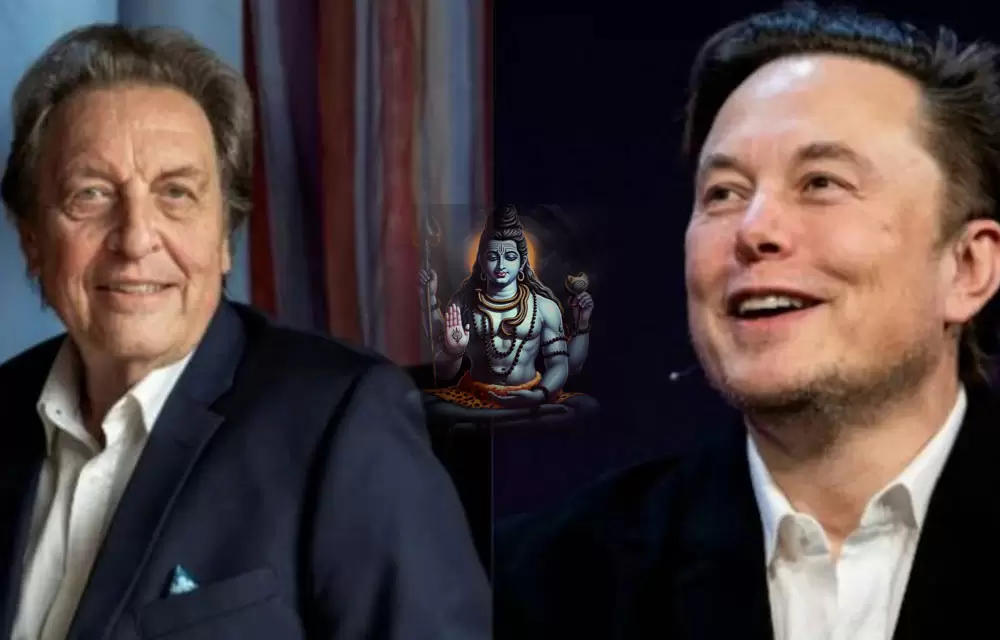
Errol Musk, father of Tesla and SpaceX CEO Elon Musk, recently expressed his profound admiration for Hinduism and Lord Shiva during a visit to India. In an exclusive interview with IANS, he remarked,
"I think if the whole world followed Shiva, it would be all right. Hinduism is so ancient that it boggles my mind. It simply tells us how little we actually know."
This powerful endorsement highlights the timeless wisdom of Sanatan Dharma and its growing global appeal. In this article, we explore the significance of Errol Musk’s remarks, the spiritual depth of Lord Shiva, and why Hinduism continues to captivate minds worldwide.
Read more
The Significance of Errol Musk’s Statement
Errol Musk’s fascination with Hinduism reflects a growing global interest in India’s ancient spiritual traditions. His comment about Lord Shiva as a path to global peace resonates deeply with the inclusive philosophy of Sanatan Dharma, encapsulated in the concept of Vasudhaiva Kutumbakam — “the world is one family.”
By praising Shiva and expressing plans to visit the Ram Temple in Ayodhya, Musk senior underscores the universal appeal of Hinduism’s teachings — emphasizing harmony, spirituality, and humility.
Learn more
Why Lord Shiva?
Lord Shiva, revered as the supreme deity in Shaivism, embodies creation, destruction, and transformation. Known as the Adiyogi (the first yogi) and Nataraja (the lord of dance), Shiva represents the cosmic balance of energy and stillness.
His qualities resonate with devotees seeking inner peace, strength, and spiritual liberation. As Errol Musk noted, Shiva’s universal appeal lies in his accessibility — accepting worship from all, regardless of background — making him a symbol of inclusivity.
Explore more | Discussion
The Ancient Roots of Hinduism
Hinduism, or Sanatan Dharma (the eternal way), is among the oldest living religions, with roots tracing back over 8,000 years to the Indus Valley civilization. Its vast corpus of texts — including the Vedas, Upanishads, and Puranas — offers profound insights into life, consciousness, and the cosmos.
Errol Musk’s awe at Hinduism’s antiquity reflects its enduring relevance and the humility it teaches in the face of life’s mysteries.
Read further
Spiritual and Cultural Impact of Shiva Worship
Worshipping Lord Shiva offers numerous spiritual benefits, making it a transformative practice for devotees worldwide:
- Inner Peace and Calmness: Shiva’s meditative stillness inspires devotees to find tranquility amidst life’s chaos.
See insights - Universal Acceptance: Shiva’s grace extends to all beings, fostering unity and compassion.
Learn more - Strength and Resilience: As the remover of obstacles, Shiva empowers devotees to overcome challenges and embrace transformation.
- Cultural Unity: Festivals like the Mahakumbh Mela, referenced by Errol Musk in discussions with author Amish Tripathi, showcase India’s rich spiritual heritage and attract millions globally.
More info
How to Connect with Lord Shiva
Inspired by Errol Musk’s words? Here are simple ways to incorporate Shiva worship into your spiritual routine:
- Chant Mantras: Recite Om Namah Shivaya or the Maha Mrityunjaya Mantra to invoke Shiva’s blessings.
- Visit Shiva Temples: Places like Kedarnath or local shrines provide sacred spaces for devotion.
Temple guide - Practice Meditation: Emulate Shiva’s meditative calm to cultivate inner peace and clarity.
- Offer Simple Worship: Light lamps, offer water, flowers, or bilva leaves, and perform puja sincerely.
How-to - Study Sacred Texts: Dive into scriptures like the Shiva Purana to deepen your understanding of Shiva’s divine nature.
Explore texts
Global Appeal of Hinduism
Errol Musk’s remarks come at a time when India’s spiritual heritage is gaining increasing international recognition. The Modi government’s efforts to promote spiritual events such as the Mahakumbh Mela have amplified Hinduism’s soft power, strengthening cross-cultural connections.
From the Indian diaspora to global figures like Musk senior, Hinduism’s message of unity, spirituality, and wisdom continues to inspire millions worldwide.
Read more | Article
Conclusion
Errol Musk’s admiration for Lord Shiva and Hinduism underscores the timeless allure of Sanatan Dharma. As he eloquently put it, the ancient wisdom of Hinduism reminds us how little we truly know, inviting humility and spiritual exploration.
By worshipping Shiva, devotees can find peace, strength, and a deeper connection to the cosmos. For more insights into Hindu spirituality, mantras, and devotional practices, visit HinduTone to enrich your spiritual journey.
Frequently Asked Questions
What did Errol Musk say about Lord Shiva and Hinduism?
In an interview with IANS during a visit to India, he said that if the whole world followed Shiva, it would be all right. He added that Hinduism is so ancient it boggles his mind and shows how little we know.
Who is Errol Musk?
Errol Musk is the father of Elon Musk, the CEO of Tesla and SpaceX. He expressed admiration for Hinduism and Lord Shiva during a visit to India.
Why is Lord Shiva called Adiyogi and Nataraja?
Shiva is called Adiyogi, the first yogi, and Nataraja, the lord of dance. Together the names show him as the cosmic balance of energy and stillness, embodying creation, destruction and transformation.
How can someone begin worshipping Lord Shiva?
Chant Om Namah Shivaya or the Maha Mrityunjaya Mantra, meditate, visit Shiva temples such as Kedarnath, and offer lamps, water, flowers or bilva leaves. Reading the Shiva Purana deepens understanding.
Which Hindu places and events did Errol Musk mention?
He expressed plans to visit the Ram Temple in Ayodhya and referred to the Mahakumbh Mela in discussions with author Amish Tripathi.
Does Shiva worship have a message for the global Indian diaspora?
Shiva accepts worship from all, regardless of background, so devotees anywhere can follow the same simple practices of mantra chanting, meditation and offering water, flowers or bilva leaves at home.
Share this with family and friends
Send it on WhatsApp, post it, or copy the link.
More from Hinduism
- Quantum Computing Explained for Hindus: Qubits, Superposition and Entanglement, with Vedanta Analogies (Not Equivalences)
- Madhava of Sangamagrama and the Kerala School: The Infinite Series for Pi, Sine and Arctangent, Worked Out Step by Step
- Vedic Mathematics: Myth vs Fact. Bharati Krishna Tirtha's 16 Sutras, Where They Come From, and What Still Works
- Pingala and Binary Numbers: Laghu-Guru Patterns, Prastara and the Meru Prastara (Pascal's Triangle) Explained
- Did NASA Say Sanskrit Is the Best Language for Computers? What Rick Briggs' 1985 Paper Actually Said
You might also like
AI and the Sanskrit Revival in 2026: Language Models, Manuscript OCR, Translation Tools and What AI Still Gets Wrong

Can a Robot Perform Puja? Robot Aarti, AI in Rituals and What Hindu Tradition Says

GitaGPT and AI Bhagavad Gita Chatbots: How Accurate Are They, and What Does Hindu Tradition Say?