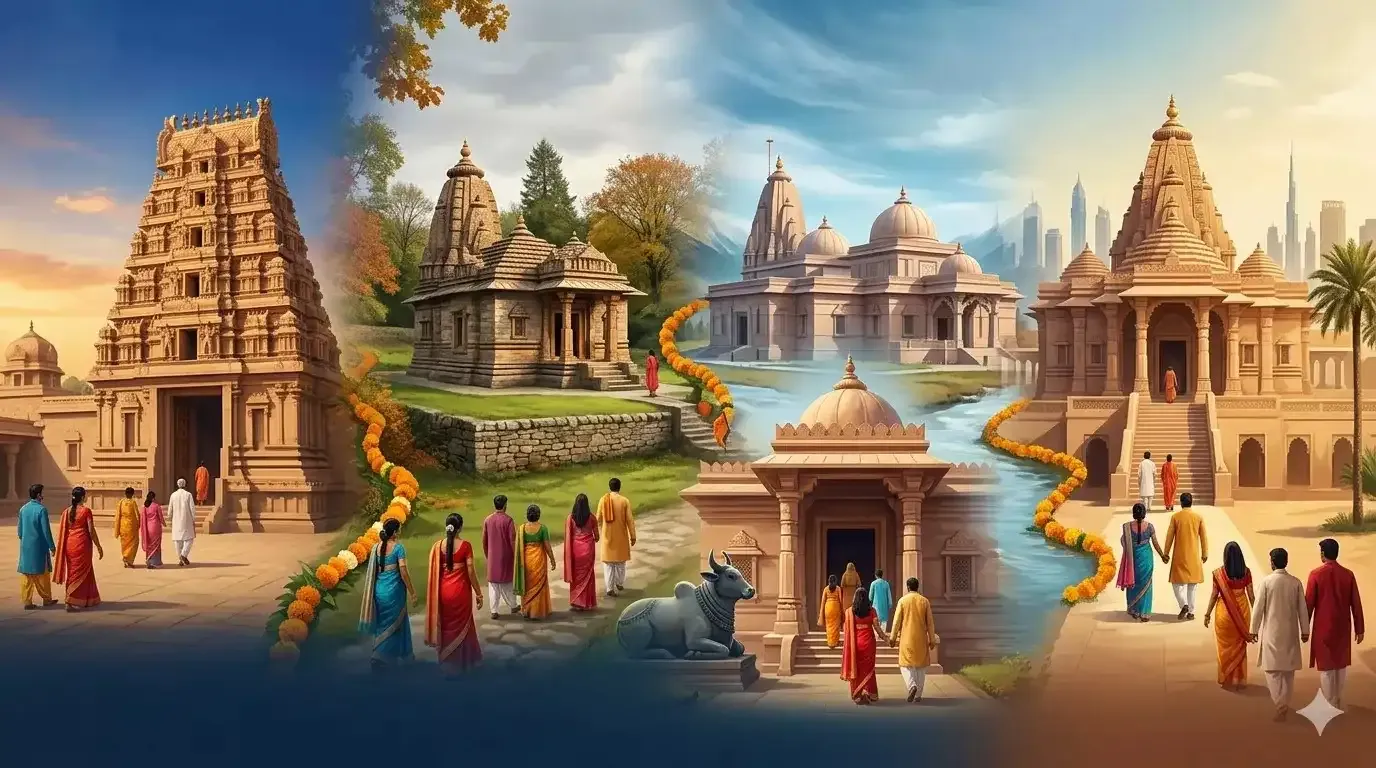
How NRIs Can Teach Their Kids the Meaning of Karthika Masam
For NRI parents raising children abroad, passing down cultural traditions can feel challenging—especially when you're far from the temples, extended family,…

For NRI parents raising children abroad, passing down cultural traditions can feel challenging—especially when you're far from the temples, extended family, and the everyday rhythm of Hindu festivals back home. Karthika Masam, the sacred month dedicated to Lord Vishnu and Lord Shiva, offers a beautiful opportunity to introduce your children to Hindu spirituality in meaningful, engaging ways.
Karthika Masam 2026 dates: the month runs from Tuesday 10 November to Tuesday 8 December (Telugu and Kannada amanta calendar), with Karthika Pournami on Tuesday 24 November. See our Karthika Masam 2026 guide for the full calendar.
Here's how you can make Karthika Masam come alive for your kids, no matter where in the world you are.
Start with Stories They'll Remember
Children connect with stories far more than abstract concepts. Karthika Masam is rich with mythology that's perfect for bedtime or weekend storytelling sessions.
Stories to share:
- The Churning of the Ocean (Samudra Manthan): Explain how Lord Vishnu took the form of Mohini to distribute the nectar of immortality, and how light (represented by diyas) symbolizes divine wisdom.
- Lord Shiva and the Power of Light: Share how lighting lamps during Karthika Masam is believed to please Lord Shiva and bring blessings.
- Prahlada and Narasimha: A tale of devotion and protection that resonates with children.
Make it interactive by asking your kids to draw their favorite scene or act out parts of the story. This turns passive listening into active participation.
Create a Family Diya-Lighting Ritual
The daily lighting of diyas is the heart of Karthika Masam. Turn this into a special family ritual that your children will look forward to.
How to make it engaging:
- Let them choose their diya: Take your kids to an Indian store or order diyas online and let them pick their favorites—maybe ones with colors or designs they love.
- Decorate together: Set up a small prayer corner with their help. Let them arrange flowers, rangoli stickers, or LED fairy lights around the diyas.
- Set a consistent time: Whether it's before dinner or bedtime, consistency helps children understand the importance of the ritual.
- Make it their responsibility: Older kids can light the diya themselves (with supervision), while younger ones can help pour oil or place the cotton wicks.
Safety tip: Use LED tea lights for very young children, or let them participate by ringing a small bell during the prayer.
Simplify the Prayers
You don't need to teach elaborate Sanskrit slokas right away. Start with simple prayers and mantras that kids can easily remember and understand.
Kid-friendly prayers:
- "Om Namah Shivaya" or "Om Namo Narayanaya": These short mantras are easy to chant and remember.
- Simple gratitude prayer: "Thank you, God, for our family, our home, and the light that guides us."
- Explain in English: After chanting, explain what the prayer means in terms they understand—"We're thanking God for protecting us and lighting our path."
Make it fun by creating a call-and-response pattern, where you chant one line and they repeat it.
Cook Traditional Foods Together
Food is a powerful cultural connector. Involve your kids in preparing simple Karthika Masam treats.
Easy recipes for kids:
- Ariselu or Adhirasam: Let them help mix ingredients or shape the sweet (with supervision).
- Simple appalu (rice flour wafers): Kids can help roll the dough.
- Payasam or kheer: They can help measure ingredients and stir.
As you cook, explain why certain foods are offered during this month and the significance of sharing prasadam (blessed food) with family and friends.
Visit Local Temples or Create Virtual Connections
If there's a Hindu temple nearby, plan a visit during Karthika Masam. Many temples abroad organize special events during this month. If not, bring the temple experience home.
Virtual alternatives:
- Live-stream temple darshans: Many major temples in India offer live streaming. Watch the evening aarti together.
- Virtual tours: Show your kids videos of famous temples like Tirupati or Kashi Vishwanath.
- Video calls with family in India: Connect with grandparents or relatives who are observing Karthika Masam and let your kids see how it's celebrated there.
Use Books and Visual Resources
Supplement your efforts with age-appropriate books, apps, and videos about Hindu festivals and mythology.
Resources to explore:
- Illustrated books on Hindu gods and festivals
- YouTube channels with animated stories from Hindu mythology
- Coloring books featuring diya designs, Lord Vishnu, or Lord Shiva
Make It a Learning Project
For older children, turn Karthika Masam into an educational project:
- Research the astronomical significance of the month (it coincides with the full moon in the Karthika nakshatra)
- Create a chart tracking the days they lit the diya
- Write a short essay or journal entry about what they learned
- Create art projects—drawing diyas, making paper lanterns, or designing their own rangoli
Connect It to Universal Values
Help your children understand that the rituals have deeper meanings that transcend religion:
- Light over darkness: Just as we light diyas, we should bring kindness and positivity into the world.
- Gratitude: Taking time each day to be thankful.
- Discipline: The daily practice teaches commitment and routine.
- Family bonding: Sacred time together strengthens relationships.
Be Patient and Flexible
Remember, you're planting seeds. Your children might not grasp the full spiritual significance right away, and that's okay. What matters is creating positive associations with your culture.
Some years they'll be more engaged than others. Some days they'll rush through the ritual. That's part of growing up. The key is consistency and making it joyful rather than obligatory.
Create New Traditions
Don't be afraid to adapt traditions to your family's unique situation. Maybe you light diyas only on weekends, or you blend Karthika Masam observances with local harvest festivals. What matters is that your children feel connected to their heritage in a way that feels authentic to them.
Karthika activities for kids: stories, lamp crafts and simple worksheets
These activities need only paper, crayons, a few clay diyas and stories already on HinduTone. Nothing has to be printed or downloaded: draw the charts by hand together, which is half the fun. Pick one or two a week through the month (Tuesday 10 November to Tuesday 8 December in India; from Monday 9 November in the USA, the UK and Canada).
Story activities
- The column of light. Tell the Lingodbhava story, in which Shiva appears as an endless pillar of fire that Brahma and Vishnu cannot measure (Karthigai Deepam 2026). Ask children to draw a flame that runs off the top and bottom of the page.
- Poli's lamp. Tell the story of Poli, who lit her lamp at home with a wick from the garden when she was not taken to the river (Karthika Amavasya 2026). Ask: what did Poli have, and what did she not have? It opens a talk about sincerity over show.
- Kartikeya and Tarakasura. Read the story from the Karthika Masam vrat katha and act it out with paper crowns: one child narrates, the others play the parts.
- Story cards. After Samudra Manthan or Prahlada (above), children draw four boxes: beginning, problem, turning point, ending. They then retell the story from their cards to a grandparent on a video call.
Lamp crafts
- Paint clay diyas. Paint only the outside of plain clay diyas with washable poster or craft paint, leave the inside bare, and let them dry overnight before any oil goes in. Use them in the lamp rows on Karthika Pournami, Tuesday 24 November in India.
- Lamp chain. A paper chain with one link for each evening of Karthika. Children add a link after the family lamp, and the chain grows across the room as the month goes on.
Simple worksheets to draw at home
- Tulasi watering chart. Draw a pot with a Tulasi plant and a row of small boxes, one per day. The child touches the soil, waters a little only if it feels dry, and ticks the box. Care tips: growing Tulasi in the USA.
- Somavaram colouring page. Draw a diya, a bilva leaf and a Shiva linga in outline and divide the page into parts; the child colours one part each Monday. India has four Karthika Mondays (16, 23 and 30 November and 7 December); the USA, the UK and Canada have five, starting 9 November. The page is finished on the last Somavaram, 7 December.
- Karthika word hunt. Hide words such as DEEPAM, TULASI, SOMAVARAM, POURNAMI and KARTHIKA in a grid of letters for older children to find.
- Kindness jar. Each time a child shares, helps or gives something away, they drop in a slip of paper. Read the slips on the last day of Karthika, when families give lamps and food as daanam.
Lamp-safety rules for kids
Say the rules aloud before each lighting and let the children repeat them:
- Only a grown-up lights or puts out a flame. Older children may light one with a grown-up right beside them.
- Hair tied back; no loose sleeves or dupattas near the lamps.
- Lamps stay on a metal tray on a steady surface, away from where people walk and pets run.
- Keep an arm's length from every flame, and never touch a lamp that was just put out: the clay and oil stay hot.
- If anything catches fire, step back and call a grown-up. Grown-ups: smother burning oil with a metal lid; never pour water on it.
For the full home checklist see Karthika Deepam safety in apartments and abroad; to shop for diyas, wicks and oil, use the Karthika Masam puja samagri checklist. More craft ideas: Diwali activities for kids.
The Gift of Cultural Identity
Teaching your children about Karthika Masam isn't just about preserving tradition—it's about giving them roots while they grow their wings. In a multicultural world, children who understand their heritage develop stronger identities and greater appreciation for diversity.
This Karthika Masam, light that diya with your little ones. Share the stories, sing the prayers, and watch as the flame of your culture burns bright in the next generation—no matter how far from home you are.
Frequently Asked Questions
How can NRI parents introduce Karthika Masam to young children?
Start with stories such as Samudra Manthan, Lord Shiva and the power of light, and Prahlada and Narasimha. Let children draw favorite scenes or act them out so listening becomes participation.
How can children take part in the daily diya lighting?
Let them choose their own diyas, help decorate a small prayer corner, and light the diya under supervision. Younger kids can pour oil or place cotton wicks, and a fixed time such as before dinner or bedtime builds the habit.
Is it safe for small kids to light diyas?
For very young children, LED tea lights are a safer choice. They can also take part by ringing a small bell during the prayer while an adult lights the flame.
Which prayers are easy for children to learn during Karthika Masam?
Short mantras like "Om Namah Shivaya" or "Om Namo Narayanaya" are easy to chant and remember. Explain the meaning in simple English and use call-and-response so kids repeat after you.
How can families abroad experience a temple visit during Karthika Masam?
Visit a nearby Hindu temple if there is one, since many temples abroad hold special events this month. Otherwise, watch live-streamed darshans and evening aarti, take virtual tours of Tirupati or Kashi Vishwanath, or video call relatives in India.
Which traditional foods can kids help make for Karthika Masam?
Children can help mix or shape ariselu (adhirasam), roll dough for appalu, and measure and stir payasam or kheer. Explain why foods are offered and why prasadam is shared with family and friends.
What Karthika activities can kids do at home?
Retell the Lingodbhava, Poli and Kartikeya stories with drawings or a short play, paint clay diyas, make a lamp chain, keep a Tulasi watering chart, colour one part of a Somavaram page each Monday and learn simple lamp-safety rules. All of these need only paper, crayons and a few clay diyas.
Share this with family and friends
Send it on WhatsApp, post it, or copy the link.
More from Festivals
- Karthika Puranam Chapter 14 (Adhyaya 14) in English: Story, Meaning and Lesson | Karthika Masam 2026 Day 14
- Karthika Puranam Chapter 13 (Adhyaya 13) in English: Story, Meaning and Lesson | Karthika Masam 2026 Day 13
- Karthika Puranam Chapter 12 (Adhyaya 12) in English: Story, Meaning and Lesson | Karthika Masam 2026 Day 12
- Karthika Puranam Chapter 11 (Adhyaya 11) in English: Story, Meaning and Lesson | Karthika Masam 2026 Day 11
- Karthika Puranam Chapter 10 (Adhyaya 10) in English: Story, Meaning and Lesson | Karthika Masam 2026 Day 10
You might also like
Akshaya Tritiya 2026 in the USA: Date, Significance, Puja Vidhi, Gold Buying & Eternal Prosperity Guide for Hindus
Hindu Dharma Worldwide: Complete NRI Diaspora Guide to Festivals, Temples, Mantras & Traditions (USA, UK, Canada, Australia, UAE & Europe — 2026)
Hindu Temples & Festivals in Europe — Complete NRI Guide to Sanatana Dharma Across the Continent (2026)