Gaja Lakshmi: Meaning, Iconography, Temples and How to Worship Her
Gaja Lakshmi is Lakshmi seated on a lotus while two elephants bathe her. Her meaning, iconography, place in Ashta Lakshmi, famous carvings and a simple home puja.
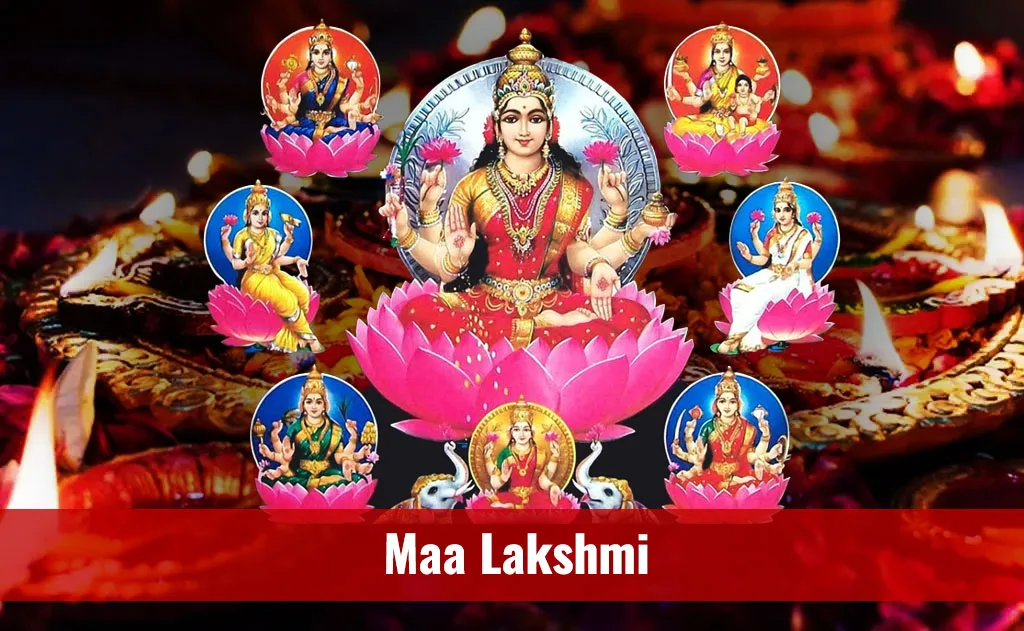
Gaja Lakshmi is the form of Goddess Lakshmi seated on a lotus while two elephants, one on each side, pour water over her from raised pots. It is one of the oldest and most widely carved images of Lakshmi in India, and one of the eight forms honoured as Ashta Lakshmi. This guide explains the form, its meaning, where you can see it, and how devotees worship her at home.
What Gaja Lakshmi means
Gaja means elephant. Gaja Lakshmi is Lakshmi "with the elephants", or Lakshmi being bathed by elephants. The scene is an abhisheka, a ritual bath, the same rite used to consecrate a king or a deity. In the picture, the elephants are honouring the goddess, and through her they bless the world with abundance.
In the Ashta Lakshmi tradition, Gaja Lakshmi is usually linked with royal dignity, power, strength and the wealth that comes from animals and the land. In older times, elephants, horses and cattle were themselves counted as riches, so the image speaks of a full, well-protected household and kingdom.
How Gaja Lakshmi is shown
- The goddess: Lakshmi sits or stands on a lotus, often in a lotus pond. She usually holds lotuses in two hands; in four-armed images the lower hands show abhaya (fearlessness) and varada (giving boons).
- The elephants: two elephants stand on lotuses on either side, trunks raised, pouring water from pots over her head. Some images show four elephants.
- The setting: lotus leaves, buds and water around her, signs of fertility and growth.
- Colours in modern art: red or gold garments, with gold coins sometimes shown falling from her hand.
The meaning of the elephants
Teachers and art historians read the elephants in several complementary ways:
- Rain and fertility. In Indian thought elephants are linked with clouds and rain. The dig-gajas, the elephants of the directions, and Indra's elephant Airavata are tied to the monsoon. Water poured on Lakshmi suggests the rain that makes fields and herds prosper.
- Royal power. Elephants were the pride of a king's army and a sign of sovereignty. An abhisheka by elephants presents Lakshmi as Rajya Lakshmi, the fortune of a just kingdom.
- Strength with gentleness. The elephant is enormously strong but calm and wise, a reminder that real prosperity is steady and well used, not reckless.
- Purification. Water cleanses. The image asks that wealth come with purity of means and purpose.
The Sri Suktam, one of the oldest hymns to Lakshmi, already joins her with elephants. Its third verse invokes the goddess "whose coming is announced by the trumpeting of elephants" (hastinādaprabodhinīm).
Gaja Lakshmi in temples and ancient art
Gaja Lakshmi is one of the most enduring motifs in Indian art and appears across Hindu, Buddhist and Jain monuments:
- Bharhut and Sanchi: some of the earliest known Gaja Lakshmi carvings appear on the railings and gateways of these Buddhist stupas, from the last centuries BCE.
- Ancient coins: the motif appears on early Indian coins, showing how widely it was recognised as a sign of good fortune.
- Ellora: the Kailasa temple (Cave 16) has a celebrated Gaja Lakshmi panel.
- Mahabalipuram: the Varaha cave temple carries a well-known Gaja Lakshmi relief.
- Doorways: Gaja Lakshmi is often carved on the lintel above the doorway of temples and traditional homes in South India, so that everyone who enters passes beneath her blessing.
Gaja Lakshmi in Ashta Lakshmi
In the commonly recited Ashta Lakshmi Stotram, Gaja Lakshmi is the fourth form, after Adi, Dhanya and Dhairya Lakshmi. Her stanza praises her as the one surrounded by chariots, elephants, horses and foot-soldiers, the signs of a strong and protected realm. Like every stanza, it ends with the refrain jaya jaya he madhusudana kamini, hailing her as the beloved of Vishnu.
How to worship Gaja Lakshmi at home
There is no single required ritual. A simple, sincere puja is enough:
- Clean the altar and place an image of Gaja Lakshmi or of Lakshmi on a lotus. Some families also place a small pair of brass or clay elephants beside her.
- Light a ghee lamp and incense.
- Offer water or a few drops of milk to the image or to the elephants, in remembrance of the abhisheka.
- Offer lotuses or red flowers, kumkum, turmeric and rice.
- Chant a Lakshmi mantra such as Om Shreem Mahalakshmyai Namah, or recite the Gaja Lakshmi stanza of the Ashta Lakshmi Stotram, the Sri Suktam or the Mahalakshmi Ashtakam.
- Offer a simple sweet such as kheer or payasam, then share it as prasad.
Friday is traditionally the day of Lakshmi, and many devotees offer this puja on Fridays and during Diwali. See our Lakshmi Puja Vidhi for a full step-by-step guide.
Gaja Lakshmi Vrat
In parts of north and central India, the sixteen-day Mahalakshmi Vrat, which begins on Bhadrapada Shukla Ashtami, concludes on Ashwin Krishna Ashtami with the worship of Lakshmi seated on an elephant. Families often make or buy a clay elephant for the day, which is why it is also known as Gaja Lakshmi Vrat or Hathi Puja. Customs vary from family to family and region to region; follow your own household tradition and a local panchang for the date.
Gaja Lakshmi at the doorway and in the home
Because Gaja Lakshmi stands for welcome, blessing and protection, she is a favourite image for:
- the main door or the space above it,
- the puja room,
- shops and offices, especially at the start of a new account year,
- house-warming (griha pravesham) gifts.
Treat the image with respect: keep it clean, keep it off the floor, and light a lamp before it when you can.
A note on what to expect
Worship of Gaja Lakshmi is an act of devotion and gratitude. Hindu teachers have always joined prayers for prosperity with honest effort, generosity and good conduct. The image itself teaches this: the elephants give before they receive.
Frequently Asked Questions
Who is Gaja Lakshmi?
Gaja Lakshmi is the form of Goddess Lakshmi seated on a lotus while two elephants pour water over her from pots. She is one of the eight forms of Ashta Lakshmi.
Why is Lakshmi shown with elephants?
The elephants perform an abhisheka, a ritual bath. They are commonly read as signs of rain and fertility, royal power and steady strength, so the image stands for prosperity that nourishes everyone.
Where can I see ancient Gaja Lakshmi carvings?
Well-known examples are on the Buddhist stupas of Bharhut and Sanchi, the Kailasa temple at Ellora and the Varaha cave temple at Mahabalipuram. Gaja Lakshmi is also often carved above temple and house doorways in South India.
Which mantra can I chant to Gaja Lakshmi?
A simple Lakshmi mantra such as Om Shreem Mahalakshmyai Namah is widely used. Devotees also recite the Gaja Lakshmi stanza of the Ashta Lakshmi Stotram or the Sri Suktam.
Can I keep a Gaja Lakshmi image at the main door?
Yes. Gaja Lakshmi is traditionally placed above doorways as a sign of welcome and blessing. Keep the image clean and treat it with respect.
What is Gaja Lakshmi Vrat?
In parts of north and central India, the last day of the sixteen-day Mahalakshmi Vrat, Ashwin Krishna Ashtami, is observed by worshipping Lakshmi seated on an elephant, often with a clay elephant. It is also called Hathi Puja. Customs vary by region.
Related HinduTone Guides
Share this with family and friends
Send it on WhatsApp, post it, or copy the link.
More from Hindu Gods
- Nava Nidhi: The Nine Treasures of Kubera (Padma, Mahapadma, Shankha and More), with Variant Lists
- Who Is Lord Kubera? Birth, Alakapuri, Pushpaka, Guardian of the North and Friend of Shiva
- Devi Mahatmya (Durga Saptashati): A Complete Guide to the 13 Chapters
- The Ten Mahavidyas: Complete Guide to the Ten Wisdom Goddesses, Their Forms, Meaning and Temples
- Sri Varada Ganesha Swami Dhyanam – For Removal of Obstacles, Prosperity & Fulfillment of Wishes
You might also like
Lakshmi and Vishnu: The Divine Couple, Their Story, Avatars and Worship

Goddess Renuka Yellamma: Story, Worship and Major Temples