Dr. A.P.J. Abdul Kalam – The People’s President & the Missile Man of India
Born: October 15, 1931Died: July 27, 201511th President of India (2002–2007)Known as: “Missile Man of India” Early Life: From Rameswaram to Dreams Beyond the…
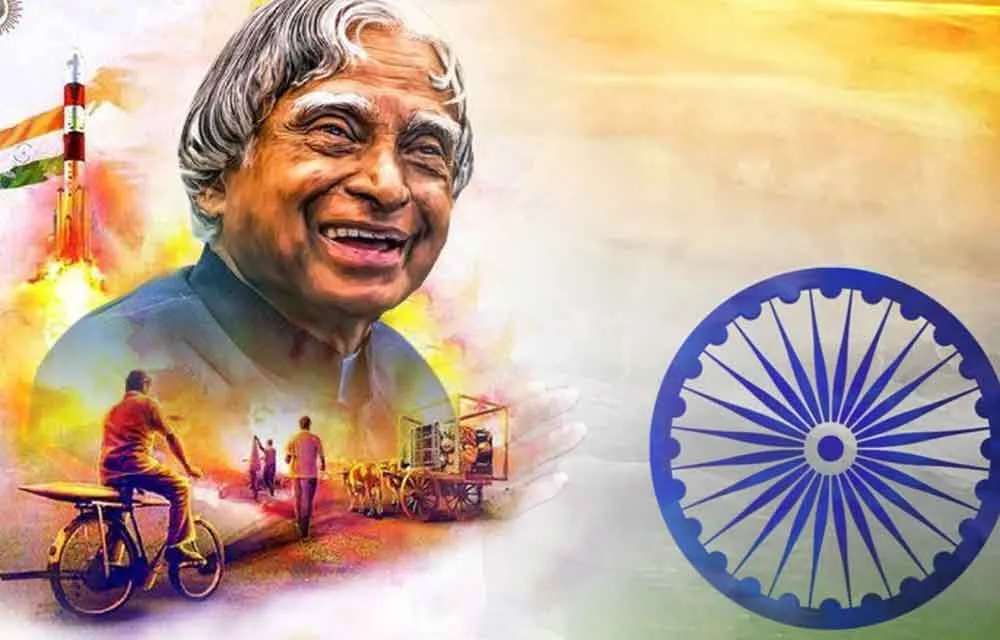
Born: October 15, 1931
Died: July 27, 2015
11th President of India (2002–2007)
Known as: “Missile Man of India”
Early Life: From Rameswaram to Dreams Beyond the Sky
Avul Pakir Jainulabdeen Abdul Kalam was born on October 15, 1931, in the holy town of Rameswaram, Tamil Nadu, to a humble family. His father, Jainulabdeen, was a boat owner, and his mother, Ashiamma, was a homemaker. Though his family had limited means, they were rich in values, honesty, and spirituality.
Kalam grew up in the shadow of the Rameswaram temple, surrounded by the rhythms of prayer, spirituality, and simplicity. As a boy, he would wake up at dawn, distribute newspapers to support his family, and then run to school with a hunger for knowledge.
His teachers often recalled that Kalam was a quiet, curious boy who loved mathematics and science. He believed education was the path to rise above circumstances, and his life became a shining example of how determination and discipline can transform destiny.
Education and First Steps into Science
Kalam studied physics at St. Joseph’s College, Tiruchirappalli, and later pursued aerospace engineering at the Madras Institute of Technology (MIT). His dream from childhood was to fly an aircraft and contribute to India’s defense and space programs.
Despite financial struggles, he completed his education with sheer hard work and faith. His determination later made him one of India’s greatest scientists.
The Scientist Who Touched the Sky
Dr. Kalam’s career took off at DRDO (Defence Research and Development Organisation) and ISRO (Indian Space Research Organisation). He played a leading role in:
- India’s first Satellite Launch Vehicle (SLV-III) that successfully deployed the Rohini satellite in 1980.
- The Integrated Guided Missile Development Programme (IGMDP), which developed missiles like Agni and Prithvi, earning him the title “Missile Man of India.”
- Strengthening India’s nuclear capabilities during the Pokhran-II nuclear tests in 1998, making India a strong nuclear power.
His scientific contributions were never for power or dominance but for self-reliance, peace, and national security.
The People’s President (2002–2007)
In 2002, Dr. Kalam was elected as the 11th President of India. Unlike many political figures, he was above caste, religion, and party lines. Known as the People’s President, he connected directly with citizens, especially students.
Instead of political speeches, Kalam spoke about dreams, innovation, and the future of India. His vision was laid out in his books such as:
- Wings of Fire – His autobiography
- Ignited Minds – Inspiring the youth
- India 2020 – His roadmap for a developed India
During his presidency, Rashtrapati Bhavan became a place of learning, inspiration, and hope for millions of young Indians.
Values and Spirituality
Though a scientist, Dr. Kalam was deeply spiritual. Living in Rameswaram, he absorbed the vibrations of Hindu prayers at the temple, Islamic teachings at the mosque, and Christian values at the church nearby.
He once said:
“For great men, religion is a way of making friends; small people make religion a fighting tool.”
Kalam believed that God is the source of light and knowledge. He often quoted from the Bhagavad Gita, Quran, and Bible with equal reverence. His spirituality made him a symbol of unity, peace, and humanity.
The Teacher Forever
Even after completing his term as President, Dr. Kalam chose to return to what he loved most — teaching and inspiring students. He believed that “the ignited mind of the youth is the most powerful resource on earth.”
He traveled tirelessly across the country, meeting students, delivering lectures, and motivating the next generation to dream big.
Final Moments – A True Karma Yogi
On July 27, 2015, while delivering a lecture to students at the Indian Institute of Management, Shillong, Dr. Kalam collapsed due to cardiac arrest. Even in his final moments, he was doing what he loved most — teaching, inspiring, and serving the youth.
His passing left the entire nation in grief, but his legacy continues to live on in every Indian heart.
Legacy and Inspiration
Dr. A.P.J. Abdul Kalam is remembered as:
- The Missile Man of India who gave the nation strength.
- The People’s President who won hearts with humility.
- A visionary teacher who believed in the power of youth.
- A spiritual soul who saw God in knowledge and service.
His birthday, October 15, is celebrated as World Students’ Day, honoring his eternal bond with students.
Famous Quotes by Dr. Kalam
“Dream, dream, dream. Dreams transform into thoughts and thoughts result in action.”
“If you want to shine like a sun, first burn like a sun.”
“Man needs difficulties in life because they are necessary to enjoy success.”
“You have to dream before your dreams can come true.”
Conclusion
Dr. A.P.J. Abdul Kalam’s life is not just a biography — it is a message to humanity:
That with humility, hard work, faith, and vision, anyone can rise beyond circumstances to touch the sky.
On October 15, 2025, as we remember his 94th birth anniversary, let us ignite our minds, dream of a better India, and walk on the path he showed — of knowledge, service, and humanity.
Frequently Asked Questions
Who was Dr. A.P.J. Abdul Kalam?
Avul Pakir Jainulabdeen Abdul Kalam was born on October 15, 1931, in Rameswaram, Tamil Nadu. He became a leading scientist at DRDO and ISRO and served as the 11th President of India from 2002 to 2007.
Why is Kalam called the Missile Man of India?
He played a leading role in the Integrated Guided Missile Development Programme (IGMDP), which developed missiles like Agni and Prithvi. He also led India's first Satellite Launch Vehicle (SLV-III), which deployed the Rohini satellite in 1980.
Why was Kalam known as the People's President?
He connected directly with citizens, especially students, and spoke about dreams, innovation and the future of India instead of politics. Rashtrapati Bhavan became a place of learning and inspiration during his term.
What books did Dr. Kalam write?
His books include Wings of Fire, his autobiography, Ignited Minds, which inspires the youth, and India 2020, his roadmap for a developed India.
How did Kalam view spirituality and religion?
Growing up in Rameswaram, he absorbed Hindu prayers at the temple, Islamic teachings at the mosque and Christian values at the church. He quoted the Bhagavad Gita, Quran and Bible with equal reverence.
How did Dr. Kalam die and when is World Students' Day?
He collapsed from cardiac arrest on July 27, 2015, while lecturing at the Indian Institute of Management, Shillong. His birthday, October 15, is celebrated as World Students' Day.
Share this with family and friends
Send it on WhatsApp, post it, or copy the link.
More from Hinduism
- Quantum Computing Explained for Hindus: Qubits, Superposition and Entanglement, with Vedanta Analogies (Not Equivalences)
- Madhava of Sangamagrama and the Kerala School: The Infinite Series for Pi, Sine and Arctangent, Worked Out Step by Step
- Vedic Mathematics: Myth vs Fact. Bharati Krishna Tirtha's 16 Sutras, Where They Come From, and What Still Works
- Pingala and Binary Numbers: Laghu-Guru Patterns, Prastara and the Meru Prastara (Pascal's Triangle) Explained
- Did NASA Say Sanskrit Is the Best Language for Computers? What Rick Briggs' 1985 Paper Actually Said
You might also like
AI and the Sanskrit Revival in 2026: Language Models, Manuscript OCR, Translation Tools and What AI Still Gets Wrong

Can a Robot Perform Puja? Robot Aarti, AI in Rituals and What Hindu Tradition Says

GitaGPT and AI Bhagavad Gita Chatbots: How Accurate Are They, and What Does Hindu Tradition Say?