Ayodhya Ram Mandir: History, Significance, Architecture & Why Every Hindu Must Visit
1. 🌅 Introduction: The Revival of a Sacred Legacy Ayodhya, nestled along the serene banks of the Sarayu River, stands as the birthplace of Lord Rama, the…
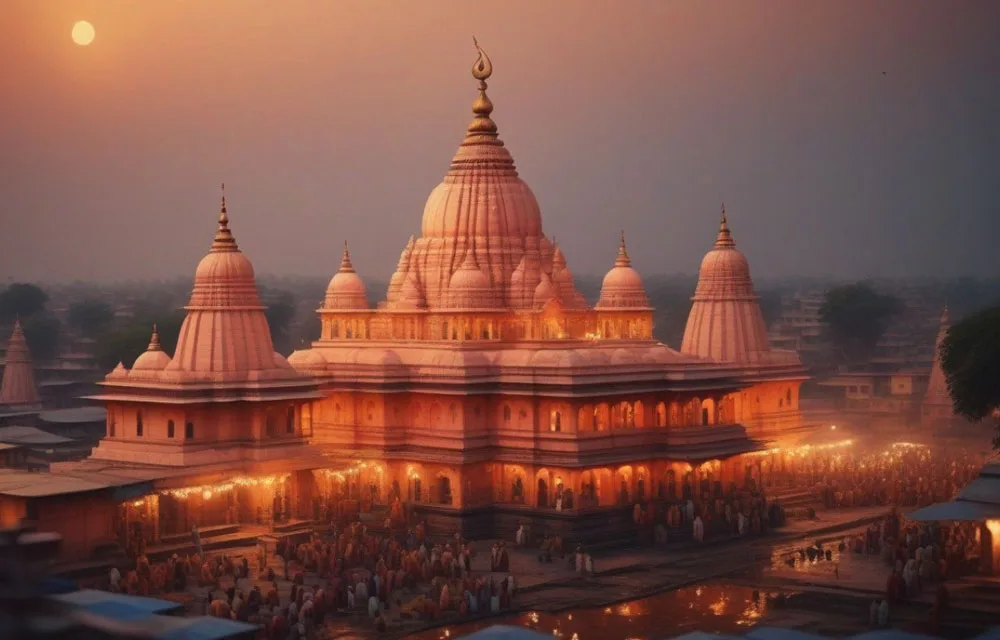
1. 🌅 Introduction: The Revival of a Sacred Legacy
Ayodhya, nestled along the serene banks of the Sarayu River, stands as the birthplace of Lord Rama, the seventh avatar of Vishnu. With the grand inauguration of the Ram Mandir, a 500-year-long spiritual struggle has culminated in a victorious and divine renaissance. More than a temple, it symbolizes the resurgence of Sanatana Dharma, uniting Hindus across generations and geographies.
2. 🌍 The Sanctity of Ayodhya: Lord Rama’s Birthplace
- Revered in the Ramayana by Maharishi Valmiki.
- Former capital of the Kosala kingdom and home to the Ikshvaku dynasty.
- A sacred landscape walked by Rama, Sita, Lakshmana, and Hanuman.
- A pilgrimage that reaffirms dharma, truth, and devotion.
3. 🔱 Ram Janmabhoomi Movement: A 500-Year Spiritual Struggle
- Original temple destroyed during the Mughal era in the 16th century.
- Centuries of saint-led spiritual resistance and civil mobilization.
- A movement that became a symbol of Hindu unity and cultural resurgence.
- Demonstrates that truth and dharma, though delayed, never perish.
4. ⚖️ Historic Verdict & Bhoomi Pujan: Legal and Divine Sanction
- 🏛️ Supreme Court Verdict (Nov 9, 2019): Granted the site to Hindus.
- 📿 Bhoomi Pujan (Aug 5, 2020): Performed by PM Narendra Modi with saints from across India.
- Marked the spiritual rebirth of Ayodhya.
5. 🌟 Pran Pratishtha Ceremony: A Divine Inauguration
- 🗓️ January 22, 2024: The consecration of Shri Ram Lalla.
- Vedic chants, global participation, and deep devotion.
- Not just an event—a spiritual awakening for the nation.
6. 🛕 Architectural Grandeur of the Ram Mandir
- Style: Traditional Nagara architecture.
- Height: 161 feet | Area: 2.7 acres.
- Materials: Rajasthan pink sandstone.
- Features: Carved pillars, majestic shikhars, Ramayana reliefs.
- Sanctum Sanctorum: Idol of Ram Lalla in child form.
7. 🤝 Symbol of Hindu Unity and Cultural Pride
- The Mandir transcends region, language, and caste.
- A beacon of Hindu revivalism, faith, and shared legacy.
- A spiritual and cultural milestone in modern Bharat.
8. 🙏 Saints, Devotees, and Volunteers: The Pillars of Dharma
- From Tulsidas to Swami Vivekananda, from karsevaks to saints.
- A temple built with sacrifice, bhakti, and seva.
- A legacy of selfless devotion and timeless dedication.
9. 🌐 Global Recognition and Participation
- Hindus in 50+ countries joined the Pran Pratishtha celebrations.
- Temples in the US, UK, Canada, Australia, Mauritius held synchronized rituals.
- Ayodhya has become a global spiritual epicenter.
10. 🗺️ Sapta Puri & the Sacred Geography of India
Ayodhya is one of the Sapta Puri—the seven holiest cities in Hinduism:
- Ayodhya
- Kashi (Varanasi)
- Mathura
- Haridwar
- Ujjain
- Kanchipuram
- Dwarka
These cities are spiritual engines that preserve Sanatana Dharma through time.
Why Every Hindu Must Visit the Ayodhya Ram Mandir
🔸 Birthplace of Lord Rama
Walk where Lord Vishnu incarnated and awaken your inner Ram.
🔸 Spiritual Purification
Connect to Satyam (Truth), Dharma (Righteousness), and Bhakti (Devotion).
🔸 Symbol of Hindu Unity
Experience the legacy of collective spiritual victory.
🔸 Cultural Renaissance
More than a temple—it's a center of learning and dharmic revival.
🔸 Historical Responsibility
Be a witness to this once-in-a-millennium moment in Hindu history.
A Glimpse into Ayodhya's Glorious History
- Capital of Kosala kingdom, ruled by the Ikshvaku dynasty.
- Celebrated in Ramayana and later by Tulsidas and Ramanujacharya.
- A spiritual crown jewel of Bharat.
Ram Mandir Visiting Hours
- Morning Darshan: 7:00 AM – 11:30 AM
- Evening Darshan: 2:00 PM – 7:00 PM
Aarti Timings:
- Mangala Aarti: 6:00 AM
- Sandhya Aarti: 6:30 PM
🚨 Tip: Book darshan passes online and arrive early due to large crowds.
Plan Your Pilgrimage with HinduTone.com
Your all-in-one Ram Mandir travel companion:
✅ Live darshan links & aarti schedules
✅ Travel guides & temple etiquette
✅ Ramayana blogs & mythology explained
✅ Bhajan playlists & chants
✅ Prasad, food & accommodation tips
🌟 Ayodhya is Calling — Will You Answer?
This is not just a visit—it’s a spiritual homecoming. In the land where Lord Rama lived, the divine energy still lingers.
Let your heart become His Ayodhya. Feel the divine. Witness history.
🕉️ Jai Shri Ram!
🛕 Ayodhya awaits every son and daughter of Dharma.
How to Reach — Travel Guide — Ayodhya Sri Ram Janmabhoomi Mandir
✈️ By Flight
Maharishi Valmiki International Airport, Ayodhya (AYJ, ~10 km from Ram Mandir) opened in 2024 with daily flights from Delhi, Mumbai, Bengaluru, Ahmedabad, Kolkata. Lucknow CCS Airport (LKO, 150 km) is an alternative with wider connectivity.
🚂 By Train
Ayodhya Dham Junction (AY, ~3 km from Ram Mandir) is the main station, modernised in 2024. Major trains: Vande Bharat (New Delhi), Saryu Express, Ayodhya Express, Begampura Express. Ayodhya Cantt (3 km) is the second station.
🚌 By Bus
Ayodhya UPSRTC Bus Stand is ~2 km from the Ram Mandir. Frequent services from Lucknow (3 hrs, every 15 min), Varanasi (5 hrs), Gorakhpur (3 hrs), Allahabad/Prayagraj (5 hrs), Delhi (12 hrs Volvo overnight). Special yatri services run during festivals.
🚗 By Road / Car
On NH-330. From Lucknow (135 km), Varanasi (210 km), Gorakhpur (130 km), Prayagraj (170 km), Delhi (640 km). Inside Ayodhya, e-rickshaws and battery vehicles connect Ram Mandir, Hanuman Garhi, Kanak Bhavan and the ghats; cars park at designated lots outside the temple zone.
Best Places to Visit Near Ayodhya Sri Ram Janmabhoomi Mandir
Combine your darshan at Ayodhya Sri Ram Janmabhoomi Mandir with these well-known nearby attractions for a complete pilgrimage and travel experience:
Hanuman Garhi (1 km from Ram Mandir) — the hilltop fortress-temple of Lord Hanuman; tradition holds Hanuman darshan precedes Ram darshan.
Kanak Bhavan (500 m) — the gold-and-jewel palace gifted to Sita by Kaikeyi; one of the most beautiful temples in Ayodhya.
Ram Ki Paidi & Saryu Ghat (2 km) — the riverfront ghats where the Deepotsav festival lights lakhs of diyas.
Sita Ki Rasoi (within Ram Mandir complex) — symbolic kitchen of Mata Sita.
Treta Ke Thakur (1.5 km) — temple housing idols said to be from the Treta Yuga.
Nageshwarnath Temple (2 km) — Shiva temple founded by Lord Rama's son Kush.
Choti Devkali Mandir (1 km) — the Devi temple Sita worshipped on her wedding journey.
All distances are approximate; please verify on Google Maps and check current road, weather and local conditions before travelling. For latest darshan timings and special pilgrim arrangements, refer to the temple's official authority website.
Frequently Asked Questions
Where is Ayodhya Ram Mandir located?
🌅 Introduction: The Revival of a Sacred Legacy Ayodhya , nestled along the serene banks of the Sarayu River, stands as the birthplace of Lord Rama , the seventh avatar of Vishnu. With the grand inauguration of the Ram Mandir , a 500-year-long spiritual struggle has culminated in a victorious and divine renaissance.
Who is the presiding deity of Ayodhya Ram Mandir?
The presiding deity is Lord Rama.
What are the timings and how do I reach Ayodhya Ram Mandir?
Temples typically open early morning and evening; confirm current darshan timings before visiting. The nearest airport, railway station and road routes are covered in the guide above.
What is the best time to visit Ayodhya Ram Mandir?
Major festival days and the cooler months are popular, though weekday mornings offer a calmer darshan. Plan around the temple's key festivals for the most vibrant experience.
Share this with family and friends
Send it on WhatsApp, post it, or copy the link.
More from Temples
- Famous Temples in Uttarakhand: A Source-Checked Guide to Kedarnath, Badrinath, Tungnath, Haridwar, Almora and More
- Famous Temples in Odisha: A Source-Checked Guide to Puri, Bhubaneswar, Biraja, Tara Tarini and Western Odisha
- Famous Temples in West Bengal: A Source-Checked Guide to Kalighat, Dakshineswar, Tarapith, Bansberia, Bishnupur and More
- Famous Temples in Uttar Pradesh: A Source-Checked Guide to Kashi, Ayodhya, Mathura-Vrindavan, Gorakhpur and Kanpur
- Famous Temples in Gujarat: A Source-Checked Guide to Somnath, Dwarka, Dakor, Ambaji, Modhera and More
You might also like
The Eternal Bridge of Faith: The Epic Story of Ramanathaswamy Temple, Rameshwaram – Home to the World’s Longest Temple Corridor

Ayodhya Ram Mandir 2025 Highlights: Faith, Festivals, and Historic Moments

The Divine Saga of Tirupati Balaji Temple: Who Built It, When, and the Epic Story Behind the Richest Temple on Earth