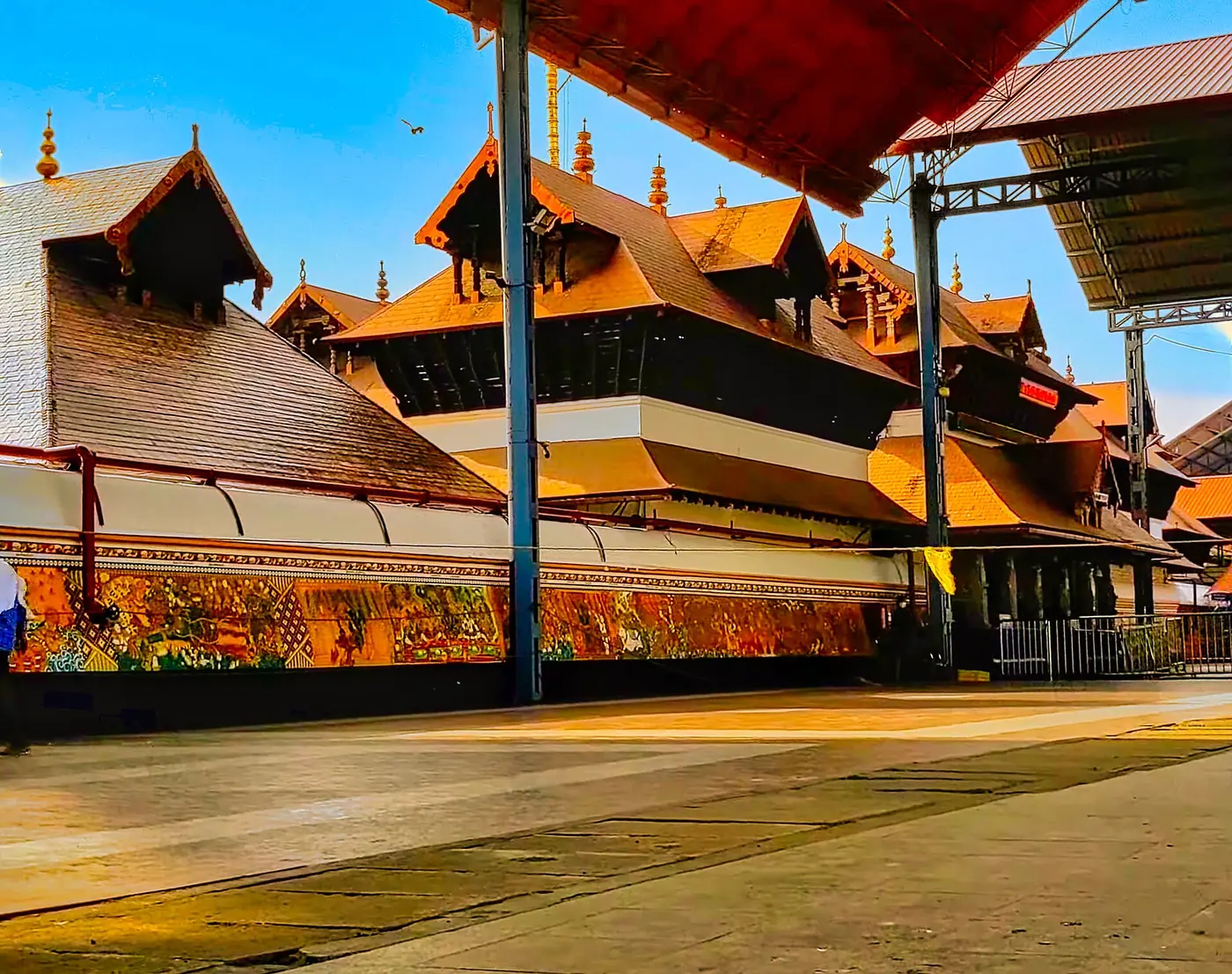
Famous Temples in West Bengal: A Source-Checked Guide to Kalighat, Dakshineswar, Tarapith, Bansberia, Bishnupur and More
A region-by-region guide to 13 West Bengal temples and sacred sites, written only from HinduTone's source-checked temple records: Kalighat, Dakshineswar, the Cossipore garden house, Annapurna at Titagarh and Chakla Dham around Kolkata; the Bansberia temples of Hooghly; Tarapith and Fullara in Birbhum; Sarbamangala at Bardhaman and Mrinmoyee at Bishnupur; and Dhirdham in Darjeeling. Each entry covers deity, recorded tradition and history, festivals and visitor notes, with a summary table, pilgrimage circuits, tips for visitors from abroad and FAQs.
A region-by-region guide to 13 West Bengal temples and sacred sites, written only from HinduTone's source-checked temple records: Kalighat, Dakshineswar, the Cossipore garden house, Annapurna at Titagarh and Chakla Dham around Kolkata; the Bansberia temples of Hooghly; Tarapith and Fullara in Birbhum; Sarbamangala at Bardhaman and Mrinmoyee at Bishnupur; and Dhirdham in Darjeeling. Each entry covers deity, recorded tradition and history, festivals and visitor notes, with a summary table, pilgrimage circuits, tips for visitors from abroad and FAQs.
Quick answer: This guide covers all 13 West Bengal temples and sacred sites in HinduTone's source-checked records, in five regions: Kolkata and North 24 Parganas (Kalighat, Dakshineswar, the Cossipore garden house, Annapurna at Titagarh, Chakla Dham and the Jagat Mukherjee Park Durga Puja), Hooghly (Hanseshwari and Ananta Basudeba at Bansberia), Birbhum (Tarapith and Fullara), Bardhaman and Bankura (Sarbamangala and Mrinmoyee) and the Darjeeling hills (Dhirdham). Most are goddess shrines of the Shakta tradition.
Last updated: 20 October 2026. Built from HinduTone's source-checked temple records (checked on 11 October 2026). The records do not publish fixed darshan timings, so confirm timings and puja rules with each temple before you travel.
Kolkata and North 24 Parganas
The Kolkata stretch of the Hooghly holds Kalighat and Dakshineswar, which Outlook Traveller names together among Kolkata's Kali shrines, and the places linked to Sri Ramakrishna and Rani Rashmoni's family. Friday is the traditional day for the goddess; see our Friday worship guide and the Goddess Durga hub.
Kalighat Kali Temple, Kolkata
In the Kalighat area of Kolkata, Kali is worshipped in an image with three eyes, four hands and a long golden tongue; the Ministry of Tourism describes the temple as a major Hindu pilgrimage site. According to tradition, it is one of the Shakti Peethas, where devotees believe the toe of Sati's right foot fell. The present aat-chala building was completed around 1809 under the Sabarna Roy Chowdhury family of Barisha. The nineteenth-century Kalighat painting style grew up among scroll painters who sold pictures to its pilgrims, according to the Victoria and Albert Museum. Kali Puja in Kartik fills the neighbourhood with pandals, and a skywalk from SP Mukherjee Road opened on the eve of Poila Boishakh in 2025. Confirm current darshan hours before travelling. Kalighat temple page.
Dakshineswar Kali Temple, Dakshineswar
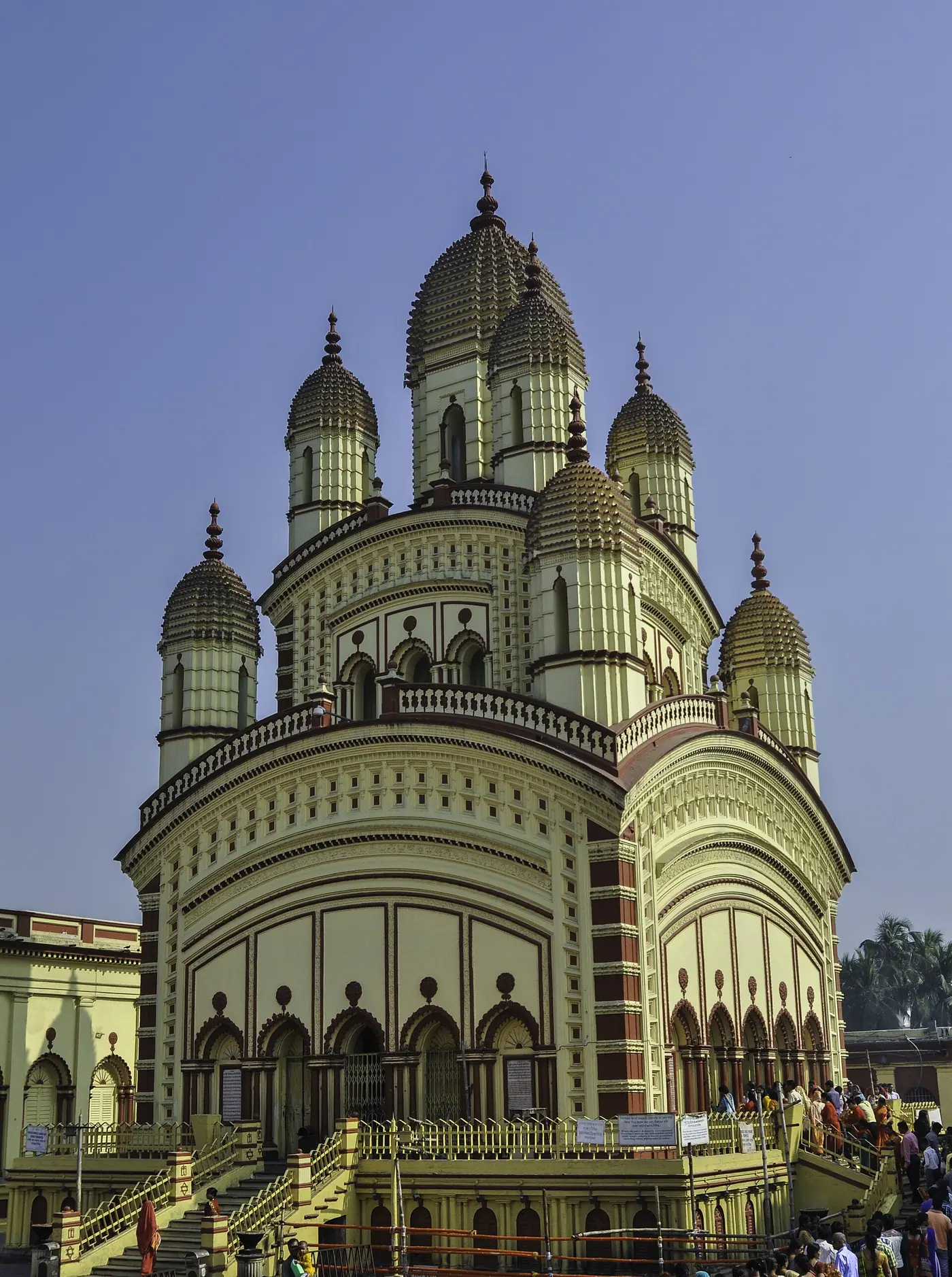
On the eastern bank of the Hooghly at the northern edge of Kolkata, Kali is worshipped as Bhavatarini. Rani Rashmoni bought the land in 1847 and the images were installed on 31 May 1855, Snana Yatra day. The black stone image stands on a reclining Shiva in a nine-spired navaratna temple. Twelve aat-chala Shiva temples line the riverfront and a Radha-Krishna temple stands nearby, so the trust describes the complex as a meeting of Shakta, Vaishnava and Shaiva worship. Sri Ramakrishna served here as a priest and spent about thirty years at Dakshineswar; his room is still kept for worship. Dipanwita Kali Puja is the principal night. Darshan is free; deposit bags and footwear, leave leather items behind and do not photograph the sanctum. Dakshineswar railway and Metro stations link to the temple by a covered Skywalk. Dakshineswar temple page.
Ramakrishna Math (Kashipur Udyanbati), Cossipore
This branch of the Ramakrishna Math in north Kolkata is set in the garden house where Sri Ramakrishna lived with his disciples in the last months of his life. His mahasamadhi took place there in 1886, and the house became a branch of the Math in 1946. It is the main centre of Kalpataru Utsav on 1 January, which recalls the day in 1886 when he came into the garden and blessed the householder devotees gathered there. Expect very large crowds and traffic restrictions on BT Road and Kashipur Road on 1 January. Cossipore Ramakrishna Math page.
Jagat Mukherjee Park Durga Puja, north Kolkata
This is not a permanent temple but a community Durga Puja held each autumn at Jagat Mukherjee Park in the Sovabazar area. The club builds a new theme pandal every year, with Durga at its centre. In 2024 the pandal recreated Kolkata's underwater Metro and carried a message about river pollution, with the goddess shown as the river goddess Ganga seated on a crocodile. In 2025 it asked whether artificial intelligence is a blessing or a curse. The pandal is open only during Durga Puja in Ashwin; check local puja guides and Kolkata Police festival traffic advisories closer to the dates. Jagat Mukherjee Park Durga Puja page.
Annapurna Mandir, Titagarh
On the Rani Rashmoni Ghat beside the Ganga near Barrackpore, this temple of Annapurna, the goddess who provides food, closely resembles Dakshineswar and is sometimes called a 'mini Dakshineswar'. It was built by Jagadamba Devi, youngest daughter of Rani Rashmoni, and opened to devotees on 12 April 1875, Chaitra Sankranti. According to tradition, the goddess told Jagadamba in a dream to build here. The ashtadhatu image holds a ladle and a vessel of food, with a silver Shiva beside her, and six Shiva temples stand in the complex. Annakut is the main festival, when about 100 kg of rice is offered. Barrackpore is the nearest station. Annapurna Mandir page.
Chakla Lokenath Mandir (Chakla Dham), near Berachampa
At Chakla in the Deganga block of North 24 Parganas, this temple honours the Bengali saint Lokenath Brahmachari, popularly Baba Lokenath. The district administration lists Chakla Dham as a well-known religious tourist place and describes Chakla as his birthplace, though Kachua Dham nearby is also linked to his birth. The birthday festival runs from 1 Bhadra to Janmashtami and draws lakhs of devotees, many carrying Ganga water in pots on their shoulders. In 2023 the Zilla Parishad renovated the complex. Chakla Lokenath Mandir page.
Hooghly: the Bansberia temples
Two ASI-protected temples share one compound at Bansberia, near Bansberia and Tribeni stations on the Bandel-Katwa line.
Hanseshwari Temple, Bansberia
The Hooghly district administration counts this goddess temple among the district's important temples. Hanseshwari, a four-armed form of Kali, is carved from neem wood and painted blue, standing on a lotus that rises from the navel of a reclining white Shiva, according to the Chitrolekha account. The five-storey building is crowned by thirteen lotus-bud spires, and the district administration describes it as a representation of the Tantric 'satchakrabhed', the piercing of the six chakras. Raja Nrisinghadeb Roy began the temple after studying Tantric teachings in Varanasi; he died in 1802 and Rani Shankari completed it in 1814. From Bansberia station it is about five minutes by rickshaw. Hanseshwari temple page.
Ananta Basudeba Temple, Bansberia
Inside the same complex stands this Vaishnav shrine to Vishnu as Ananta Vasudeva, built in 1679 by Raja Rameshwar Dutta, a devout Vaishnav. Live History India notes that within three generations his family turned to Shakta-Tantric worship. The single-towered ek-ratna building has a curved, hut-style roof and an octagonal spire. Its terracotta decoration, which the district administration describes as very rich, covers three walls with scenes from Krishna Lila, the Ramayana and the Mahabharata. The pair of temples was notified as a protected monument in 1964. Confirm current visiting arrangements with the ASI Kolkata Circle or the district administration. For Vishnu worship, see our Thursday guide, the Lord Vishnu hub and famous Krishna temples in India. Ananta Basudeba temple page.
Birbhum: Tarapith and Fullara
Birbhum holds several goddess sites that the records connect with Sati; our 108 Shakti Peethas guide explains the wider tradition.
Tarapith Temple, Tarapith
Near Rampurhat, beside the Dwarka river and a cremation ground that devotees regard as part of the sacred site, Tarapith is the shrine of Maa Tara, the second of the ten Mahavidyas. According to local tradition, Sati's eye or third eye fell here; it is widely called a Shakti Peetha in Bengal, though not every list includes it, and it is also called a Siddha Peetha. The Tantric saint Bamakhepa (1837-1911), a contemporary of Sri Ramakrishna, meditated in the cremation ground, and his ashram is part of the pilgrimage. Kaushiki Amavasya in Bhadrapada is the main gathering, and every new moon draws crowds. Phones, photography and flower offerings are not allowed inside the sanctum, as The Statesman reported in 2023. Rampurhat is the nearest station. Tarapith temple page.
Fullara (Phullara) Devi Temple, Labhpur
At Labhpur, the goddess Fullara is worshipped not in a carved image but as a large, bright red stone slab whose front is shaped like a lip. According to tradition, Sati's lower lip fell here, and Bhairava is worshipped as Bishwashwar, though some place it at Attahas instead. A traditional account told by the temple's sevait says the goddess appeared in a dream to Krishnananda Giri, a sannyasi of Kashi, who later saw her as Jay Durga here on a Magh Purnima. The present temple is the third on the site, founded in the Bengali year 1302 by a local landholder. Devotees believe a sound rises from the water before Durga Puja, after which the Sandhi puja begins. A temple committee runs the shrine. The temple is about a ten-minute walk from the station. Fullara temple page.
Bardhaman and Bankura
Sarbamangala Temple, Bardhaman
On D.N. Sarkar Road in Burdwan town, Sarbamangala is described in Bengali news reports as the presiding goddess of Bardhaman. She is a small black touchstone image of the eighteen-armed Mahishasuramardini riding a lion. According to tradition, fishermen drew the stone from a pond and a ruler installed it after a dream. The temple was built in 1702 by Maharaja Kirtichand of Bardhaman; the idol is held to be older, though its age is disputed. A trust board set up in 1959 manages the temple. On Pratipada after Mahalaya, water drawn from the Krishnasagar tank is carried in a sacred pot to the temple, and its installation opens Durga Puja in the town. Burdwan Junction is the nearest station. Sarbamangala temple page.
Mrinmoyee Temple, Bishnupur
In Bishnupur, the Malla capital known for its terracotta temples, Maa Mrinmoyee, a form of Durga, is worshipped in a clay idol that the district administration says is made of Ganga clay. The district administration, Live History India and Sahapedia date the founding to 997 CE under King Jagat Malla; according to local tradition, the goddess told the king in a dream to build it. The temple's Durga Puja begins about two weeks before it starts elsewhere and runs about fifteen days, with painted pata images of Boro, Mejo and Chhoto Thakurani installed in turn. A cannon is fired at Sandhi Puja on Maha Ashtami, when vegetables are offered in place of sacrifice. Regular trains run from Kolkata to Bishnupur. Mrinmoyee temple page.
The Darjeeling hills
Dhirdham Temple, Darjeeling
Built in 1939, Dhirdham is a pagoda-style Shiva temple modelled on the Pashupatinath temple of Kathmandu, with Tibetan and Buddhist influences noted by the district administration. The Ministry of Tourism lists it among Darjeeling's spiritual sites. Near the entrance is an image of Shiva called Pancha Bakram Tri Netram, showing five faces and the third eye, and devotees believe three Shiva-lingas representing Brahma, Vishnu and Maheshwar manifested here. Bagdogra is the nearest airport and Siliguri and New Jalpaiguri the main railheads. For Shiva worship see our Monday guide, the Lord Shiva hub and, for Shiva's shrines elsewhere in India, the 12 Jyotirlingas guide. Dhirdham temple page.
Belur Math, the Kamarpukur and Jayrambati villages and the Bishnupur terracotta temple group are also important pilgrimage and heritage sites; they are not yet in our source-checked set.
West Bengal temples at a glance
| Temple | District/City | Deity | Known for |
|---|---|---|---|
| Kalighat Kali Temple | Kolkata | Kali | Shakti Peetha tradition; Kali Puja |
| Dakshineswar Kali Temple | North 24 Parganas | Bhavatarini (Kali) | Rani Rashmoni; Sri Ramakrishna |
| Ramakrishna Math, Cossipore | Kolkata | Sri Ramakrishna | Kalpataru Utsav, 1 January |
| Jagat Mukherjee Park Durga Puja | Kolkata | Durga | Theme pandal each autumn |
| Annapurna Mandir | North 24 Parganas | Annapurna | 'Mini Dakshineswar'; Annakut |
| Chakla Lokenath Mandir | North 24 Parganas | Baba Lokenath | Birthday festival in Bhadra |
| Hanseshwari Temple | Hooghly | Hanseshwari (Kali) | Thirteen lotus-bud spires |
| Ananta Basudeba Temple | Hooghly | Vishnu | Terracotta plaques, 1679 |
| Tarapith Temple | Birbhum | Tara | Kaushiki Amavasya; Bamakhepa |
| Fullara Devi Temple | Birbhum | Fullara | Red stone slab; Sati Pith tradition |
| Sarbamangala Temple | Purba Bardhaman | Sarbamangala | Opens Bardhaman's Durga Puja |
| Mrinmoyee Temple | Bankura | Mrinmoyee (Durga) | Fifteen-day Durga Puja |
| Dhirdham Temple | Darjeeling | Shiva | Pashupatinath-style pagoda |
Pilgrimage circuits in West Bengal
- Kalighat, Dakshineswar and Tarapith: the state's classic Kali circuit. Begin at Kalighat in south Kolkata, cross the city to Dakshineswar, then travel by rail to Rampurhat for Tarapith.
- Rani Rashmoni and Sri Ramakrishna along the Hooghly: Dakshineswar, the Cossipore garden house and Annapurna Mandir at Titagarh, all linked to the same family and saint.
- North 24 Parganas and Hooghly: Chakla Dham near Berachampa, then the Hanseshwari and Ananta Basudeba temples at Bansberia, reached by the Bandel-Katwa line.
- Western Bengal goddess route: Sarbamangala at Bardhaman, Mrinmoyee at Bishnupur, and Tarapith and Fullara in Birbhum.
- Darjeeling: Dhirdham is part of the town's standard sightseeing tour and suits a separate hill trip via Bagdogra or New Jalpaiguri.
The records do not name a single best season for West Bengal's temples. Durga Puja, Kali Puja, Kaushiki Amavasya and Kalpataru Day are the most crowded days; see our Durga Puja and Bijoya Dashami 2026 in West Bengal guide, the Durga Puja 2026 Kolkata dates and our Kali Puja 2026 guide.
Visiting from abroad
Netaji Subhas Chandra Bose International Airport in Kolkata, Kazi Nazrul Islam Airport at Andal near Durgapur, and Bagdogra are the airports named in these records. Take a rest day after a long flight before festival crowds or the drive to the hills, and use only official temple, trust or government channels for any bookings. Dress modestly, carry a copy of your passport, and keep small cash for offerings and footwear counters. Our temple visit guide covers darshan and etiquette, and our temple safety tips help in festival crowds. See also the Hindu days of the week.
Frequently asked questions
Which West Bengal temples does this guide cover?
All 13 West Bengal temples and sacred sites in HinduTone's source-checked records, each with a full section, grouped into Kolkata and North 24 Parganas, Hooghly, Birbhum, Bardhaman and Bankura, and the Darjeeling hills.
Can I take photographs inside Dakshineswar or Tarapith?
Not inside the sanctum. The Dakshineswar temple trust says photography is not permitted inside the main sanctum, and The Statesman reported in December 2023 that the Tarapith Sebayet Committee banned mobile phones and photography inside its sanctum.
When is Kaushiki Amavasya at Tarapith?
It is the new moon of Bhadrapada (August to September) and the temple's main annual gathering; in 2026 it fell on 10 September.
Are Kalighat and Tarapith Shakti Peethas?
According to tradition, yes: Kalighat is linked to the toe of Sati's right foot and Tarapith to her eye. Fullara at Labhpur is linked to her lower lip. The records note that Shakti Peetha lists differ between texts and traditions.
Is a visit to these temples a guaranteed remedy?
No. Devotees believe Annapurna turns no one away empty-handed and that prayers to Sri Ramakrishna on Kalpataru Day are answered, and the records report those beliefs. They are matters of faith, and no outcome is guaranteed.
Editor's note (20 October 2026)
Every temple fact in this guide comes from HinduTone's source-checked temple records, which were researched against district administrations, state tourism and endowment departments, newspapers and temple directories and checked on 11 October 2026. Claims resting on a single source and temples not yet verified are left out. Timings and puja rules change; please confirm them with the temple before travelling.
Related guides
- Durga Puja and Bijoya Dashami 2026 in West Bengal
- Kali Puja 2026 in West Bengal
- 108 Shakti Peethas guide
- 12 Jyotirlingas of Lord Shiva
- Famous temples in Maharashtra
- Famous temples in Andhra Pradesh
- Famous temples in Odisha
- Famous temples in Uttar Pradesh
- Goddess Durga hub
- Hindu temple visit guide: darshan, dress code and etiquette
You might also like
Famous Temples in Maharashtra: A Source-Checked Guide to Ashtavinayak, Jyotirlingas, Pandharpur, Kolhapur and More
Famous Temples in Uttarakhand: A Source-Checked Guide to Kedarnath, Badrinath, Tungnath, Haridwar, Almora and More
Famous Temples in Gujarat: A Source-Checked Guide to Somnath, Dwarka, Dakor, Ambaji, Modhera and More