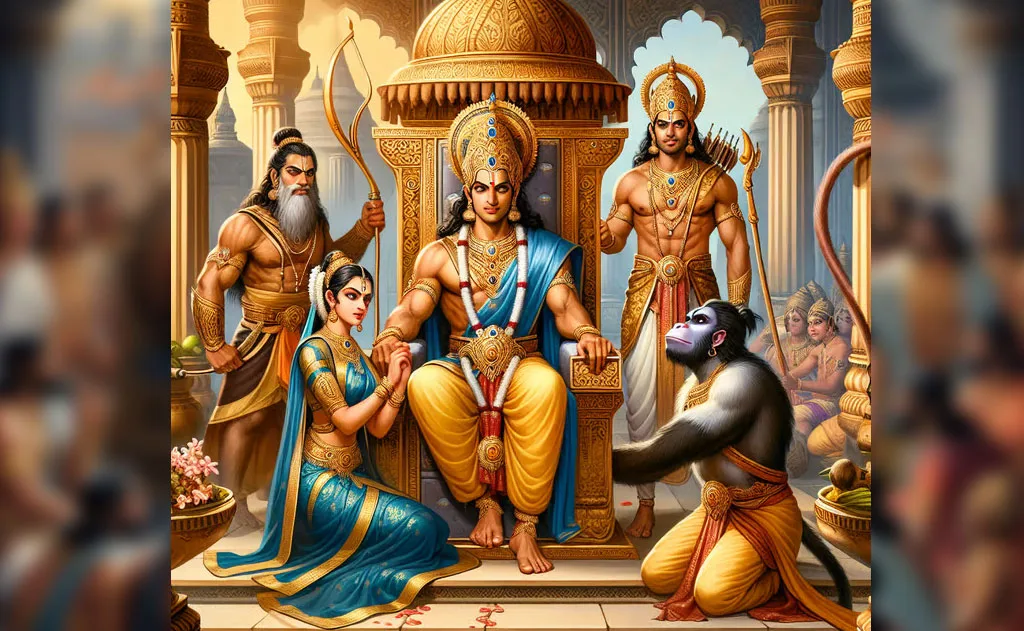
Western Influence on Hindu Youth: Balancing Modern Lifestyles with Traditional Values
In today’s interconnected world, Hindu youth are navigating a complex cultural landscape shaped by the rapid globalization of Western ideas.

In today’s interconnected world, Hindu youth are navigating a complex cultural landscape shaped by the rapid globalization of Western ideas. While Western influence brings opportunities for growth, innovation, and personal freedom, it also poses challenges to maintaining traditional values and practices rooted in Hindu culture. This blog examines the ways Hindu youth balance these influences, the dilemmas they face, and the unique identity that emerges from this interplay.
1.Western Influence: Opportunities and Challenges The Western lifestyle emphasizes individuality, freedom of choice, and modernity, which can be both empowering and challenging for Hindu youth. Key aspects include:
Education and Career Aspirations: Exposure to Western education systems and global career opportunities has led to personal and professional growth among Hindu youth. Media and Popular Culture: Hollywood, Western music, and social media platforms significantly shape youth attitudes toward fashion, relationships, and lifestyle. Questioning Authority: Western ideals of questioning traditions and authority encourage critical thinking but sometimes clash with the respect for elders and traditions emphasized in Hindu culture.
2. Tensions Between Modernity and Tradition Balancing Western lifestyles with Hindu traditions often creates dilemmas, such as:
Cultural Expectations: Many young Hindus face pressure to uphold family traditions, like celebrating festivals or participating in rituals, while managing demanding academic or work schedules. Relationship Norms: Hindu youth raised in conservative households may find Western dating norms conflicting with arranged marriage traditions. Religious Practices: Yoga, meditation, and vegetarianism gain global popularity, yet some youth struggle to practice these sincerely amidst modern distractions.
3. Strategies for Striking a Balance Despite the challenges, Hindu youth often find ways to integrate both influences meaningfully:
Redefining Rituals: Adopting simplified, meaningful forms of traditional practices, such as celebrating Diwali by focusing on family gatherings rather than elaborate rituals. Digital Dharma: Leveraging apps, online pujas, and virtual communities to stay connected with their roots. Cultural Advocacy: Many young Hindus use social media to share their culture, challenge stereotypes, and create awareness about their traditions. Dual Identities: Embracing a hybrid identity that respects both worlds—wearing traditional attire for festivals while maintaining modern wardrobes in daily life.
4. Examples of Success in Balancing Both Worlds Festivals Abroad:
Hindu youth in diaspora communities organize cultural events like Holi and Navratri in universities, blending tradition with modern celebration styles. Professionals with Roots: Entrepreneurs like Sundar Pichai and Satya Nadella exemplify how Hindu values can coexist with global success. Youth Movements: Initiatives like “Global Hindu Youth Conferences” promote awareness of Hinduism while addressing the needs of modern youth.
5. Challenges to Watch For Cultural Erosion: Overexposure to Western ideals can sometimes lead to a dilution of cultural identity. Hinduphobia: Misrepresentation of Hinduism in Western media can discourage young Hindus from embracing their heritage. Generational Gaps: Parents and elders may struggle to understand the youth's perspectives, leading to conflicts.
6. Conclusion: A New Synthesis Hindu youth today are forging a new identity that incorporates the best of both worlds. While they embrace the freedom, innovation, and individuality offered by Western lifestyles, many remain deeply connected to their roots, drawing strength from Hindu values like compassion, self-discipline, and spirituality. The journey to balance these influences is not without challenges, but it ultimately enriches the global Hindu community with diversity, resilience, and a forward-looking spirit.
What Do Hindu Scriptures Actually Say About Engaging With the Outside World?
The anxiety over Western influence is not new in principle — Hindu philosophy has long grappled with the tension between loka-vyavahara (worldly engagement) and dharmic adherence. The Bhagavad Gita, in Chapter 3, addresses this directly: Arjuna's dilemma about acting in a morally complex world mirrors the modern Hindu youth's struggle to participate fully in a globalized society without surrendering inner conviction. Krishna's answer — nishkama karma, or action without ego-driven attachment — offers a framework that is strikingly applicable to navigating career ambition, social media culture, and peer pressure.
The Taittiriya Upanishad closes with the charge: 'Satyam vada, dharmam chara' — speak truth, walk the path of dharma. This is not an instruction to withdraw from the world but to engage with it honestly. For Hindu youth, this scriptural foundation can serve as an anchor: one can study Western philosophy, work in multinational corporations, or consume global media, provided the inner compass of satya and dharma remains operative. The tradition never demanded cultural insularity; it demanded ethical clarity.
How Have Hindu Youth Historically Navigated Foreign Cultural Contact?
The encounter between Hindu culture and foreign influence is centuries old. During the colonial period, reformers such as Swami Vivekananda and Sri Aurobindo demonstrated that engagement with Western thought need not mean capitulation to it. Vivekananda famously presented Advaita Vedanta at the 1893 Parliament of the World's Religions in Chicago — using the very platforms of Western modernity to assert the depth of Hindu civilization. His message was one of confident synthesis, not anxious imitation.
Earlier still, the Nalanda and Takshashila universities drew scholars from Central Asia, China, and the Mediterranean world, making pluralism and intellectual exchange native to Hindu tradition rather than foreign impositions. The Arthashastra of Kautilya acknowledges the value of learning from diverse sources in statecraft and knowledge. This historical precedent reminds today's Hindu youth that selective, critical engagement with outside ideas is itself a venerable Indian practice, not a betrayal of roots.
What Role Do Festivals and Sacred Calendars Play in Preserving Identity?
The Hindu ritual calendar — structured around events like Makar Sankranti, Ugadi, Navaratri, Diwali, and Karthika Deepam — functions as a living curriculum in cultural memory. Each festival carries embedded theology: Navaratri, for instance, celebrates the nine forms of Devi as described in the Devi Mahatmyam of the Markandeya Purana, teaching youth about Shakti, perseverance, and the cyclical nature of time. When a young Hindu living abroad lights a lamp during Karthika month or fasts on Ekadashi, they are not merely performing custom — they are participating in a time-structured cosmology that connects them to millions across generations.
Urban Hindu youth increasingly use digital tools — WhatsApp puja reminders, YouTube livestreams from Tirupati Tirumala Venkateswara Temple or the Kashi Vishwanath Temple in Varanasi — to sustain participation in sacred time even when physical attendance is impossible. Far from diluting tradition, these adaptations demonstrate that the spirit of a festival can survive changes in medium. The challenge is ensuring that the theological meaning is transmitted alongside the cultural aesthetic, so that Diwali does not reduce to fireworks and Holi does not reduce to colors.
Is the Concept of Purushartha a Practical Guide for Modern Hindu Youth?
Purushartha — the four aims of human life: Dharma (righteous conduct), Artha (material prosperity), Kama (desire and enjoyment), and Moksha (liberation) — offers Hindu tradition's own answer to the question of how to live fully in the world. Crucially, Artha and Kama are not condemned; the Kama Sutra of Vatsyayana and the economic treatises of classical India explicitly validate the pursuit of wealth and pleasure as legitimate human goals. The condition is that they remain subordinate to Dharma and oriented ultimately toward Moksha.
For a Hindu youth pursuing a corporate career, enjoying contemporary entertainment, and also maintaining a meditation practice, the Purushartha framework provides a non-guilt-ridden map. Western culture often presents work-life balance as a secular management problem. Hindu philosophy frames it as a cosmic design: a life in which Artha and Kama are pursued without Dharma becomes adharmic, and without the horizon of Moksha becomes hollow. Teaching this framework explicitly — in homes, gurukulas, and Hindu student organizations on college campuses — can give youth a vocabulary to articulate their own values without feeling intellectually outgunned by secular or Western frameworks.
How Are Diaspora Hindu Communities Creating New Models of Cultural Continuity?
Across the United States, United Kingdom, Canada, and Australia, Hindu diaspora communities have built institutions that attempt to transmit culture without the geographic and familial scaffolding available in India. Temples such as the BAPS Swaminarayan Akshardham in Robbinsville, New Jersey, and the Sri Venkateswara Temple in Pittsburgh, Pennsylvania, function not only as places of worship but as community centers offering Sanskrit classes, classical dance instruction, and Vedic study groups specifically designed for second-generation youth.
Hindu student organizations on university campuses — including chapters of the Hindu Students Council — organize events that blend intellectual engagement with cultural celebration, hosting discussions on Dharmic philosophy alongside Holi and Diwali events. These spaces allow young Hindus to form peer communities where traditional identity is normalized rather than treated as something to be explained or defended. The model emerging from the diaspora may, paradoxically, offer lessons back to Hindu communities in India, where rapid urbanization creates social conditions not unlike those of the immigrant experience: atomized individuals seeking community outside traditional village or joint-family structures.
What Is the Difference Between Adopting Western Ideas and Losing Dharmic Grounding?
A critical distinction that Hindu youth benefit from internalizing is the difference between technological and methodological borrowing on one hand, and philosophical or axiological replacement on the other. Hinduism has always absorbed foreign techniques — mathematics, astronomy, linguistic tools — while maintaining its metaphysical core rooted in concepts like Brahman, Atman, karma, and dharma. Adopting a Western management style at work, enjoying jazz or hip-hop, or practicing sports psychology does not inherently displace one's Dharmic identity.
The erosion of Dharmic grounding typically happens not through a single dramatic rejection but through gradual neglect: when Sanskrit slokas are no longer memorized, when elders are no longer consulted on life decisions, when the meaning behind rituals is never explained and they are therefore abandoned as 'superstition.' The Vivekachudamani of Adi Shankaracharya warns against mistaking the anitya (impermanent) for the nitya (eternal). For Hindu youth, cultural vigilance means periodically asking: which of my adopted values are methodological tools, and which are quietly replacing my understanding of who I am and what life is for?
Frequently Asked Questions
How can Hindu youth balance Western lifestyles with traditional values?
Common strategies include simplifying rituals into meaningful forms, such as focusing Diwali on family gatherings. Others use apps and online pujas, advocate for their culture on social media, and embrace a dual identity.
What do Hindu scriptures say about engaging with the modern world?
The Bhagavad Gita, Chapter 3, teaches nishkama karma, action without ego-driven attachment. The Taittiriya Upanishad's charge 'Satyam vada, dharmam chara' means speak truth and walk the path of dharma, which calls for honest engagement rather than withdrawal.
How does Purushartha help young Hindus in a modern career?
Purushartha names four aims of life: Dharma, Artha, Kama and Moksha. Wealth and enjoyment are legitimate goals as long as they stay subordinate to Dharma and oriented toward Moksha.
How can Hindu youth in the USA, UK, Canada or Australia stay connected to festivals?
Diaspora youth use WhatsApp puja reminders and YouTube livestreams from temples such as Tirumala Venkateswara or Kashi Vishwanath. They also organize Holi and Navratri events in universities.
What are the main challenges Hindu youth face with Western influence?
Challenges include cultural erosion, Hinduphobia from misrepresentation in Western media, and generational gaps with parents. Dating norms can also clash with arranged marriage traditions.
Is engaging with foreign ideas against Hindu tradition?
No. Swami Vivekananda presented Advaita Vedanta at the 1893 Parliament of the World's Religions in Chicago, and Nalanda and Takshashila drew scholars from Central Asia, China and the Mediterranean. Selective, critical engagement is a long-standing Indian practice.
Share this with family and friends
Send it on WhatsApp, post it, or copy the link.
More from Culture
- Why Is the Family System Weakening? 15 Reasons and What We Can Do
- Godavari Pilichindi: Sir Arthur Cotton, the Dowleswaram Anicut and a Telugu Story of Coming Home
- Hindus Worldwide Must Be Safe in Public Places: Temple Security, Festival Safety and Daily Life
- Why We Never See Dead Monkeys: The Belief and the Natural Explanation
- Why Learn Grammar? – A Sanskrit Verse Explaining the Significance of Correct Pronunciation and Its Interpretation
You might also like
Why is Dharba (Holy Grass) is used as Ring during on our Auspicious and Inauspicious Occasions?
Why Lord Jagannath Falls Ill Every Year – The Untold Divine Secret of Anasara

Hindu Wedding Traditions: Rituals, Symbolism, and Regional Diversity