Top 15 Famous Hindu Temples in Jammu & Kashmir: Complete Pilgrimage and Darshan Guide 2026
Quick answer: The most famous Hindu temples in Jammu and Kashmir are Shri Mata Vaishno Devi (Trikuta Hills, near Katra), the Amarnath Cave (Anantnag district), Shankaracharya Temple (Srinagar), Kheer Bhawani (Tulmulla, Ganderbal), the Sharika Devi Temple on Hari Parbat, and Jammu's Raghunath and Ran
Quick answer: The most famous Hindu temples in Jammu and Kashmir are Shri Mata Vaishno Devi (Trikuta Hills, near Katra), the Amarnath Cave (Anantnag district), Shankaracharya Temple (Srinagar), Kheer Bhawani (Tulmulla, Ganderbal), the Sharika Devi Temple on Hari Parbat, and Jammu's Raghunath and Ranbireshwar temples. The ancient Martand Sun Temple and Avantipur temples are protected archaeological sites, not functioning temples for daily worship.
Jammu and Kashmir is home to some of India's most revered Hindu pilgrimage destinations, ancient temples and sacred landmarks. From the abode of Shri Mata Vaishno Devi in the Trikuta Hills to the holy Amarnath Cave, the region holds an extraordinary place in Hindu religious tradition.
Known as the City of Temples, Jammu has historic shrines dedicated to Lord Shiva, Lord Rama, Goddess Durga and other deities, while the Kashmir Valley preserves Shankaracharya Temple, Kheer Bhawani and the ancient Martand Sun Temple. This guide covers 15 important temples across the Union Territory, with their significance, location, festivals and travel tips. For a district-by-district directory, see our temples of Jammu and Kashmir.
1. Shri Mata Vaishno Devi Temple, Katra
Presiding deity: Shri Mata Vaishno Devi
Location: Trikuta Hills, near Katra, Reasi district
Significance: Major Shakti pilgrimage
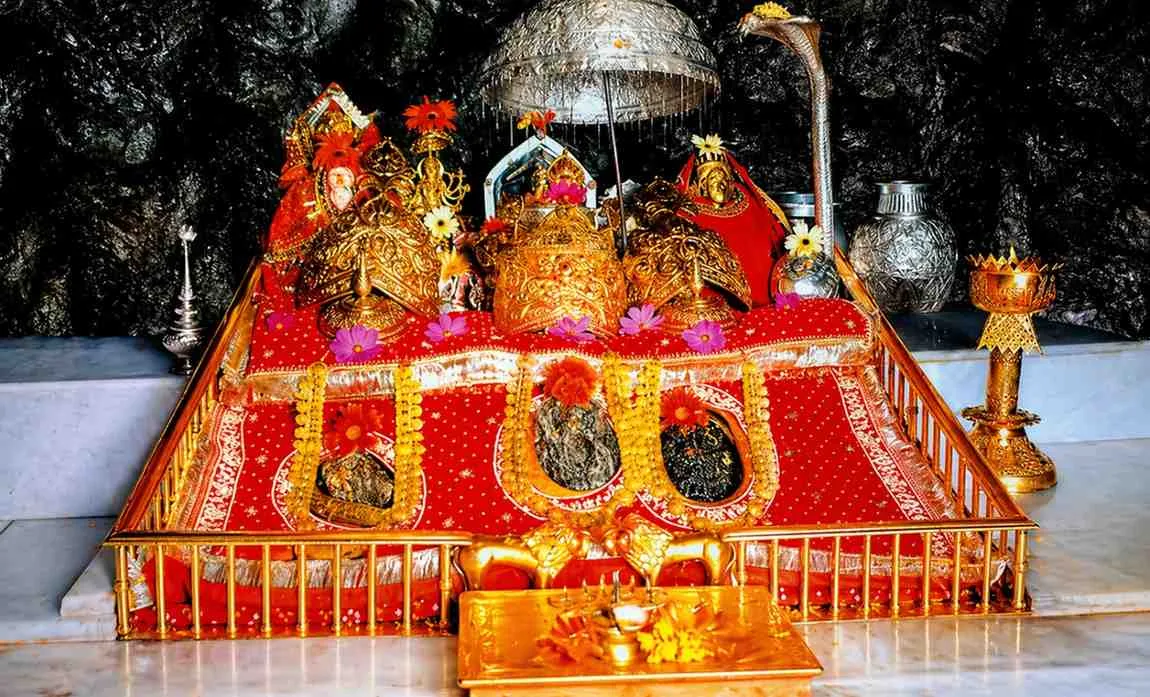
Shri Mata Vaishno Devi is among India's most important Hindu pilgrimage destinations and draws millions of devotees every year. The pilgrimage begins at Katra, from where devotees walk about 12–13 km to the holy cave. The Goddess is worshipped in the forms of Mahakali, Mahalakshmi and Mahasaraswati.
Devotees undertake the yatra to seek blessings for health, family prosperity, success, spiritual growth and protection. The busiest seasons are Chaitra and Sharad Navratri, Diwali and the New Year.
Pilgrims must register and follow the Shri Mata Vaishno Devi Shrine Board's current instructions (official website). See our Vaishno Devi temple guide.
2. Shri Amarnath Cave Temple
Presiding deity: Lord Shiva
Location: Amarnath Cave, Anantnag district
Significance: One of the most revered Shiva pilgrimages
At about 3,888 metres above sea level, the Amarnath Cave is famous for its naturally formed ice lingam, worshipped as Lord Shiva. Tradition holds that Shiva revealed the secret of immortality to Goddess Parvati here.
The yatra is held in summer, subject to official arrangements and weather, by two main routes: the traditional Pahalgam route and the shorter but steeper Baltal route. Pilgrims must check registration, medical fitness rules and route conditions with the Shri Amarnathji Shrine Board. See our Amarnath Yatra 2026 guide.
3. Shankaracharya Temple, Srinagar
Presiding deity: Lord Shiva (Jyeshteshwara)
Location: Shankaracharya Hill, Srinagar
Significance: Ancient Shiva shrine
High on a hill above Srinagar, with views over Dal Lake and the valley, Shankaracharya Temple is one of Kashmir's best-known Hindu shrines. It is traditionally associated with Adi Shankaracharya, who is believed to have visited Kashmir on his spiritual journey. Maha Shivaratri is an important occasion here. Check current security arrangements, access and photography rules before visiting (Kashmir Tourism).
4. Kheer Bhawani Temple, Tulmulla
Presiding deity: Goddess Ragnya Devi
Location: Tulmulla, Ganderbal district
Significance: Major Kashmiri Pandit shrine
Dedicated to Goddess Ragnya Devi, a form of Goddess Durga, Kheer Bhawani has a special place in Kashmiri Pandit tradition. The shrine is built around a sacred spring, and devotees offer kheer, flowers and prayers. The annual Mela Kheer Bhawani on Zyeshta Ashtami draws devotees from across India and overseas (Kashmir Tourism).
5. Martand Sun Temple, Mattan
Presiding deity: Lord Surya
Location: Mattan, Anantnag district
Period: 8th century CE
Built in the reign of King Lalitaditya Muktapida of the Karkota dynasty, Martand is one of the greatest examples of ancient Kashmiri temple architecture: a monumental stone temple with a large colonnaded courtyard and fine architectural detail, set against views of the valley. It now stands in ruins and is a protected archaeological monument, not a functioning temple for daily worship (Incredible India).
6. Sharika Devi Temple, Hari Parbat, Srinagar
Presiding deity: Goddess Sharika
Location: Hari Parbat, Srinagar
Significance: Important Shakti shrine
Goddess Sharika is worshipped as a form of Goddess Durga and holds an important place in Kashmiri Hindu tradition. Devotees pray to her for protection and prosperity, and Hari Parbat, with its historic fort and religious sites, is a key stop for anyone exploring Srinagar's spiritual history.
7. Avantipur Temples, Awantipora
Location: Awantipora, Pulwama district
Significance: Ancient temple architecture
The temple remains at Avantipur are associated with King Avantivarman, founder of the Utpala dynasty. The two principal complexes are the Avantiswami Temple, dedicated to Lord Vishnu, and the Avantishvara Temple, dedicated to Lord Shiva. Their carvings, courtyards and columns make Avantipur a must for heritage enthusiasts; like Martand, it is an archaeological site.
8. Shri Raghunath Temple, Jammu
Presiding deity: Lord Rama
Location: Raghunath Bazaar, Jammu
Significance: Major Dogra-era temple complex
Begun by Maharaja Gulab Singh and completed under Maharaja Ranbir Singh in the 19th century, the Raghunath Temple is one of Jammu's most famous landmarks. The main shrine holds Lord Rama with Sita and Lakshmana, and the complex has several other shrines, gilded interiors and collections of Shaligram shilas and old manuscripts. Ram Navami, Diwali, Janmashtami and Navratri are major occasions.
9. Ranbireshwar Temple, Jammu
Presiding deity: Lord Shiva
Location: Shalimar Road, Jammu
Significance: Major Shiva temple
Built under Maharaja Ranbir Singh in the 19th century, Ranbireshwar is one of Jammu's largest Shiva temples, known for its tall Shiva lingam, many smaller lingams and crystal lingams. Maha Shivaratri, the month of Shravan and Mondays bring the biggest crowds.
10. Bawe Wali Mata Temple, Bahu Fort, Jammu
Presiding deity: Goddess Mahakali
Location: Bahu Fort, Jammu
Significance: Important Shakti shrine
Inside the historic Bahu Fort, the Bawe Wali Mata temple is dedicated to Goddess Kali, revered as the presiding deity of Jammu. It is busiest during Navratri. The Bagh-e-Bahu garden nearby offers views of the city and the Tawi river.
11. Peer Kho Cave Temple, Jammu
Presiding deity: Lord Shiva
Location: Circular Road, Jammu
Significance: Cave shrine
Also called the Jamwant Cave Temple, Peer Kho is a Shiva shrine inside a natural cave, where a Shiva lingam is worshipped. Its cave setting makes it one of Jammu's most distinctive temples, especially on Maha Shivaratri.
12. Panchvaktar Temple, Jammu
Presiding deity: Lord Shiva
Location: Panj Bakhtar, Jammu
Significance: Historic Shiva shrine
The name Panchvaktar refers to the five-faced form of Lord Shiva, which symbolises different aspects of divine power. Devotees visit throughout the year, especially on Mondays and Maha Shivaratri.
13. Sudh Mahadev Temple, Chenani
Presiding deity: Lord Shiva
Location: Near Chenani, Udhampur district
Significance: Regional Shiva pilgrimage
Near Patnitop, Sudh Mahadev is linked with local legends of Lord Shiva and Goddess Parvati and draws large crowds for its annual fair. Nearby are Patnitop, Mantalai and Gauri Kund, so it combines well with a mountain holiday. Check the fair dates locally.
14. Baba Dhansar, Karua
Presiding deity: Lord Shiva
Location: Near Karua village, Reasi district
Significance: Shiva pilgrimage near Katra
Baba Dhansar is a Shiva shrine set among greenery, streams and rocks, and is often added to a Katra and Reasi pilgrimage itinerary.
15. Krimchi Temples, Udhampur
Location: Krimchi village, Udhampur district
Significance: Ancient temple group
The Krimchi group of ancient stone temples shows the early temple-building traditions of the Jammu region, with carvings and architectural features that make it a rewarding stop for heritage travellers.
Jammu and Kashmir temples at a glance
| Temple | District / area | Main deity | Type |
|---|---|---|---|
| Vaishno Devi | Reasi | Mata Vaishno Devi | Pilgrimage shrine |
| Amarnath Cave | Anantnag | Lord Shiva | Seasonal pilgrimage |
| Shankaracharya | Srinagar | Lord Shiva | Temple |
| Kheer Bhawani | Ganderbal | Goddess Ragnya Devi | Temple |
| Martand Sun Temple | Anantnag | Lord Surya | Archaeological site |
| Sharika Devi | Srinagar | Goddess Sharika | Temple |
| Avantipur Temples | Pulwama | Vishnu and Shiva | Archaeological site |
| Raghunath Temple | Jammu | Lord Rama | Temple |
| Ranbireshwar | Jammu | Lord Shiva | Temple |
| Bawe Wali Mata | Jammu | Goddess Kali | Temple |
| Peer Kho | Jammu | Lord Shiva | Cave temple |
| Panchvaktar | Jammu | Lord Shiva | Temple |
| Sudh Mahadev | Udhampur | Lord Shiva | Temple |
| Baba Dhansar | Reasi | Lord Shiva | Shrine |
| Krimchi Temples | Udhampur | Various deities | Heritage site |
Best time to visit
- March to June: good for many Srinagar and Jammu temple visits, subject to weather and access.
- July to August: the traditional Amarnath Yatra season, subject to official arrangements.
- September to October: Navratri and pleasant autumn travel.
- November to February: fine for Jammu temples; Kashmir is cold, with possible snowfall.
Always check the latest weather, temple timings, security arrangements and road conditions.
Major Hindu festivals in Jammu and Kashmir
- Maha Shivaratri: at Shiva temples across the region.
- Navratri: especially at Vaishno Devi and Bawe Wali Mata.
- Mela Kheer Bhawani: the great gathering of Kashmiri Pandits at Tulmulla.
- Amarnath Yatra: the summer pilgrimage to the holy cave.
- Diwali: lamps and Lakshmi puja; see Diwali in Kashmir 2026.
- Ram Navami: especially at the Raghunath Temple.
A suggested seven-day pilgrimage itinerary
- Jammu: Raghunath, Ranbireshwar, Panchvaktar and Peer Kho temples.
- Jammu to Katra: Bawe Wali Mata, then travel to Katra.
- Vaishno Devi: the yatra to the holy cave and back, depending on fitness.
- Srinagar: Shankaracharya Temple (subject to access) and Dal Lake.
- Srinagar heritage: Sharika Devi and Hari Parbat.
- Ganderbal and Anantnag: Kheer Bhawani and Martand.
- Awantipora: the Avantipur ruins, then departure.
This is an ambitious plan that needs advance transport arrangements; Amarnath needs its own seasonal plan and is not included.
Travel tips for pilgrims
- Register on official pilgrimage portals where required.
- Check medical fitness rules for high-altitude yatras.
- Follow official security and travel advisories, and carry valid ID.
- Book accommodation early for major festivals.
- Respect temple customs, and check whether phones and cameras are allowed.
- Confirm opening arrangements before you set out.
For official tourism information, see Jammu district's places of interest and the Directorate of Tourism, Kashmir.
Frequently asked questions
Which is the most famous Hindu temple in Jammu and Kashmir?
Shri Mata Vaishno Devi, in the Trikuta Hills near Katra, is the most visited.
Which Hindu temple is famous in Srinagar?
The Shankaracharya Temple, a Shiva shrine on Shankaracharya Hill.
Where is Kheer Bhawani Temple?
At Tulmulla in Ganderbal district.
Which is the famous ancient Sun Temple in Kashmir?
The Martand Sun Temple near Mattan in Anantnag district, built in the 8th century under King Lalitaditya; it is now an archaeological site.
Which temples should Shiva devotees visit in Jammu?
Ranbireshwar, Peer Kho, Panchvaktar and Sudh Mahadev.
Which temples are important for devotees of the Goddess?
Vaishno Devi, Bawe Wali Mata, Kheer Bhawani and Sharika Devi.
How many days does a Jammu and Kashmir temple tour need?
About 7 to 12 days, depending on the destinations, travel conditions and whether Amarnath is included.
What is the best time for a temple pilgrimage in Jammu and Kashmir?
March to June and September to October suit most destinations; Amarnath has its own summer season.
More temple guides on HinduTone
- Diwali in Kashmir 2026: temples, Srinagar and travel guide
- Vaishno Devi temple guide
- Amarnath Yatra 2026 guide
- Famous temples in Uttar Pradesh
Jai Mata Di! Har Har Mahadev!
More on Diwali in Kashmir
Share this with family and friends
Send it on WhatsApp, post it, or copy the link.
More from Temples
- Hindu Temples in New York City (Queens, Brooklyn, Manhattan): Guide and Nov–Dec 2026 Festival Dates
- Hindu Temples in London: Visitor Guide, Nov-Dec 2026 Dates
- Hindu Temples in Toronto and the GTA: Nov-Dec 2026 Guide
- Hindu Temples in New Jersey: Guide and Nov-Dec 2026 Dates
- Famous Temples in West Bengal: A Source-Checked Guide to Kalighat, Dakshineswar, Tarapith, Bansberia, Bishnupur and More
You might also like
Famous Temples in Maharashtra: A Source-Checked Guide to Ashtavinayak, Jyotirlingas, Pandharpur, Kolhapur and More
Famous Krishna Temples in India: 13 Source-Checked Temples from Guruvayur to Mathura, Vrindavan, Dakor and Pandharpur
Famous Temples in Uttarakhand: A Source-Checked Guide to Kedarnath, Badrinath, Tungnath, Haridwar, Almora and More