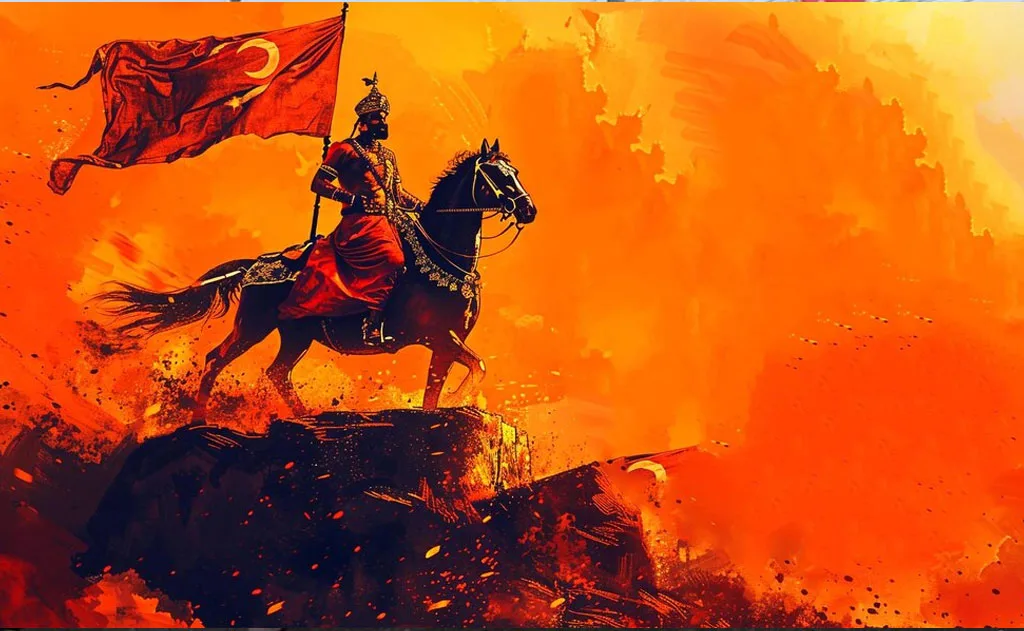
The Eternal Wheel of Time: How Hinduism Reveals the Truth of Cyclic Time (Kaal Chakra)
Introduction: The Illusion of Linear Time The West sees time as a straight line—past, present, future—always moving forward, never repeating.

Introduction: The Illusion of Linear Time
The West sees time as a straight line—past, present, future—always moving forward, never repeating. But Hinduism knows the deeper truth: Time is a circle, an endless cycle of creation, preservation, and destruction.
This is Kaal Chakra—the Wheel of Time—where death is rebirth, endings are beginnings, and the past is the future.
The ancient rishis did not measure time in seconds or years, but in aeons (Yugas), cosmic breaths (pralaya), and the dance of Shiva (Nataraja)—the eternal rhythm of existence.
This is the real truth of Time, beyond clocks and calendars.
1. The Cosmic Clock: The Four Yugas
Hinduism divides time into four great cycles (Yugas), repeating endlessly like the seasons of the universe:
- Satya Yuga (Golden Age) – The era of truth, righteousness, and divine wisdom. Humans lived for thousands of years, in harmony with the gods.
- Treta Yuga (Silver Age) – The age of sacrifice and rituals. Dharma weakens slightly, but great kings like Rama uphold divine order.
- Dvapara Yuga (Bronze Age) – The era of confusion and division. The Mahabharata war takes place, and Krishna delivers the Bhagavad Gita.
- Kali Yuga (Iron Age) – The darkest age, where greed, lies, and violence dominate. We are in Kali Yuga now, but even this will end—leading back to Satya Yuga.
"Time creates all things, Time destroys all things. Time burns all beings; Time again extinguishes the fire." — Mahabharata
This cycle repeats forever, like a cosmic heartbeat.
2. The Destroyer and Creator: Shiva’s Dance of Time
At the center of this eternal wheel stands Lord Shiva as Nataraja—the Cosmic Dancer.
- His drum (damaru) beats the rhythm of creation.
- His fire burns away illusion.
- His raised foot offers liberation (moksha).
- His crushed demon (Apasmara) symbolizes ignorance.
Shiva dances inside a ring of flames—the circle of time itself. His dance is both destruction and rebirth. When he stops, the universe dissolves—only to begin again.
"The world is a play of Shiva’s dance. From his movement, all life comes; in his stillness, all returns to the source." — Tirumantiram
3. The Death That Is Not Death: Reincarnation and Eternal Return
In the West, death is the end. But in Hinduism, death is just a turn of the wheel.
- The Bhagavad Gita (2:22) says:"As a person discards old clothes and wears new ones, the soul discards old bodies and enters new ones."
- The Upanishads declare:"The wise know that what we call ‘death’ is merely the soul changing its form, like the moon waxing and waning."
This is why Hindus perform last rites (shraddha)—not as a farewell, but as a prayer for the soul’s next journey.
4. The Great Dissolution: Pralaya and the End of the Cycle
Every 4.32 billion years, the universe undergoes Mahapralaya (Great Dissolution)—where all creation merges back into Brahman.
- The oceans rise, swallowing the earth.
- The sun burns out, stars collapse.
- Shiva inhales, withdrawing all existence into himself.
But this is not the end—only a pause before the next cycle begins.
"As the spider spins its web and withdraws it, as plants sprout from the earth and return to it, so the universe emerges from Brahman and dissolves back into it." — Brihadaranyaka Upanishad
5. The Future Is the Past: Prophecies of Cyclic Time
Hindu texts already know the future because time is a loop:
- The Vishnu Purana predicts:
- Kali Yuga will end in chaos, followed by a new Golden Age.
- Kalki Avatar, the final incarnation of Vishnu, will appear on a white horse, restoring Dharma.
- The Bhavishya Purana foresees:
- A great war, after which sages will revive Vedic wisdom.
- A new Satya Yuga will dawn, where humanity lives without suffering.
This is not fantasy—it is the inevitable turn of the wheel.
Conclusion: Breaking Free From the Illusion of Time
Most people live trapped in linear time, fearing death, clinging to the past. But Hinduism teaches:
- You are not bound by time—you are the eternal Atman, beyond birth and death.
- Every ending is a beginning—what dies is only the body, never the soul.
- The future has already happened—because time is a circle.
The Kaal Chakra keeps turning, but you are not the wheel—you are the rider.
"Time is under me, not over me. I am the witness, not the slave." — Adi Shankara
References & Further Reading
- Vishnu Purana – The cycles of Yugas
- Bhagavad Gita – Death and rebirth
- Tirumantiram – Shiva’s dance of time
- Upanishads – The nature of eternity
(A devotional exploration of Hinduism’s cosmic vision of time, perfect for Hindutone.com’s spiritual audience.)
Frequently Asked Questions
What does Kaal Chakra mean in Hinduism?
Kaal Chakra is the Wheel of Time, the Hindu view that time is an endless cycle of creation, preservation and destruction rather than a straight line. Death is seen as rebirth and every ending as a beginning.
What are the four Yugas and which one are we in?
The four Yugas are Satya (Golden), Treta (Silver), Dvapara (Bronze) and Kali (Iron). We are in Kali Yuga, the darkest age, which will end and lead back to Satya Yuga.
How does Shiva as Nataraja represent time?
Shiva dances inside a ring of flames that stands for the circle of time. His drum beats the rhythm of creation, his fire burns away illusion, and when he stops the universe dissolves, only to begin again.
What is Mahapralaya?
Mahapralaya is the Great Dissolution that comes every 4.32 billion years, when all creation merges back into Brahman. It is a pause before the next cycle begins, not a final end.
How does cyclic time relate to reincarnation?
Death is a turn of the wheel: the Bhagavad Gita (2:22) compares the soul discarding old bodies to a person discarding old clothes. Shraddha rites are performed as a prayer for the soul's next journey.
Who is Kalki and what role does he play at the end of Kali Yuga?
Kalki is the final incarnation of Vishnu, who will appear on a white horse to restore Dharma. The Vishnu Purana describes Kali Yuga ending in chaos, followed by a new Golden Age.
Share this with family and friends
Send it on WhatsApp, post it, or copy the link.
More from Hinduism
- AI and the Sanskrit Revival in 2026: Language Models, Manuscript OCR, Translation Tools and What AI Still Gets Wrong
- Can a Robot Perform Puja? Robot Aarti, AI in Rituals and What Hindu Tradition Says
- GitaGPT and AI Bhagavad Gita Chatbots: How Accurate Are They, and What Does Hindu Tradition Say?
- Robotic Elephants and AI in Hindu Temples: Kerala's Mechanical Tuskers, Tirumala's AI Command Centre and the Debate
- Quantum Computing Explained for Hindus: Qubits, Superposition and Entanglement, with Vedanta Analogies (Not Equivalences)
You might also like
Naishtika Brahmacharya: Lord Ayyappa’s Eternal Vow Explained — Manu Smriti, Bhagavata, Yoga Sutra and the 41-Day Vratham
ISKCON Representatives Meet Director Boyapati Sreenu, Laud 'Akhanda 2' for Promoting Sanatan Dharma
The Story Behind Akshaya Tritiya – Why It's Called Eternal Day