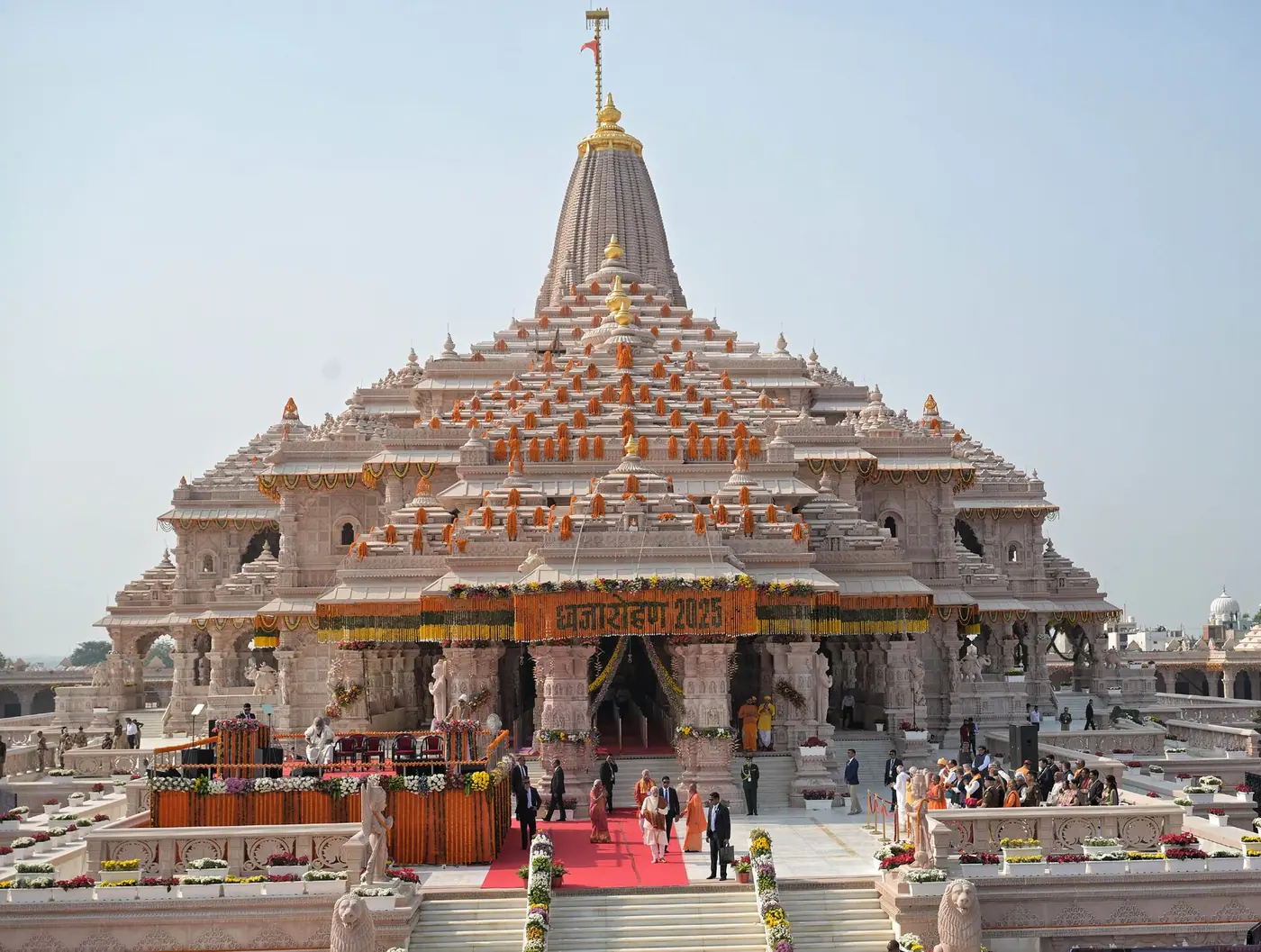
Kailasanathar Temple Kanchipuram Guide: Pallava History, Architecture and Visiting Tips
A complete guide to the Kailasanathar Temple in Kanchipuram, the oldest structural temple in the city: Rajasimha Pallava's vision, the sandstone architecture and its ring of 58 shrines, the sculptures of Shiva and Parvati, how it differs from Ellora's Kailasa, and practical tips for visitors from abroad.
Quick answer: The Kailasanathar Temple in Kanchipuram, Tamil Nadu, is the city's oldest structural temple and one of the finest early Dravidian temples in India. It was built in sandstone by the Pallava king Narasimhavarman II (Rajasimha) around the late 7th and early 8th century CE and is dedicated to Lord Shiva as the Lord of Mount Kailasa. It is famous for its pyramidal vimana, the ring of 58 small shrines built into its enclosure wall, and its graceful carvings of Shiva, Parvati and the Somaskanda family. It is a protected monument where worship continues. Check the official website for current timings before you visit.
Many visitors arrive in Kanchipuram for silk saris and the great Kamakshi and Ekambareswarar temples, and nearly miss Kailasanathar on the western side of town. That would be a pity. Its quiet courtyard is where the classic South Indian temple form was first worked out in stone, and its sculptures are among the loveliest in Tamil Nadu. Note that this guide is about the Kanchipuram temple; Ellora's Kailasa temple in Maharashtra is a different monument, explained below.
Kailasanathar Temple at a glance
| Detail | Information |
|---|---|
| Deity | Lord Shiva as Kailasanathar (Lord of Kailasa), worshipped as a linga |
| Location | Kanchipuram, Tamil Nadu, on the western side of the town |
| Built by | Pallava king Narasimhavarman II (Rajasimha), completed by Mahendravarman III |
| Period | Late 7th to early 8th century CE |
| Material | Sandstone, on a granite base |
| Status | Protected monument (ASI) with active worship |
History: Rajasimha's vision
The Pallavas ruled much of northern Tamil Nadu from Kanchipuram between roughly the 6th and 9th centuries. Earlier Pallava kings, especially Mahendravarman I and Narasimhavarman I (Mamalla), created rock-cut cave temples and the monolithic rathas of Mamallapuram. Narasimhavarman II, known as Rajasimha, took the next step: building free-standing temples out of cut stone. The Shore Temple at Mamallapuram and the Kailasanathar Temple in Kanchipuram are his most famous works.
Inscriptions on the temple name it Rajasimha Pallaveswaram, after its royal builder, and record the titles of the king in elegant Pallava Grantha script. The front shrine is associated with his son Mahendravarman III. Rajasimha's queen Rangapataka is also commemorated in an inscription, a reminder that Pallava royal women were patrons of temples too.
The temple's fame spread beyond the Pallava kingdom. The Chalukya king Vikramaditya II, after capturing Kanchipuram in the 8th century, is recorded in an inscription here to have admired the temple and returned its treasures rather than plundering it. The Virupaksha temple at Pattadakal in Karnataka, built by his queen, is widely believed to have been inspired by Kailasanathar.
Architecture: the birth of the Dravidian temple
Kailasanathar shows the elements that later grew into the great temples of Thanjavur, Madurai and Srirangam, but on an intimate scale.
- The vimana: a pyramidal tower of diminishing storeys rises over the sanctum, topped by a dome-like finial. It anticipates the towering vimana of the Brihadeeswarar Temple at Thanjavur, built about three centuries later by the Cholas.
- Ring of shrines: the inner face of the rectangular enclosure wall is lined with 58 small cell-like shrines, each with sculptures of Shiva in different forms, often with Parvati. Walking along them is like walking through a stone gallery of Shaiva iconography.
- Lion pillars: rearing lions (vyalas or yalis), a Pallava signature, support pilasters around the temple.
- Small entrance gopuram: unlike the soaring gopurams of later temples, the entrance tower here is modest, showing the stage before gateways overtook vimanas in height.
- Sandstone: the soft stone allowed fine carving but has weathered over the centuries. Parts were later restored, and traces of original painted plaster survive in places.
Sculptures to look for
- Somaskanda: Shiva and Parvati seated with the child Skanda (Murugan) between them. This family image is a hallmark of Pallava temples and appears behind the linga in the sanctum and in several panels.
- Shiva's many forms: Nataraja dancing, Gangadhara receiving the river Ganga in his hair, Lingodbhava emerging from the column of fire, Tripurantaka destroying the three cities, and Dakshinamurti the teacher.
- Durga and the goddesses: fierce and graceful images of the goddess, including Durga on her lion.
- Ardhanarishvara: Shiva as half male, half female, symbolising the unity of Shiva and Shakti.
Many devotees know the Lingodbhava story from the Arunachaleswara temple at Tiruvannamalai, where Shiva is worshipped as the column of fire itself. Our Arunachaleswara temple guide tells that legend in full.
The pradakshina passage
Around the sanctum is a narrow, low passage that devotees traditionally crawl through as part of their circumambulation. Local tradition describes entering through a small opening and emerging from another as a symbolic passage through birth and rebirth, a reminder of liberation. The passage is tight and low; if you have mobility or back problems, simply walk around the outer path instead. Follow staff instructions, as access can be restricted.
Kanchipuram's Kailasanathar vs Ellora's Kailasa
| Kailasanathar, Kanchipuram | Kailasa (Cave 16), Ellora | |
|---|---|---|
| State | Tamil Nadu | Maharashtra |
| Dynasty | Pallavas | Rashtrakutas |
| Period | Late 7th–early 8th century | 8th century |
| Technique | Structural: built from cut sandstone blocks | Monolithic: carved downwards from a single rock |
| Worship | Active | Monument; no regular worship |
Both temples imagine Shiva's home on Mount Kailasa in stone, and both are among the masterpieces of Indian architecture. If you are visiting Ellora, our Grishneshwar Jyotirlinga guide covers the Jyotirlinga beside the caves.
Festivals
Maha Shivaratri is the main festival, along with the monthly Pradosham observances and Shiva festivals of the Tamil calendar. Because Kailasanathar is a heritage monument, celebrations are usually quieter than at Kanchipuram's larger temples. Check the official website for the year's programme.
How to reach and plan your visit
- Kanchipuram is about 70–75 km south-west of Chennai, which has the nearest international airport. Most visitors travel by taxi or bus from Chennai.
- Kanchipuram has a railway station with connections towards Chennai and Arakkonam.
- The temple is a short auto-rickshaw ride from the town centre and the main temples.
- Check the official website for current timings; heritage temples sometimes close in the afternoon.
- Wear modest clothing and remove shoes before entering. Follow photography rules, especially in the sanctum.
- Visit in the morning or late afternoon, when the light brings out the carving and the stone is cooler underfoot.
A day in Kanchipuram can include Kailasanathar, the Ekambareswarar Temple, Kamakshi Amman and Varadaraja Perumal. Add Mamallapuram for the Shore Temple, Rajasimha's other great work, and Chennai's Kapaleeshwarar Temple for a rich South Indian temple circuit.
Why Kailasanathar matters to NRI families
For children growing up abroad, Kailasanathar is a wonderful introduction to how Hindu temples work: the sanctum, the tower, the circumambulation, and the stories carved in stone. Point out the Somaskanda family, Nataraja and Lingodbhava, and ask them to find the lions. It is also a reminder of the patronage of Tamil kings and queens that shaped temple traditions now carried to temples in Singapore, Malaysia, the UK and North America.
Frequently asked questions
Who built the Kailasanathar Temple in Kanchipuram?
It was built by the Pallava king Narasimhavarman II, better known as Rajasimha, around the late 7th and early 8th century CE. His son Mahendravarman III is credited with completing parts of it, including the front shrine.
Is Kailasanathar Temple Kanchipuram the same as Ellora's Kailasa Temple?
No. Ellora's Kailasa (Cave 16) in Maharashtra is a monolithic temple carved out of a single rock by the Rashtrakutas. Kanchipuram's Kailasanathar is a built (structural) temple of sandstone blocks, created by the Pallavas in Tamil Nadu. Both are dedicated to Shiva as Lord of Mount Kailasa.
Is Kailasanathar Temple an active temple?
Yes. Although it is a protected monument maintained by the Archaeological Survey of India, worship continues in the main sanctum. It is calmer than Kanchipuram's busier temples, which many visitors enjoy.
How much time do I need at Kailasanathar Temple?
Allow about an hour to walk around the enclosure, see the small shrines and sculptures and have darshan. Architecture enthusiasts often spend longer.
What else should I see in Kanchipuram?
Kanchipuram is one of the seven sacred cities (Moksha-puris) of India. Nearby are the Ekambareswarar Temple (the earth element among the Pancha Bhoota Sthalams), the Kamakshi Amman Temple, the Varadaraja Perumal Temple and the Vaikuntha Perumal Temple, another Pallava masterpiece.
Editor's note
Editor's note (5 October 2026): This guide has been restored at its original address after the earlier version was lost. It covers well-established history, architecture and general travel information. We have not listed timings, entry fees or contact details, which change; please check the official website before you visit.
Related guides
Share this with family and friends
Send it on WhatsApp, post it, or copy the link.
More from Temples
- Famous Temples in Gujarat: A Source-Checked Guide to Somnath, Dwarka, Dakor, Ambaji, Modhera and More
- Famous Temples in Madhya Pradesh: A Source-Checked Guide to Mahakaleshwar, Omkareshwar, Khajuraho, Orchha and Datia
- Famous Temples in Kerala: A Source-Checked Guide to Guruvayur, Padmanabhaswamy, Vadakkunnathan, Attukal, Sabarimala and 70 More
- Famous Temples in Andhra Pradesh: A Source-Checked Guide from Tirumala and Simhachalam to Srikurmam, Lepakshi and Kanipakam
- Famous Temples in Karnataka: A Source-Checked Guide to Kukke, Kollur, Mysuru, Melukote, Hampi and More
You might also like
Famous Temples in Uttarakhand: A Source-Checked Guide to Kedarnath, Badrinath, Tungnath, Haridwar, Almora and More
Famous Temples in Odisha: A Source-Checked Guide to Puri, Bhubaneswar, Biraja, Tara Tarini and Western Odisha
Famous Temples in West Bengal: A Source-Checked Guide to Kalighat, Dakshineswar, Tarapith, Bansberia, Bishnupur and More