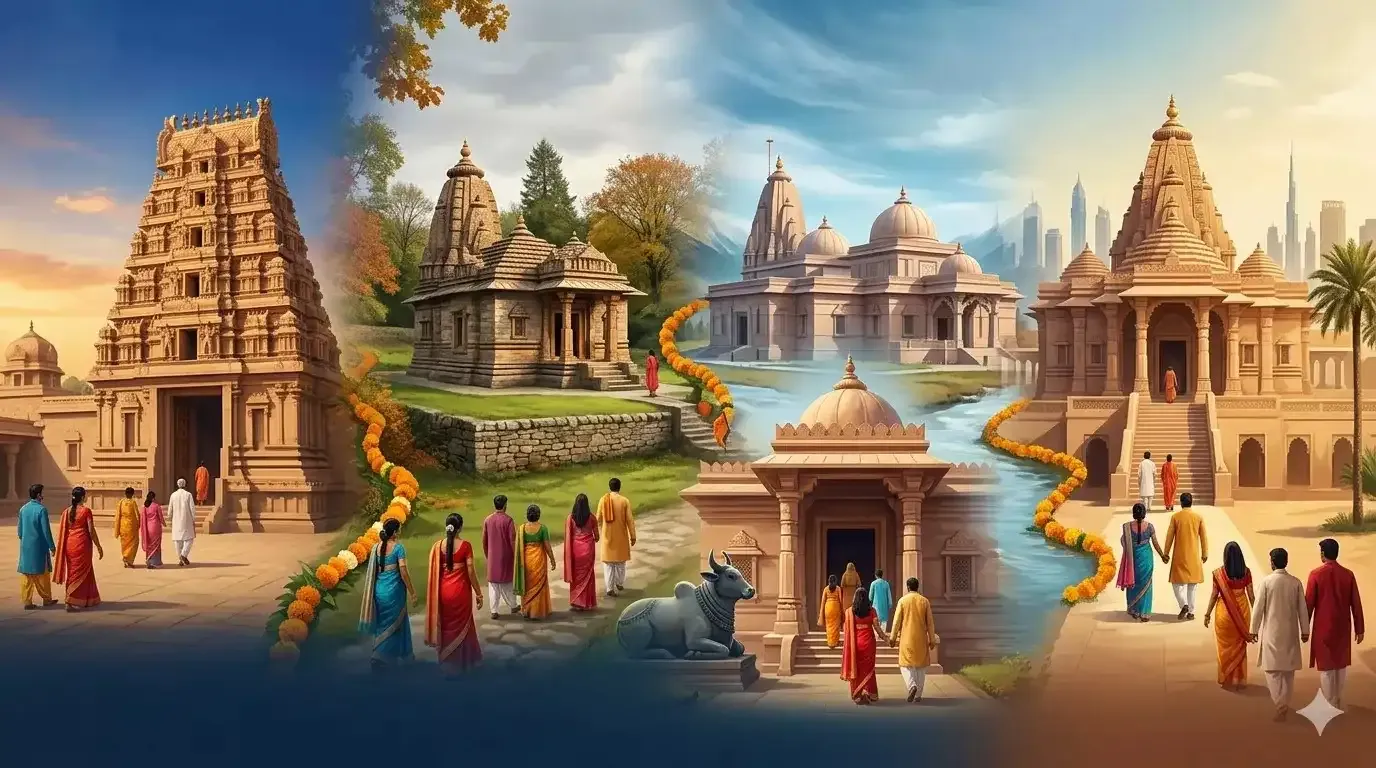
Karthika Masam Fasting Rules for NRIs 2026: Spiritual Benefits, Vratam Food, Challenges and How to Observe It Abroad
How NRIs can observe Karthika Masam 2026 abroad: fasting rules, Somavaram options, vratam food, spiritual benefits, cold-weather and work challenges, and safety.

Quick answer: NRIs can observe Karthika Masam 2026 sincerely from anywhere. In India the month runs from 10 November to 8 December (Telugu amanta calendar); in the USA, UK and Canada many local calendars start it on Monday 9 November. Choose a fast that suits your health and work, light a lamp at local sunset, pray daily and follow your city's panchangam.
Karthika Masam is a sacred period associated with the worship of Lord Shiva, Lord Vishnu, Goddess Tulasi and Lord Kartikeya. Devotees traditionally observe early-morning baths, the daily Deepam, vegetarian food, Monday fasting, Ekadashi vratam, Tulasi worship, prayer and charity.
But what happens when a devotee lives in New York, London, Toronto, Melbourne, Dubai or Singapore? Can an NRI observe Karthika Masam without visiting a temple every day? Is it necessary to wake before sunrise in freezing weather? Can working professionals observe Somavaram fasting? What can be cooked with ingredients available abroad? Should devotees follow Indian or local timings?
Karthika Masam can be observed meaningfully from anywhere in the world. Traditional practices can be adapted to local circumstances while keeping their devotional purpose. Devotion should be practical, safe and sincere, not a competition to keep the strictest fast.
Karthika Masam 2026 for NRIs: quick guide
- Karthika Masam begins (India, Telugu amanta calendar): 10 November
- Karthika Masam ends (India, Telugu amanta calendar): 8 December
- Karthika Somavaram in India: 16, 23 and 30 November and 7 December
- Karthika Pournami: 24 November
- USA, Canada and UK: many local calendars start the month on 9 November, giving five Mondays
- Daily Deepam: at local sunrise or sunset, according to your tradition
- Ekadashi: follow your local Ekadashi date and parana time
Important for NRIs: a tithi is a single astronomical event, but the civil date on which it is observed can differ by location. A date shown for Hyderabad is not automatically correct for New York, London, Toronto or Sydney. Use a panchangam set to your own city and confirm festival days with your local temple; some temples abroad follow the Indian calendar or a particular sampradaya's calendar.
Why Karthika Masam is considered so sacred
The month is associated with Lord Shiva, Lord Vishnu, Goddess Tulasi and Lord Kartikeya, and the Skanda Purana and other traditional texts praise worship, prayer, charity, fasting and lamp-lighting during this period. It is not simply about avoiding certain foods: it is a chance to bring discipline into daily life, reduce distractions and deepen devotion. For families abroad it is also a beautiful way to connect children with Hindu traditions.
Lord Shiva in Karthika Masam
- Chanting Om Namah Shivaya.
- Shiva Abhishekam where possible.
- Offering Bilva leaves.
- Observing Karthika Somavaram vratam.
- Reading or listening to the Shiva Purana.
- Visiting Shiva temples and lighting a Deepam with devotion.
Lord Vishnu in Karthika Masam
- Chanting Om Namo Bhagavate Vasudevaya.
- Worshipping Lord Damodara.
- Tulasi Puja and Tulasi Vivah.
- Observing Ekadashi.
- Reading Vishnu Sahasranamam.
- Offering lamps to Lord Vishnu.
Goddess Tulasi
Tulasi is worshipped as a sacred embodiment of devotion and purity. Many families offer water, flowers and a lamp to the Tulasi plant during Karthika Masam. In an apartment, an indoor plant where practical, or a devotional image, can be used according to family tradition.
Traditional Karthika Masam fasting rules
Fasting in Karthika Masam is an expression of devotion and self-discipline. Families and regions follow different rules; these are the most common.
Rule 1: Follow a vegetarian diet
Many devotees avoid chicken, mutton, fish, eggs and other meat products for the whole month, and many also avoid alcohol and tobacco. Abroad this is often easy to keep, because lentils, rice, vegetables and dairy are widely available.
Rule 2: Avoid onion and garlic if your family does
Many families keep a sattvic routine without onion and garlic, but this is not universal. Follow the practice of your family, guru, sampradaya or temple.
Rule 3: Eat simple, sattvic food
The focus is simplicity: rice and dal, curd rice, vegetable pongal, idli, upma, chapati with a vegetable curry, fruit, milk, nuts, khichdi and homemade vegetable soups. All can be made with ingredients from local supermarkets and Indian grocery stores.
Rule 4: Observe Karthika Somavaram
Monday is sacred to Lord Shiva. Common forms of the Somavaram vratam:
- Strict fast: no regular food for the prescribed period, according to family tradition.
- Phalaharam: fruits, milk and permitted fasting foods.
- Ekabhuktam: one main meal in the day.
- Naktam: one meal after the evening worship or lamp-lighting.
- Simple vegetarian observance: for those who cannot fast, a simple vegetarian diet with time set aside for prayer.
Choose according to your health, family tradition and circumstances. For details see our guide to Karthika Somavaram upavasam rules.
Rule 5: Observe Ekadashi
Ekadashi is a key fasting day for Vishnu devotees: fast according to your capacity, chant Vishnu mantras, avoid grains if your tradition prescribes it, pray in the evening and break the fast at your local parana time. Smarta and Vaishnava rules can differ, so do not assume one calendar fits everyone.
Rule 6: Light the daily Deepam
Lighting a lamp with ghee or sesame oil is the most recognisable Karthika practice; it stands for spiritual illumination and the removal of ignorance. Light it at your home altar or another safe, permitted place. Where open flames are not allowed, an electric diya is a practical alternative.
Rule 7: Keep discipline in daily life
Fasting is not only about food. Devotees also try to speak truthfully, avoid arguments and anger, give up harmful habits, help people in need, read spiritual literature, keep the home clean and avoid waste.
Spiritual benefits of Karthika Masam fasting
Scriptures and devotional traditions praise Karthika Masam as a time of great spiritual merit. The benefits below are understood in a religious and devotional sense; they are not guaranteed material outcomes or medical claims.
- Devotion to Lord Shiva: Somavaram worship and chanting Om Namah Shivaya deepen the devotee's connection with Shiva.
- Connection with Lord Vishnu: Tulasi Puja, Ekadashi, Damodara worship and Vishnu Sahasranamam cultivate humility and remembrance of the divine.
- Self-discipline: simple food, fewer distractions and a daily prayer routine build self-control.
- Peace of mind: daily prayer gives busy professionals a regular time for reflection and calm.
- Gratitude: lighting a lamp is a daily reminder to be thankful for family, food, shelter and health.
- Charity and compassion: dana can be practised wherever you live, through food banks, helping elders or supporting children in need.
- Family and cultural ties: explaining the month to children preserves language, culture and spiritual knowledge across generations.
- Awareness of habits: the aim is not merely to complete a fast but to cultivate better conduct.
Why Karthika Masam is difficult for NRIs, and practical solutions
Cold weather
Karthika falls in November and December, when much of the USA, Canada, the UK and Europe has cold, dark mornings. Use warm water, take a normal bath with a prayerful intention and avoid unsafe exposure to cold. A cold-water bath should never become a test of endurance.
Different sunrise and sunset times
Indian panchangams list Indian sunrise and sunset; these cannot simply be converted. Sunset in London in November comes far earlier than many families expect. Use a panchangam set to your own city and light the evening Deepam at your local sunset.
Office hours and professional commitments
Long hours, night shifts, international calls, physical work and commuting can make a strict fast unsafe. Choose a sustainable method: a simple vegetarian meal, a short mantra session and the evening Deepam. A sincere observance that fits a responsible working routine is better than an unsustainable fast.
Children's school and activities
Make the practice simple and educational: explain the month, teach Om Namah Shivaya, light the evening lamp together, read one short story, cook one traditional dish and visit a temple at the weekend. Do not force children to fast strictly.
Limited access to temples
Some families live an hour or two from the nearest temple. A home puja with an image or murti, a small lamp, flowers, water and sincere prayer is enough for a daily routine; attend temple programmes at weekends when you can.
Puja items that are hard to find
Bilva or Tulasi leaves, cotton wicks, sesame oil or particular flowers can be hard to find abroad. Shop at Indian grocery stores before the month begins, keep a small puja kit and use substitutes your family tradition accepts. Do not delay prayer because one item is missing; our Karthika Masam puja samagri checklist helps you plan.
Different food habits at home
Children eat school meals and spouses may keep different schedules. Cook a shared vegetarian meal where possible; a family can keep a devotional food routine without everyone observing an identical fast.
Apartments with fire restrictions
Many buildings restrict open flames, smoke and incense. Use a stable, heat-resistant diya plate in a permitted place, never leave a lamp unattended, and use an electric diya where flames are prohibited. See Karthika deepam safety in apartments and abroad.
Missing family celebrations in India
Many NRIs miss the temple visits, river baths and rows of lamps of their hometowns. Hold a small family prayer, join relatives in India by video call, listen to the Karthika Puranam and build new traditions abroad.
India dates versus local dates
Some families follow the Indian calendar, others a local city panchangam, which can change the month's start and the number of Mondays. Pick one consistent calendar authority and confirm with the temple you attend; don't mix Indian sunrise, local sunrise and temple programme dates.
Country notes for NRI families
USA
Cold mornings, short days, long commutes and long drives to temples are common, and East Coast and West Coast dates can differ. Keep a short morning prayer, your chosen vegetarian practice and the evening Deepam after local sunset, and save longer pujas for weekends. City dates: Karthika Masam 2026 in the USA.
Canada
Toronto, Brampton, Vancouver, Calgary, Edmonton and Ottawa bring freezing mornings, snow and early darkness. Use warm water, keep an indoor altar and lamp, and avoid outdoor rituals in severe weather. City dates: Karthika Masam 2026 in Canada.
United Kingdom
Rain, cold, very early sunsets, busy commutes and apartment fire rules are the main hurdles. Keep the morning prayer short and make the evening Deepam a family routine; check your temple's Somavaram and Pournami programmes. City dates: Karthika Masam 2026 in the UK.
Australia
November and December fall in the Australian spring and early summer, with heat in some regions and long distances to temples. Use local sunrise and sunset, stay hydrated and choose a suitable fasting method. City dates: Karthika Masam 2026 in Australia.
Dubai and the UAE
Long hours, shift work, travel time to temples and accommodation rules on open flames are common. Keep a small home prayer space, a suitable vegetarian routine and a short mantra, and attend temple events when possible. Guide: Karthika Masam 2026 in Dubai and the UAE.
Singapore and Malaysia
Established temples are close by for many families, but work and commuting still limit daily rituals. Attend temple worship when possible and keep the home Deepam, Monday and Ekadashi observances. Guide: Karthika Masam 2026 in Singapore.
Germany and Europe
Cold, early darkness and distant temples call for warm-water bathing, an indoor altar, local vegetarian ingredients and a weekend family prayer.
A practical daily routine for NRI families
Morning
- Wake at a time that is safe and practical.
- Bathe, with warm water if needed.
- Clean the home altar.
- Offer a short prayer to Lord Shiva and Lord Vishnu.
- Chant Om Namah Shivaya or Om Namo Bhagavate Vasudevaya.
- Read a short devotional passage.
During the working day
- Keep your chosen vegetarian food practice.
- Avoid arguments and negative behaviour.
- Take a short prayer break if practical.
- Don't let fasting burden your professional responsibilities.
Evening
- Light a lamp safely at local sunset.
- Offer flowers or water where appropriate.
- Chant a short mantra.
- Read or listen to the Karthika Puranam.
- Share the day's devotional moment with your family, and help someone in need when you can.
Weekends
Use weekends for temple visits, Shiva Abhishekam, Vishnu Sahasranamam, Tulasi Puja, family bhajans, Puranam reading and community service.
Karthika Masam fasting food abroad
What you can eat depends on your fast and family tradition. A simple day might look like this:
- Breakfast: idli, plain upma or fruit
- Lunch: rice, dal and a vegetable curry
- Evening: fruit, milk or permitted nuts
- Dinner: vegetable khichdi, pongal or curd rice
Common sattvic ingredients are rice, moong dal, milk, curd, fruit, seasonal vegetables, coconut, nuts, ghee and mild spices. Indian grocery stores, Asian supermarkets, farmers' markets, mainstream supermarkets and online grocers all stock them. Buy only what you need and avoid waste. More ideas: Karthika Masam fasting recipes for NRIs and the Karthika Masam rules and food guide.
Remember: fasting food rules differ between families and sampradayas; a food allowed in one vratam may not be allowed in another.
Simple mantras for NRIs
- Om Namah Shivaya: a devotional salutation to Lord Shiva, among the most widely recited Shiva mantras.
- Om Namo Bhagavate Vasudevaya: a devotional mantra to Lord Vishnu.
- Tulasi Devi Namastubhyam: a salutation to Goddess Tulasi used in daily worship.
- Deepam Jyoti Parabrahma, Deepam Sarva Tamopaham: a traditional lamp prayer honouring the divine light that removes darkness.
- Maha Mrityunjaya Mantra: Om Tryambakam Yajamahe Sugandhim Pushtivardhanam, Urvarukamiva Bandhanan Mrityor Mukshiya Maamritat.
Rituals NRIs can perform at home
- Karthika Snanam: a regular warm bath with a prayer; there is no need to face freezing conditions.
- Karthika Deepam: a lamp in a safe place, or an electric diya where flames are not allowed.
- Tulasi Puja: water, flowers and prayer to Tulasi, or to an image if a live plant isn't possible.
- Karthika Somavaram: a short Monday puja to Shiva with a fast that suits you.
- Ekadashi: fast according to your tradition and break it at your local parana time.
- Karthika Pournami: a morning bath, Shiva and Vishnu worship, lamps where safe, scripture reading, a temple visit and charity. See Karthika Pournami 2026.
Can NRIs observe Karthika Masam without a temple?
Yes. A temple visit is valuable, but living near a temple is not required. A clean prayer space, an image or murti, a small lamp or electric diya, flowers if available, water, a short mantra and a few minutes of prayer make a complete home observance. Your observance is not incomplete because you cannot visit a temple every day.
Fasting safety for NRIs
Religious fasting should never harm your health, and a strict fast is not for everyone.
- People with diabetes, kidney disease, heart conditions, low blood pressure, eating disorders or other medical conditions should consult a qualified healthcare professional before fasting.
- Pregnant or breastfeeding women, children, elderly people and anyone on regular medication should not fast strictly without professional advice.
- For people with diabetes, fasting can cause low or high blood sugar and dehydration; do not change medication or meal times without medical advice.
- Stay hydrated if your fast permits fluids, never skip essential medication, avoid strenuous activity on a strict fast, and stop and seek help if you feel dizzy, faint or very weak.
If fasting is not suitable, prayer, the Deepam, charity, vegetarian food and scripture reading are meaningful alternatives.
What if you cannot follow every rule?
Night shifts, health conditions, childcare or exams can make the full routine impossible. No single rigid routine applies to every household. Light one lamp daily, chant one mantra, keep vegetarian food if that is your family tradition, observe selected Somavarams, read a short passage, donate food or clothing and pray with your family. Don't compare your practice with anyone else's: the purpose is devotion, humility, discipline and compassion.
Teaching children Karthika Masam abroad
- Explain the meaning of Karthika Masam.
- Explain why Hindus worship Lord Shiva and Lord Vishnu.
- Teach one simple mantra.
- Explain the symbolism of the Deepam.
- Read one devotional story each evening.
- Cook a traditional vegetarian meal together.
- Take them to a local Hindu temple.
Children should not be pressured into strict fasting; the aim is understanding and a positive relationship with their heritage. More ideas: Karthika Masam activities for kids.
A 30-day practice plan for NRI families
Adapt these suggestions to the lunar dates in your local calendar; they are ideas, not religious requirements.
- Days 1–7: begin with prayer; learn what Karthika Masam means; chant Om Namah Shivaya; light a family Deepam; read a Shiva story; practise kindness; donate food.
- Days 8–14: read about Lord Vishnu; perform Tulasi Puja; learn a new mantra; keep Ekadashi if it falls; listen to Vishnu Sahasranamam; help an elderly person; cook a traditional vegetarian meal.
- Days 15–21: hold a family prayer; keep Somavaram; read the Karthika Puranam; visit a temple if possible; practise gratitude; offer a Deepam; join Tulasi worship.
- Days 22–30: donate clothes or food; chant a Shiva mantra; sing family bhajans; learn about Karthika Pournami and join the Pournami worship; help someone in need; read a devotional passage; reflect on the month; close with prayer and gratitude.
A message for every Hindu living outside India
You may live far from your birthplace, without a river for Karthika Snanam or a Shiva temple nearby, working long hours or raising children in a new country. The light of devotion does not depend on geography. A small lamp in a New Jersey apartment, a prayer in a London home, a Tulasi plant in a Sydney garden or a mantra in a Dubai household can all be meaningful expressions of devotion.
May Lord Shiva bless every family with peace, may Lord Vishnu guide every devotee towards righteousness, and may Goddess Tulasi bless every home. Om Namah Shivaya. Om Namo Bhagavate Vasudevaya.
Frequently Asked Questions
Can NRIs observe Karthika Masam while living outside India?
Yes. Hindus can observe Karthika Masam anywhere through home worship, the Deepam, mantra chanting, a suitable fast, vegetarian food, charity and temple visits when available.
Is it compulsory to bathe before sunrise during Karthika Masam?
An early bath is traditional, but devotees in cold climates can use warm water and follow a safe, practical routine. Health and safety come first.
Can I observe Karthika Somavaram while working in the USA?
Yes. Choose a fasting method that suits you and do a short Shiva puja before or after work. A strict fast is not compulsory.
Should NRIs follow Indian or local panchangam timings?
Use a reliable panchangam set to your own city and confirm important days with your temple or family tradition. Do not convert Indian sunrise, sunset or parana times.
Can I light the Karthika Deepam in an apartment?
Yes, if your building allows it. Use a stable, heat-resistant surface and never leave a lamp unattended; where flames are prohibited, use an electric diya.
Can people with diabetes observe the Karthika Masam fast?
They should consult their healthcare professional first, since fasting affects blood sugar and medication. A non-fasting devotional observance may be more suitable.
Is it necessary to fast on every Monday?
No. Observe the Mondays you can, according to your capacity and family tradition. In India the four Karthika Somavarams of 2026 are 16, 23 and 30 November and 7 December.
Related guides
Share this with family and friends
Send it on WhatsApp, post it, or copy the link.
More from Festivals
- Karthika Puranam Chapter 14 (Adhyaya 14) in English: Story, Meaning and Lesson | Karthika Masam 2026 Day 14
- Karthika Puranam Chapter 13 (Adhyaya 13) in English: Story, Meaning and Lesson | Karthika Masam 2026 Day 13
- Karthika Puranam Chapter 12 (Adhyaya 12) in English: Story, Meaning and Lesson | Karthika Masam 2026 Day 12
- Karthika Puranam Chapter 11 (Adhyaya 11) in English: Story, Meaning and Lesson | Karthika Masam 2026 Day 11
- Karthika Puranam Chapter 10 (Adhyaya 10) in English: Story, Meaning and Lesson | Karthika Masam 2026 Day 10
You might also like
Sawan Somwar 2026: 4 Mondays, Vrat Vidhi & Mantras | HinduTone
Hindu Dharma Worldwide: Complete NRI Diaspora Guide to Festivals, Temples, Mantras & Traditions (USA, UK, Canada, Australia, UAE & Europe — 2026)
Hindu Temples & Festivals in Europe — Complete NRI Guide to Sanatana Dharma Across the Continent (2026)