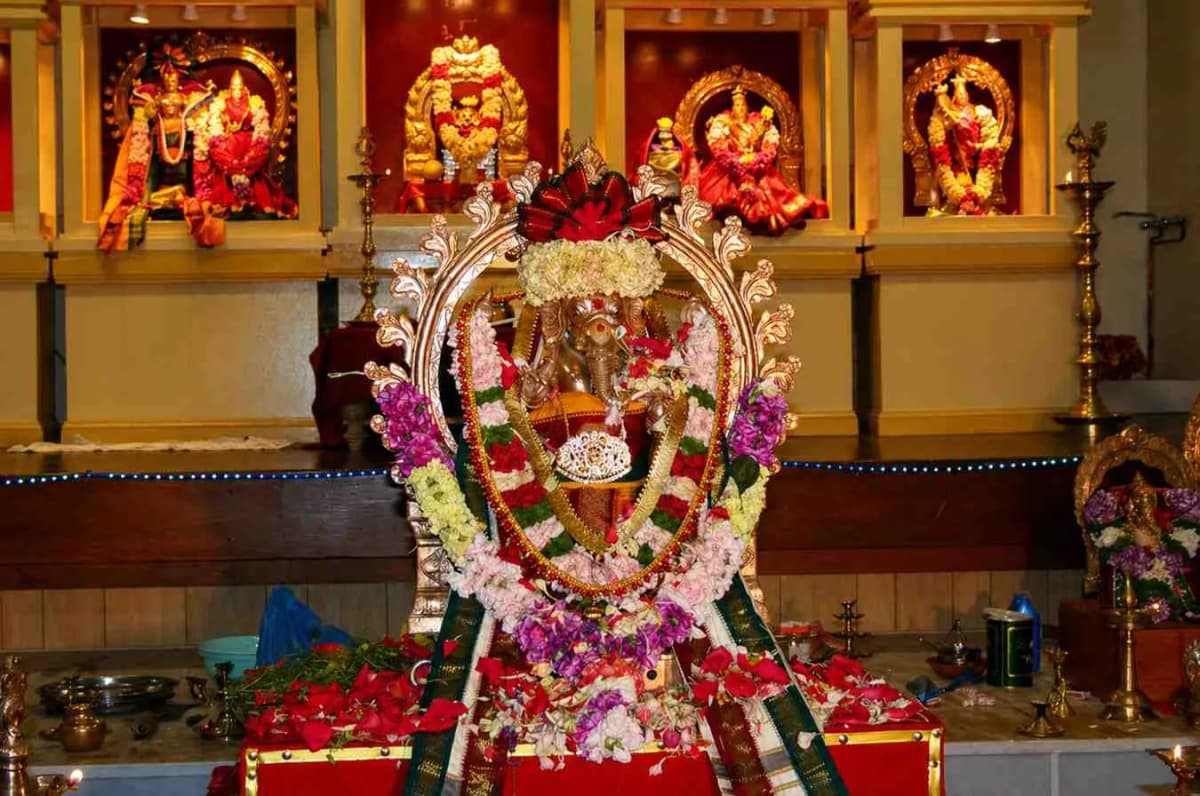
Diwali 2026 — Sun 8 November: Complete 5-Day Festival Guide, Muhurat, Rituals & NRI Country-Wise Celebrations
Diwali 2026 falls on Sunday 8 November (Kartika Amavasya). Complete devotional guide: 5-day schedule (Dhanteras Fri 6 Nov → Bhai Dooj Tue 10 Nov), city-wise Lakshmi Puja muhurat (India / USA / UK / Canada / Australia / UAE / Singapore / NZ), spiritual significance from Ramayana + Bhagavata Purana, detailed rituals, country-wise NRI celebrations, sacred mantras and closing blessings.
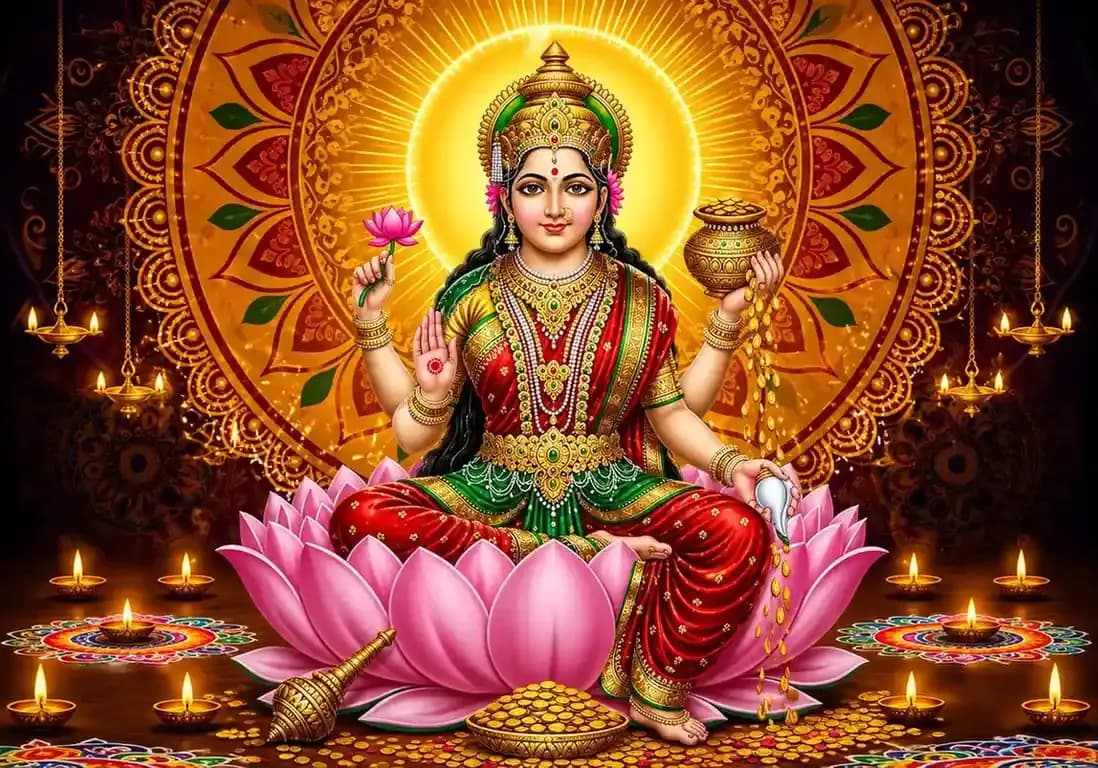
Diwali 2026 falls on Sunday 8 November (Kartika Amavasya). Complete devotional guide: 5-day schedule (Dhanteras Fri 6 Nov → Bhai Dooj Tue 10 Nov), city-wise Lakshmi Puja muhurat (India / USA / UK / Canada / Australia / UAE / Singapore / NZ), spiritual significance from Ramayana + Bhagavata Purana, detailed rituals, country-wise NRI celebrations, sacred mantras and closing blessings.
Diwali 2026 — the main Lakshmi Puja night — falls on Sunday, 8 November 2026 (Kartika Amavasya). The five-day festival of lights runs from Dhanteras (Fri 6 Nov) to Bhai Dooj (Tue 10 Nov). This is HinduTone's complete devotional + practical guide for the global Hindu diaspora — verified dates, muhurat windows, five-day rituals, spiritual significance from the Ramayana + Bhagavata Purana, country-wise NRI celebrations (USA, UK, Canada, Australia, UAE, Singapore, NZ, South Africa, Malaysia, Fiji, Mauritius, Europe), sacred mantras, and closing blessings.
Om Shri Mahalakshmyai Namah • Om Shri Ganeshaya Namah • Om Shri Ramaya Namah
When is Diwali 2026? Five-Day Schedule
Main Diwali (Lakshmi Puja): Sunday, 8 November 2026 (Kartika Amavasya).
- Day 1 · Dhanteras (Dhantrayodashi): Friday, 6 November 2026 — purchase gold/silver/utensils, Yama Deepam at south-facing entrance.
- Day 2 · Choti Diwali / Naraka Chaturdashi / Kali Chaudas: Saturday, 7 November 2026 — pre-sunrise Abhyanga Snan (sesame oil bath); principal day in South India (Krishna's victory over Narakasura).
- Day 3 · Main Diwali / Lakshmi Puja / Deepavali: Sunday, 8 November 2026 — the heart of the festival.
- Day 4 · Govardhan Puja / Annakut / Bali Pratipada / Padwa: Monday, 9 November 2026 — mountain of vegetarian food offered to Krishna.
- Day 5 · Bhai Dooj / Bhaiya Dooj: Tuesday, 10 November 2026 — sisters apply tilak, pray for brothers' long life.
Regional note: In Tamil / Telugu / Kannada tradition, Naraka Chaturdashi (Sat 7 Nov) is the principal day — Abhyanga Snan before sunrise. In Gujarati / Maharashtrian communities, celebrations may extend a day earlier with Govatsa Dwadashi or Vagh Baras.
Lakshmi Puja Muhurat — City-Wise (8 November 2026)
Pradosh Kaal (after sunset) is the primary Lakshmi-Ganesha puja window on Amavasya night. Approximate timings — verify with your regional Panchang:
- India (IST): ~5:54 PM to 7:50 PM (Delhi window; ±20 min city-wise).
- London / UK (GMT): ~5:30 PM to 7:25 PM local (post-clock-change).
- New York / US Eastern: Local Pradosh window ~5:15 PM to 7:00 PM ET.
- Los Angeles / US Pacific: Local Pradosh window ~5:30 PM to 7:15 PM PT.
- Toronto / Canada ET: ~5:15 PM to 7:00 PM local.
- Sydney / Melbourne AEDT: ~7:55 PM to 9:40 PM local.
- Dubai / UAE Gulf Time: ~6:00 PM to 7:45 PM local.
- Singapore SGT: ~7:15 PM to 9:00 PM local.
- Auckland NZDT: ~8:30 PM to 10:15 PM local (or shift to Mon 9 Nov practicality).
For minute-precision, cross-check with Drik Panchang adjusted to your city's longitude and latitude.
The Deep Spiritual Significance
From the Ramayana: After 14 years of vanavas and the destruction of the ten-headed Ravana, Lord Rama returned to Ayodhya with Mother Sita and Lakshmana. The people of Ayodhya illuminated the entire city with rows of lamps to welcome their beloved king. Diwali is the celebration of the return of Dharma and righteous rule.
From the Bhagavata Purana: On Naraka Chaturdashi, Lord Krishna — accompanied by Satyabhama — destroyed the powerful asura Narakasura, freeing 16,000 imprisoned princesses and restoring light to the world. This symbolizes the destruction of inner demons — ego, greed, anger, and ignorance.
Goddess Mahalakshmi worship: On the main night, we invoke Mahalakshmi alongside Lord Ganesha. Lakshmi is not merely the giver of material wealth; she is the bestower of spiritual wealth — purity of heart, generosity, and devotion. Ganesha removes obstacles so true prosperity can enter and remain.
Govardhan Puja: Reminds us of Krishna's lifting of Govardhan Hill to protect Vrindavan from Indra's wrath — humility, gratitude to nature, supremacy of pure devotion over ritualistic pride.
Bhai Dooj: Celebrates the sacred bond of protection between brothers and sisters — Dharma and compassion.
In essence: Diwali is the festival of inner illumination. The outer lamps mirror the light of Atman within every being. When we light a diya, we pray: "O Divine Light, remove the darkness of ignorance from my heart and fill me with the radiance of knowledge, love, and selfless service."
Detailed Five-Day Rituals
Day 1 — Dhanteras (Fri 6 Nov 2026)
Dedicated to Lord Dhanvantari (the divine physician who emerged from the ocean of milk with the pot of Amrit) + Goddess Lakshmi as the bestower of wealth. Auspicious to purchase gold, silver, utensils, or new home items. In the evening, light a Yama Deepam outside facing south to seek protection from untimely death. Begin thorough home cleaning + decorations. NRI tip: order Indian sweets/puja items now — shipping delays compound in the week before Diwali.
Day 2 — Choti Diwali / Naraka Chaturdashi (Sat 7 Nov 2026)
Rise before sunrise for Abhyanga Snan — ritual bath with sesame oil applied to head + body, followed by bath. Purifies body and mind for the main night. Principal day in South Indian tradition. Light lamps in the evening, share special sweets, prepare for the main night.
Day 3 — Main Diwali / Lakshmi Puja (Sun 8 Nov 2026)
The heart of the festival. Ritual sequence:
- Deep-clean the entire home; draw beautiful rangoli at the entrance.
- Set up puja altar: kalash with coconut + 5 mango leaves + Ganga jal, idols/images of Mahalakshmi + Ganesha, ghee diyas, incense.
- During Pradosh Kaal (post-sunset), perform Lakshmi-Ganesha Puja: sankalpam, avahanam, panchamrit abhishekam, sandalwood + akshat + red flowers, 21+ diyas lit.
- Offer sweets, fruits, coins, gold ornaments to the altar. Chant Lakshmi mantras (see below).
- Read the Lakshmi Ashtottara (108 names) or the Sri Suktam.
- Aarti of Mahalakshmi followed by Ganesha aarti.
- Distribute prasad. Family feast.
- Burst eco-friendly fireworks where permitted; enjoy family time.
Day 4 — Govardhan Puja / Annakut (Mon 9 Nov 2026)
Prepare Annakut — a "mountain of food": 56 varieties (Chappan Bhog) in Vaishnava tradition, or as many vegetarian dishes as your family can prepare. Offer to Lord Krishna. Circumambulate the Annakut or a symbolic Govardhan made of cow dung / food. Share prasad with family, neighbors, and the needy.
Day 5 — Bhai Dooj (Tue 10 Nov 2026)
Sisters apply tilak to brothers, perform aarti, pray for their long life and protection. Brothers give gifts and vow to protect their sisters. Long-distance siblings: video-call with virtual tilak — the emotional bond crosses oceans without diminishing.
Diwali 2026 for NRIs — Country-Wise
USA (4.5M+ Indian-origin community)
Vibrant across New Jersey (Edison / Iselin), California (Bay Area / LA), Texas (Houston / Dallas), New York, Illinois (Chicago), Florida, Atlanta. Major temples: BAPS Swaminarayan Mandirs (multiple states), Hindu Temple of Atlanta, SV Temple Pittsburgh, Malibu Hindu Temple, Bharatiya Temple Michigan. Grand Lakshmi Pujas, cultural programs, Annakut, community melas, rangoli competitions, interfaith events. California Assembly + growing state recognitions have made Diwali a mainstream holiday. See our Diwali 2026 USA state-wise city-wise guide.
Canada
Toronto, Brampton, Mississauga, Vancouver, Calgary, Edmonton, Montreal — some of the largest celebrations outside India. Cold November weather doesn't dampen the spirit; indoor decorations + community halls filled with lights + warm prasad create joyful atmospheres. Provincial recognitions + school cultural programs help second-generation children stay connected. See Diwali 2026 Canada comprehensive guide.
United Kingdom
Leicester's Golden Mile (Belgrave Road) hosts one of the biggest Diwali celebrations outside India — massive light switch-on, processions, cultural performances. London: Trafalgar Square events, BAPS Neasden Temple (Europe's first traditional Hindu temple), Shri Sanatan Mandir Wembley, ISKCON Bhaktivedanta Manor. Lakshmi Puja timings adjust to GMT after the late-October clock change. See Diwali 2026 UK region-wise + city-wise guide.
Australia
Sydney, Melbourne, Brisbane, Perth, Adelaide — large-scale weekend events. Because Diwali falls on a Sunday in 2026, many families enjoy extended celebrations without work interruptions. AEDT Pradosh windows in the evening. See Diwali 2026 Australia complete city-wise events.
UAE — Dubai, Abu Dhabi, Sharjah
Large Indian expatriate community transforms residential areas and temples with lights. Dubai's Indian associations + temples hold special pujas. Fireworks (where allowed) + family gatherings. Proximity to India means many travel home, but those who stay create equally vibrant celebrations. See Diwali 2026 Dubai — complete celebration guide.
Singapore
Little India transforms with lights + decorations weeks in advance. Deepavali is a public holiday. Tamil + North Indian communities celebrate with traditional fervor — temple visits, open houses, community feasts. Multicultural fabric makes Diwali a shared festival.
New Zealand
Auckland, Wellington, Christchurch — temple events + community gatherings. Smaller but dedicated community maintains strong traditions through associations and home pujas. See How New Zealand celebrates Diwali 2026.
South Africa
Durban + Johannesburg have historic Indian communities that celebrate with great enthusiasm. Temples + cultural organizations organize large events reflecting both North + South Indian traditions. See South Africa Diwali 2026 complete festival guide.
Malaysia
Kuala Lumpur + cities with significant Indian populations light up. Public holiday in most states. Open houses welcome all backgrounds. See Must-visit Hindu temples in Malaysia during Diwali 2026.
Fiji + Mauritius
Large populations of Indian origin — Diwali is a major national-level celebration. Homes, streets, temples glow with lights. Traditional rituals preserved with deep devotion. In Mauritius, Diwali is a public holiday.
Europe — Germany, France, Netherlands, Switzerland
Frankfurt, Berlin, Paris, Amsterdam, Zurich — growing Indian communities organize temple pujas + cultural programs + family events. Many NRIs travel within Europe to join larger gatherings. See Diwali 2026 European countries complete guide.
Practical Guidance for NRI Families
- Order early: rakhis, sweets, diyas, puja items, traditional clothes → weeks in advance if shipping from India / specialty stores.
- Local resources: visit Indian grocery stores for fresh ingredients. Many temples sell puja kits.
- Virtual family: schedule video calls with India family during your muhurat window — extended family participates together across timezones.
- Eco-friendly: clay diyas over plastic, natural rangoli colours over synthetic dyes, green fireworks where possible. Follow local fire ordinances (many US cities restrict fireworks).
- Involve children: tell the stories of Rama + Krishna, teach simple mantras, let them light their own diyas under supervision. Watch a Ramayana or Krishna cartoon together.
- Charity — the true Lakshmi lives where generosity flows: donate to temples, feed the needy, support dharmic causes.
- Photography before puja: capture rangoli + altar + family portraits before the puja starts — the muhurat window is short and rushed.
- Prasad packaging: pack small boxes of sweets to distribute to neighbors of all faiths — beautiful cultural bridge-building.
Sacred Mantras for Diwali 2026
Lakshmi Beej Mantra:
ॐ श्रीं ह्रीं श्रीं कमले कमलालये प्रसीद प्रसीद / ॐ श्रीं ह्रीं श्रीं महालक्ष्म्यै नमः ॥
Sri Suktam (opening verse):
हिरण्यवर्णां हरिणीं सुवर्णरजतस्रजाम्। चन्द्रां हिरण्मयीं लक्ष्मीं जातवेदो म आवह ॥
Ganesha invocation:
ॐ गं गणपतये नमः / वक्रतुण्ड महाकाय सूर्यकोटि समप्रभ / निर्विघ्नं कुरु मे देव सर्व-कार्येषु सर्वदा ॥
Simple Lakshmi Aarti opening:
ॐ जय लक्ष्मी माता, मैया जय लक्ष्मी माता / तुमको निशदिन सेवत, हरि विष्णु विधाता ॥
For the complete text + audio + English meaning: Complete Diwali 2026 mantras guide for NRIs • Vishnu Sahasranama — Sunday practice guide • Lalita Sahasranama — Friday practice for Devi.
Closing Blessings
Whether you are in a high-rise in Manhattan, a suburb in Toronto, a flat in London, a home in Melbourne, or a villa in Dubai — the same Goddess Lakshmi is waiting to enter when the door of your heart is open. Light the diya not only outside but also inside. Every lamp reminds us of the eternal promise of Sanatana Dharma: darkness is temporary, light is eternal.
May Goddess Mahalakshmi bless you with unending prosperity. May Lord Ganesha remove every obstacle from your path. May Lord Rama guide your life with righteousness. May Lord Krishna fill your heart with pure devotion. May this Diwali 2026 illuminate your family with health, harmony, success, and spiritual progress.
Shubh Deepavali! Happy Diwali 2026 to all NRIs and Hindus worldwide!
Jai Shri Ram • Jai Shri Krishna • Jai Mata Lakshmi • Om Shanti Shanti Shanti
Related deep-dives: Dhanteras 2026 date + muhurat + puja vidhi • Naraka Chaturdashi / Choti Diwali 2026 • Govardhan Puja 2026 — Krishna's Divine Protection • Bhai Dooj 2026 date + muhurat • Diwali Wishes Collection 2026 • Eco-Friendly Cracker-Free Diwali 2026.
Your complete Diwali 2026 guide
Explore every part of the five-day festival:
- Diwali 2026 date & Lakshmi Puja muhurat
- Lakshmi Puja muhurat — city-wise timings
- The five days of Diwali explained
- Naraka Chaturdashi / Choti Diwali 2026
- Deepavali 2026 (South Indian / Tamil)
- Diwali sweets & festive recipes
- Diwali puja samagri checklist
- Diwali rangoli designs
- Diwali 2026 in the USA
- Diwali 2026 in the UK
- Diwali 2026 in Canada
- Diwali 2026 wishes & greetings
Frequently Asked Questions
When is Diwali 2026?
Diwali (Lakshmi Puja) 2026 falls on Sunday, 8 November 2026 (Kartik Amavasya). The five-day festival runs from Dhanteras on 6 November and Naraka Chaturdashi (Choti Diwali) on 7 November, through Diwali / Lakshmi Puja on 8 November, followed by Govardhan Puja and Bhai Dooj.
What is the Lakshmi Puja muhurat on Diwali 2026?
Lakshmi Puja is performed in the Pradosh Kaal after sunset on 8 November 2026. The exact muhurat window shifts by city, so confirm the timing for your location on a reliable panchang.
What are the five days of Diwali?
Dhanteras, Naraka Chaturdashi (Choti Diwali), Diwali (Lakshmi Puja), Govardhan Puja / Annakut, and Bhai Dooj — five connected days of light, prosperity and family.
How is Diwali celebrated?
Homes are cleaned and decorated with rangoli and rows of diyas, families perform Lakshmi–Ganesh puja after sunset, and the day is marked with new clothes, sweets, gifts and fireworks welcoming prosperity and the victory of light over darkness.
What is the difference between Diwali and Deepavali?
They are the same festival. Deepavali is the South Indian and Tamil name, traditionally observed on Naraka Chaturdashi (7 November 2026), while much of North India celebrates Lakshmi Puja on the amavasya night (8 November 2026).
Diwali 2026 Around the World — Country & City Guides
Celebrating Diwali 2026 in the diaspora? These HinduTone guides give the local Lakshmi Puja muhurat, five-day dates, events and temples for each country and city:
- Diwali 2026 in the USA — state-by-state
- Diwali 2026 in Canada — province-by-province
- Diwali 2026 in the UK
- Diwali 2026 in Australia
- Diwali 2026 in New Zealand
- Diwali 2026 in France
- Diwali 2026 in Dubai & the UAE
City guides: London, Leicester, Sydney, Melbourne, Auckland, Paris. See the Diwali 2026 hub for the full list.
Diwali 2026 across India — all state guides
Explore Diwali 2026 in every Indian state and union territory:
- Diwali 2026 in West Bengal
- Diwali 2026 in Gujarat
- Diwali 2026 in Himachal Pradesh
- Diwali 2026 in Chhattisgarh
- Diwali 2026 in Rajasthan
- Diwali 2026 in Uttar Pradesh
- Diwali 2026 in Maharashtra
- Diwali 2026 in Delhi
- Diwali 2026 in Punjab
- Diwali 2026 in Odisha
- Diwali 2026 in Kerala
- Diwali 2026 in Andhra Pradesh
- Diwali 2026 in Telangana
- Diwali 2026 in Madhya Pradesh
- Diwali 2026 in Bihar
- Diwali 2026 in Jharkhand
- Diwali 2026 in Assam
- Diwali 2026 in Uttarakhand
- Diwali 2026 in Haryana
- Diwali 2026 in Goa
- Diwali 2026 in Tripura
- Diwali 2026 in Sikkim
- Diwali 2026 in Puducherry
- Diwali 2026 in Jammu & Kashmir
- Diwali 2026 in Chandigarh
- Diwali 2026 in Manipur
- Diwali 2026 in Meghalaya
- Diwali 2026 in Mizoram
- Diwali 2026 in Nagaland
- Diwali 2026 in Arunachal Pradesh
- Diwali 2026 in Andaman & Nicobar
- Diwali 2026 in Dadra & Nagar Haveli and Daman & Diu
- Diwali 2026 in Ladakh
- Diwali 2026 in Lakshadweep
- Diwali 2026 in Karnataka
- Diwali 2026 in Tamil Nadu
You might also like
Diwali 2026 Dates USA: Complete 5-Day Celebration Guide with Stories, Rituals, Lakshmi Puja Timings, Recipes & Diaspora Events
Diwali 2026 Dates UK: Complete 5-Day Celebration Guide with Lakshmi Puja Timings, Stories, Rituals & Events at Neasden, Leicester, Wembley & Birmingham
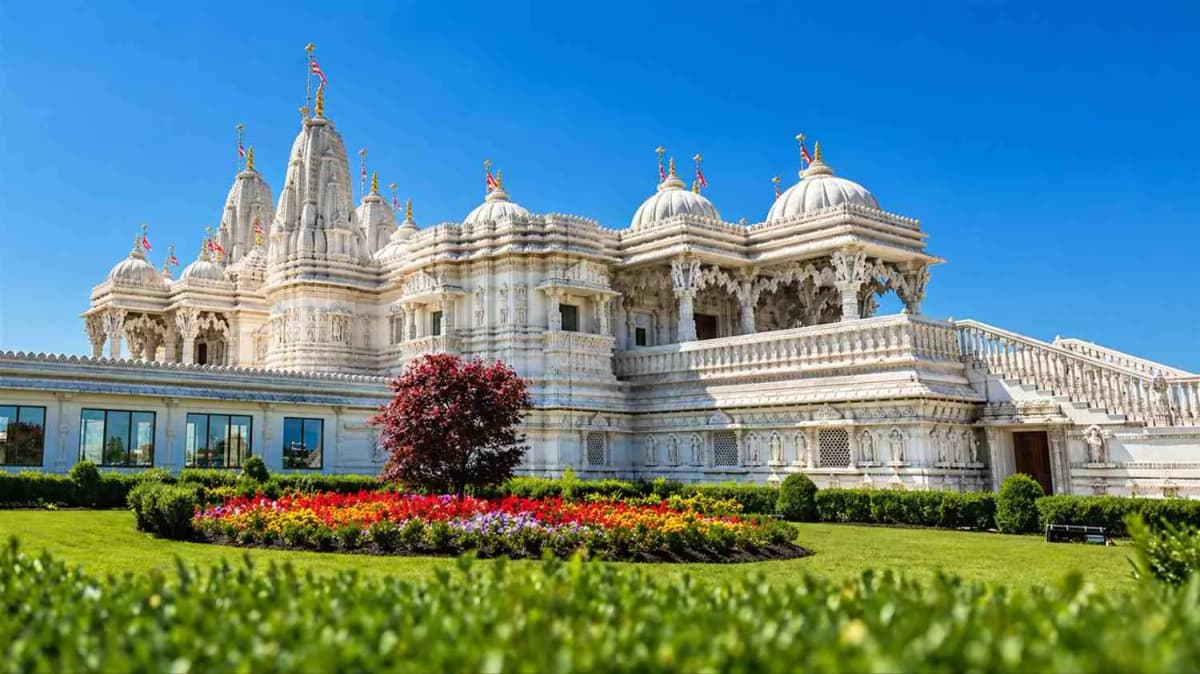
Diwali 2026 Dates Canada: Complete 5-Day Celebration Guide with Stories, Rituals, Lakshmi Puja Timings, Recipes & Events in Toronto, Brampton & Vancouver